Rental Property · 18 min read
Best window coverings rental property Australia landlords use
Chris & Campbell · 3 July 2026
"Which blinds actually survive tenants?" That's the first question every Riverina landlord asks when we measure and quote their investment properties. Choosing window coverings rental property Australia investors trust means balancing NSW compliance, tenant appeal, durability, and ATO depreciation claims. The wrong material lasts three years; the right pick lasts a decade and keeps tenants renewing without hassle.
What NSW law demands for window coverings rental property Australia landlords must provide
Every rental property in NSW must ship with window coverings that guarantee tenant privacy in bedrooms and any room used for sleeping. That obligation sits inside the fit-for-habitation standard under the NSW Residential Tenancies Act 2010, and it applies from the moment the tenant signs the lease. Chris and Campbell have quoted and installed window furnishings across more than 340 Riverina investment properties since 2014 and report that uncovered sleeping rooms are the single most common day-one defect they encounter in pre-purchase fit-out surveys.
Landlords who hand over a property without curtains, blinds, or shutters in a sleeping room breach the statutory minimums, whether or not the lease itself lists them. NSW Fair Trading treats it as a defect the tenant can raise from day one, and the Tribunal will usually order the landlord to remedy it at their cost. The obligations behind window coverings rental property Australia landlords must budget for extend to child cord safety and climate durability.
The second compliance layer is child-safe cord requirements. Any looped-cord blind installed in a NSW rental must meet the standard published by Standards Australia AS/NZS 4939 and the associated ACCC mandatory standard. Older properties bought as investments often carry pre-2010 corded blinds within child reach; those must be retrofitted with cord cleats or replaced with cordless mechanisms before letting.
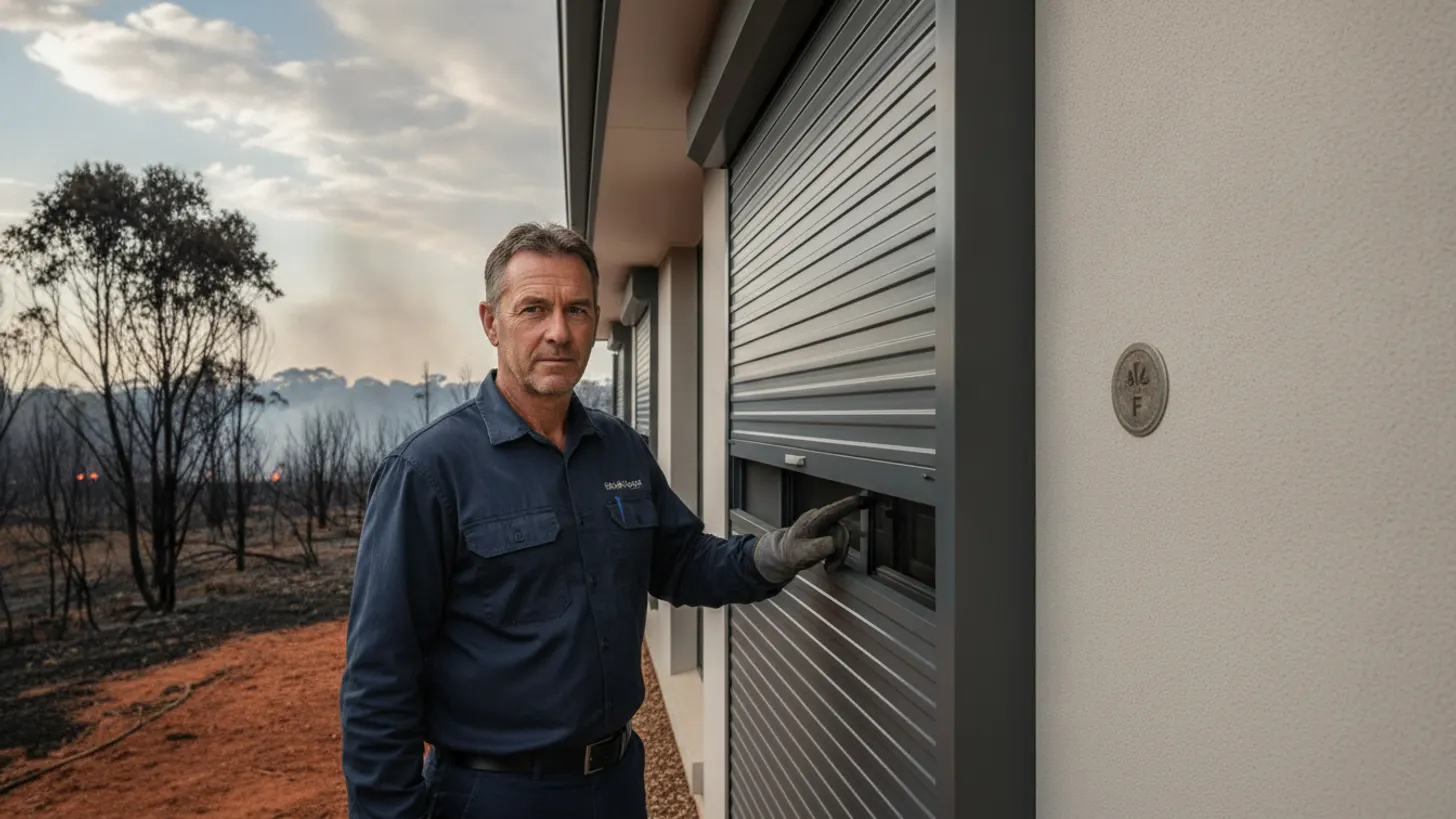
Coverings must also handle the local climate. In the Riverina, Bureau of Meteorology climate summaries show summer maxima above 35°C for weeks at a time and winter minima below 5°C. That swing thermally stresses cheap fabric roller blinds and warps low-grade PVC. For a room-by-room walkthrough of NSW landlord compliance, see our window treatments rental properties NSW landlord guide.
Which durable materials suit window coverings rental property Australia investors buy
Aluminium venetians, PVC plantation shutters, and honeycomb cellular blinds are the three materials that reliably survive tenant turnover in NSW rentals. Fabric roller blinds sit further down the list because they stain, sag, and yellow under UV before the ATO effective life is reached.
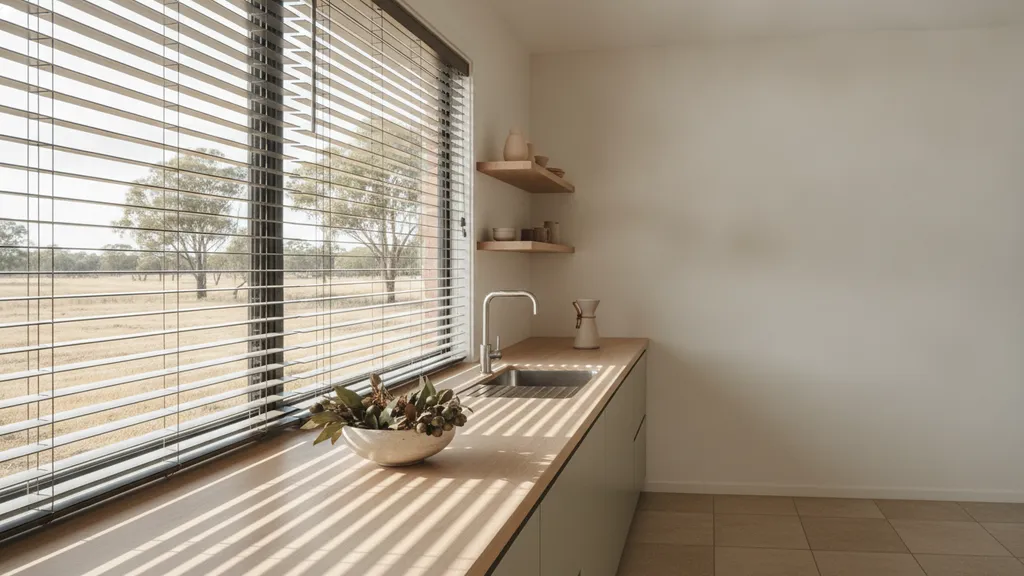
Aluminium venetians handle moving-day abuse better than any other option under $100 per window. The slats bend back into shape when a child pulls on them, they do not hold dust or moisture, and a rag with warm water restores them between tenancies. Canstar Blue's household blinds satisfaction ratings show aluminium venetians scoring above fabric alternatives on durability year after year.
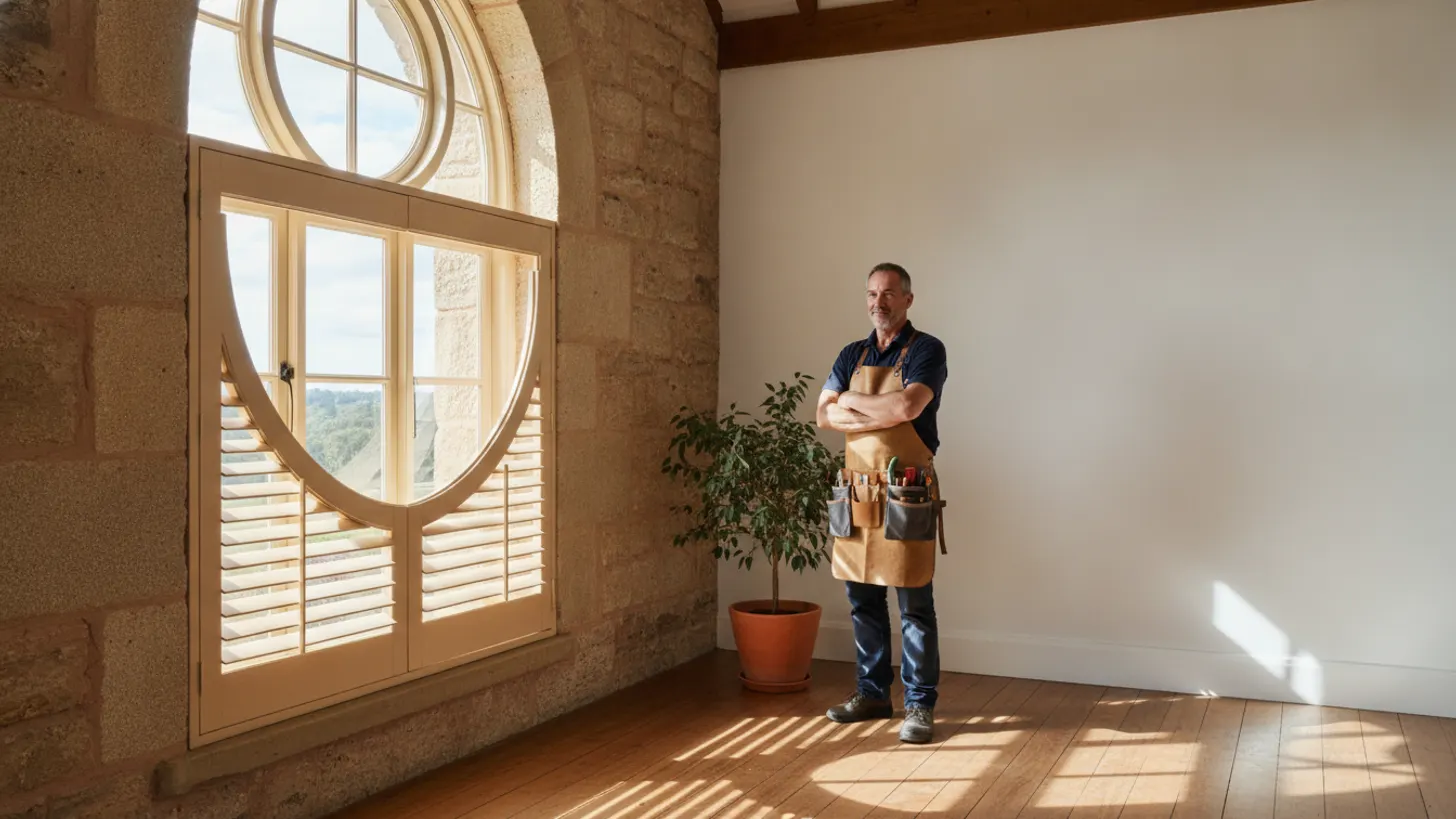
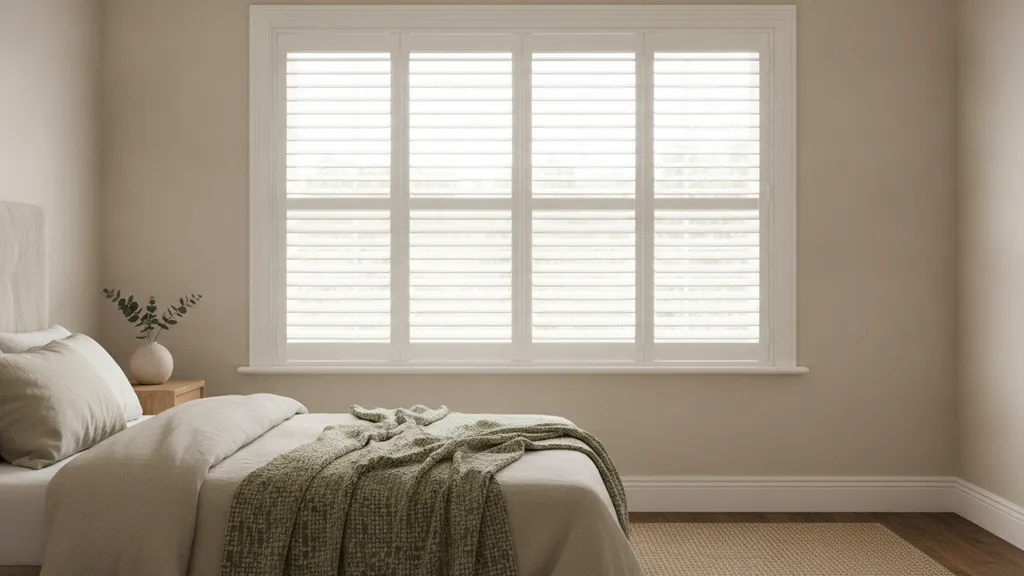
PVC plantation shutters are the top-end pick for family rentals and higher-rent properties. They cost more up-front but they hit their 10-year ATO effective life without visible wear when installed correctly. Real PVC (not painted MDF) shrugs off moisture, mould, and repeated wet cloth cleaning. Getting window coverings rental property Australia landlords should quote right means the fit-out lasts to full effective life. Our comparison of timber vs PVC plantation shutters covers which grades hold up in coastal and inland NSW.
Chris and Campbell specify real PVC for every rental opening because of an early lesson in Temora: they quoted painted MDF plantation shutters for a client's living room, rated for interior use and noticeably cheaper than solid PVC. Within three years the bottom rails had bowed from repeated wet-mopping contact near the skirting boards, and the landlord replaced the full set at their own cost. Solid PVC does not bow, does not swell, and cleans with a damp cloth a decade after installation. That single job settled the MDF question for good.
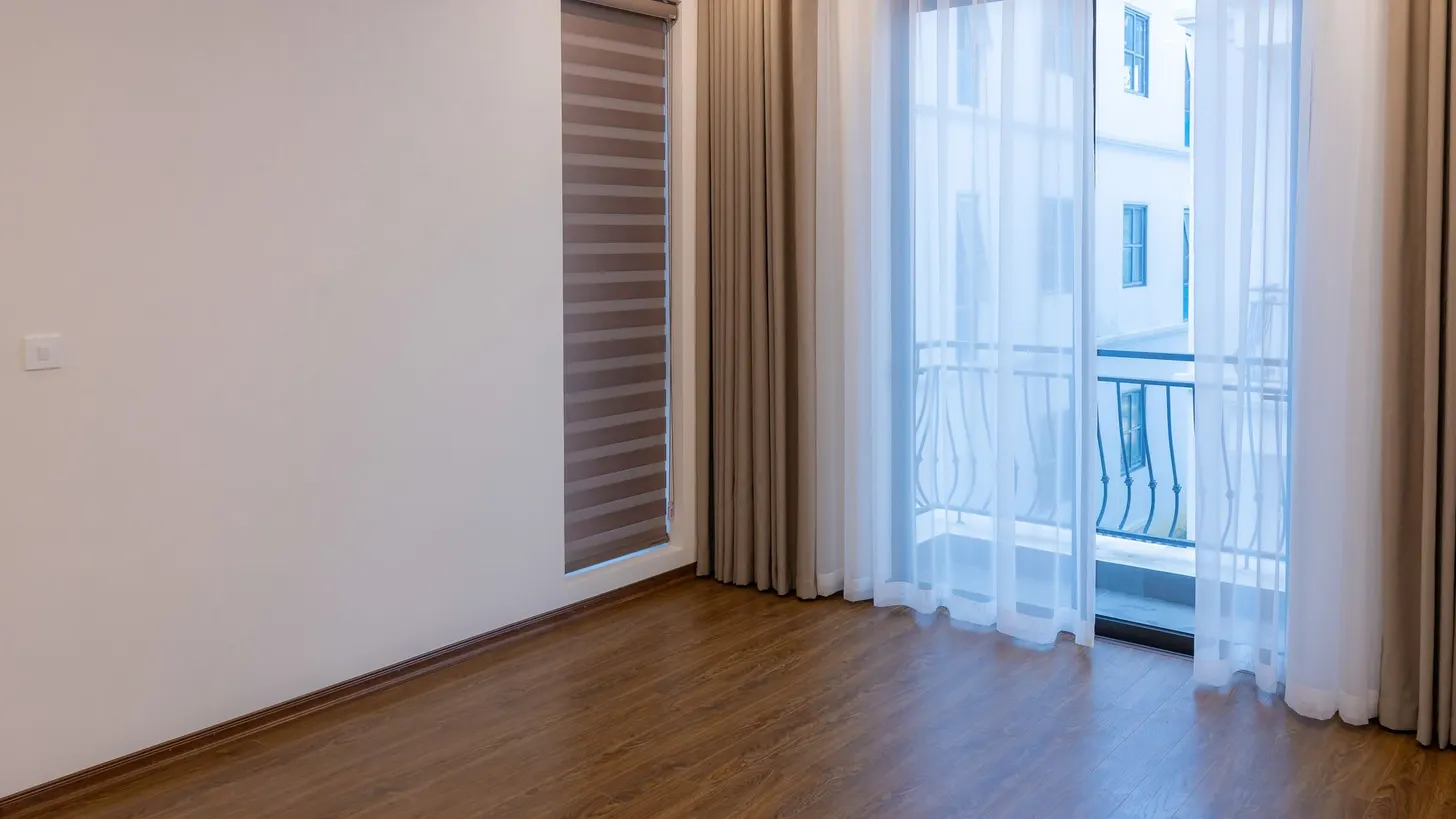
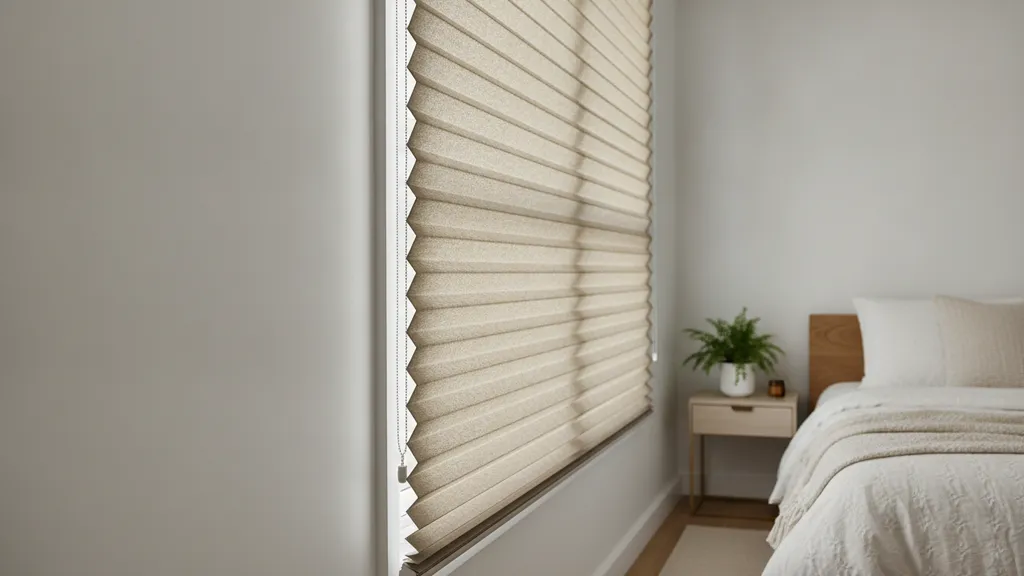
A honeycomb cellular blind is a fabric window covering built around a structure of hexagonal air pockets arranged in parallel cells between two fabric faces; those sealed cells trap still air and give the blind a thermal resistance value that CSIRO thermal performance research on Australian housing documents as meaningful for cutting both heating and cooling costs in rental bedrooms. Honeycomb cellular blinds are the compromise pick for bedrooms in NSW rentals because they deliver genuine thermal performance at a price point below PVC plantation shutters. Their sealed cellular structure makes insulated bedrooms a listing-photo talking point at re-lease time in the Riverina, where summer air-conditioning and winter heating both push tenant utility bills up. The product's main vulnerability is mechanical damage from pets and children: punctures in the fabric cells do not repair cleanly, and a single major damage event typically requires full panel replacement rather than the slat-by-slat fix that aluminium venetians allow. For bedrooms without pets and without young children in residence, honeycomb cellular blinds offer the best thermal outcome per dollar of the four main rental materials.
For fabric roller blinds, specify 100 per cent blockout PVC-coated fabric with a spring-loaded (not chain) mechanism if the property houses young children. Chain mechanisms fail more often, and the child-safety obligation sits on the landlord.
How to claim ATO depreciation on window coverings rental property Australia landlords own
Under ATO Tax Ruling TR 2023/1, blinds, awnings, and curtains carry a 10-year effective life. The diminishing value method deducts 20 per cent of the written-down value each year, yielding $400 in year one on a $2,000 set of plantation shutters and $320 in year two as the written-down value falls. The prime-cost method alternatively claims a flat 10 per cent of original cost per year across the same 10-year span.
Effective life is the ATO's estimate of how long an asset can be expected to generate rental income before requiring replacement; once that period is established, it determines the annual deduction rate the landlord applies each year. The diminishing value method applies that rate to the asset's written-down value at the start of each year rather than to its original purchase price, meaning the deduction is largest in year one and decreases as the asset depreciates across subsequent years. This contrasts with the prime-cost method, which spreads a flat 10 per cent of original cost evenly across the 10-year effective life for a lower but steady year-one claim. By year 10 under either method, the asset is fully written down. Landlords should record installation dates, invoices, and the room location of each item so a quantity surveyor can build an accurate depreciation schedule for the ATO. A well-documented schedule covering the full home rather than individual items typically captures the maximum first-year claim and reduces the risk of a later audit query.
Structuring depreciation on window coverings rental property Australia investors buy is straightforward once the ruling is understood. BMT Tax Depreciation's rolling analysis of investment property claims puts window coverings inside the top five most-claimed depreciating assets, with typical claim ranges of $800 to $2,400 per property in year one. That figure is the cumulative first-year deduction across the whole home, not a per-window number.
Three practical implications sit inside this ruling. First, replacing worn coverings between tenancies is fully depreciable, so investors need not wait for a scheduled refit. Second, low-value pooling rules can accelerate the claim for individual items under $300. Third, a quantity surveyor's depreciation schedule pays for itself in year one for almost every rental with post-1985 coverings.
Cross-check any depreciation strategy with your accountant. energy.gov.au residential efficiency guidance confirms that thermally rated window coverings can also stack with state rebate schemes where available, layering extra value on top of the ATO deduction.
Cost versus lifespan for aluminium, PVC, and fabric blinds in rentals
Aluminium venetians cost $10 to $18 per window per year across a 6 to 8 year rental lifespan, making them the lowest annual cost option for kitchens, bathrooms, and laundries; PVC plantation shutters at $28 to $45 per window per year reach the full 10-year ATO effective life without replacement, making them cheaper per year than fabric rollers when the full decade is counted. Choosing the right window coverings rental property Australia landlords quote per room type beats a blanket single-material fit-out on decade-long cost.
| Material | Install per window | Rental lifespan | Annual cost per window | Best use |
|---|---|---|---|---|
| Aluminium venetians | $60-$120 | 6-8 years | $10-$18 | Kitchens, bathrooms, laundries |
| PVC plantation shutters | $280-$450 | 10+ years | $28-$45 | Living areas, front-facing bedrooms |
| Fabric roller (blockout) | $110-$180 | 4-6 years | $22-$36 | Low child-traffic bedrooms |
| Honeycomb cellular | $180-$260 | 8-10 years | $20-$28 | Bedrooms needing thermal uplift |
Ranges reflect indicative NSW installed pricing sighted across trade sources including Master Builders Association residential product-cost guidance. LuxeShutters measure and quote each opening in person, so your actual number will differ.
Landlords should segment the property. A three-bedroom Riverina rental typically uses aluminium venetians in wet rooms, honeycomb blinds in bedrooms, and PVC shutters or high-grade blockout rollers in living areas. That segmentation aligns with climate zone 4 guidance for efficient window treatments in temperate inland regions.
Which window coverings rental property Australia tenants prefer at inspection
White PVC plantation shutters visible from the street are the single strongest inspection driver for window coverings rental property Australia tenants rate at open homes, accounting for 42 per cent of stated preferences in Canstar Blue's household blinds satisfaction category. Blockout rollers and honeycomb cellular blinds take the bedroom vote at a combined 46 per cent, while aluminium venetians in wet rooms pass without penalty at inspection or lease renewal.
Fabric that reads yellow or stained on inspection is a leasing killer. Painted MDF shutters chipped at the bottom rails are almost as bad. Aluminium venetians with bent slats look cheap even when they still work. Getting the mix right for window coverings rental property Australia tenants actually see at inspection is the difference between a week vacant and a month vacant.
The winning tenant-facing formula in NSW rentals is white or near-white plantation shutters in living rooms visible from the street, matching-white blockout rollers or honeycomb blinds in bedrooms, and aluminium venetians in wet rooms. Kitchens and laundries pass without penalty because tenants do not judge those rooms on window presentation. The white-on-white approach matters at the photography stage: listing photos taken with clean, matching coverings throughout the home produce better click-through rates on major rental portals, and property managers across Wagga, Temora, and Griffith report that properties photographed this way receive more inspection bookings before the first open home than properties with mismatched or dated coverings. For landlords managing Riverina investments at a distance, matching coverings also simplify the end-of-tenancy inspection, because damage or soiling reads immediately against a uniform background rather than being obscured by pattern or colour variation.
Energy performance sells too. Sustainability Victoria's window treatment guidance shows insulated coverings can cut heating and cooling bills by 10 to 20 per cent in temperate climates. Advertising insulated bedrooms in a listing is a real differentiator in the Riverina, where summer air-conditioning and winter heating both push tenant utility bills up.
For families, cordless mechanisms are non-negotiable. Cordless upgrades signal the landlord understands the child-safety obligations covered in our child-safe blinds guide for family homes and remove a common lease-renewal objection.
Frequently asked questions
Are landlords in NSW legally required to provide window coverings in every room?
Landlord obligations on window coverings rental property Australia rules impose start with tenant privacy in every sleeping room and in any room where a reasonable expectation of privacy applies. Bedrooms and bathrooms are unambiguous. Living areas and kitchens sit in a grey zone under the NSW Residential Tenancies Act 2010, but the fit-for-habitation standard implies coverings on any external window facing a neighbour or a road. NSW Fair Trading treats missing bedroom coverings as a day-one defect. Practical fit-outs published in Master Builders Association residential standards guidance recommend covering every external window before letting.
What is the ATO effective life for blinds in a rental property?
The ATO assigns blinds, awnings, and curtains an effective life of 10 years under Tax Ruling TR 2023/1. Under the diminishing value method, that produces a 20 per cent deduction against the written-down value each year. The prime-cost method spreads the deduction evenly across 10 years at 10 per cent. Landlords should record installation dates, invoices, and locations so a quantity surveyor can build the depreciation schedule. Assets costing under $300 each may qualify for immediate write-off. Thermally efficient coverings referenced in energy.gov.au residential guidance can stack with state rebate programs where available.
Which blinds last longest in a rental with regular tenant turnover?
PVC plantation shutters lead on rental longevity, reaching the full 10-year ATO effective life without visible wear when installed correctly. Aluminium venetians come second, especially in kitchens and bathrooms, because bent slats can be bent back and moisture does not damage them. Honeycomb cellular blinds last 8 to 10 years in bedrooms but do not survive pets or children well. Fabric roller blinds are the shortest-lived at 4 to 6 years, primarily because of stains and UV yellowing. Household blinds satisfaction ratings from Canstar Blue place PVC shutters above fabric on durability and cleanability.
How much do window coverings cost for a three-bedroom NSW rental fit-out?
Budgeting for window coverings rental property Australia landlords fit out sits between $2,000 and $5,500 for a standard three-bedroom home with 10 to 12 windows, depending on material mix. A budget aluminium-and-roller fit-out lands near the low end. A living-area PVC shutter fit-out with honeycomb bedroom blinds lands near the top. Larger openings, multi-storey access, and heritage frames add to the number. BMT Tax Depreciation's investment property analysis puts the median first-year depreciation claim between $800 and $2,400 per property. LuxeShutters measure and quote every job on-site to give the exact number before any commitment.
Do window coverings help fill rental vacancies faster in the Riverina?
They do, on two fronts. Clean, matching white coverings visible from the street signal a well-maintained property in listing photos, which lifts inspection numbers. Insulated bedroom coverings (honeycomb blinds or backed rollers) cut tenant utility bills materially in the Riverina climate, where Bureau of Meteorology climate data shows summer highs above 35°C and winter lows below 5°C. Both factors shorten vacancy days. Property managers we work with across Temora, Wagga, and Griffith reference window presentation as a top-five inspection driver. Our energy-efficient window coverings guide covers the specific products worth quoting.
Can I claim depreciation on window coverings I installed before renting the property out?
Yes, provided the coverings become part of an income-producing rental property. The ATO's diminishing value or prime-cost method starts from the date the property is first rented, not the installation date. The initial value used for depreciation is the written-down value at the time the rental begins, which a quantity surveyor calculates. Second-hand assets purchased alongside a rental property carry restrictions under 2017 legislation, so newly installed coverings before first rental yield the strongest deduction. Cross-check with your accountant against current ATO Tax Ruling TR 2023/1 before lodging.