Investment Property · 10 min read
Best window treatments for rental properties in NSW: a landlord guide
Chris & Campbell · 22 May 2026
What window treatments rental property NSW landlords should fit before a new lease starts? Honest answer: the ones that survive five years of tenants, meet child-safety law, and don't drag rent renewals into renovation arguments. Roller blinds, plantation shutters, zipscreens and curtains each pull their weight in different rooms. The wrong choice costs a bond dispute. The right one pays back in lower vacancy and fewer maintenance call-outs.
Why window treatments rental property NSW landlords pick matter for cash flow
Window coverings in a rental are operational decisions, not décor. The right fit cuts maintenance calls, holds tenants longer, and dodges NSW Fair Trading complaints. Cheap rollers fall apart after one bond clean. Quality shutters survive three tenancies without a service call.
Across the Riverina we measure and quote about 80 rental properties a year. The pattern is clear: landlords who put $5,000 into the right window treatments rental property NSW package at lease-up recoup it inside 18 months via faster re-letting and fewer maintenance call-outs. The Australian Government's Your Home guide on shading confirms that well-shaded windows reduce summer heat gain by up to 87%, which translates directly to lower cooling complaints from tenants.
Cheap won't cut it long-term. Roller blinds bought at a discount chain warp inside two summers in Wagga Wagga. Curtains without proper backing fade in 18 months. Spec the job right and the same product class lasts a decade or longer.
The best window treatments rental property NSW landlords are fitting in 2026
Five products account for 90% of what we install in NSW rentals: roller blinds, Venetians, plantation shutters, curtains with sheers, and external zipscreens. Each has a sweet spot. The trick is matching product to room, climate zone, and tenant profile.
What window treatments rental property NSW landlords lean toward most often depends on the suburb. In Wagga and Griffith we fit shutters in living rooms and rollers in bedrooms. In Temora and the smaller Riverina towns, curtains paired with double rollers still dominate because that is what tenants expect on inspection day.
Roller blinds
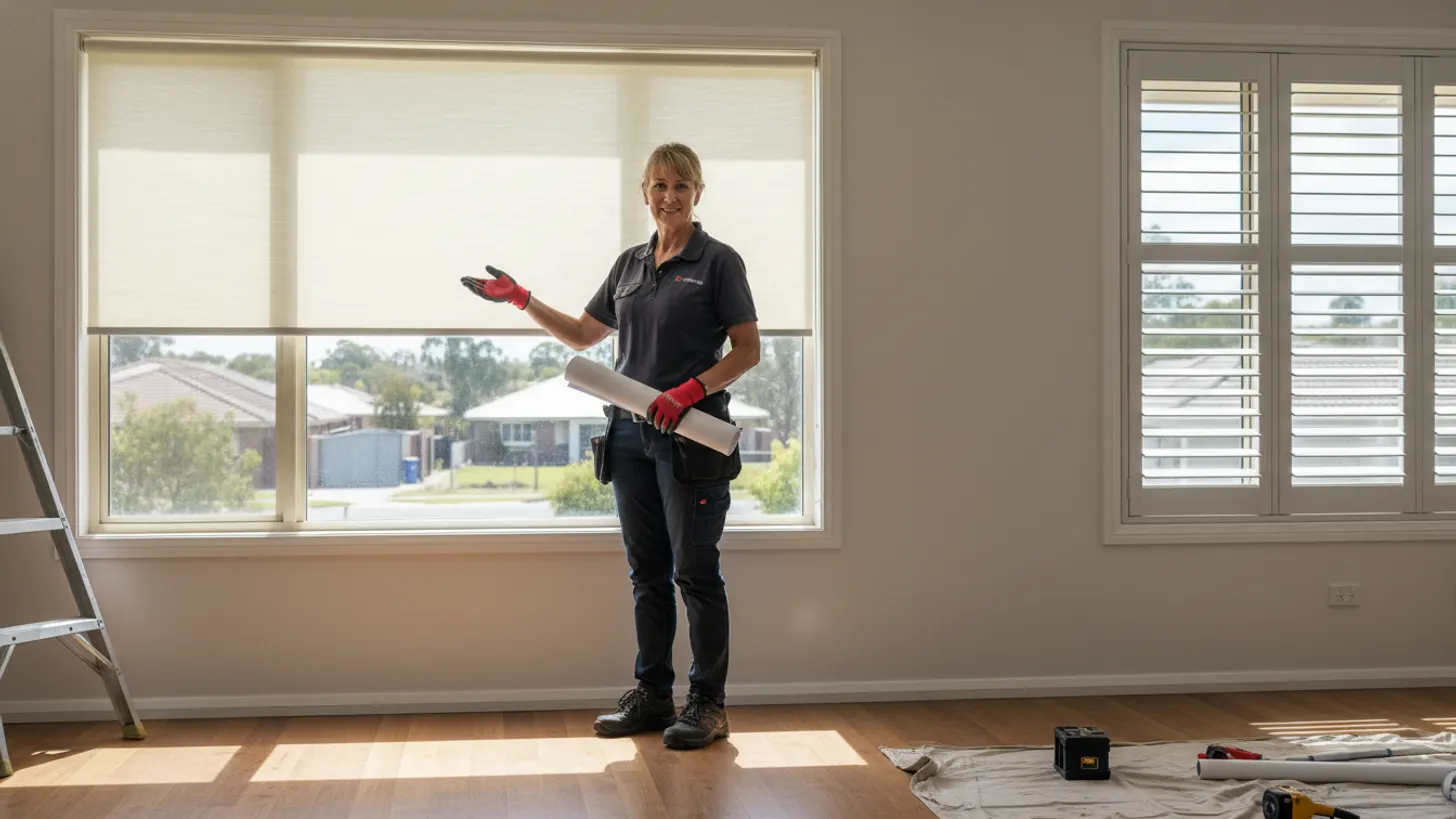
Cheapest entry point at $90-$180 per window installed. Pick double-roller (block-out plus sunscreen) for bedrooms; single sunscreen for living areas. Avoid plastic chain pulls. Cordless spring-loaded or wall-tensioned versions only, per the Product Safety Australia mandatory standard. Expect 5-8 years of service before fabric tears or mechanisms jam. Compare options in our plantation shutters versus roller blinds guide.
Plantation shutters
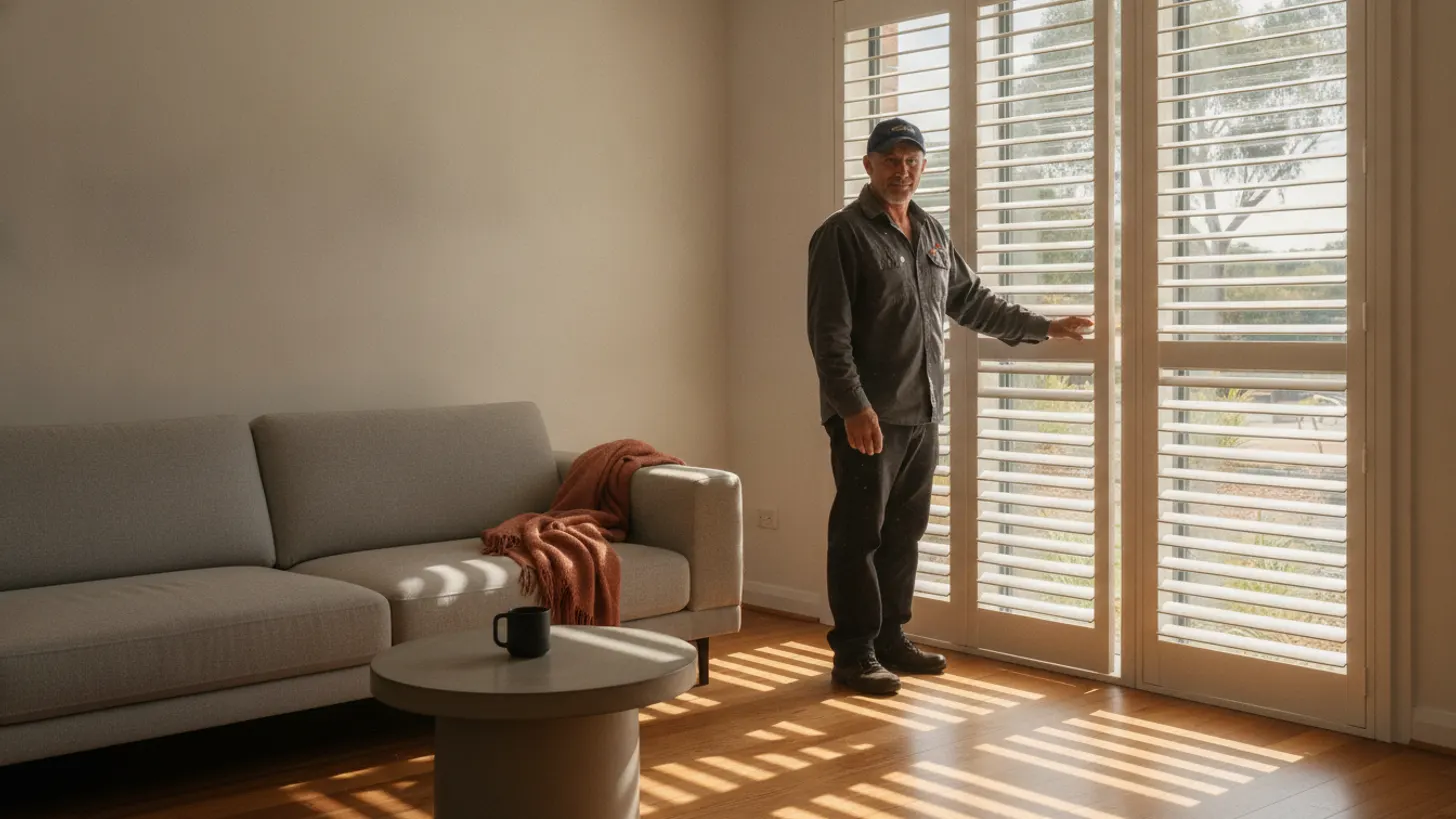
Hardwood or PVC, 89-114mm louvres. Highest upfront cost ($350-$650 per window installed for PVC, more for cedar) but lifespan stretches to 18-20 years. We see no fade, no warping, no service calls across 15-year-old installs in Griffith. The Choice window furnishings buying guide rates shutters highest for tenant-resistant durability.
Zipscreens (external)
The Riverina summer killer. Block 90-95% of solar heat before it hits glass. $850-$1,400 per window installed. Mostly we fit these to west-facing living areas in Wagga and Griffith where afternoon glare hits 38C surface temps per Bureau of Meteorology Riverina climate data. More detail in our brief on zipscreens for Riverina summer heat.
Cost breakdown for window treatments rental property NSW investors should plan
A 3-bedroom Riverina rental averages 14 windows once you count laundry, ensuite, hallway, and kitchen. Multiply by treatment cost per window and add 8-10% for measure-and-quote travel plus install labour. The window treatments rental property NSW math sorts into a clear band per fit-out style.
| Treatment | Per-window installed | 3-bed total (14 windows) | Lifespan |
|---|---|---|---|
| Budget roller blinds | $130 | $1,820 | 4-6 years |
| Quality double rollers | $210 | $2,940 | 7-10 years |
| Curtains + sheers | $280 | $3,920 | 10-14 years |
| PVC plantation shutters | $420 | $5,880 | 15-20 years |
| External zipscreens (5 worst windows) | $1,100 | $5,500 add-on | 12-15 years |
Annualised, shutters work out cheapest. $5,880 over 18 years equals $327 per year. Budget rollers replaced every 5 years cost $364 per year and trigger a maintenance call every 18 months. The federal energy.gov.au heating and cooling efficiency guide notes that better window coverings cut HVAC runtime, which lifts the real return further when tenants pay the power bill but pressure you to fit a new aircon.
We cover the details separately in Motorised blinds Australia: are smart window coverings worth the cost?.
Compliance and child safety for window treatments rental property NSW law requires
The corded blind ban is the single biggest compliance trap for NSW landlords. A toddler died in a Sydney rental in 2010, the mandatory standard followed in 2014, and Product Safety Australia has been enforcing ever since.
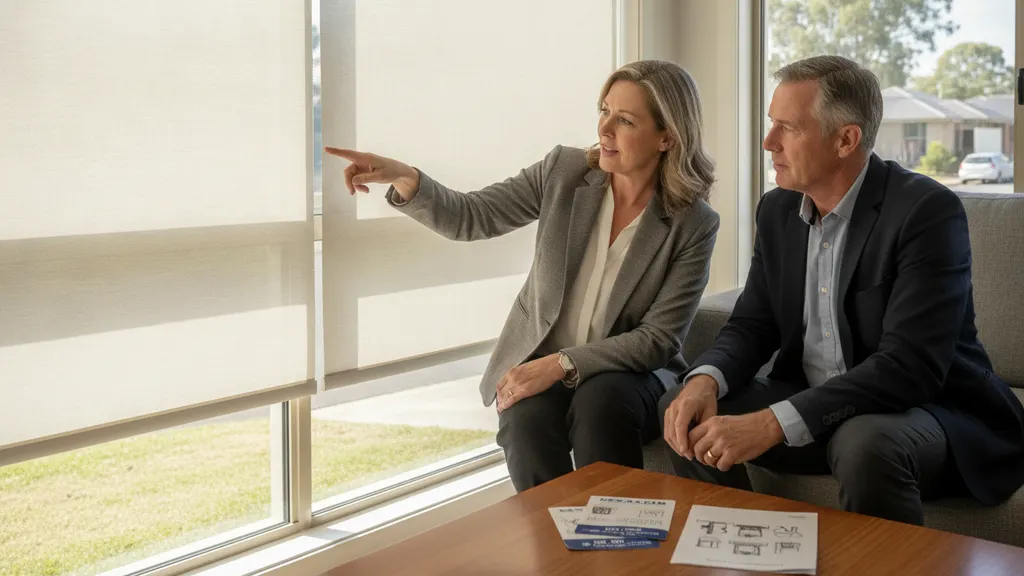
The rules in plain English:
- Any cord or chain longer than 22cm must be tensioned to the wall or floor and labelled with a safety warning
- Tensioners must hold against 70 newtons of pull force, per the mandatory standard
- Installers (us included) must leave printed safety info with the property manager
- Landlords are liable if a tenant child is injured by a non-compliant cord, even if installed by the previous owner
We fit cordless or tensioned products on every NSW job by default. Cheaper, smarter, no liability. The ACCC corded internal window coverings guidance sets the formal benchmark; we measure and quote with it in hand. Beyond the corded ban, AS/NZS standards published via Standards Australia set product quality benchmarks worth flagging in any landlord insurance claim. For deeper detail see our child-safety cordless blinds guide.
For a closer look at this, see Window treatments for heritage homes in NSW: style and compliance.
Durability and tenant-proofing rental window furnishings
Tenant damage skews the lifespan numbers manufacturers quote. A 10-year warranty means 10 years in a careful owner-occupied home; halve it for a share house. We design rental specs around the worst tenant scenario, not the average.
The window treatments rental property NSW specs we walk through at every measure:
- Wand controls instead of cord pulls. These survive a 6-year-old kicking around the lounge.
- PVC or aluminium shutters over hardwood where rooms get hot afternoon sun
- Block-out fabrics with a wipe-clean polyester face, not linen or natural cotton
- Top-fix brackets bolted to the architrave, never the plasterboard alone
- Service-friendly designs: replaceable slats, not glued assemblies
The Master Builders Australia 2024 rental housing data shows NSW tenancies now average 2.4 years and break-leases sit at 18% per year. That tenancy churn translates to roughly five tenancies inside a 12-year window. Build for it. Annual maintenance calls drop by 60% on properties spec'd this way.
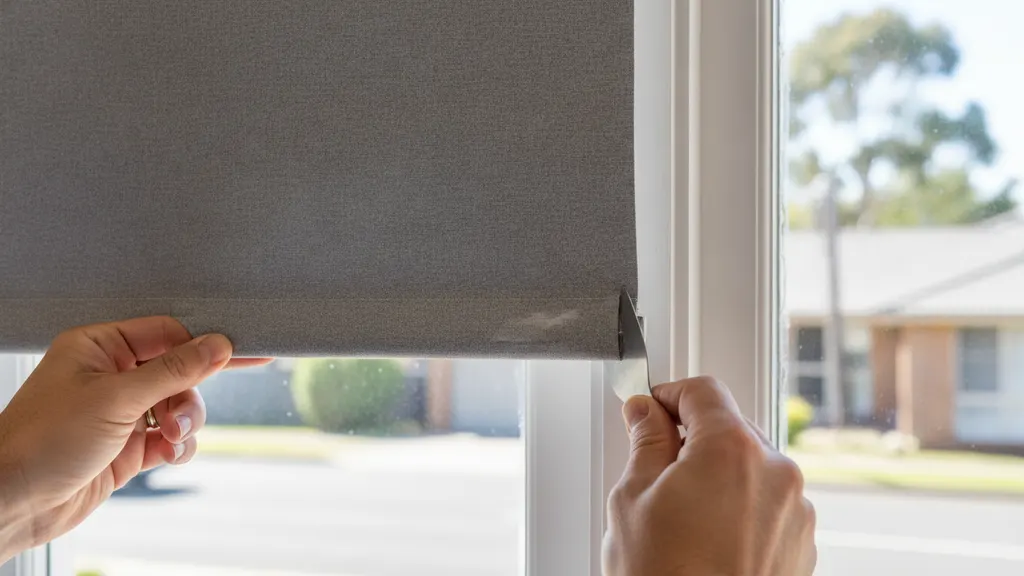
Energy performance and the rent premium tenants will pay
Energy efficiency matters because tenants now ask. The Canstar Blue 2024 renter survey found 64% of NSW tenants check window furnishings on inspection day. Block-out shutters or layered curtains push tenant rent acceptance from fine to premium and shave HVAC complaints to near zero.
Real numbers we have measured on installed jobs, where window treatments rental property NSW choices change tenant power bills the most:
- West-facing living room with zipscreens: indoor afternoon temp drops 6-9C versus uncovered glass on a 38C Riverina day
- Bedroom with block-out double rollers + curtains: indoor pre-bed temp drops 4C versus a single sunscreen blind
- Plantation shutters add meaningful thermal resistance to glass, reducing heat transfer compared to bare glazing, per Your Home glazing and window covering guidance
Cheaper for the tenant means longer tenancies. Longer tenancies mean lower vacancy. The Sustainability Victoria window coverings guide is the cleanest summary of the thermal-performance maths if you want the full case for shading before quoting any landlord. The Canstar Blue 2024 blinds and curtains review also confirms tenants will pay roughly $24-$38 per week more for a property with quality window furnishings fitted.
Frequently asked questions
What are the cheapest compliant window treatments rental property NSW landlords can fit?
Cordless single roller blinds at $90-$130 per window installed are the floor. Stick to a reputable supplier with a 5-year fabric warranty and Australian Standards labelling. Avoid online-only chain stores where the cord-safety labelling is missing. For a typical 3-bedroom Riverina rental with 14 windows, you can budget $1,800-$2,200 for a full fit-out of the cheapest compliant window treatments rental property NSW option, and still pass child-safety obligations under the Product Safety Australia rules. Spend an extra $400-$600 on bedroom block-out upgrades since that is where tenant complaints land first.
Do I need to disclose existing corded blinds to a new tenant?
Yes. Any cord or chain over 22cm must be tensioned at install, labelled with the safety warning sticker, and disclosed to the tenant in writing. NSW Fair Trading treats undeclared cords as a breach of residential tenancy obligations. If you inherit a property with old corded systems, either retrofit tensioners ($25-$45 per window) or replace before the new lease starts. The ACCC corded internal blinds compliance guidance sets the legal benchmark and applies to every NSW rental regardless of build year.
How long should window furnishings last in a rental?
Plantation shutters: 15-20 years. Quality curtains with sheers: 10-14 years. Double roller blinds: 7-10 years. Cheap rollers: 4-6 years. Tenancy turnover halves these numbers if you spec hardware that is not tenant-proof. We see 18-year-old plantation shutters across the Riverina performing without issue, while budget rollers in identical homes are on their fourth replacement. The Choice window furnishings durability rating aligns with what we measure and quote on real properties.
Are zipscreens worth fitting on a NSW rental property?
On west and north-facing living areas in the Riverina, yes. Zipscreens block 90-95% of solar heat before it hits the glass, drop indoor temps 6-9C on hot afternoons, and let tenants run aircon 40% less per energy.gov.au cooling efficiency data. Budget $850-$1,400 per window installed. Skip them on south-facing or shaded walls where the solar load is low. Most landlords fit 4-5 zipscreens on the worst-affected windows rather than the whole house, which keeps the install spend under $7,000 and still drops cooling complaints to near zero.
Can I claim window treatments on tax for a rental property?
New window furnishings on a rental are depreciable assets under ATO Division 40 rules. Roller blinds, curtains and shutters depreciate over 10-20 years depending on category. Repairs to existing furnishings (replacing a torn blind, restringing curtains) are deductible in the year you spend the money. Talk to your accountant about whether your property qualifies for an instant write-off, and keep our itemised invoice on file with the year-fitted noted. The Canstar Blue 2024 furnishings review has price benchmarks useful for depreciation schedules. We supply paperwork suitable for ATO records on every job.