Coastal & Climate · 15 min read
Coastal window treatments NSW: salt air, UV, and beach house style
Chris & Campbell · 17 July 2026
How quickly does a set of standard aluminium blinds fail once the salt spray reaches them? On homes within 500 metres of the water, seized tracks come off frames after eighteen months. Coastal window treatments NSW residents install need marine-grade materials, sensible UV planning, and installers who understand wind ratings, or they end up on the tip inside a decade.
Why coastal window treatments NSW fail faster than inland alternatives
Salt aerosol, extreme ultraviolet radiation, and higher wind pressures combine to age standard blinds three to four times faster on the NSW coast than in Sydney's western suburbs or in the Riverina. Coastal window treatments NSW homeowners buy from generic online catalogues rarely list the marine spec they use, and it shows by the second summer.
Salt-laden air within 500 metres of the shoreline penetrates screw heads, tracks, and headrails. Once chloride ions reach the base metal under anodised aluminium coatings, pitting corrosion sets in and does not stop. Australian manufacturers rate standard anodised aluminium blind components for roughly 2 years in that band before failure, which lines up with observation across NSW coastal sites from Batemans Bay up to Byron.
Ultraviolet load compounds the problem. The Bureau of Meteorology UV Index bulletin records readings of 10 to 12 (Extreme) along the NSW coast from October through March. That radiation bleaches polyester fabrics, cracks PVC vane profiles, and can chalk economy-grade paint finishes on shutters within a single season.
Standard anodised aluminium tracks can seize within 18 months in a coastal installation. The previous supplier had used zinc-plated screws inside the 500 m salt zone. Every fixing point showed full-depth pitting through the anodised layer into the base aluminium, and the headrail powder coat was chalking white at every bracket hole. Getting the full coastal window treatments NSW spec right from the first fixing is the only way to avoid that call-out.
Materials and hardware for coastal window treatments NSW that survive salt air
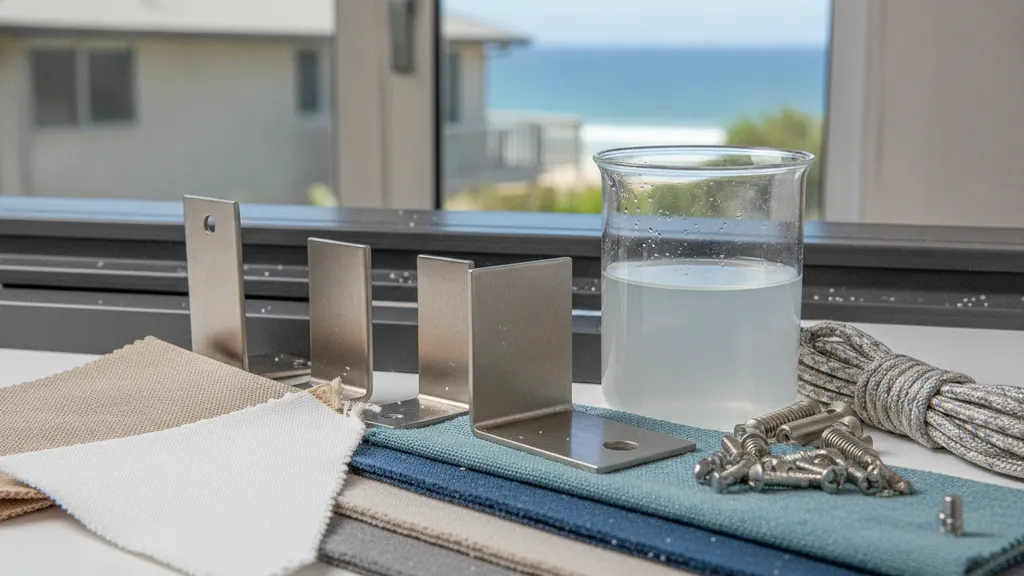
Marine-grade powder-coated aluminium or 316-grade stainless steel is the minimum coastal specification recommended by Australian manufacturers. The right coastal window treatments NSW spec starts with a chloride-tolerant substrate on every screw, bracket, chain, and headrail, not just the visible face plate. Cutting corners on internal hardware is where budget imports fail first.
316 stainless (also called marine stainless) contains 2 to 3% molybdenum, which sharply lifts pitting resistance in chloride environments compared with the more common 304 grade. On roller blind chains, headrail brackets, and shutter hinges, this is the correct grade inside the 500 m salt zone. For extruded aluminium tracks and battens, a two-stage marine-grade powder coat over etched aluminium meets the AS 3715 marine coating benchmark for atmospheric exposure.
Fabric selection matters too. Polyester screen fabrics with a solid PVC coating and a woven glass fibre core hold shape and colour under sustained UV load; naked polyester weaves lose 15 to 20% of tensile strength inside three summers. Basswood and PVC shutter blades outperform inexpensive MDF or hollow polymer alternatives, provided the paint spec is exterior-grade UV-stabilised acrylic. The Your Home shading guide from the Australian Government covers the underlying physics.
For a closer look at this, see Window treatments for Newcastle homes: coastal salt air and heat.
Balancing UV protection with coastal window treatments NSW ocean views
Ocean views are the whole point of a coastal house, so opaque blockout is rarely the right first-layer answer. Coastal window treatments NSW installs often layer a low-openness screen fabric during the day with a translucent or blockout roller behind, giving view retention and heat rejection without shutting out light.
Solar-reflective screen fabrics at 3% or 5% openness cut glare, keep 90% of the view visible, and reject a large share of solar radiant heat. CSIRO research published in the Architectural Science Review found that solar-reflective window coverings can reduce solar heat gain through standard glazing by up to 77%, cutting cooling loads in north and west-facing rooms. Bureau of Meteorology records show afternoon temperatures along the NSW coast regularly exceed 35°C from December through February, and unshaded west-facing glass can reach surface temperatures above 60°C under direct summer sun, pushing split-system run times up by hours on the hottest afternoons. An external screen intercepts that radiation before it crosses the glazing line, stopping the heat load at its source rather than managing it once it is inside the room. That is the distinction the energy.gov.au home heating and cooling guidance draws when it ranks external shading above internal treatments for peak-summer heat gain: the energy is stopped before it enters the building, not after. That is also why, for any west-facing coastal window treatments NSW installation, an external screen or hooded shutter delivers better thermal performance and shorter cooling run times than internal curtains or roller blinds placed behind the same glass.
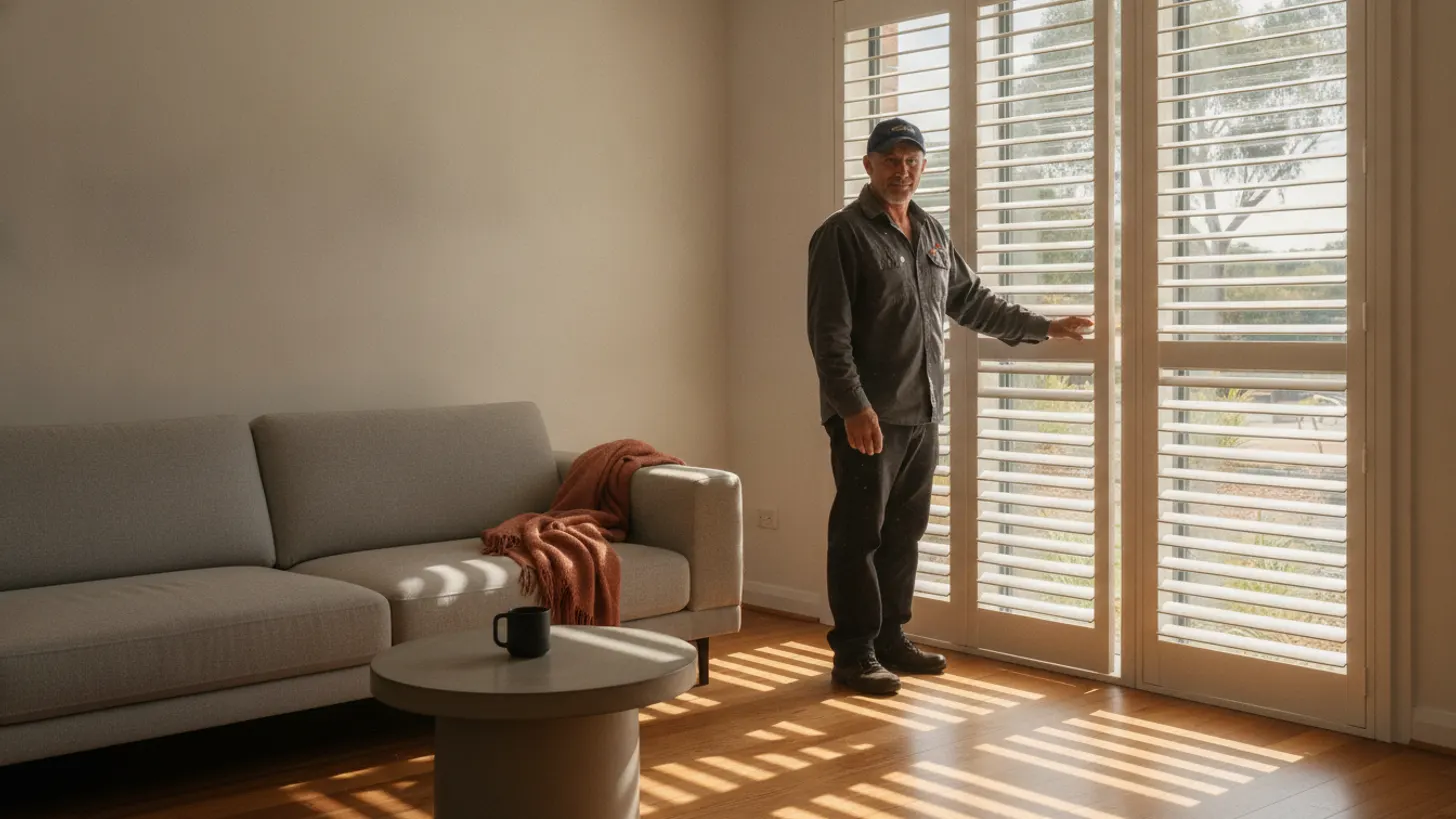
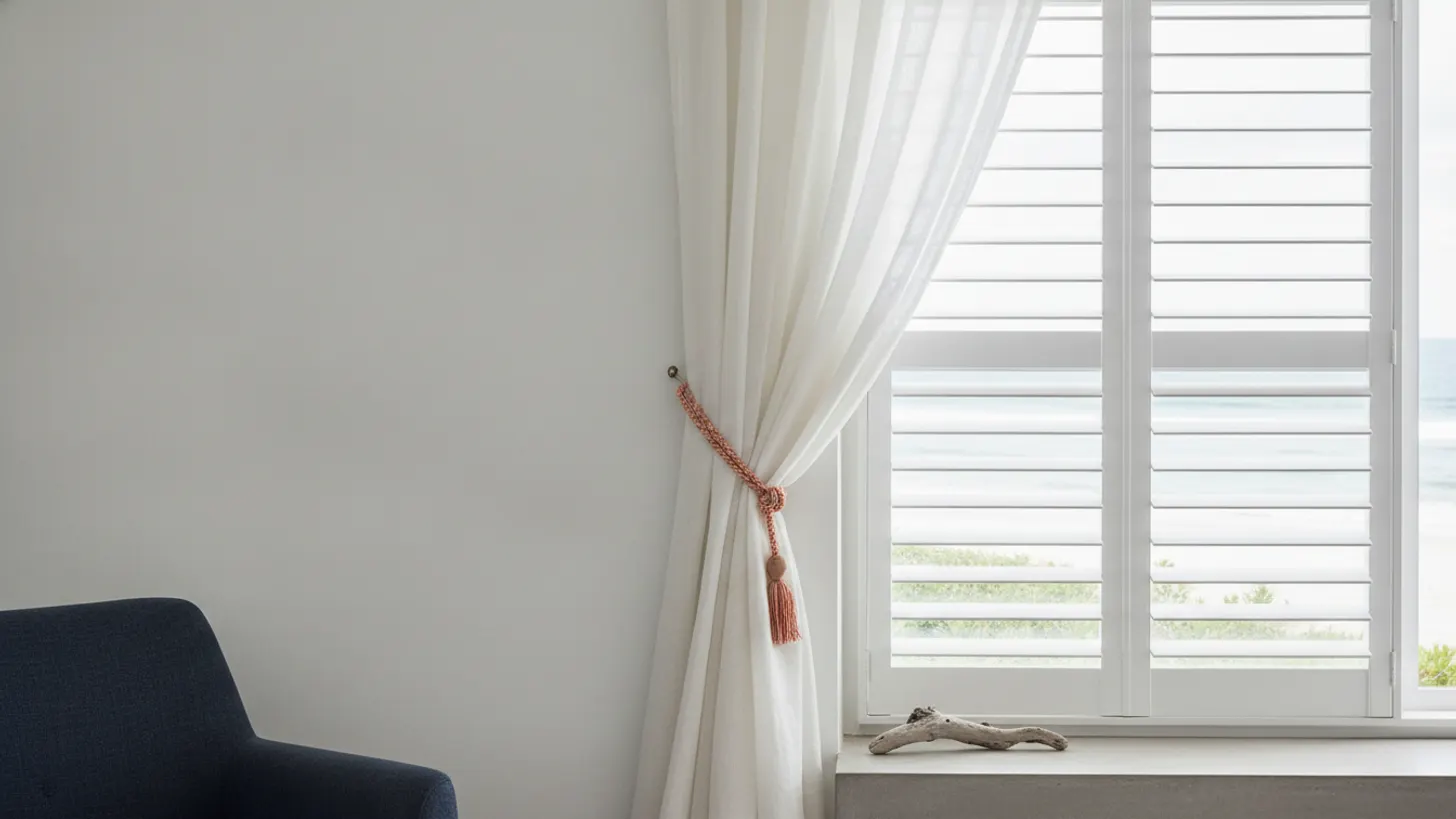
On the practical side, hooded roller shutters or zipscreens are the sensible external option on any west-facing coastal window that cops afternoon sun. Externally mounted screens stop UV before it hits the glass, which protects timber floors, upholstery, and artwork inside. On east and south elevations where morning glare and view are the trade-off, sheer curtains inside a plantation shutter give layered flexibility without heavy summer heat penalties. See the energy-efficient window coverings guide for the deeper thermal maths.
Blind and shutter styles that suit beach houses and holiday homes
Coastal interiors typically read pale, layered, and honest about material. Aluminium plantation shutters in soft white or sand hold up against salt without warping the way solid timber can in the humidity that Bureau of Meteorology station data shows sitting above 70% relative humidity along the NSW coast for most of the year. Natural-weave roman shades in polyester rope look coastal but keep shape better than raw jute in humid air.
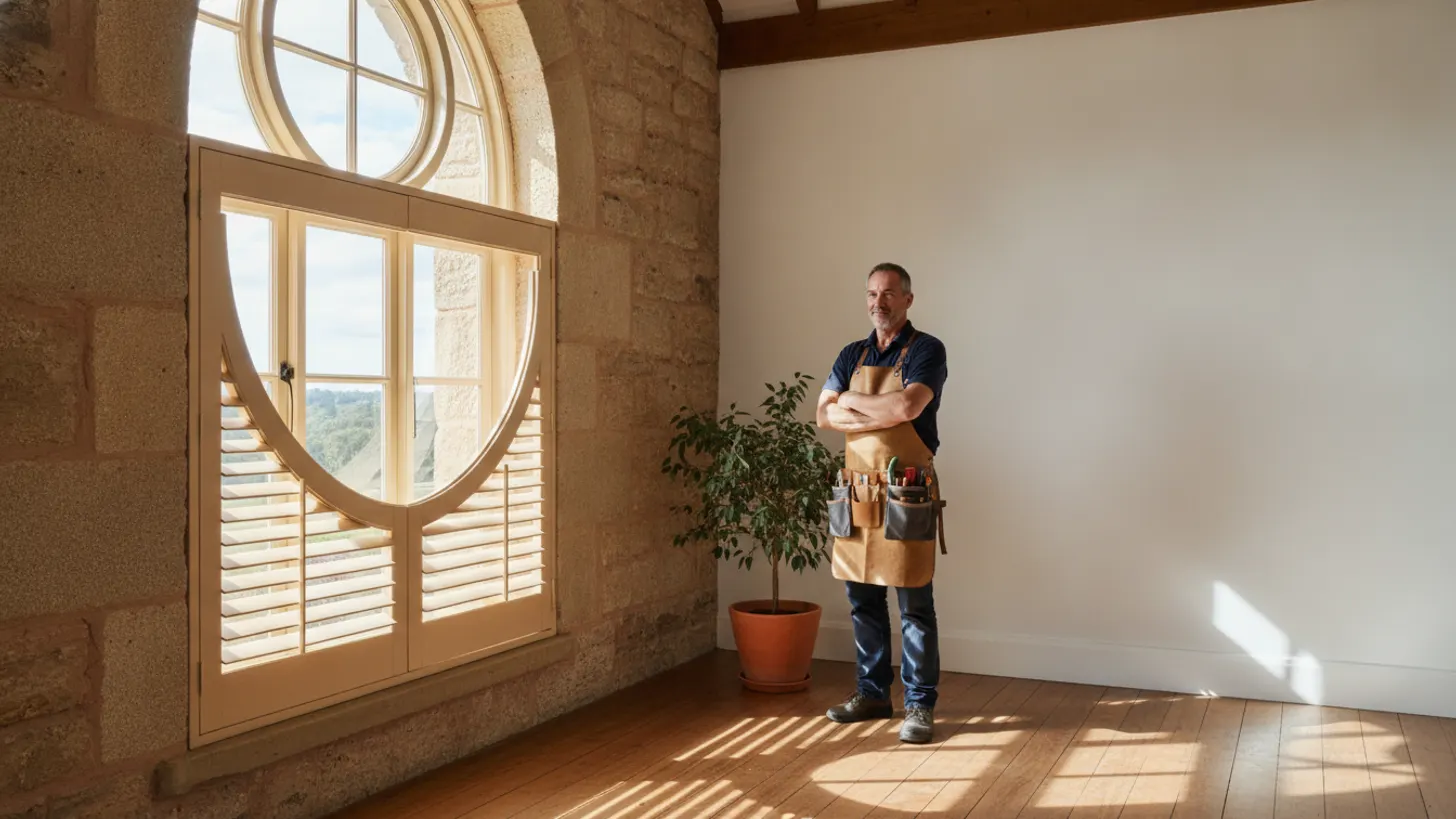
For holiday rentals along the NSW mid-north coast, aluminium shutters with 89 mm or 114 mm blades in a marine-grade paint tolerate hard cleaning, look intentional in beach interiors, and hold their setting for privacy without needing daily adjustment, which matters when the property runs through Airbnb turnover. The timber versus PVC plantation shutter comparison covers the material trade-offs by climate.
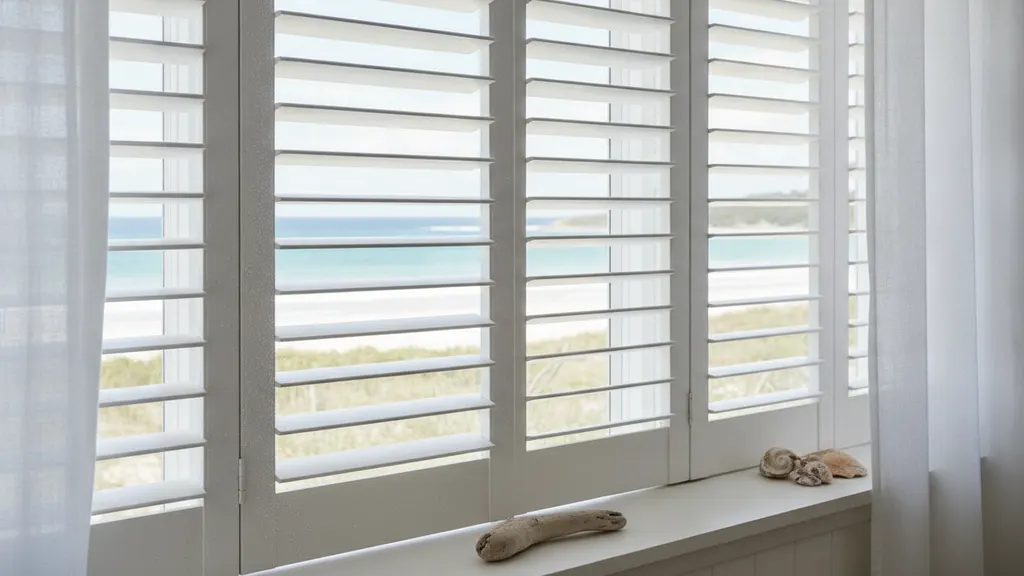
Roller blinds in cream, driftwood, or off-white polyester screen work as the workhorse second layer for coastal window treatments NSW installs. Motorised versions with hardwired power on primary living-space windows are worth the extra spend when the house sits empty half the year, because they can run scheduled cycles to protect the mechanism and set the interior temperature ahead of guest arrivals. The motorised blinds Australia guide covers the economics.
Wind loads and coastal window treatments NSW installation standards
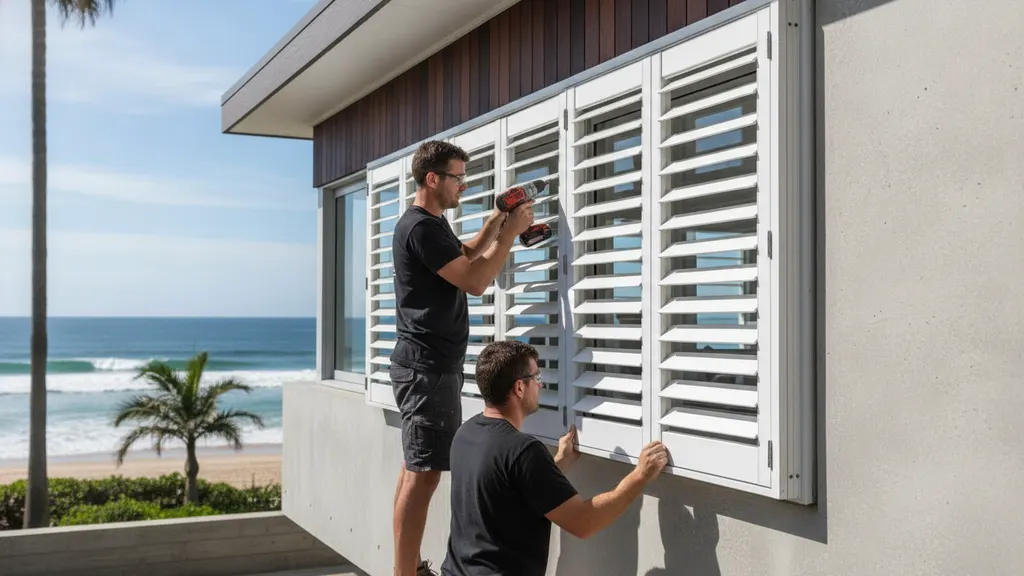
Coastal wind loads are not decorative. Under AS 1170.2, most NSW coastal residential blocks sit in Wind Region A2 with terrain category 2 or 2.5, giving design pressures that a lightweight interior roller blind may handle but that an external awning or zipscreen must be engineered for. Coastal window treatments NSW installers who skip the pressure calculation are the reason so many external roller shutters flap loose in the first onshore gale.
Hooded external roller shutters should run a minimum 0.5 mm double-skinned aluminium slat with side channels, cyclone clips at every 300 mm, and a locking bottom rail rated for a design pressure the local council typically flags at pre-DA stage. Master Builders Australia technical guidance sits alongside AS 1170.2 for residential external fittings.
| Product | Salt-air rating | Wind rating | Typical coastal use |
|---|---|---|---|
| Aluminium plantation shutters | Marine powder coat | Interior only | Living, bedrooms |
| Hooded external roller shutter | 316 fixings + marine coat | Region A2 rated | West windows, holiday lockup |
| Zipscreen awning | Marine components | Region A2 rated | Alfresco, outdoor rooms |
| Screen roller blind (3-5% open) | 316 chain + brackets | Interior | View retention, UV control |
See the outdoor blinds NSW alfresco zipscreens guide for external product selection; hooded roller shutters at this specification have a strong field record against the southerly buster events that BoM data documents at the Newcastle coastline, validating the AS 1170.2 pressure ratings in real conditions. The CSIRO built environment research archives contain the thermal test data behind the 77% figure cited above.
Frequently asked questions
How far inland from the ocean does salt corrosion really affect blinds?
Australian manufacturer coastal warranty maps and installer field observation both mark 500 metres from the shoreline as the high-risk zone, with a secondary caution zone out to about 1 kilometre depending on prevailing wind direction. Inside 500 m, 316 stainless fixings and marine-grade powder-coated aluminium are the minimum. Between 500 m and 1 km, standard powder coat with 304 stainless is usually fine for interior products but external shutters and awnings still warrant marine-grade. The Your Home steel selection guide spells out atmospheric corrosivity categories for the same reason.
Are external roller shutters worth the extra cost on a coastal NSW home?
For west and north-facing rooms in exposed coastal positions, yes. External hooded roller shutters cut solar heat gain before it reaches the glass, which CSIRO research shows can drop peak summer cooling loads by up to 77% on shaded windows. They also lock down the house against wind-driven debris in a southerly change and deter opportunistic entry when the property sits empty. Budget on a longer payback than an inland install because you are specifying marine-grade coatings, but expect a 12 to 15 year working life if the spec is right.
What is the best fabric for roller blinds in a beach house?
PVC-coated woven fibreglass screen fabric at 3% or 5% openness is the default for coastal beach houses. It resists UV degradation, holds shape in humid air, and cleans back with warm soapy water without shrinking or discolouring. Naked polyester or cotton-linen weaves may look softer but lose tensile strength quickly under sustained Extreme UV load per Bureau of Meteorology summer records. For a blockout second layer, acrylic-coated polyester with a fibreglass reinforcement tolerates the temperature swings behind a west-facing pane.
Do I need a wind engineering report for external blinds on a coastal home?
Not always, but the installer must design the fitting to the AS 1170.2 pressures for your terrain and shielding class. For most single-storey NSW coastal blocks in Wind Region A2, a competent installer can select a proprietary hooded shutter or zipscreen from a manufacturer rated range without a bespoke engineer certificate. For two-storey exposed positions above the escarpment or on headlands, a written wind pressure statement from the manufacturer is worth requesting. Check the Standards Australia catalogue for the full text of AS 1170.2.
How often should I clean coastal window treatments NSW hardware to keep the warranty?
Most Australian coastal warranties on aluminium or 316 stainless hardware require a monthly fresh-water rinse of external components, quarterly wipe-down of internal aluminium tracks, and an annual mild-detergent wash of screen fabrics. Skipping the rinse voids many coastal warranties, and salt crust on a chain drive will start pitting the metal even under a marine coat. In practice, a seized chain mechanism on an external hooded shutter typically costs $200 to $400 to replace and can fail within two summers if the monthly rinse is missed altogether. A written maintenance schedule should come with the installer invoice so there is no ambiguity when a claim gets tested.
Which room in a coastal NSW home should I upgrade first?
The west-facing living room, without exception. That is where sun bleaching, heat gain, and glare hit the hardest, and where interior finishes cost the most to replace once the fabric is damaged. A well-specified external screen or hooded shutter on that one room typically knocks a large share off the cooling bill and protects timber floors and artwork downstream per energy.gov.au heating and cooling guidance. Bedrooms come next for sleep quality and UV skin protection, then holiday-let rooms for turnover durability. A separate post covers valuation impact for coastal buyers.