Outdoor Blinds · 10 min read
Outdoor blinds NSW alfresco: extend your entertaining year-round
Chris & Campbell · 1 June 2026
Can outdoor blinds NSW alfresco zones really turn a windy pergola into a usable winter dining room? Yes, if you spec them for actual Riverina weather. We measure and quote alfresco shading across Temora, Wagga, and Griffith every week, and the right combination of zipscreens, café blinds, and powered shutters extends entertaining into the months you currently write off. Here is what works, what fails, and what to ask before you sign.
Why outdoor blinds NSW alfresco areas need four-season grit
The Riverina throws 40°C summer heat one week and frost-bitten winter mornings the next. Coastal-spec hardware fails fast under that punishment. You need UV-stable mesh, frames sized for paddock-edge wind, and motors that handle 40-degree daily temperature swings without binding.
Bureau of Meteorology long-term records for the Wagga Wagga AMO station show mean January maxima above 32°C with regular 40°C-plus afternoons, and July overnight minima close to 0°C with frequent frosts: BOM Wagga Wagga station averages. UV degrades generic PVC sheeting faster inland than on the coast because there is less cloud cover and more direct sunlight hours per year. The CSIRO has documented building envelope heat-load behaviour under inland conditions: CSIRO building energy efficiency research.
Translated to your outdoor blinds NSW alfresco purchase:
- Mesh must be UV-stabilised PVC-coated polyester at minimum. Shade cloth offcuts will not last two summers out here.
- Frames need powder-coated aluminium. Raw steel rusts within two seasons inland. Raw timber cracks within four.
- Motor housings should be IP55 or higher so winter dew does not corrode the windings during overnight freezes.
- Fixings need to be 316 stainless even inland, because frost cycling corrodes lesser grades faster than salt air.
Compare that spec against any cheap online outdoor blind kit and the gap is obvious. See our walkthrough on aluminium hardware longevity in inland NSW for the structural fixing side of the conversation.
Materials and mesh: which outdoor blinds NSW alfresco system suits your aspect
North-facing alfrescos cop the worst summer sun. West-facing decks bake from 2 pm onward. South and east aspects mostly need wind and rain protection, not heat blocking. Your outdoor blinds NSW alfresco choice depends on which combination of those four conditions your space actually faces.
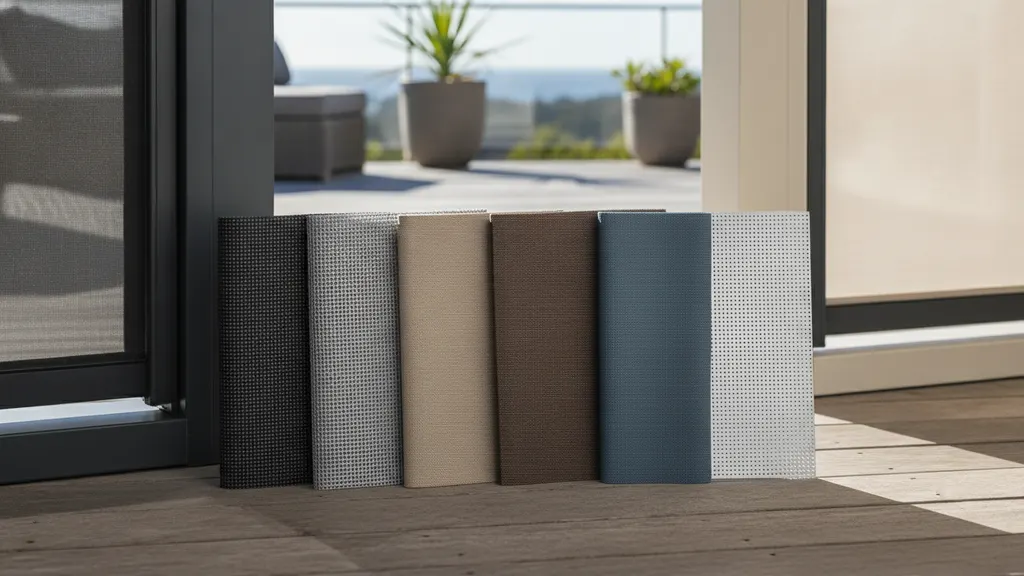
Three mesh openness factors dominate the market:
- 3 to 5% openness (tight weave): blocks the most heat and UV, view-through limited, best for west-facing summer punishment.
- 10% openness (mid weave): balanced view-through and heat block, the most common pick for north-facing alfrescos.
- 14% openness (loose weave): better airflow and view, suited to south and east aspects where heat is not the main enemy.
The Australian Government's Your Home guide covers how external shading outperforms internal blinds for thermal control: Your Home shading and passive design. The short version is that stopping heat at the glass line is far less effective than stopping it before it reaches the wall.
Clear PVC café blinds suit homes that want occasional total weather sealing for cold nights and rain events, but they fog up in temperature swings and yellow with sustained sun exposure. We rarely recommend them as the primary system for daily summer use across the Riverina.
Zipscreens vs café blinds vs awnings: outdoor blinds NSW alfresco compared
Three systems dominate the outdoor blinds NSW alfresco category: zipscreen mesh, clear PVC café blinds with strap-and-eye fixings, and folding-arm awnings. Each handles wind, rain, sun, and bug control differently. Pick by your worst-case weather day, not your easiest one.
| Feature | Zipscreen mesh | Café PVC | Folding-arm awning |
|---|---|---|---|
| UV block | 85-95% | 60-70% | 70-80% |
| Rain resistance | High (sealed track) | Very high (waterproof) | Low (water ingresses sides) |
| Wind rating | Up to N3 | Up to N2 | Up to N1 |
| View through | Yes (mesh weave) | Yes (clear PVC) | No (opaque fabric) |
| Bug screening | Yes | Yes | No |
| Riverina cost installed | $650-$1,400 per opening | $420-$900 per opening | $1,800-$3,500 per unit |
For most Temora and Wagga jobs we install zipscreens on the three exposed sides of the alfresco and run a folding-arm awning across the open face only if there is no existing pergola roof. Café PVC gets specified when the client wants full winter sealing and is willing to roll the panels up in summer. Read more in our zipscreen buying guide for Australian conditions.
Wind ratings, fire compliance, and weather data
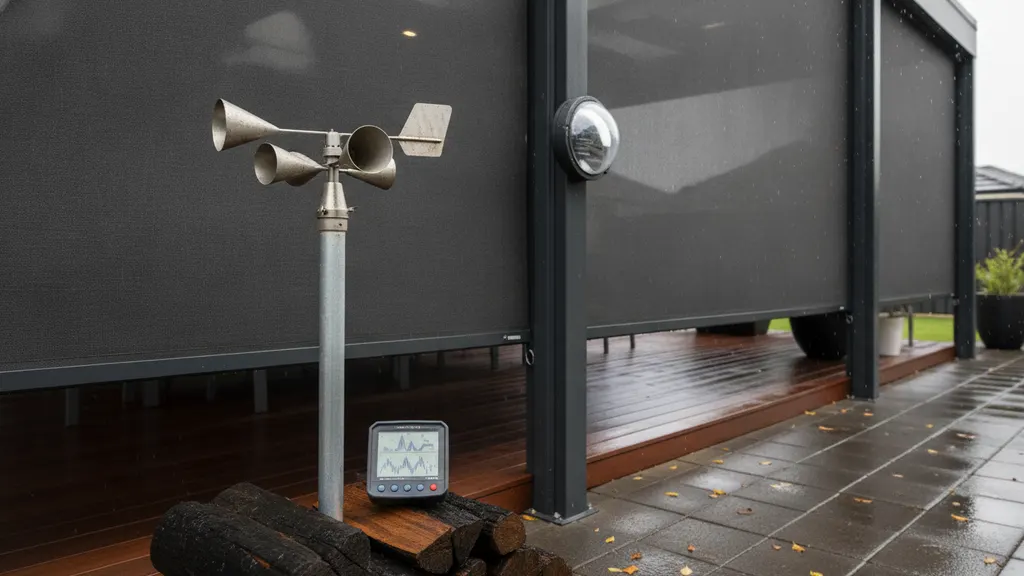
Wind is the single biggest reason cheap outdoor blinds NSW alfresco kits fail in the Riverina. Standards Australia AS 4055 sets wind classifications from N1 to N6 for housing. Most Riverina addresses fall into N2 or N3 country, and rural blocks on ridges or paddock edges can hit N4.
Get your wind classification from AS 4055 site information or your local council building section: Standards Australia publication catalogue. The Bureau of Meteorology gust records for your nearest weather station also help size the fittings honestly.
Bushfire compliance matters in BAL-rated zones. If your property sits in BAL-12.5 or higher, your blind material and frame need to match the rating. The federal window furnishing guide covers basic compliance maps: energy.gov.au window furnishings overview. Talk to your council and your installer together before specifying any combustible mesh.
What a real measure and quote visit looks like
A proper measure and quote runs 60 to 90 minutes onsite. The installer climbs onto your alfresco, checks structural fixing points, measures every opening twice, sights sun angles, photographs hardware locations, and writes itemised pricing on the spot. Anything quoted from a phone photo will get changed on install day.
For outdoor blinds NSW alfresco jobs specifically, the walkthrough we run covers nine checkpoints:
- Structural fixing assessment (post, beam, fascia, slab edge)
- Wind classification confirmation against AS 4055 for your address
- Aspect and sun angle mapping for each opening
- Drainage path check for any sealed PVC sections
- Motor power source planning (240V, solar, or battery backup)
- Control type: manual, remote, smart hub, or hardwired switch
- Colour matching against existing roof, gutter, and fascia tones
- Bushfire compliance check for BAL-rated properties
- Itemised written pricing with payment terms and lead time before we leave
If a competitor will not do these on site, they are quoting at risk. Choice Australia covers what an honest tradesperson visit should look like: Choice outdoor blinds buying guide.
Maintenance and lifespan in the Riverina
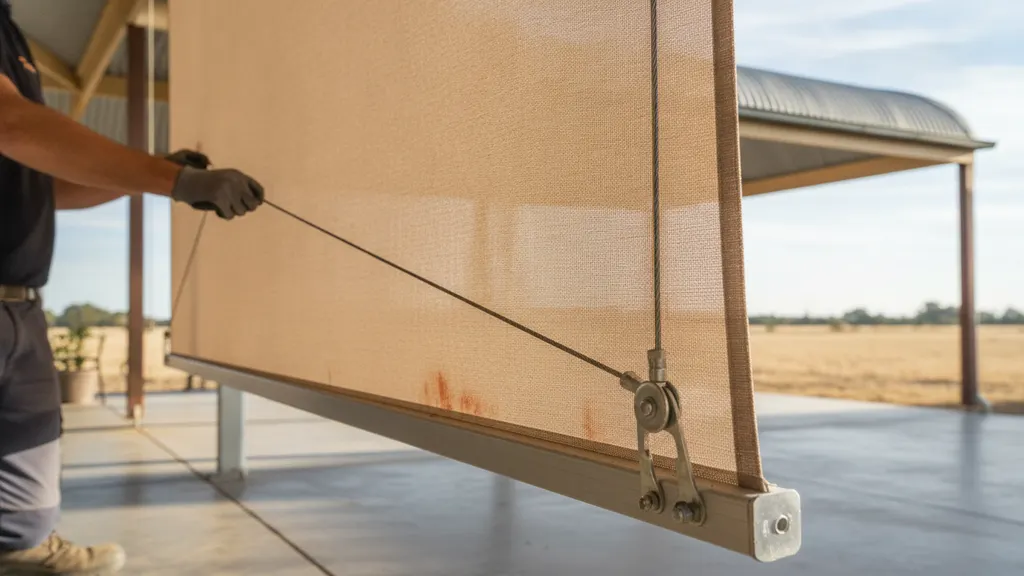
Outdoor blinds in dry inland NSW need different maintenance than coastal jobs. Dust and pollen are the enemies, not salt. Rinse the mesh once a season with a soft garden hose. Lubricate the tracks annually with silicone, not WD-40 which attracts grit. Inspect motor housings and strap fixings every spring before bushfire season and before summer storm fronts hit.
Master Builders Australia owner-care guidance recommends an annual whole-of-system check on external furnishings: Master Builders Australia owner-occupier resources. For motorised outdoor blinds NSW alfresco systems, that means testing limit switches, confirming the receiver pairs cleanly, and rinsing the gearbox area to remove paddock dust.
Typical lifespans we see across Riverina installs:
- Powder-coated aluminium frame: 15 to 20 years
- Quality zipscreen mesh fabric: 8 to 12 years
- Clear PVC café panels: 6 to 10 years (yellowing from year six)
- Tubular motors: 7 to 10 years before brush wear
- Remote receivers and hubs: 5 to 7 years (electronics fail before mechanical parts)
Plan the replacement budget around the shortest-life item, not the longest. Our preferred annual service window for paid maintenance is November (pre-summer) and April (post-storm) for most Riverina addresses. See our comparison of internal versus external shading lifespans for context.
Frequently asked questions
How much do outdoor blinds cost in NSW?
Pricing depends on opening size, wind rating, and motorisation. Across the Riverina, zipscreen mesh blinds run from around $650 to $1,400 per opening installed for manual operation, with motorised units adding $300 to $500 per blind. Café-style PVC blinds with strap-and-eye fixings sit between $420 and $900 per opening. Folding-arm awnings start near $1,800 and can pass $3,500 for wide spans with weather sensors. Choice Australia covers price ranges and what drives them in their outdoor shading buying guide. Always insist on itemised written quotes after an in-home measure and quote visit before signing anything.
Will outdoor blinds keep an alfresco warm in winter?
They cut wind chill and trap radiant heat from outdoor heaters, but they are not wall insulation. With three sides enclosed in PVC café blinds and a roof above, your Riverina alfresco can sit 6 to 10°C warmer than outside on a still winter evening. Add a gas mushroom or radiant strip heater and you can hold 18 to 20°C through a frost night. Mesh zipscreens trap less heat than clear PVC because the weave still passes some air. Your Home Australia explains how envelope shading affects indoor comfort. Specifying outdoor blinds NSW alfresco systems for winter use changes which mesh weave you pick.
What is the difference between zipscreen and café blinds?
Zipscreens use a mesh fabric with a zipper bonded along each side edge. The zipper runs inside a side channel, locking the blind to the frame so wind cannot blow it out and gaps cannot form between blind and post. They are typically opaque mesh with 3 to 14% openness factor depending on the weave. Café blinds use clear PVC sheeting held in place with straps fed through eyelets at the bottom edge. PVC stays see-through and blocks rain better, but it can stretch in heat, fog up in temperature swings, and yellow under sustained UV. Zipscreens suit daily use; café blinds suit occasional all-weather sealing.
How long do outdoor blinds last in the Riverina?
Quality powder-coated aluminium framework lasts 15 to 20 years in dry inland NSW, longer than coastal installs because there is no salt corrosion. Mesh fabric typically holds colour and structural integrity for 8 to 12 years before sun exposure breaks down the coating. Clear PVC in café blinds yellows and stiffens noticeably from year six onward, requiring panel replacement around year eight to ten. Tubular motors run 7 to 10 years before brushes wear out. Master Builders Australia outlines maintenance schedules that extend service life. Annual mesh rinse and track lubrication doubles practical lifespan on most installs.