Apartment Living · 13 min read
Apartment Blinds NSW: What Strata Rules Mean for Window Treatments
Chris & Campbell · 17 July 2026
Can you install roller blinds in a Sydney apartment without asking the owners corporation (the committee that governs a strata scheme on behalf of all apartment owners)? Short answer: usually not, if the covering faces outward. Any window treatment visible from the street or common property triggers strata approval under the NSW Strata Schemes Management Act 2015. This guide explains how apartment blinds Australia strata rules actually work, which products get approved fastest, and where owners and tenants trip themselves up.
What strata by-laws affect apartment blinds Australia strata approvals
If a window covering is visible from common property (shared areas outside individual lots) or the building exterior, written owners corporation approval is required before you install it. The NSW Strata Schemes Management Act 2015 sets this rule for any alteration that affects external appearance, and apartment blinds Australia strata rules extend it to any covering visible from outside the building.
In practice, blockout backing colour, valance, pelmet, and any external-facing hardware fall under by-laws. Buildings registered after 2016 usually use the model by-laws under Schedule 3, which sort works into three tiers: cosmetic, minor, and major. Interior-only work rarely needs approval. External-facing coverings almost always do. The Your Home passive design guide by the Australian Government treats window coverings as thermal control assets, but the strata rules still trump physics: get the approval, then buy the blind.
Written approval means a signed resolution recorded in the meeting minutes, not a verbal nod from the strata manager. Committees are required to respond within a reasonable time under Section 108 of the Act, and most schemes list preferred colours, valance types, and headbox styles in a schedule you can request from the strata manager before you shop.
Which apartment blinds Australia strata committees typically approve
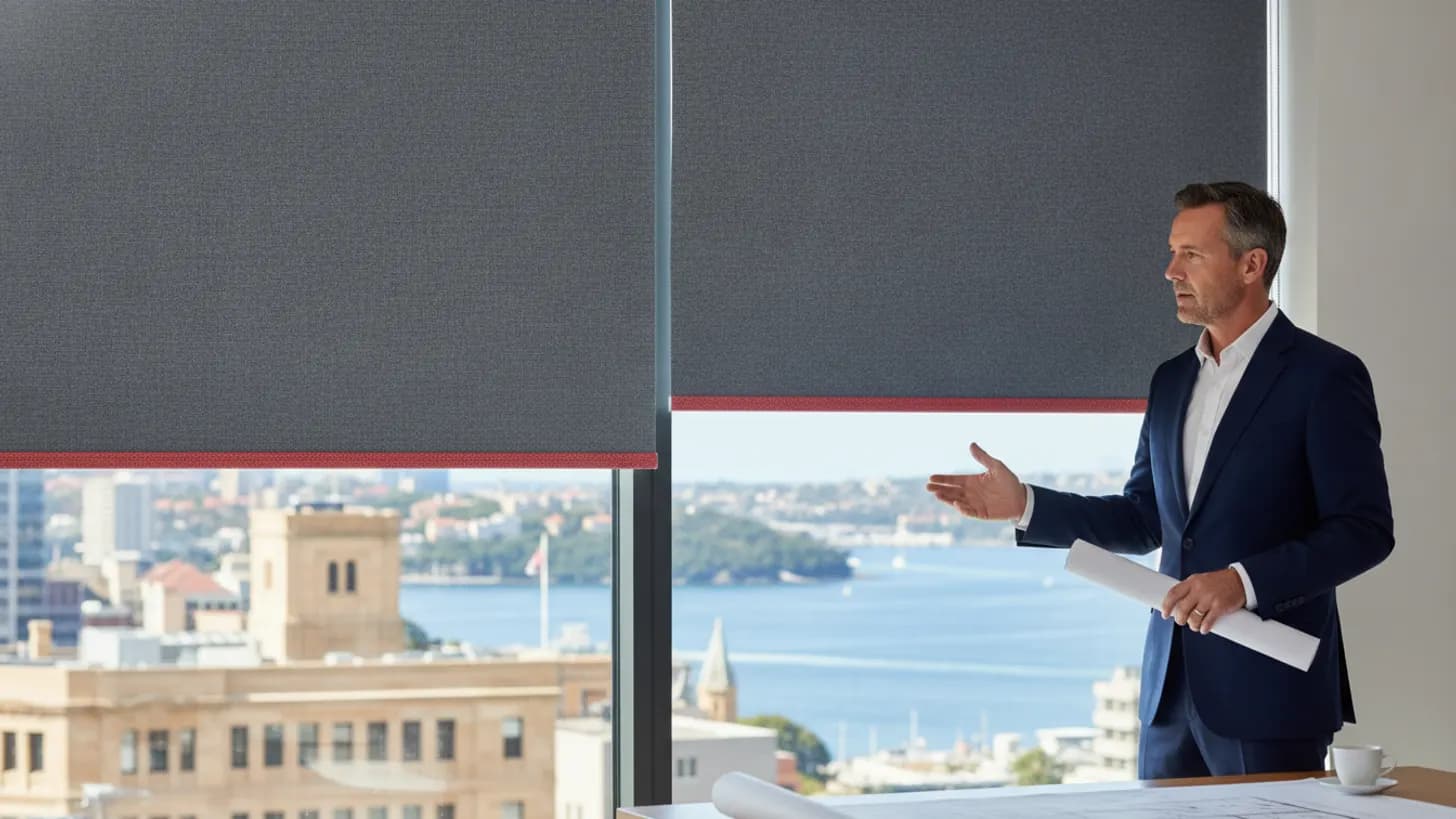
Committees favour products with predictable, uniform external appearance. Blockout roller blinds in white or cream, dual roller blinds with matching backings, and interior-mounted plantation shutters are the three easiest wins. Apartment blinds Australia strata approvals move quickest when the applicant submits a colour sample, brochure photo, and mounting diagram in the same email.
Sheer curtains and Roman blinds are usually fine because they sit inside the reveal and read as a soft neutral from outside. Vertical blinds and coloured Venetians are the two most common rejection triggers, especially in buildings with a heritage overlay or a strong visual identity clause. If your scheme uses a strata manager, ask for the design guidelines document before you order.
We learned the cost of skipping the reveal check with a client in a Wagga Wagga unit complex. Their application was rejected because the headbox projected 40mm past the reveal line, which the owners corporation said broke the scheme's flush-finish clause. We resubmitted with a cassette roller that sits fully inside the reveal, included a photo of the installed profile, and the committee signed off within two weeks. Checking reveal clearance before you order saves a rejection cycle and a delay of four to eight weeks.
| Blind type | Typical strata outcome | Best for |
|---|---|---|
| Blockout roller (white or cream backing) | Approved fast | Bedrooms, western facades |
| Dual roller (day/night) | Approved with sample | Living rooms with balconies |
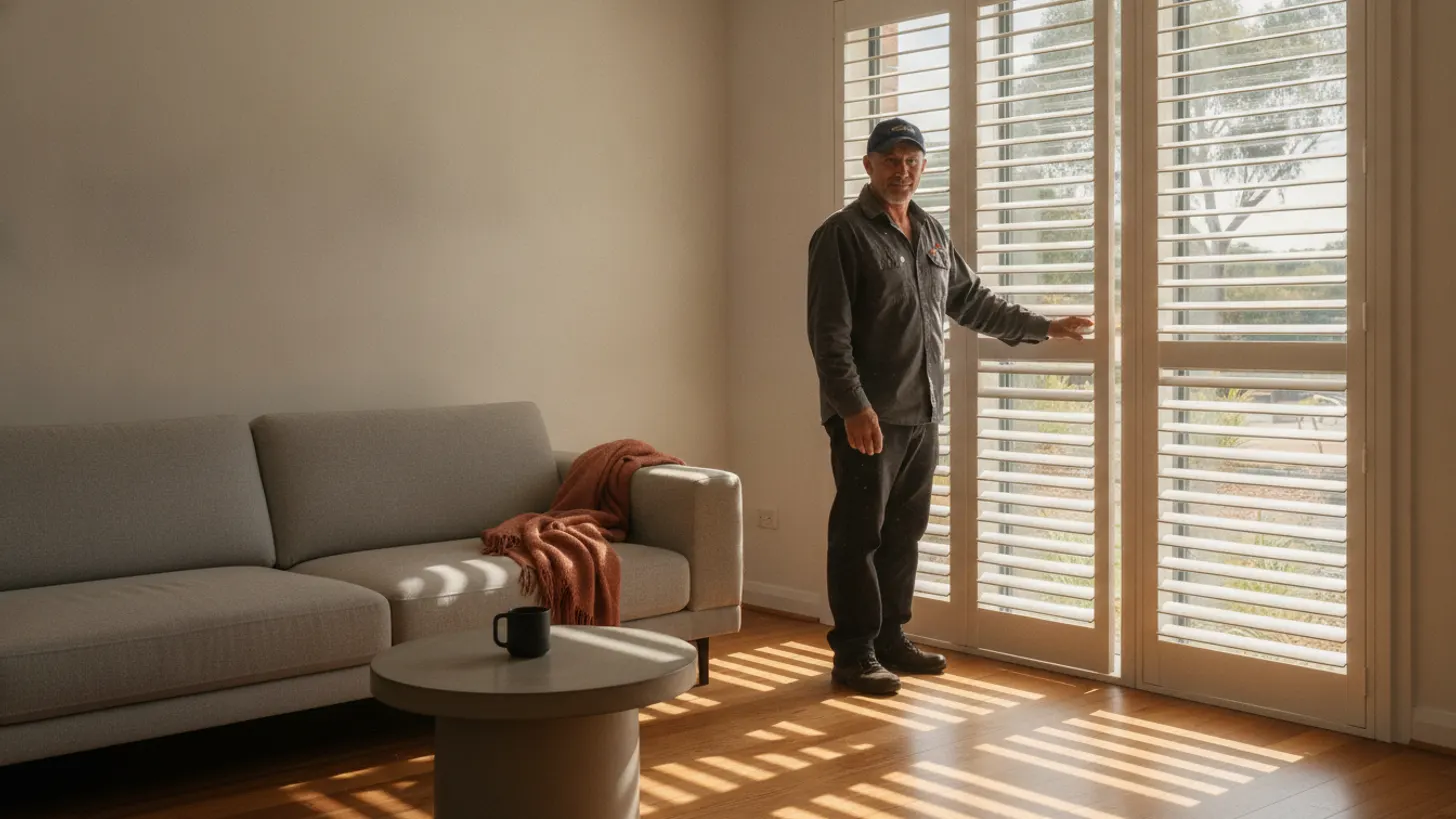
| Interior plantation shutters | Usually approved | Kitchens, small windows |
| Sheer curtains | Usually approved | Living areas |
| Vertical blinds | Often rejected | Not for external-facing |
| Coloured Venetians | Often rejected | Not for external-facing |
Apartment blinds Australia strata: noise, privacy and light in NSW high-rises
High-rise apartments have three environmental problems roller blinds solve well: harbour or road noise reflecting off nearby facades, unwanted sightlines from opposite buildings, and thermal load from unshaded glass. Blockout roller blinds cut solar gain, while translucent day rollers preserve outlook. The Australian Government energy efficiency guidance for households notes that internal window coverings slow heat transfer through glass.
Sound attenuation from roller blinds is modest, roughly 2 to 4 decibels at mid frequencies, but honeycomb cellular blinds do better if noise is your main concern. For privacy, dual rollers give you the neighbour-friendly outward look of a plain white backing plus a sheer front for daytime softness. See our guide to double roller blinds Australia for the day and night mechanism.
For apartment blinds Australia strata compliance in high-rises, motorisation earns its keep because reaching a headbox above a fixed pane on the 14th floor is not fun. Battery motors are the norm for retrofit because they avoid strata dramas around external cabling. Recent Canstar Blue household appliance research shows demand for smart window controls climbs fastest in higher-density postcodes.
Motorised blind approval rules for NSW strata apartments
Owners often assume motorised blinds trigger strata approval automatically. They do not, when the entire installation sits inside the lot (your individual apartment boundary) and no wiring, bracket, or receiver touches common property. Apartment blinds Australia strata by-laws focus on external appearance and structural change, not on whether the mechanism is manual or battery-driven.
The exceptions worth knowing: hardwired 240V installations that penetrate common walls or require an electrician to run cable through common cavities do need approval, because the electrical work touches common property. Solar chargers stuck to the outside of a window pane technically alter external appearance in some schemes, so ask first. And any headbox that projects into the balcony void or beyond the window reveal line will almost certainly need a resolution.
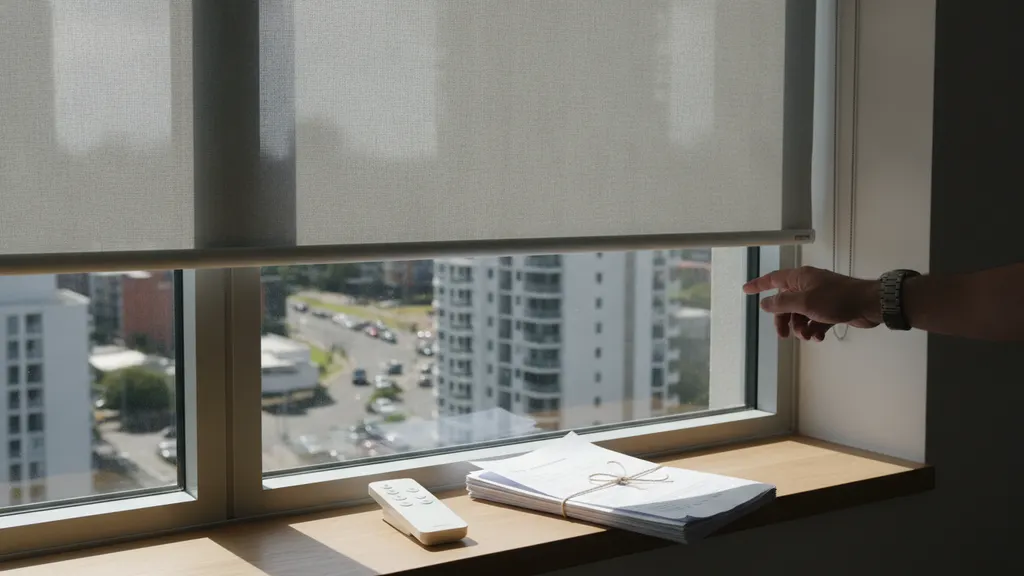
For retrofit installs, battery-powered rollers with rechargeable lithium packs skip both problems. The Standards Australia catalogue of AS/NZS documents covers low-voltage rules if you are curious. Most schemes we work with across the Riverina just want a one-page product spec and a photo of the intended mounting.
Apartment blinds Australia strata: choosing window treatments for small NSW apartments
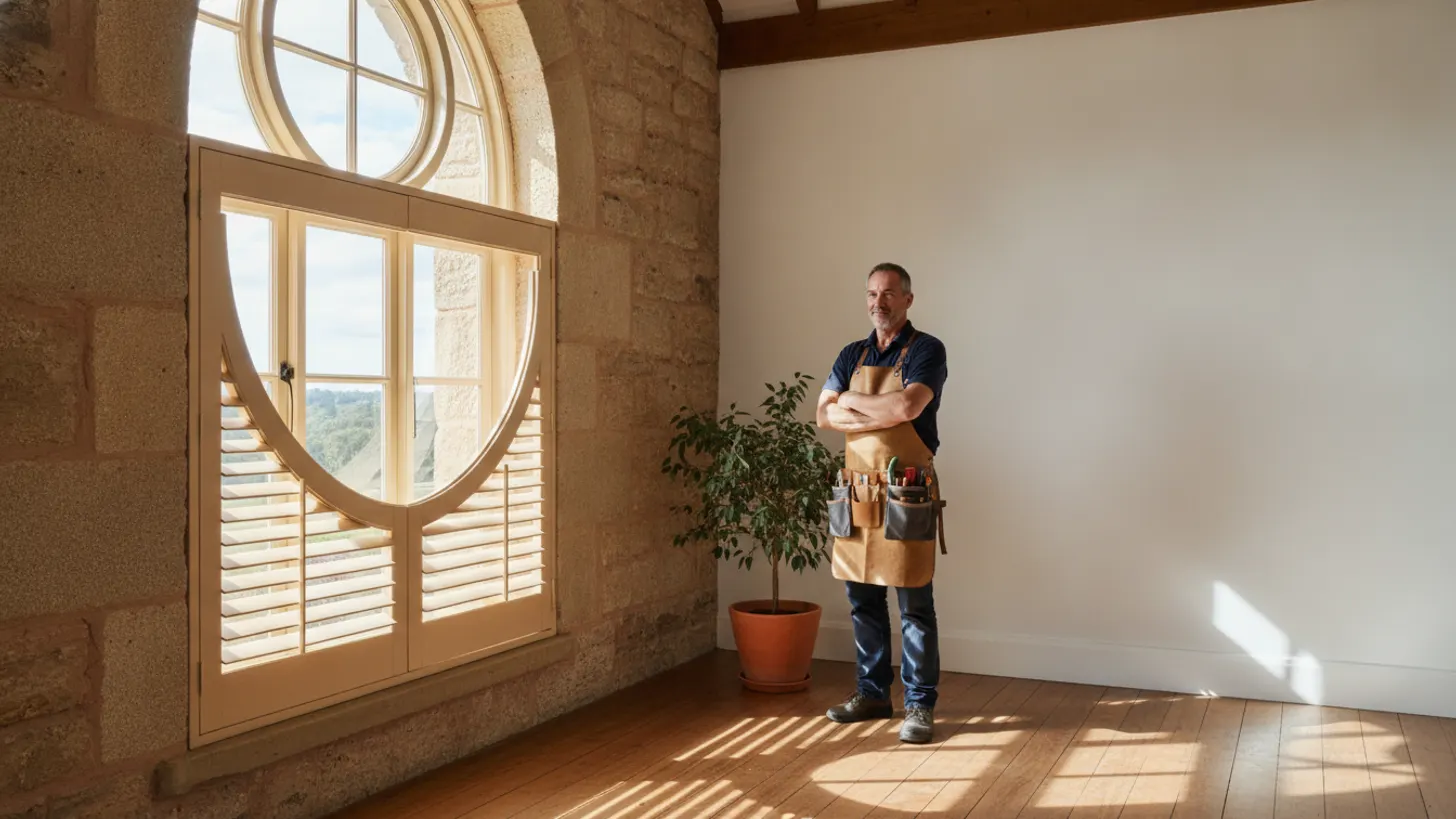
Small apartment windows, especially in older Sydney and inner-Newcastle stock, need coverings that do not eat the reveal or block the pane when open. Slim-profile roller blinds with a 32mm tube are the workhorse. Interior plantation shutters with a shallow 63mm louvre look sharp on kitchen and bathroom windows and pass most strata style rules. Read our Newcastle window treatments guide for coastal-specific advice.
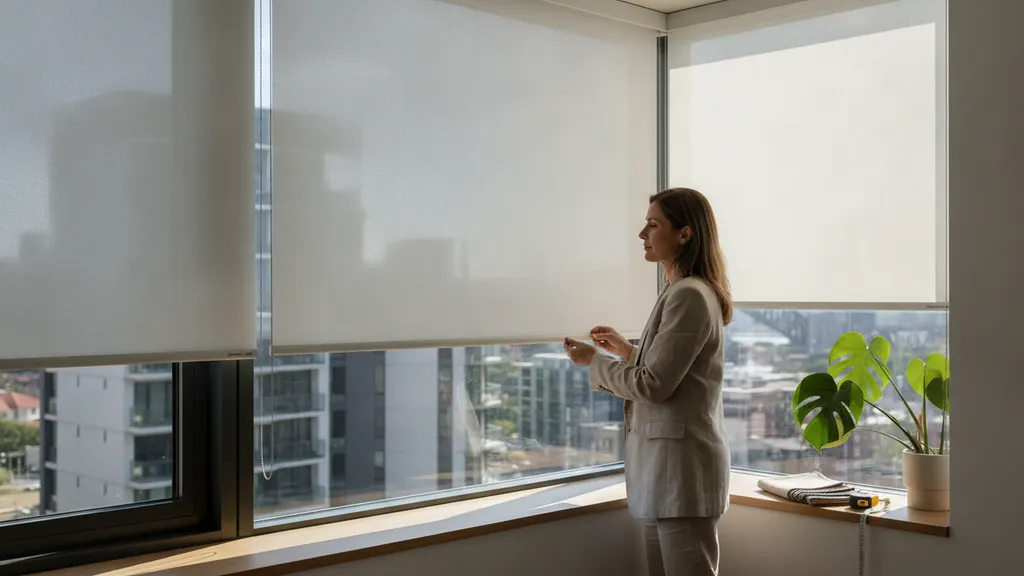
Apartment blinds Australia strata schedules often list acceptable colours, and neutral cream or white sits inside almost every scheme. Cellular honeycomb blinds are the underrated pick for tight windows because the fabric folds flat into a 25mm stack. They also improve R-value modestly. The Sustainability Victoria energy efficiency library covers cellular blind performance in detail. For studio apartments, matching the covering to the wall paint reduces visual clutter and helps the room read larger.
Renters in strata schemes have narrower options because they need both landlord and owners corporation permission. Our guide to window coverings for rental properties covers the two-step approval path. If you are unsure whether a product will pass, we measure and quote every NSW job in person and can flag likely strata objections before you order.
Frequently asked questions
Do I need strata approval to install roller blinds in my NSW apartment?
Yes, if the roller blind is visible from common property or the exterior of the building. Under the NSW Strata Schemes Management Act 2015, any alteration to the external appearance of a lot requires written owners corporation approval. That includes the backing colour, the valance, and any pelmet visible from outside. Interior-only elements like the front fabric and bracket usually do not need approval. The safest path is to submit a one-page proposal with a colour sample and product spec. The Your Home Australian Government guide lists window coverings as external-facing thermal assets, and your strata schedule will list acceptable colours.
Which apartment blinds get approved fastest by strata committees?
Blockout roller blinds with a white or cream external backing get the fastest approval, followed by interior-mounted plantation shutters and dual rollers with matching backings. Committees favour products with predictable uniform appearance because they preserve the building facade. Vertical blinds and coloured Venetians see the highest rejection rate. Submit a colour sample, brochure image, and a photo of the intended mounting when you request approval. Most schemes reply within a few weeks. In older Sydney buildings with a heritage overlay, expect an extra step where the owners corporation checks the covering against the conservation plan before signing off.
Can I install motorised blinds in my apartment without strata approval?
Usually yes, as long as the entire installation sits inside your lot, uses battery power, and touches no common wall, cable, or bracket. Apartment blinds Australia strata by-laws focus on external appearance and structural change. Battery-driven retrofit motors bypass both because they need no wiring. Hardwired 240V installations that penetrate common cavities do need approval because the electrical work involves common property. Solar chargers on the exterior of the glass are a grey area, so ask the strata manager first. Recent Canstar Blue household research shows battery motors are the dominant retrofit choice.
What window treatments suit small apartment windows in Australia?
Slim-profile roller blinds with a 32mm tube, cellular honeycomb blinds that fold to a 25mm stack, and interior plantation shutters with a 63mm louvre all preserve reveal depth on small windows. For apartment blinds Australia strata schemes, cellular fabric in a neutral shade also passes visual uniformity checks. Cellular blinds improve R-value modestly, which matters on single-glazed apartments common in older stock. Matching the covering to the wall paint reduces visual clutter and helps a compact room read larger. Avoid deep pelmets and heavy Roman blinds on windows narrower than 900mm because they crowd the pane.
Does the owners corporation have to give a reason if my blind request is rejected?
Yes. Under the Strata Schemes Management Act 2015, any refusal must be reasonable and the resolution should be recorded in meeting minutes. If your request is knocked back, you can request the written reason via your strata manager. Common grounds are non-conforming colour, visible mechanism, or a pelmet that projects beyond the reveal line. You can then submit a revised proposal or, if the refusal was unreasonable, apply to the NSW Civil and Administrative Tribunal for review. The NSW Civil and Administrative Tribunal publishes guidance on applying for review of unreasonable strata decisions, including the evidence your application will need.
Are tenants allowed to install blinds in a strata apartment?
Tenants need two approvals: from the landlord under their tenancy agreement, and from the owners corporation under the by-laws. For tenants, apartment blinds Australia strata approval is a two-step process where the landlord usually applies to the owners corporation on the tenant behalf. NSW Fair Trading advises both owners and tenants to obtain written strata approval before installing any covering visible from common property. Portable tension-mounted blinds that leave no fixings behind rarely need strata approval, but always confirm with the strata manager.