Bedroom Blinds · 15 min read
Kids bedroom blinds Australia: safe and practical NSW window treatments
Chris & Campbell · 4 September 2026
How safe are the kids bedroom blinds Australia parents can actually trust? The ACCC recorded three child fatalities from blind cord entanglement between 2010 and 2020, which forced the 2014 mandatory standard revision. The fix is straightforward: cordless or motorised operation, 95 percent blackout for daytime naps, and fabrics that survive sticky fingers. Chris and Campbell measure and quote every room across the Riverina, so here is exactly what they specify when a child sleeps in the room.
Australian safety standards for kids bedroom blinds Australia
Australian law is clear on cords near children. The ACCC 2014 mandatory standard (Consumer Protection Notice No. 14, Schedule 2) prohibits any accessible looped cord below 1.6 metres in rooms used by children under 18 months. The rule exists because at least three child fatalities from blind cord entanglement were recorded in Australia between 2010 and 2020, and further non-fatal strangulation incidents were reported to the ACCC during the same period. The standard places the compliance obligation on the retailer or installer, not on the buyer: if a blind with an accessible looped cord is sold or installed into a room used by children under 18 months, the supply chain carries the legal responsibility under Australian Consumer Law. A landlord who retains a pre-2014 corded blind in a property later rented by a family with young children faces direct liability, not merely a building code breach.
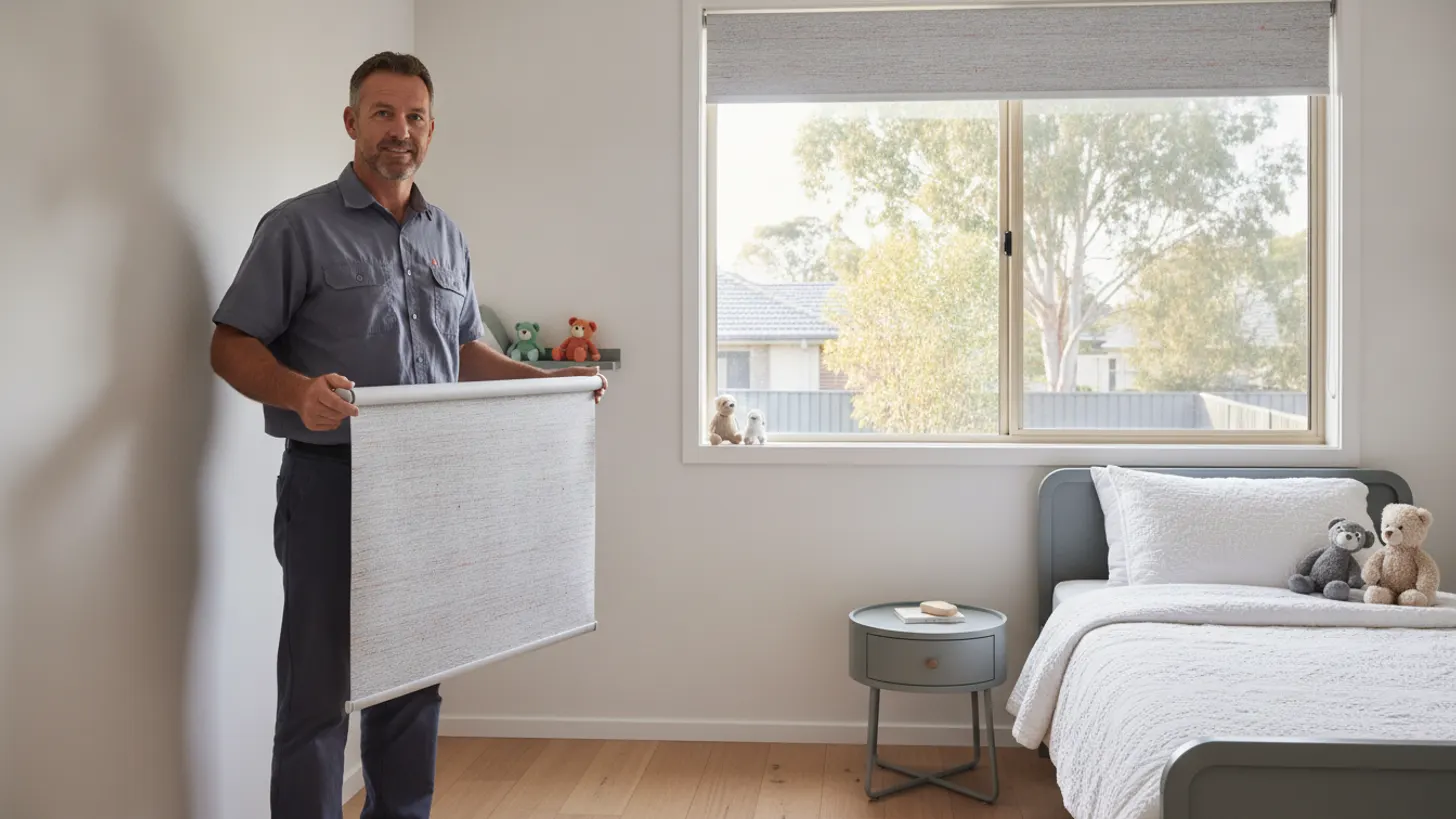
When Chris and Campbell measure and quote a bedroom in Temora, Wagga, or Griffith, they default to cordless operation for any window a cot, bed, or piece of furniture can reach. The mandatory standard is a legal minimum, not a target. Compliant kids bedroom blinds Australia specifiers still meet a mixed picture in older rentals and hand-me-down installations: continuous-loop chains on rollers, spliced cords on Roman blinds, and old venetians without cord cleats. Any of those need replacing before a child moves into the room.
In 2022, Chris and Campbell replaced every blind in a six-window Wagga Wagga rental after a property manager flagged a looped chain sitting 900 millimetres off the floor in the child's bedroom. The existing rollers were pre-2014 stock that had never been upgraded. The retrofit cost the landlord 1,800 dollars across six windows. A cordless fit-out at the original installation would have cost roughly 400 dollars more. That gap, and the question of who bears the cost of non-compliance, is something Chris and Campbell raise at every quote in a property with young children.
For a rental fit-out, the Standards Australia AS/NZS 4930 corded window covering standard mark on the packaging is the fastest visual check. If a blind carries the mark and the operating cord is either eliminated (spring or motorised) or permanently tensioned to the wall, it is compliant.
Cordless vs motorised kids bedroom blinds Australia for safety and cost
Both cordless and motorised operation eliminate the accessible loop the ACCC standard targets, so both are legally compliant. The trade-off is cost, convenience, and battery maintenance. Cordless spring-loaded rollers are usually 20 to 30 percent cheaper than motorised; motorised units add roughly 200 to 400 dollars per window per the Canstar Blue 2024 blinds review.
Motorised suits nurseries and toddler rooms because parents can raise and lower blinds without opening the door mid-nap. Rechargeable lithium tubes now last 12 to 18 months per charge with a small solar panel on the window, which cuts out the ladder maintenance older motors demanded. Kids bedroom blinds Australia parents choose for pre-schoolers often shift back to spring-loaded cordless rollers once the child can reach the wand or app themselves. Our motorised blinds Australia guide walks through the app-only control mode most parents settle on.
A middle path: cordless downstairs plus one motorised blackout blind in the primary sleep window. That covers the daytime-nap requirement without motorising every window in the house.
Blackout levels for kids bedroom blinds Australia and healthy sleep
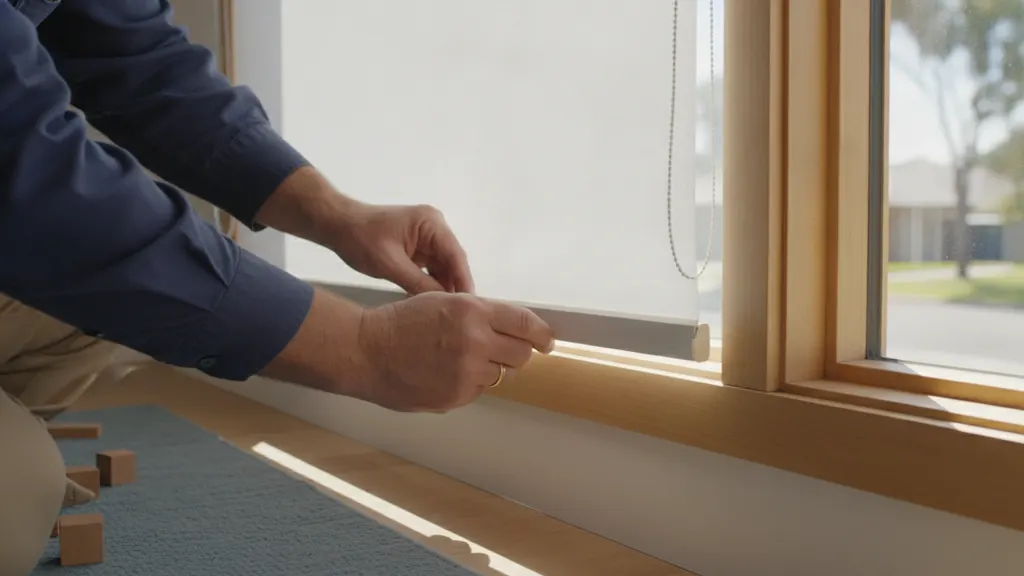
Kids bedroom blinds Australia specifications for a sleep window should target 95 to 100 percent light block. The Royal Children's Hospital Melbourne guidelines set daily sleep at 12 to 16 hours for infants, 11 to 14 for toddlers, and 10 to 13 for 3 to 5 year olds, so daytime naps are a clinical requirement until at least school age. Peer-reviewed paediatric sleep research shows that even low-level light exposure during daytime rest suppresses melatonin production and reduces total sleep time in children under five, because developing circadian systems are more sensitive to light cues than adult ones. For a west-facing bedroom in Wagga or Griffith, afternoon solar angles in a Riverina summer can push light through the side reveals of an inside-mount roller, which is why outside-mount channels or a secondary blockout curtain are worth the additional investment.
| Fabric type | Approximate light blocked |
|---|---|
| Sunscreen (10% openness) | 30% |
| Translucent roller | 60% |
| Blockout roller | 95% |
| Blockout roller with side channels | 99% |
NSW daylight is bright. Bureau of Meteorology climate data records around 14 hours of daylight in a Riverina summer, and a west-facing window in Wagga can push a child's bedroom past 30 degrees in the afternoon. A block-out fabric on a roller blind stops 95 percent of visible light, but the sides of the reveal still bleed daylight. Fitting the blind on outside-mount channels or adding a secondary blockout curtain closes the gap to near 100 percent. The energy.gov.au keeping cool guide notes that blackout window coverings can reduce cooling load by 10 to 25 percent depending on orientation.
Durable fabrics and finishes for kids bedroom blinds Australia
Kids bedroom blinds Australia manufacturers use woven polyester or acrylic-coated fabrics for rollers, painted aluminium slats for venetians, and PVC or ABS panels for shutters. All three wipe clean with a damp microfibre and survive crayon, jam, and the occasional tennis ball. Natural weaves stain permanently and grow mould in humid rooms; save those for a formal living room.
| Material | Wipe-clean | Impact resistance | Blackout rating |
|---|---|---|---|
| Woven polyester roller | Excellent | Good | 95% |
| Painted aluminium venetian | Excellent | Very good | 75% |
| PVC or ABS shutter panel | Excellent | Excellent | 80% |
| Painted timber shutter | Good | Fair | 80% |
| Linen or cotton weave | Poor | Poor | 30% |
Painted timber shutters look premium but chip when a toddler swings on the panels. Faux-timber PVC (basswood substitutes) copies the look at roughly 40 percent lower cost and stands up to knocks. For roller fabrics, Sustainability Victoria's window treatments guide notes that fabrics rated for GreenGuard low-VOC emissions are preferable in sleeping rooms because they off-gas fewer solvents. CSIRO indoor air-quality research supports the same principle: choose finished surfaces that pass low-VOC criteria for any room a child sleeps in overnight.
Balancing fun design and practical choices in a child's room
Fun and safety are not competing priorities in a child's room. NSW suppliers stock blockout roller fabrics in more than a hundred standard colours, and a 95-percent blockout roller with a printed pelmet clears every ACCC cord-safety rule. Swapping a pelmet when the child outgrows a theme costs around 60 dollars; replacing the blind itself costs 600.
Consider layering. A block-out roller with a linen-look sheer overlay softens the daytime look while the child is at kindergarten, and drops down for naps. A double roller cassette (one sunscreen, one blockout) achieves the same in a single mechanism. Our double roller blinds Australia guide walks through the day-night mechanics. For families renovating a Temora, Wagga, or Griffith home, our Temora window treatments guide covers the extreme-heat factor that pushes fabric choice for the whole house.
Keep the operating hardware boring. Adult-height keypads, remotes docked in a wall cradle, and app-only control modes remove the toy factor from a motorised system. Kids bedroom blinds Australia stock lists at major retailers now include child-lock modes on most branded motor tubes, which is worth requesting at the quote stage.
Frequently asked questions
Are cordless blinds required by law in kids bedrooms in Australia?
Yes and no. The ACCC 2014 mandatory standard for internal window coverings requires that any accessible looped cord below 1.6 metres in a room used by children under 18 months must be eliminated or tensioned. In practice the law does not force you to buy cordless blinds, but it forces the retailer or installer to make the cord safe if the blind has one. Cordless or motorised operation is the simplest guarantee. The Standards Australia AS/NZS 4930 safety mark on the packaging is the fastest visual check when buying stock rollers or venetians for a rental fit-out.
Do motorised blinds still need a remote for child safety?
Motorised blinds are legally cordless if the operating mechanism is a hardwired switch, a wall-mounted keypad, or a wireless remote that stays out of reach. A remote left on a low shelf becomes a chewing hazard for a toddler and a choking risk for the button battery inside. Australia's mandatory button-battery standard now requires child-resistant compartments on any product sold here. Wall keypads at adult height, or app-only control on the parent's phone, remove both risks. The Canstar Blue 2024 blinds review notes battery removal by a child is the failure mode installers see most often.
How much blackout do children need for daytime naps in NSW?
For daytime naps, aim for 95 to 100 percent light block on the sleep window. The Royal Children's Hospital Melbourne sleep guidelines recommend 10 to 13 hours of daily sleep for 3 to 5 year olds and 11 to 14 hours for toddlers, so daytime sleep is a clinical requirement, not a nice-to-have. NSW summer daylight from Bureau of Meteorology climate data reaches roughly 14 hours across the Riverina in December and January. A blockout roller fabric on inside mount stops about 95 percent of visible light; add side channels or a blackout curtain to reach near total darkness.
Which blind fabrics survive stains, crayon, and rough handling best?
Woven polyester and acrylic-coated roller fabrics wipe clean with a damp microfibre and resist most permanent stains, including biro and jam. Painted aluminium venetians and PVC or ABS shutter panels do the same and handle knocks from thrown toys. Avoid unbacked linen, jute, and cotton in a child's room; they mark permanently and can grow mould in humid coastal or inland-summer rooms. The Your Home windows guide and our energy-efficient window coverings post both note that heavier, close-woven fabrics also perform better on the thermal insulation front.
Can I install kids bedroom blinds Australia families use in a rental?
Yes, with your landlord's written consent for any drilling. NSW rental law under the Residential Tenancies Act 2010 allows a tenant to install minor modifications with permission, and blind installation is generally treated as minor. Tension-mount cordless rollers avoid brackets altogether and suit strata apartments. For a longer tenancy, ask the landlord to fund the cord-safe upgrade; Master Builders Australia rental compliance briefings note that any pre-2014 blind is a landlord liability if it fails to meet the mandatory standard. Motorised units with rechargeable batteries typically install without wiring.
What is the safest way to fit blinds if the cot sits under the window?
Move the cot first if you can. When the room layout forces the cot under the window, kids bedroom blinds Australia installers specify cordless spring-loaded rollers with no accessible chain or cord, or motorised units with app-only control. Fit the blind to outside mount so the fabric drop clears the mattress by at least 300 millimetres, and remove any curtain tie-back cords or draw wands from the sleep zone. The Australian Government's Your Home shading guidance also suggests external shading like awnings or zipscreens on west-facing windows to reduce the interior heat load a cot experiences during an NSW summer afternoon.