Window Shutters · 17 min read
Window shutters installation Australia: measuring and fitting guide
Chris & Campbell · 14 October 2026
"Do I measure the window or the hole?" That question comes up on nearly every quote visit, and getting it wrong is the fastest way to ruin a window shutters installation Australia homeowners otherwise love. Measure the opening, in three places, and record the smallest figure. Then check reveal depth, architrave width and handle clearance before anyone picks a frame. On Riverina jobs those checks happen before a price is written.
Window shutters installation Australia: how to measure your openings
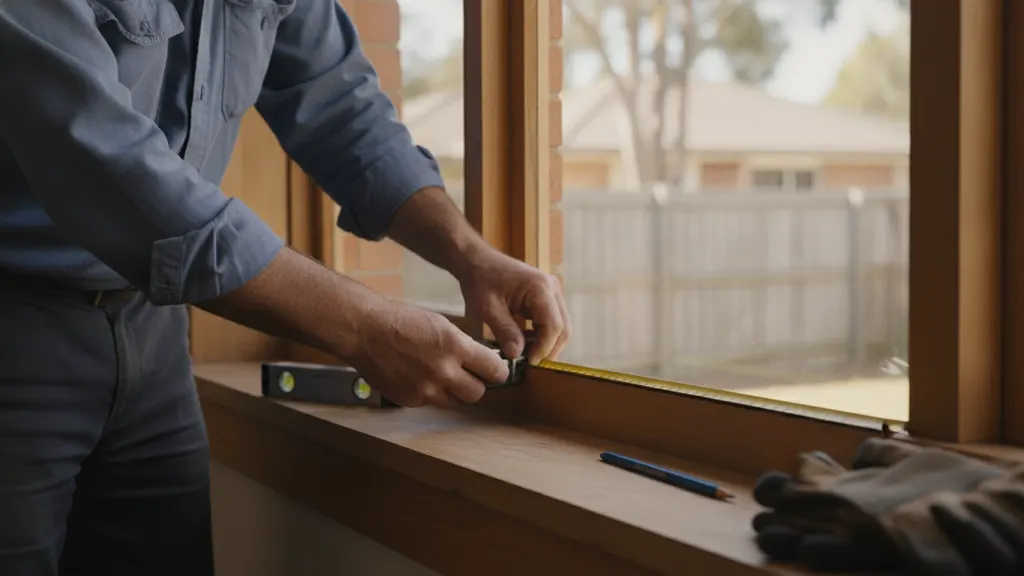
Measure the opening, not the glass. Take the width at the top, middle and bottom of the reveal, take the drop at the left, centre and right, then work from the smallest figure in each set. Six numbers per window, recorded in millimetres, taken with a steel tape.
Houses move. In older Riverina cottages and in plenty of newer brick veneer builds, a reveal runs a few millimetres out of parallel from top to bottom, and that difference lands as a light gap or a panel that scrapes. Check the diagonals as well: if the two corner-to-corner measurements differ, the opening is out of square and the frame choice has to allow for it. Your Home, the Australian Government guide to sustainable house design, makes the same point about assessing an opening and its surrounds before settling on a covering, and the Australian Window Association recommends checking window openings, reveals and surrounding finishes before selecting an installation method.
Write down what sits inside the opening too: winder handles, window locks, flyscreen tracks, sill slope, tile return, and whether the architrave is wide enough to carry a face-fitted frame. A measurement sheet without those notes is half a sheet. If you hand your own figures to a supplier you usually own any error, which is why a window shutters installation Australia wide is normally priced off a check measure done by the installer rather than off a homeowner tape.
We got this wrong once. In 2022, a Wagga job went to the workshop off the measurements in our own file without a fresh check on site, and the first panel came back with an 11 mm gap down one side where a bowed reveal had moved since the original visit. We remade the frame at our own cost and changed the process: every opening gets measured again on the day of fitting, no matter how straightforward the file looks. That is the kind of error a careful check measure is meant to catch, and it is why we do not skip the step even on repeat clients.
There is a full breakdown of this topic in Kitchen window shutters Australia: ventilation and cleaning guide.
We cover the details separately in Bushfire shutters Australia: BAL ratings and NSW compliance guide.
We cover the details separately in Custom shaped shutters Australia: unusual NSW window solutions.
We cover the details separately in Window shutters cost Australia: pricing factors for NSW renovations.
Window shutters installation Australia mounting methods: reveal fit, face fit and recess fit
A reveal fit sets the frame inside the window opening. A face fit mounts the frame on the wall or architrave in front of the opening. A recess fit is the deeper version of a reveal fit, with panels sitting back far enough to clear handles. Depth decides which one you can use.
Depth is the gate. A reveal fit needs the opening to take the frame, plus the closed panel, plus clearance for anything that moves inside it. Shallow reveals, tiled returns in bathrooms and kitchens, and aluminium sliders with a wide track often leave no usable depth, so the frame goes on the face instead. Standards Australia publishes the window and glazing standards Australian installers work to, including AS 2047 for windows in buildings and AS 1288 for glass, and those documents are the reason a careful installer will not pack a frame into an opening that cannot carry it.
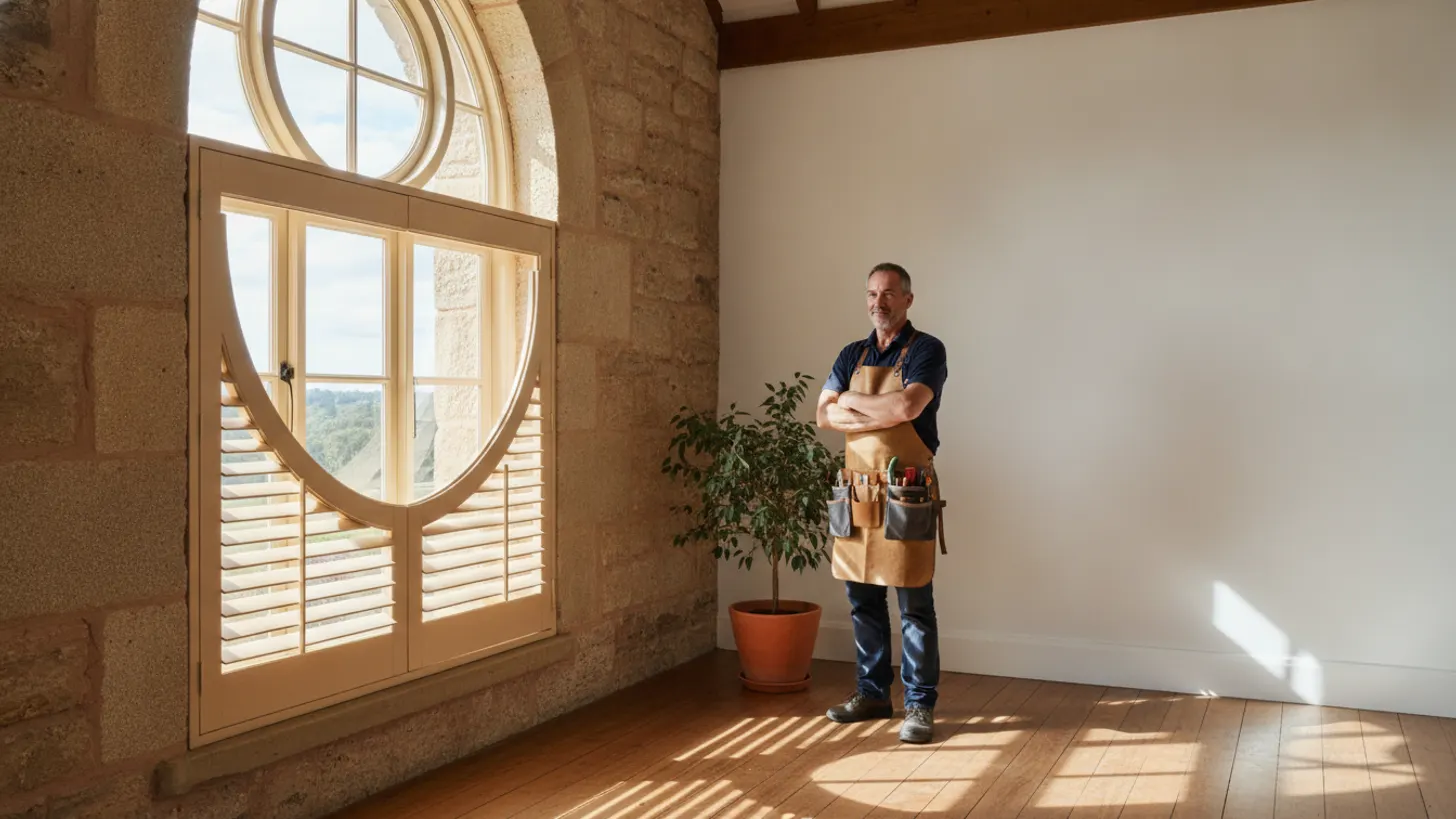
Out-of-square openings change the answer again. A face fit hides a discrepancy of several millimetres behind the frame, while a reveal fit shows the same error as a wedge of light down one stile. Arched and raked openings need a template rather than a tape, and the guide to arched window shutters for NSW homes covers that work. For a planned window shutters installation Australia homeowners should expect a fit method nominated per opening, not one method applied to the whole house.
Window shutters installation Australia: frames, panels and light gaps
Blade width, frame profile and panel layout decide how a finished shutter looks and works. Wider blades mean fewer blades, a cleaner view line and less edge to dust. More panels in one opening mean more stiles, more light gaps and a deeper stack when panels fold back.
Blade count is arithmetic rather than opinion. The standard blades sold in Australia are 47 mm, 63 mm, 89 mm and 114 mm, and dividing a panel height by the nominal blade width tells you roughly how many blades you will be looking at and how many overlap lines can leak light.
Light gaps come from four places: the frame-to-reveal join, the point where two stiles meet, the blade overlap, and the tilt rod style. A hidden rear tilt rod closes tighter than a centre rod on most ranges, which matters in bedrooms and media rooms. Material behaviour matters as well, and the comparison of basswood, PVC and aluminium shutter materials sets out how each one handles heat and moisture. The Your Home shading chapter explains why blocking sun at the glass beats dealing with it inside the room, and CSIRO building science research covers the thermal behaviour of the glazing your shutter sits over.
Panel layout is a traffic decision as much as a style one. Hinged panels need swing room, bi-folds need a stack allowance at one or both ends, and sliding or bypass tracks suit wide openings where nothing can swing into the room. Doors are their own problem, handled in the guide to French door shutters. For any window shutters installation Australia homeowners plan around existing furniture, measure the stack before the frame type is locked in.
Walls, architraves and handles: what an installer checks before fitting
Before a single screw goes in, the installer needs to know what the wall is made of, how wide the architrave is, and what moves inside the opening. Brick veneer, double brick, timber stud, steel stud, fibre cement and tiled reveals each take a different fixing and a different drill.
Fixings follow the substrate. Brick veneer takes a masonry anchor into the brick rather than into plasterboard, timber and steel studs need the stud found rather than guessed, and tiled reveals need a packer plan so the frame pulls up straight without cracking anything. Master Builders Australia, the national body for licensed builders, is a useful reference on written scopes and trade practice if you are coordinating shutters alongside other renovation work.
The moving parts matter as much as the wall. Winder handles, window locks, sliding sashes, flyscreens, security screens, curtain tracks, cornice returns and power points all sit in the way of something. On doors and low-level glass there is a compliance step too: NCC 2022 requires safety glazing in specified hazardous locations, including certain doors and low-level glazing areas, and the Australian Glass and Glazing Association publishes guidance on glass selection, glazing safety and installation practices that glaziers work from. A window shutters installation Australia wide should be sequenced after glazing and painting, which is why the guide to planning window treatments for a new build in NSW puts the measure and quote visit late in the build program.
Window shutters installation Australia: what a professional quote should include
A quote you can compare is itemised. It names the product range and blade width, the frame profile per opening, the fit method per opening, hardware colour, who performs the check measure, installation labour, waste removal, lead time, warranty terms and payment stages.
| Quote line item | What to look for | Why it matters |
|---|---|---|
| Check measure | Done by the installer, in writing, before manufacture | Shifts measurement risk off you |
| Panels and frames per opening | Panel count, blade width and frame profile named room by room | Lets you compare like with like |
| Fit method per opening | Reveal, face or recess nominated for each window | Light gaps and handle clearance depend on it |
| Hardware and finish | Hinge and tilt rod style, colour, paint or stain code | Mismatched hardware is the usual callback |
| Installation and make good | Fixings, packing, sealing, removal of old coverings | Covers the work after delivery day |
| Lead time and warranty | Dates, payment stages, product and workmanship cover | Written terms you can hold someone to |
Two things to watch. First, a window shutters installation Australia quote that gives one lump sum for a whole house hides which openings are expensive and which are simple, so ask for per-opening pricing. Second, check who carries the measurement risk, because a quote built on your figures rather than a check measure usually leaves the remake with you. Consumer research from Canstar Blue on comparing home improvement quotes is worth reading first, and the household pages at energy.gov.au set out the heat-flow case for coverings that close properly.
A written quote should also state deposit and balance terms, the warranty on the product and on the workmanship, variation pricing if an opening turns out different at check measure, and what happens to the old blinds. Chris and Campbell measure and quote across Temora, Wagga and Griffith, and every window shutters installation Australia homeowners book through the Riverina workshop gets itemised written pricing before anything is ordered.
Frequently asked questions
How do I measure a window for shutters myself?
Use a steel tape and measure the opening, not the glass. Take the width at the top, middle and bottom of the reveal, then the drop at the left, centre and right, and work from the smallest figure in each set. Measure both diagonals too, because a difference tells you the opening is out of square. Note the reveal depth and anything sitting inside it: handles, locks, flyscreen tracks and sill slope. Sustainability Victoria publishes background guidance on choosing window coverings. Treat your own figures as a guide, since a check measure by the installer is what a window shutters installation Australia order is built from.
What is the difference between a recess fit and a face fit shutter?
A recess or reveal fit puts the frame inside the window opening, so the shutter sits back in the wall and leaves the architrave visible. A face fit mounts the frame on the wall or architrave in front of the opening, which suits shallow reveals, tiled returns and openings that are out of square. Recess fitting needs depth, enough to clear winder handles, locks and flyscreens. Face fitting needs a flat, solid surface and enough architrave width to carry the frame. Standards Australia publishes the window and glazing standards installers build to, including AS 1288 for glass in buildings.
How much does shutter installation cost in Australia?
Cost tracks the number of openings, the blade width, the frame profile, the material and the fit method, so any figure quoted without a measure is a guess. Ask for a window shutters installation Australia quote that is itemised: panels and frames per opening, hardware, check measure, installation labour, waste removal and warranty. Compare the line items rather than the total, because a cheaper total often hides a cheaper frame or a fit method that leaves a wider light gap. The NSW plantation shutters cost guide and Canstar Blue home and garden research both explain which variables move the price.
Can shutters be installed over windows with winder handles?
Yes, with planning. Awning and casement windows with winder handles need either a recess fit deep enough for the closed panel to clear the handle, a face fit that stands the frame off the wall, or a cranked or removable handle fitted in place of the standard one. The installer measures the handle projection at full travel, not at rest, because a winder that opens fully sweeps further than it looks. Check flyscreen and security screen clearance in the same pass. Household guidance at energy.gov.au covers why keeping windows operable matters for ventilation and night cooling.
Do I need safety glass before putting shutters on a door?
Shutters do not change the glazing rules, but they draw attention to glass that was never compliant. NCC 2022 requires safety glazing in specified hazardous locations, including certain doors and low-level glazing areas, and the Australian Glass and Glazing Association publishes guidance on glass selection, glazing safety and installation practices for Australian buildings. Before any window shutters installation Australia homeowners book on a French door, a sidelight or glass close to floor level, have the glazing checked or replaced first. The Your Home glazing chapter is a plain-English starting point.
Will shutters help with heat in a Riverina summer?
Closed blades add a layer of still air at the glass and block direct sun, which cuts radiant heat gain on west and north-facing windows. How much you notice depends on orientation, glass type and how hot your part of NSW runs through summer. Bureau of Meteorology station climate data for your own town is the right figure to design against rather than a national average. Pair blade control with external shading where the budget allows, because stopping sun before it reaches the glass does more for a hot room than any internal covering can.