Bedroom Window Treatments · 10 min read
Best window treatments for bedrooms: blackout, privacy and style
Chris & Campbell · 1 June 2026
What blocks more morning light at 5am: a heavy blockout curtain or a tilt-locked plantation shutter? Customers across Temora, Wagga and Griffith ask Chris and Campbell that question on almost every quote visit. The honest answer for the best window treatments bedroom australia depends on three things: how dark you need the room at sunrise in summer, who can see in from the street after dark, and how cold the glass gets on a Riverina winter night. Layered systems beat single products on all three counts.
Why the best window treatments bedroom australia balance blackout, privacy and warmth
The bedroom is the one room in the house where the window covering has to do three different jobs at once. It has to kill morning light, stop street-level sightlines after dark, and slow heat loss through what is usually single-glazed aluminium-framed glass. One product rarely does all three at premium level, which is why layered treatments dominate this category.
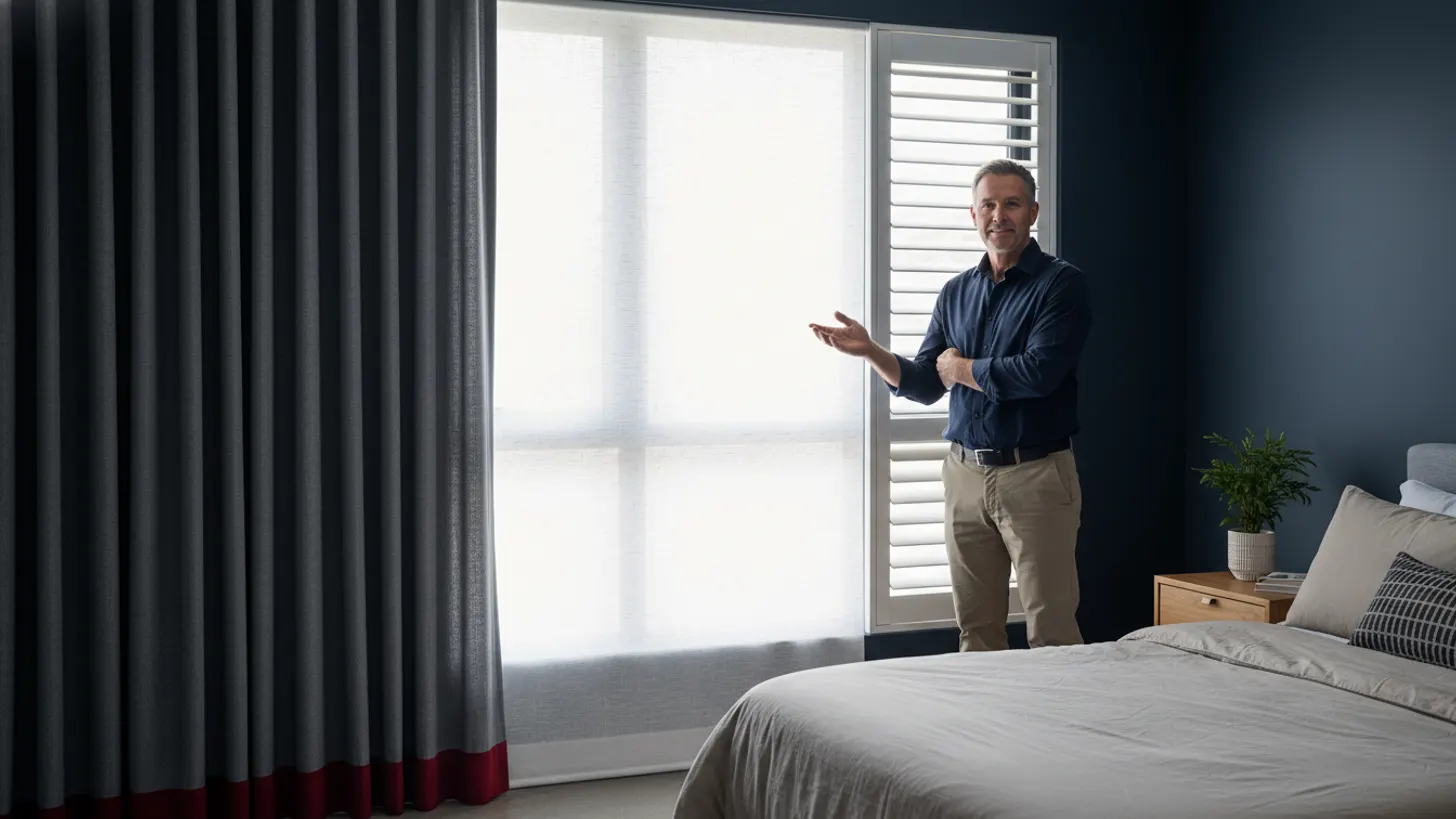
On almost every Riverina job we measure and quote, the homeowner starts by asking for blockout. What they actually need is a system: a daytime privacy layer (sheer or open louvre) plus a night-time blackout and insulation layer (lined curtain, channelled blind, or closed shutter). The Australian Bureau of Meteorology winter minimums sit below 2 degrees Celsius across Temora, Wagga and Griffith for around 60 nights per year, which puts thermal performance on equal footing with darkness for the best window treatments bedroom australia category.
The government guide at Your Home (yourhome.gov.au) glazing chapter ranks heavy lined curtains with pelmets and side channels as the most effective retrofit treatment for single glazed bedrooms, ahead of standard internal blinds. We see the same hierarchy in the field. See our deeper write-up on blockout curtains versus shutters if you want the full breakdown.
Blackout performance: what the best window treatments bedroom australia actually block
True blackout means under 1% visible light transmission with side gaps sealed. Most homeowners assume any product with the word blockout on the label hits that bar. In practice, fabric blockout only means the fabric itself is opaque. The system around the fabric controls perimeter leak.
From our measure and quote tape across the Riverina, the practical blackout ranking from worst to best is: sheer panel (around 30% blockage), light-filter roller (50%), closed plantation shutter (90%), standard tracked blockout curtain (95%), channelled blockout roller blind (99%), and a closed external roller shutter (effectively 100%).
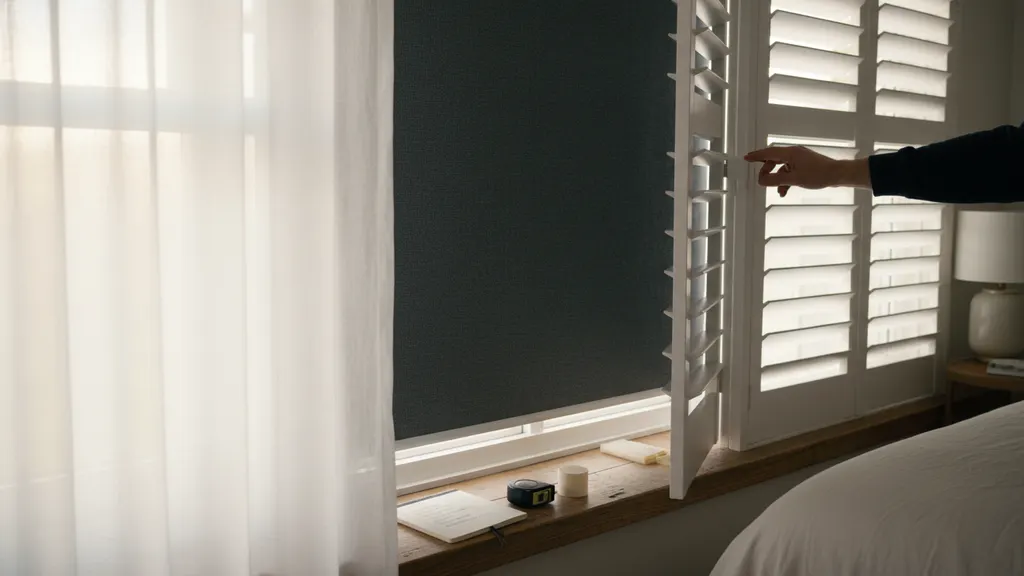
For shift workers and parents of newborns, only the bottom two products on that list deliver real 5am darkness. Consumer testing from CHOICE's blinds buying guide confirms that side-channel or wraparound rail systems are the only way to hit pure blackout with a fabric product alone. Layered systems still beat any single layer for true 5am blackness, which is what the best window treatments bedroom australia category is really about.
Privacy at night vs day: which best window treatments bedroom australia handle both
Bedroom privacy is two separate problems. Daytime privacy means you want to see out without the neighbour seeing in. Night-time privacy means lights on inside, dark outside, and full sightline reveal unless the covering is opaque. Most bedroom privacy complaints we hear about start as a night-time problem.
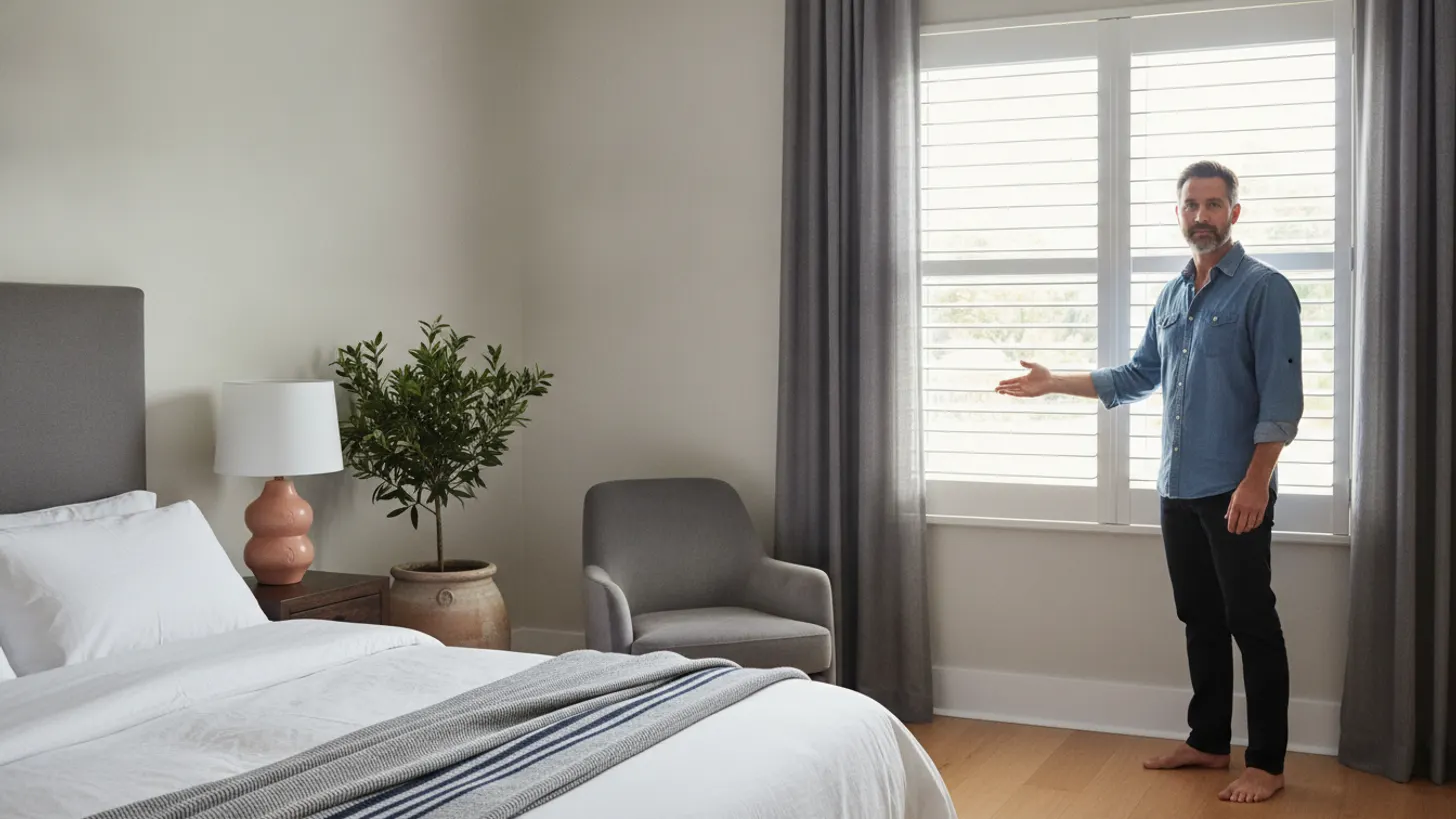
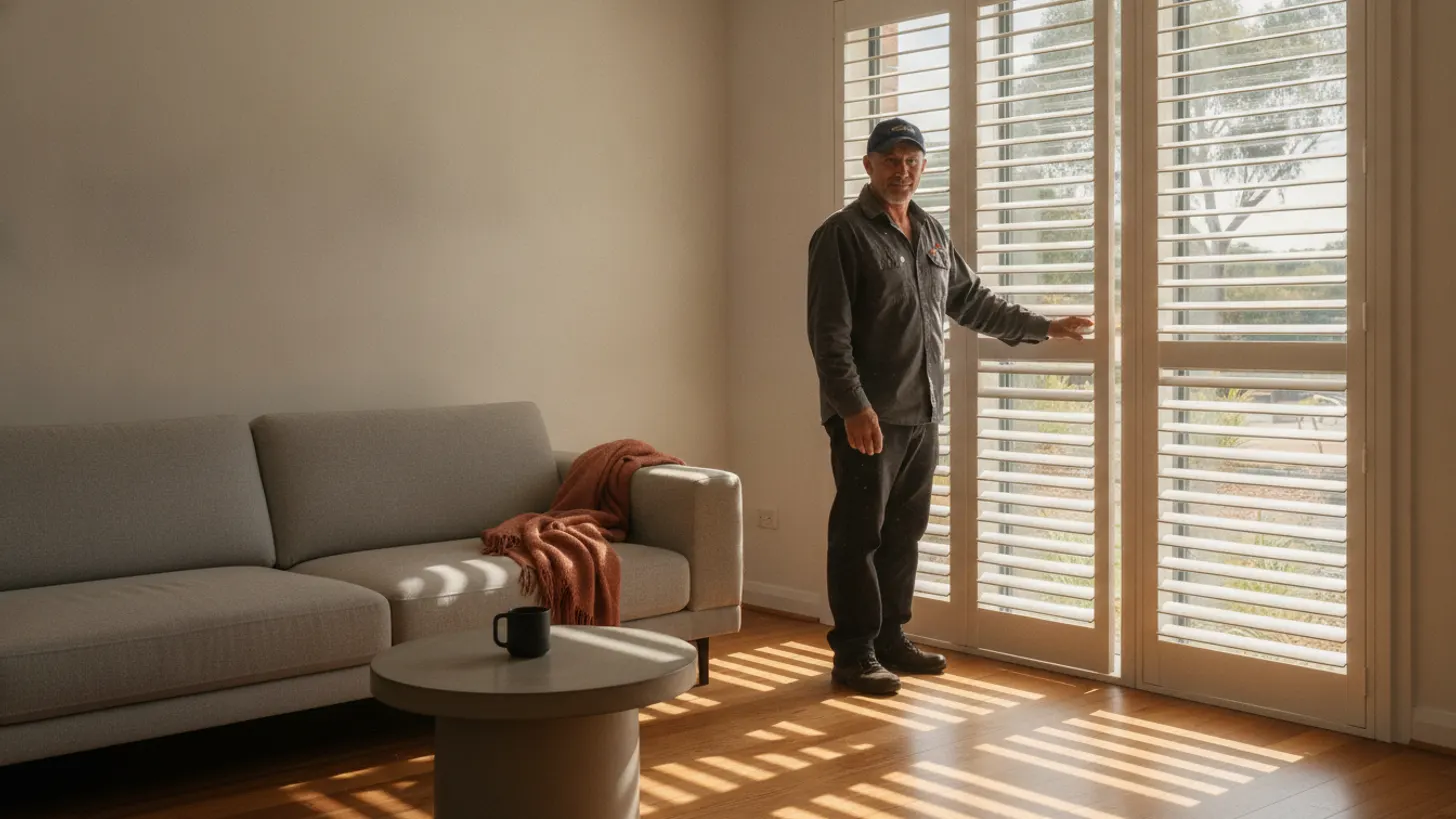
Closed plantation shutters in a 89mm or 114mm louvre size handle both directions well: angled louvres give downward viewing during the day while blocking horizontal sightline into the room, and a full close at night delivers 90 to 95% opacity with no fabric flap. Closed roller blinds in light-filter weave handle daytime privacy but glow visibly at night, which means anyone outside can see silhouette shapes inside.
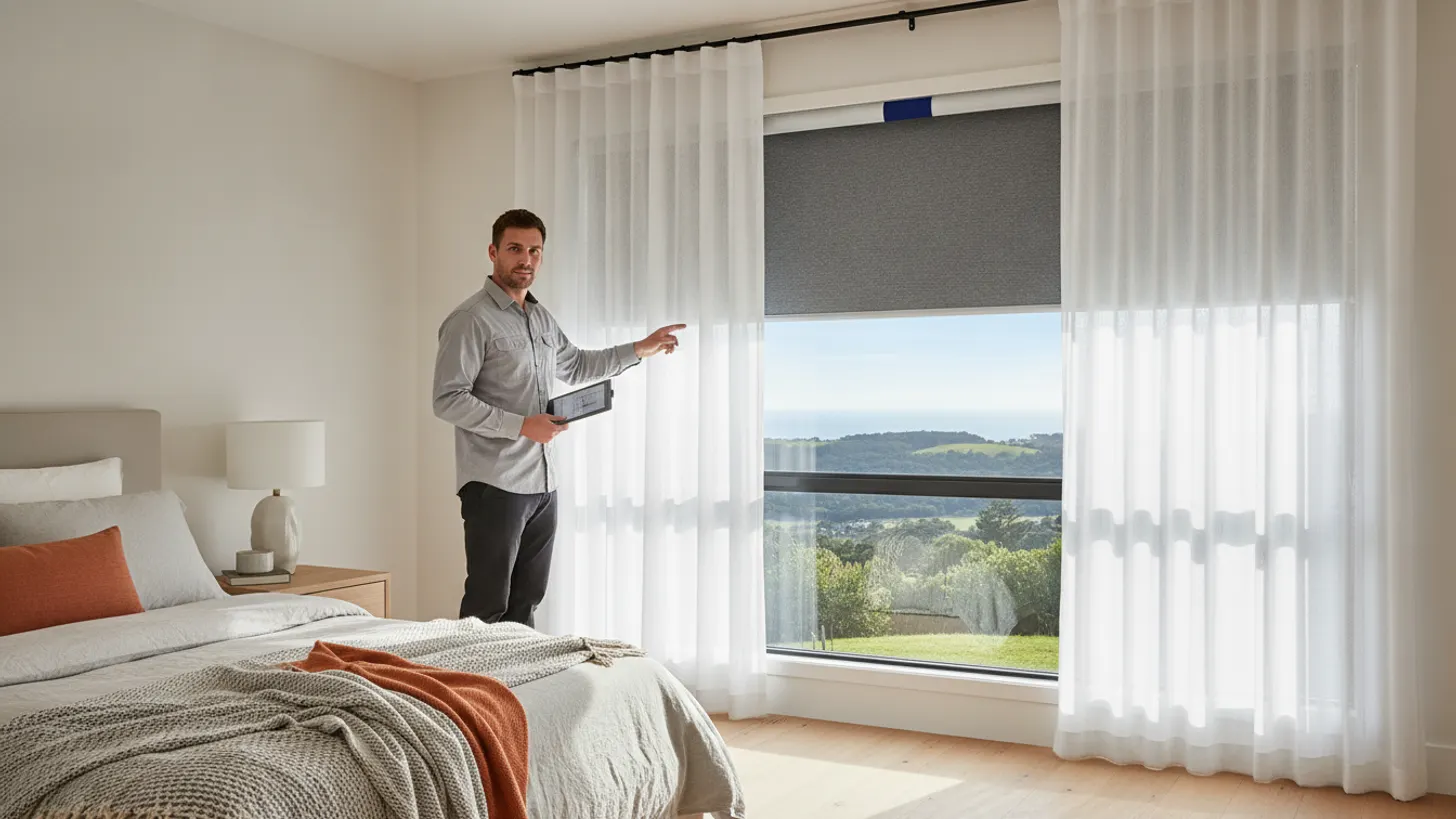
For street-facing bedrooms in tight subdivisions across Wagga and Griffith, we measure and quote shutters layered with a sheer panel for daytime softening. Shutters often top the best window treatments bedroom australia shortlists for street-facing rooms because they handle both privacy directions in a single product. For courtyard bedrooms with no overlooking neighbours, a single channelled blockout roller is often enough. The Riverina plantation shutters guide walks through the louvre size choice in more detail.
Thermal performance and bedroom energy bills
Bare single-glazed windows lose between 10 and 25% of total household heat in a NSW winter, per the Department of Climate Change energy guidance at energy.gov.au heating and cooling. Bedrooms are usually the worst offenders because they sit unoccupied and unheated overnight while the glass radiates internal heat outward.
Internal window coverings add R-value (insulation) to the assembly. Approximate winter heat loss reduction on a standard 1800x1200 single-glazed bedroom window, measured against Sustainability Victoria's home energy figures:
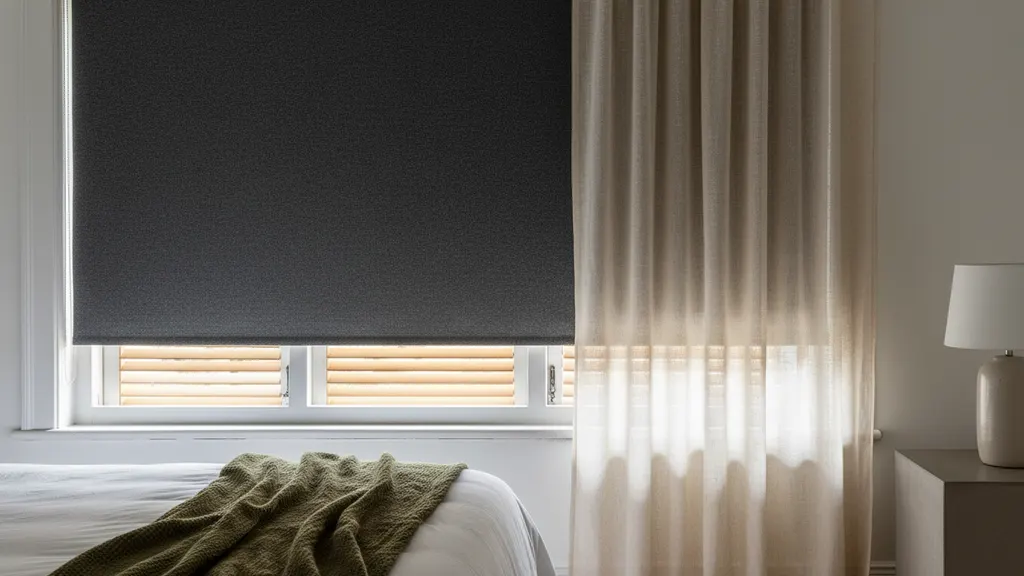
The pattern is clear: any covering beats bare glass, layered coverings beat single layer, and shutters plus a lined curtain produce the largest single jump. The Sustainability Victoria home insulation guide ranks well-fitted internal shutters as the most cost-effective retrofit for single-glazed bedrooms, ahead of secondary glazing for budget-conscious owners. Among the best window treatments bedroom australia owners install for energy reasons, shutters carry the highest return per dollar in our quoting data.
Shutters, curtains and roller blinds compared for master bedrooms
Style and function pull bedroom buyers in different directions. Curtains feel warm and traditional, shutters feel architectural and clean, roller blinds feel minimal and modern. The choice usually settles on three practical factors: how the room is used, how often the covering is opened, and how much wall space sits beside the window for stack-back.
| Treatment | Blackout | Thermal | Daytime privacy | Lifespan | Riverina price band |
|---|---|---|---|---|---|
| Plantation shutters (basswood) | 90% | High | High | 20+ years | $900 to $1600 |
| Channelled blockout roller blind | 99% | Medium | Low at night | 8 to 12 years | $600 to $1100 |
| Lined blockout curtains | 95% | High | Variable | 10 to 15 years | $400 to $700 |
| Sheer curtains (privacy layer) | 30% | Low | High day, low night | 5 to 10 years | $300 to $600 |
| External roller shutter | 100% | Highest | High | 15 to 20 years | $1800 to $3500 |
Across the master bedrooms we measure and quote in Temora and Wagga, around 6 in 10 owners pick shutters as the primary treatment and add a curtain layer for warmth. The remaining 4 in 10 pick a channelled blockout roller plus a sheer where budget is tighter. For families with cot-age children, see our breakdown of child-safe window coverings first.
The Canstar Blue 2024 window furnishings customer survey at canstarblue.com.au blinds review rates plantation shutters highest for satisfaction and longevity across all room types, with curtains close behind for bedrooms specifically. Among the best window treatments bedroom australia owners ask us to quote, shutters and blockout curtains are almost always the top two.
Child safety and the Australian Standard for blind cords
Child safety on bedroom window coverings is not optional. The mandatory standard AS/NZS 4986:2010 sets installation, cord-length and labelling rules for every corded internal window covering sold in Australia. Cordless and motorised products sit outside the rule because they have no strangulation hazard.
The ACCC product safety regulator at productsafety.gov.au corded internal window coverings records corded blinds as the leading cause of strangulation deaths among Australian children under 36 months. Every cord must be fixed to the wall with a tensioner or cleat at 1.6m height, every product must carry a permanent safety label, and every loop must be broken or secured. We install these as part of every job. The standard itself is published by Standards Australia (standards.org.au).
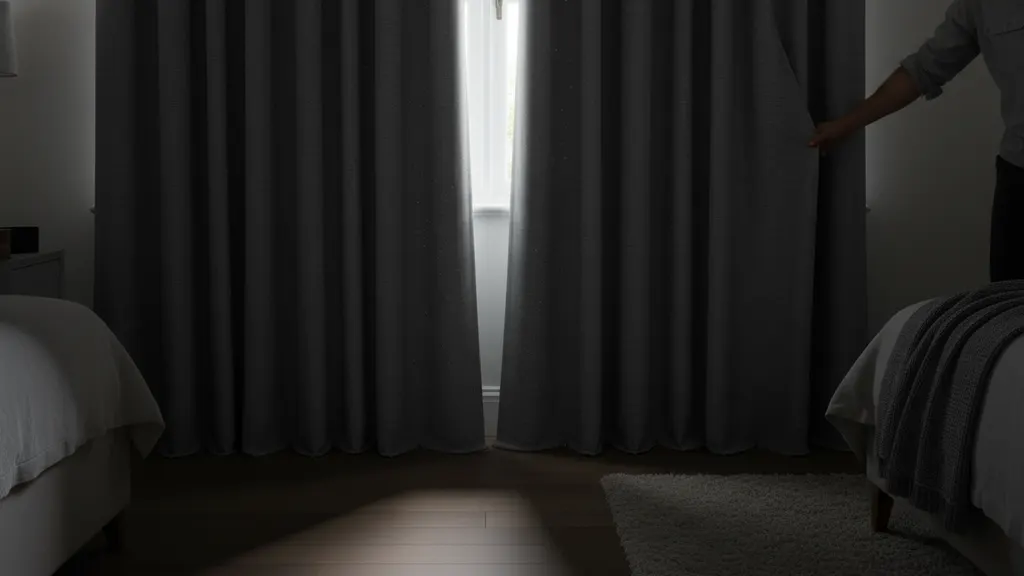
For nurseries and kids' bedrooms, we measure and quote cordless roller blinds, motorised shutters or curtains on a wand-only track by default across the Riverina. Among the best window treatments bedroom australia families with young children install, motorised plantation shutters have become the most common ask in the past 18 months because they remove cords entirely and tilt via remote.
Frequently asked questions
Are blockout curtains really 100% blackout?
Pure 100% blackout is rare without side channels. A heavy lined blockout curtain hung off a standard track will still leak light around the perimeter, particularly at the top above the pelmet and at the side gap between the fabric and the architrave. CSIRO daylight measurements show channelled blockout systems achieve around 99% transmission reduction, while standard tracked curtains usually sit between 90% and 95%. For shift workers and parents of newborns across the Riverina, we measure and quote a wraparound rail with 20cm overlap to close that gap. See the Your Home passive cooling guide at yourhome.gov.au for glazing and curtain pairing options.
What is the safest bedroom blind for children under 3?
Cordless or motorised window coverings are the safest choice in a child's bedroom. The ACCC product safety regulator records that hanging cords on blinds and curtains are the leading cause of strangulation deaths among Australian children under 36 months, and the mandatory standard AS 4986 requires all corded products to be installed with a tensioner or cleat. We install cordless roller blinds and battery-powered shutters in nurseries by default across our Wagga and Griffith jobs. See the ACCC corded blinds standards summary at productsafety.gov.au for the current mandatory standard and the installation checklist.
Do plantation shutters help with summer heat in Riverina bedrooms?
Yes. Closed louvres cut peak afternoon heat gain by around 30 to 40% on west-facing bedrooms. Plantation shutters create a still layer of air between the louvre face and the glass, which slows radiant transfer the way double glazing does, at a fraction of the cost. Sustainability Victoria estimates well-fitted internal shutters can lower bedroom cooling demand by up to 30% in summer. In Temora and Griffith bedrooms where afternoon glass temperatures top 50 degrees Celsius, we measure and quote shutters first, then layer a sheer behind for daytime privacy. Bureau of Meteorology summer averages are published at bom.gov.au climate records.
How much should I budget for blackout treatments in a master bedroom?
For a standard 1800mm wide master bedroom window, expect roughly $400 to $700 for a tracked blockout curtain installed, $600 to $1100 for a channelled blockout roller blind, $900 to $1600 for plantation shutters in basswood, and $1800 plus for an external roller shutter with motor. Canstar Blue 2024 consumer pricing across Australian window furnishing brands lines up with those bands. Final pricing on any Riverina job depends on width, ceiling height and motorisation. Chris and Campbell measure and quote on site so there are no surprise variations after order. Among the best window treatments bedroom australia options, shutters tend to be the highest dollar-for-lifetime value.