Window Treatments · 15 min read
Living room window treatments Australia: light, privacy, style in NSW
Chris & Campbell · 11 June 2026
What do you put on a living room window that lets in afternoon sun but keeps the street out? That is the question we get every week across Temora, Wagga and Griffith. Good living room window treatments Australia have to handle four things at once: glare, privacy, heat, and the way the room actually looks at 7pm. Here is what we measure and quote on every Riverina job, and what costs you money to get wrong.
Why living room window treatments Australia start with light, not fabric
Most Australian living rooms have one large window facing west or north. That window does three jobs at once: it dumps heat in summer, leaks heat in winter, and puts your couch on display to the footpath. Good living room window treatments Australia solve all three without making the room dark at 3pm.
Before we open a sample book on a job, we ask one question: which way does the window point? A north-facing window in Wagga gets soft winter sun you want to keep, plus harsh summer sun you want to block. A west-facing window in Griffith is a heat bomb from 2pm to 7pm in January. South-facing windows in Temora barely see direct sun and the conversation shifts to insulation and privacy.
The YourHome glazing guidance from the federal government says windows account for up to 40% of heating energy loss and up to 87% of heat gain in summer. A pane of clear glass with nothing on it is a wide-open hole in your insulation. That is why we never sell a fabric before we have walked the room, looked at the orientation, the eaves, and what the neighbours can see from their driveway.
Five materials we fit on living room window treatments Australia in NSW
We measure and quote five options on most living room jobs: plantation shutters, roller blinds (block-out and sunscreen), honeycomb cell blinds, S-fold sheer curtains, and zipscreen outdoor blinds. Each one has a job it does better than the others. Most living rooms end up with two of them layered, not one alone.
Plantation shutters
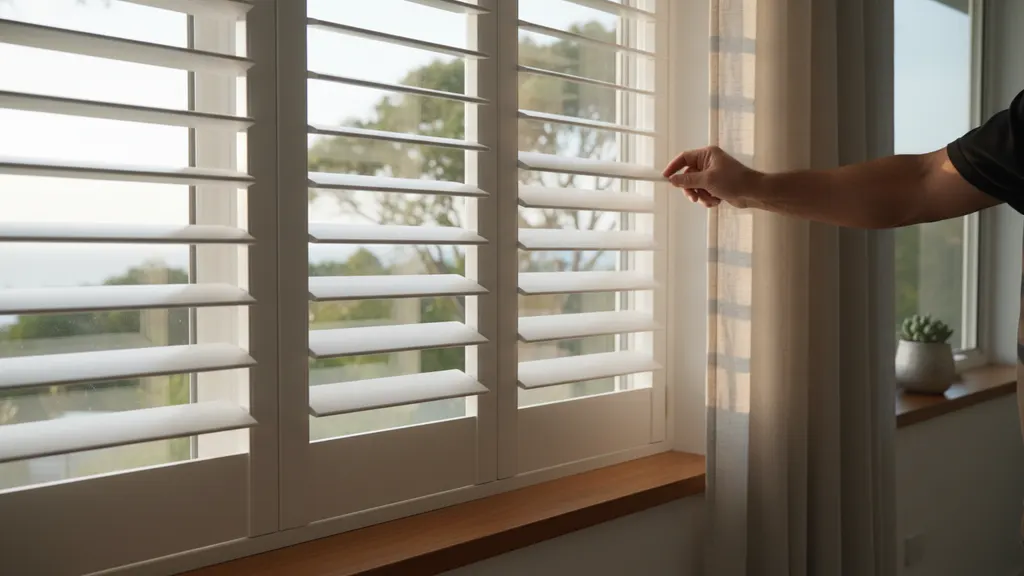
Solid-louvre shutters give you full light control, full privacy, no flapping in the wind, and they last 15 to 25 years on the frame. We fit them most often on west-facing and street-facing living rooms in Temora, Wagga and Griffith. Painted basswood is the standard pick. Aluminium goes on bathrooms and outdoor areas, not living rooms.
Roller blinds (block-out and sunscreen dual)
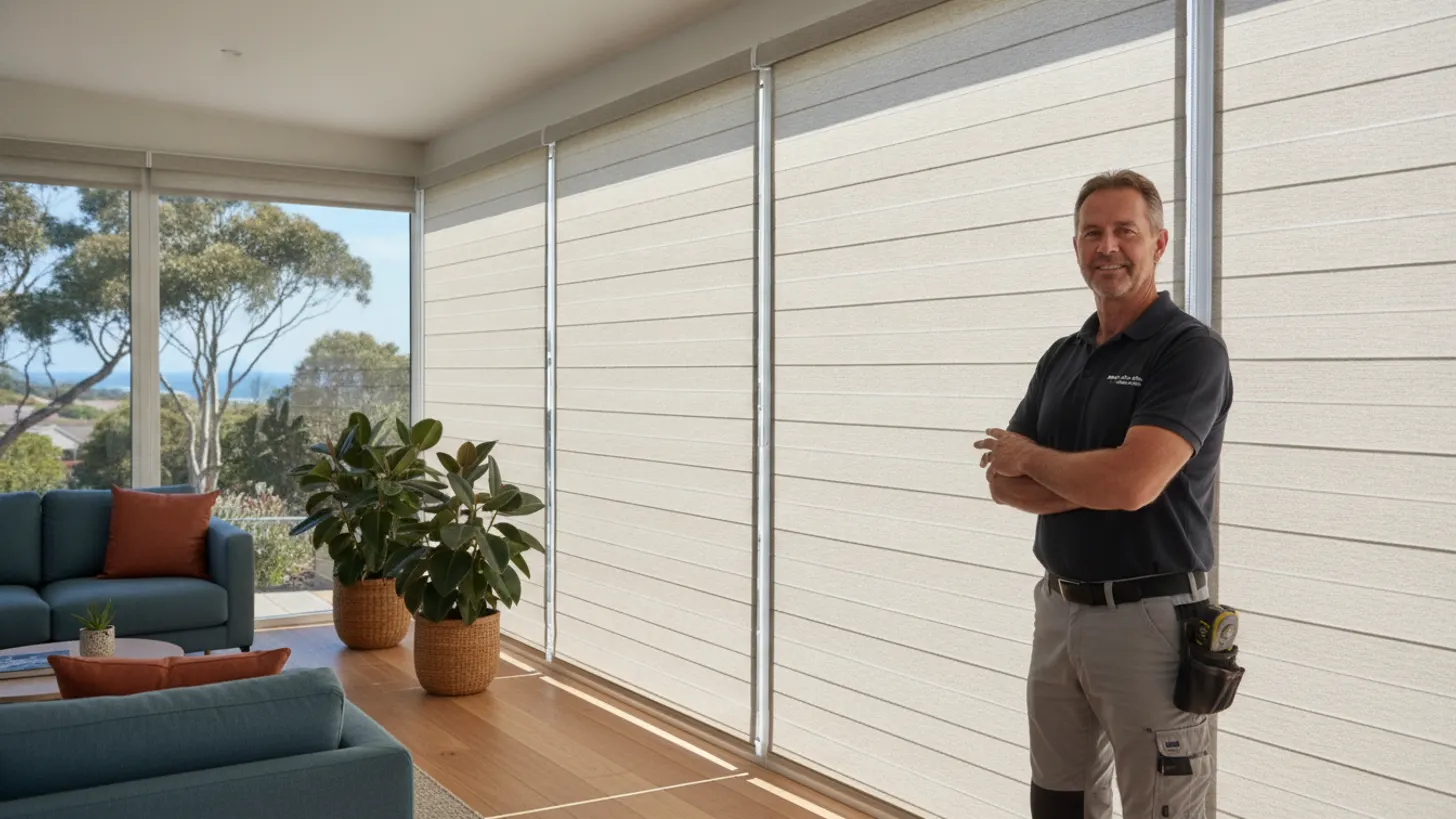
A dual-bracket setup with a 5% sunscreen on the front roller and a block-out on the back roller is the workhorse of NSW living rooms. The sunscreen knocks down glare during the day while you can still see out to the yard. The block-out comes down at night for full privacy. Both rollers run on motorisation if you wire it during the install.
Honeycomb cell blinds
If the priority is winter heat retention, honeycomb cells beat every other soft covering. The trapped air in the cells gives them R0.6 to R1.5 thermal resistance, per the CSIRO 2023 window energy work. They cost more than rollers, around $450 to $900 per window installed, and they do not give you the layered look that sheers do.
S-fold sheer curtains
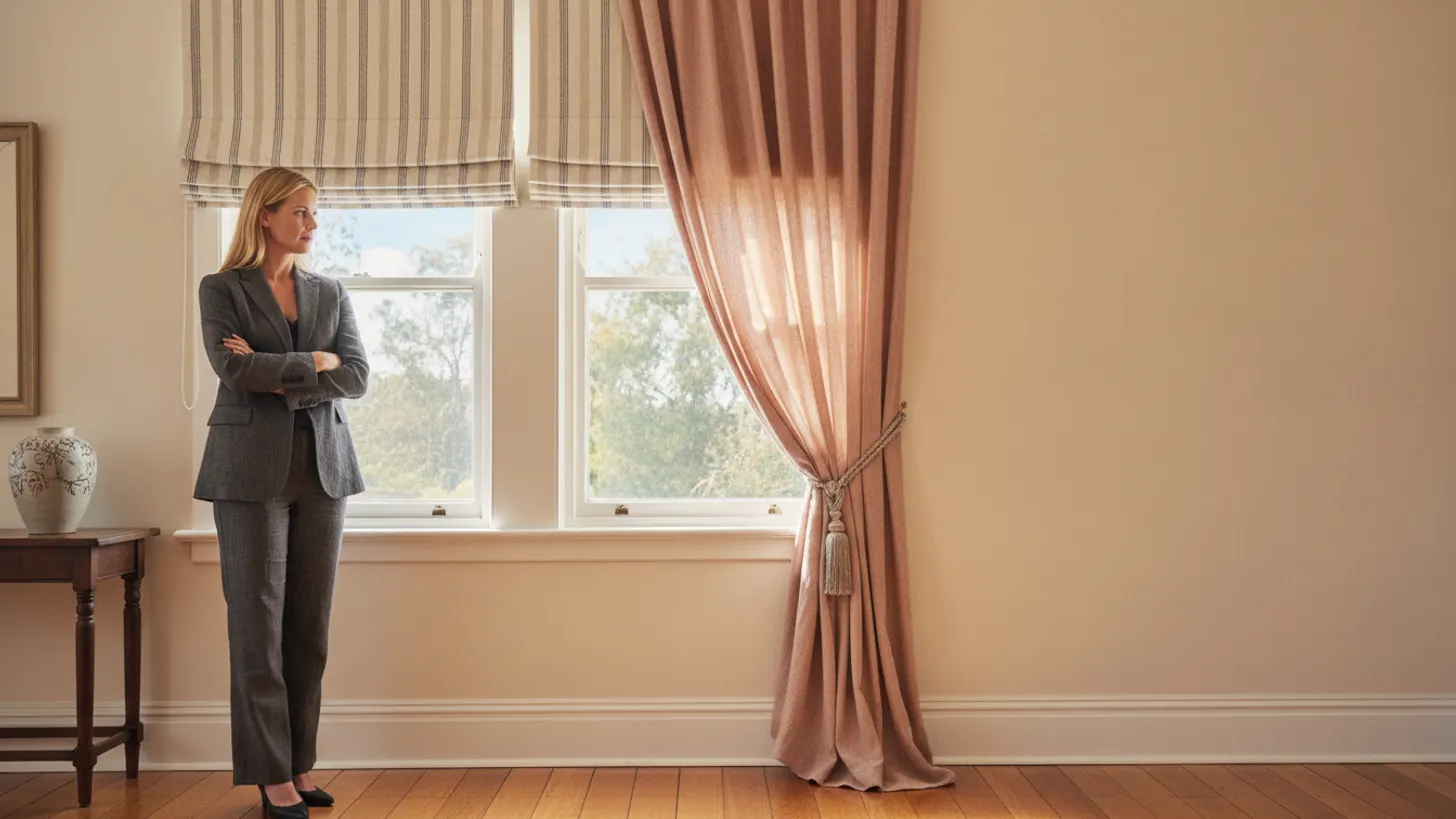
Sheers soften light, give daytime privacy from the street, and make a living room look finished. They do not block heat or glare on their own. We pair sheers with shutters or rollers on roughly 60% of the Riverina living rooms we touch.
Zipscreen outdoor blinds
If your living room opens to a north or west deck through bifolds or stackers, zipscreens on the outside of the glass do more than any internal treatment. They stop the heat before it hits the glass. The Sustainability Victoria window guide calls external shading the single biggest summer heat intervention.
Light control for living room window treatments Australia by orientation
The single biggest mistake we see on Riverina living rooms is people choosing a fabric before they have worked out where the sun actually sits. A north-facing window and a west-facing window need different answers, even if they are in the same room.
West-facing windows take the hardest hit. BOM long-term records for Wagga show January mean maximum temperatures above 32°C, and afternoon sun loads glass surfaces past 50°C. You want a block-out option on the inside and ideally an external shade or eave on the outside. North-facing windows in NSW want winter sun in and summer sun out, which is what an external zipscreen or a deep eave plus internal sheers does best.
South-facing windows almost never get direct sun in NSW. The conversation here is about privacy and heat loss in winter, not glare. A double-cell honeycomb on its own, or a plantation shutter, is usually the right call. For a deeper breakdown by aspect, see our west-facing window treatments NSW guide.
Privacy without losing the view: layering options that work
Privacy is the second most common driver behind living room window treatments Australia in our area. Most NSW homes have the living room facing the street. A passerby can see straight in if you have nothing on the glass after dark. We measure and quote three reliable layering patterns:
- Sheers plus block-out rollers: daytime softness and view, full privacy after dark. The most-used setup in our Riverina living rooms.
- Plantation shutters alone: tilt the louvres up to keep view of the sky while blocking direct sightlines from footpath height.
- Sheers plus plantation shutters: the premium look for north and street-facing rooms. Costs about 60% more than rollers but the resale story is real.
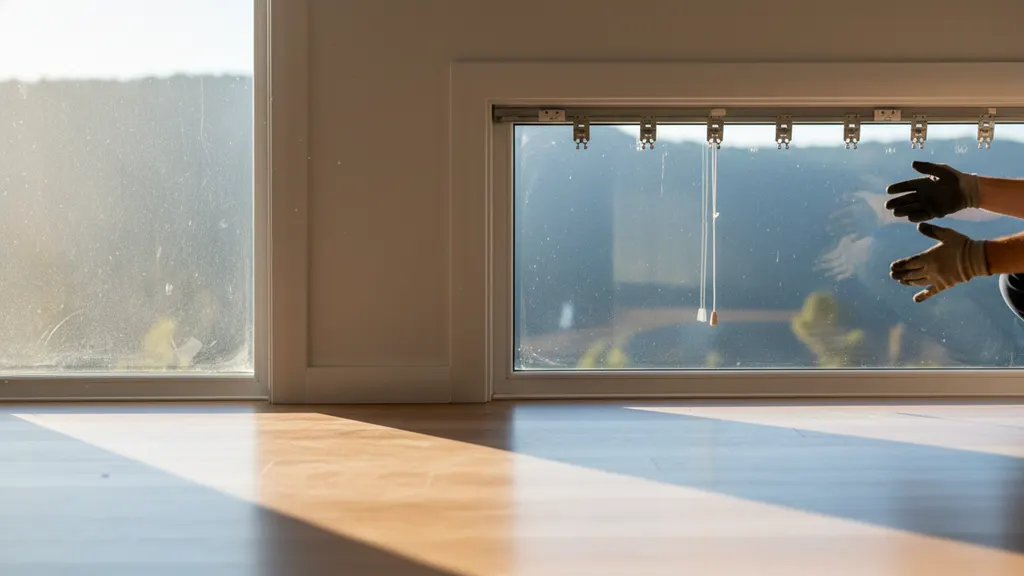
Whatever you pick, do not let an installer talk you into a corded blind anywhere a child can reach. The ACCC Product Safety blind cord rules were tightened in 2022 after 21 deaths over two decades. Every roller we fit is either motorised or fitted with the mandatory cord cleat and tensioner. Our full child-safe blinds Australia guide walks through the exact compliance setup.
For a closer look at this, see Sheer Curtains Australia: Get Privacy Without Losing Natural Light.
Heat, cold and energy: what living room window treatments Australia actually save
Properly chosen living room window treatments Australia are the cheapest insulation upgrade you can put on a house. The federal energy.gov.au insulation page notes that uncovered glass can account for up to 40% of household heating loss and the bulk of summer heat gain. A well-fitted internal treatment plus an external shade together can claw back most of that.
In a 2026 Wagga install, we replaced an old vertical blind on a 2.4 m by 1.8 m west-facing living room window with a dual roller (5% sunscreen plus block-out) and a sheer in front. The owner reported the room dropped from running the split system at 18°C in January afternoons to running at 23°C with the rollers down by 2pm.
What to look at on the quote
If a sales rep gives you a verbal estimate over coffee with no measurements, walk away. Every honest job in NSW starts with a tape measure. We measure and quote on-site in a 60 to 90 minute visit, then email a written, itemised quote with brand, fabric, openness factor, motor brand (if applicable), warranty term and install date. Canstar Blue 2024 ratings show on-site quoting is the single biggest predictor of customer satisfaction in the category.
What things cost and how long they last
Honest pricing for living room window treatments Australia in NSW. These are fitted, finished prices we have quoted in the Riverina in 2026 (one large window plus one secondary window):
| Treatment | Typical living room range | Working life | Best for |
|---|---|---|---|
| Roller blinds (dual) | $680 to $1,400 | 8 to 12 years | Day/night light control |
| Honeycomb cell blinds | $900 to $1,800 | 8 to 12 years | Winter heat retention |
| S-fold sheer curtains | $1,400 to $2,800 | 10 to 15 years | Daytime softness, style |
| Plantation shutters (basswood) | $1,800 to $3,600 | 15 to 25 years | Privacy, resale value |
| Layered (sheer + roller) | $2,400 to $4,200 | 10 to 15 years | Most NSW living rooms |
| Zipscreen outdoor blinds | $1,600 to $3,200 per opening | 10 to 15 years | External summer shading |
CHOICE 2024 blinds review found that warranty and after-sales service vary far more than the headline price. A 10-year frame and 5-year motor warranty is what we write on every LuxeShutters quote. Anything shorter, ask why.
Style and resale: what NSW homes pair in 2026
The NSW living room palette has shifted in the last two years. Painted-out white walls, warm timber floors, and matte black tap-ware ask for window treatments that recede rather than shout. We see four pairings winning right now:
- Off-white plantation shutters on a charcoal frame: heritage homes in Temora and Cootamundra. Hides road dust, looks finished.
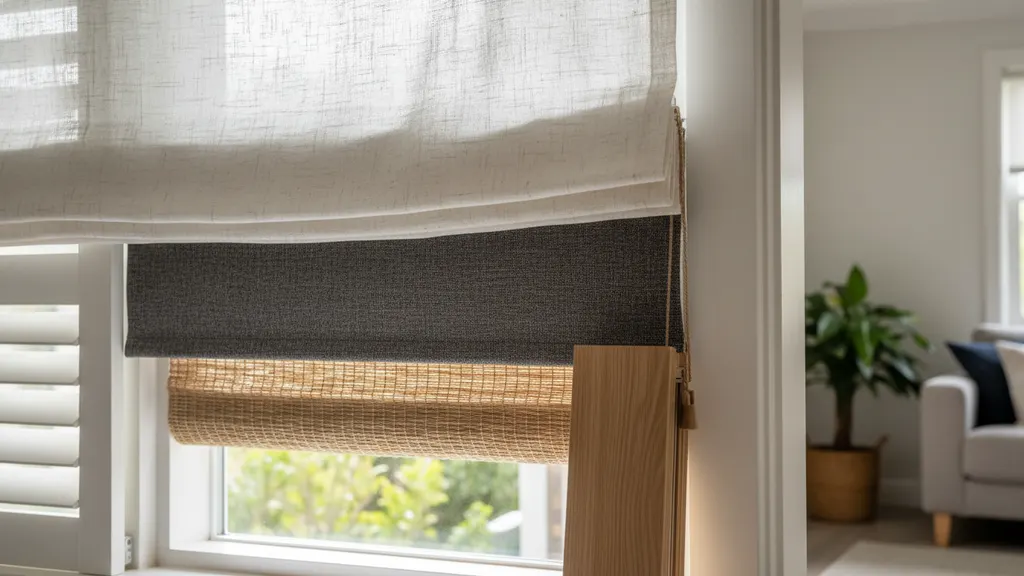
- Linen-look S-fold sheers + 5% charcoal sunscreen: new builds in West Wagga and Estella.
- Wide-louvre (89mm) shutters in cool white: large openings in Griffith builder homes. Best louvre-to-glass ratio for view.
- Linen sheer + cellular block-out behind: Riverina farmhouses where winter heat retention matters more than the layered look.
Internal note from our own quote book: we have written more shutter-and-sheer combinations in the first half of 2026 than in all of 2024. Demand for premium living room window treatments Australia has gone mainstream in regional NSW.
Frequently asked questions
What is the best living room window treatments Australia setup for west-facing windows?
On a west-facing living room window in NSW, layer an external zipscreen or a deep eave on the outside with a dual roller (5% sunscreen plus block-out) on the inside. If budget allows, add S-fold sheers in front for daytime softness. The external shade is doing most of the heat work; internal-only treatments still let about 70% of solar heat into the room once it has hit the glass, per the YourHome glazing guidance. Expect to spend $2,800 to $5,400 fitted for a single large west-facing window with this full layered setup.
Are plantation shutters worth the money for a NSW living room?
For street-facing or west-facing living rooms in NSW, yes - shutters pay back through working life and resale. A painted basswood plantation shutter lasts 15 to 25 years on the frame, gives you full light and privacy control without motors or cords, and adds a measurable lift to the look of the room. Per Canstar Blue 2024 buyer data, shutters score the highest customer satisfaction of any covering category. They cost roughly twice what dual rollers cost, but on a per-year basis they are cheaper.
Are corded blinds still legal in Australia?
Corded blinds are legal but tightly regulated. The ACCC mandatory standard updated in 2022 requires every corded blind sold or installed in Australia to either have no accessible cord, an inaccessible cord, or a securely fitted cord cleat above 1600mm. There were 21 known child deaths from blind cords between 1999 and 2022, which is why the rules tightened. We fit motorised or cordless rollers on every living room job where a child lives in the home, no exceptions.
Do living room window treatments Australia really save on energy bills?
Yes, but how much depends on the glass behind them and the orientation. Federal energy.gov.au modelling shows that adding internal block-out plus a heavy curtain or honeycomb cell to single-glazed windows cuts winter heat loss through the glass by 40 to 60% and summer gain by 30 to 50%. On a typical NSW living room with single glazing and west exposure, that translates to roughly $180 to $340 off a household annual heating and cooling bill at 2025 retail electricity prices.
How long does it take to measure, quote and install?
From first call to install, our typical Riverina living room job runs four to seven weeks. The on-site measure and quote takes 60 to 90 minutes. We email an itemised written quote within 48 hours. Once you approve, shutters take 3 to 5 weeks to manufacture, rollers and honeycombs take 2 to 3 weeks, and sheers take 2 to 4 weeks depending on fabric stock. Install is usually a single visit of 2 to 4 hours per room. Per CHOICE 2024 buyer research, four to seven weeks is the industry norm in regional Australia.