Window Treatments · 14 min read
Dining room window treatments Australia: NSW ambiance, privacy, style
Chris & Campbell · 10 July 2026
Can you have soft evening light, real street privacy, and a room that still cleans up after a curry night? That is the puzzle behind dining room window treatments Australia homeowners get wrong the most. In Temora, Wagga and Griffith, dining rooms usually open onto the kitchen and living zone, so one wrong fabric choice haunts three spaces at once. This guide gives the plain-English answers we measure and quote against every week across the Riverina.
Dining room window treatments Australia homes love in open-plan spaces
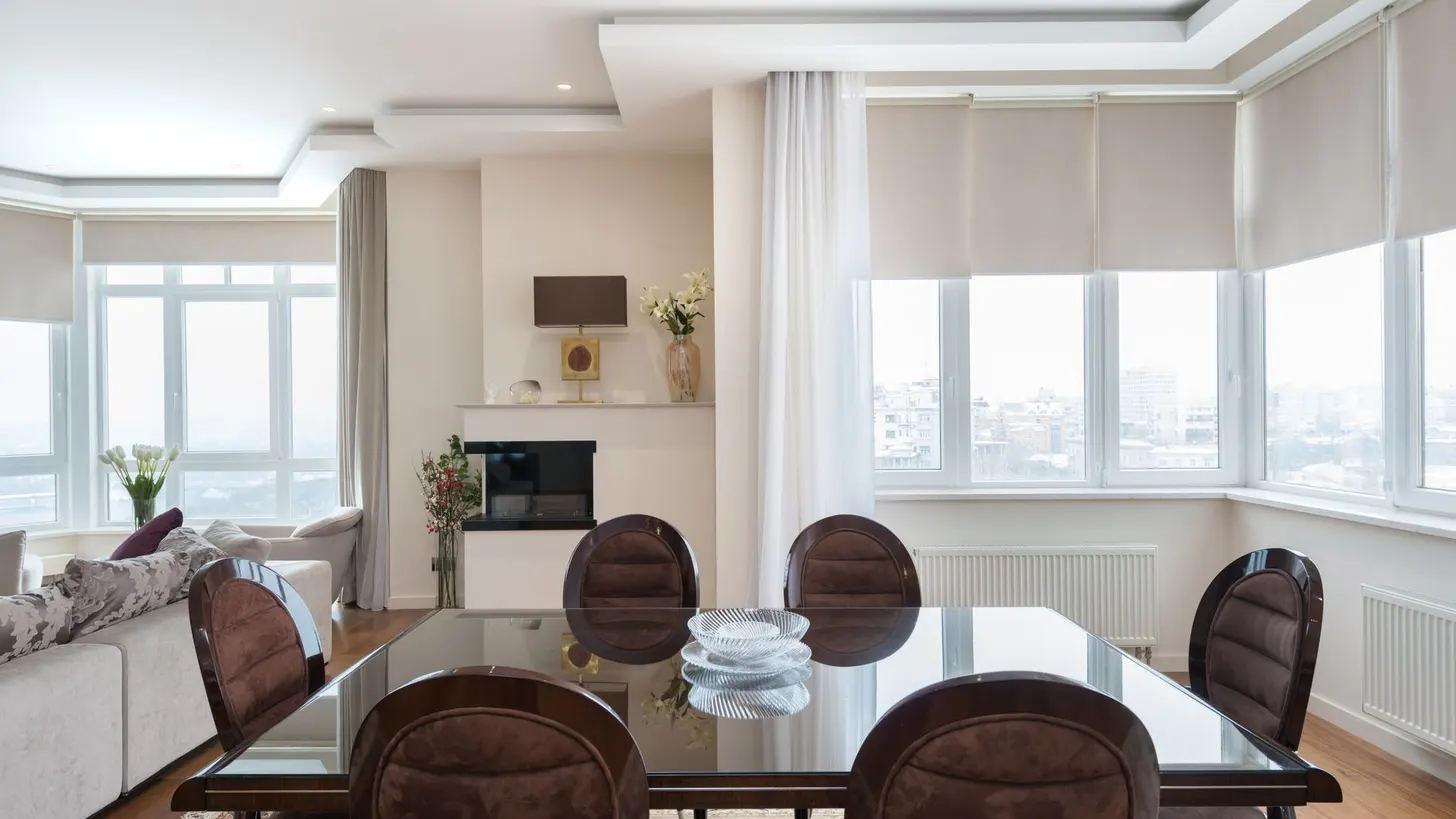
In an open-plan kitchen-dining-living layout, one window furnishing has to earn its keep across three rooms at once. Roughly 70% of new Australian home designs now use this layout, matched by Master Builders Australia building activity outlook reporting. That is why dining room window treatments Australia builders specify are almost never a single product.
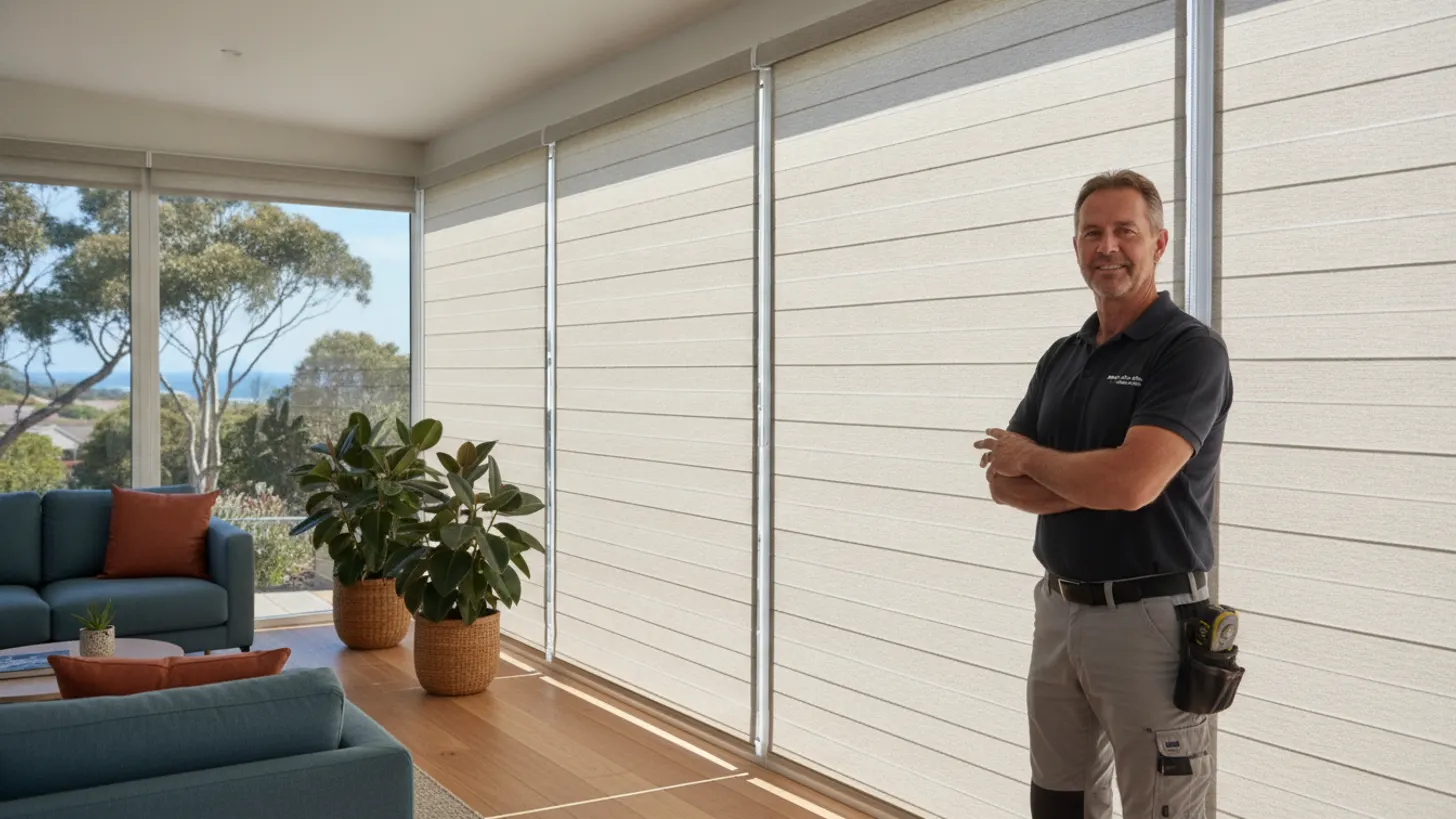
Our rule on site: pick one hero (usually plantation shutters or dual-roller blinds), then let a secondary layer (sheer curtains or a slim linen roman) handle glare and softness in the dining zone only. The dining area still reads as its own room even without a wall separating it from the kitchen. Buyers who plan this at frame stage save money and rework later; our post on planning window treatments for a new build in NSW walks through the order of operations.
Practical checks we run at measure and quote:
- Does the treatment carry the same colour temperature as the kitchen splashback and living blinds?
- Can you operate it one-handed while holding a plate?
- Will it survive steam and cooking spatter within 3 metres of the range hood?

Balancing street privacy and natural light in NSW dining rooms
Dining rooms usually sit street-facing in Riverina cottages and modern estates alike. The brief we hear at measure and quote is the same: keep the light, lose the neighbours. Balancing that trade-off is where dining room window treatments Australia homeowners get the most conflicting advice. Layered dining room blinds NSW families install add a translucent daytime layer and an opaque evening layer to solve it.
Australian Government Your Home passive design guidance on shading and glazing recommends adjustable treatments over fixed ones for rooms with variable use through the day. A dining room is exactly that: morning coffee, midday work, evening entertaining. Fixed sheers alone will not cut it; block-out roman blinds alone will leave the room dim by lunchtime.
Here is how we compare the four most common picks for dining room window treatments Australia clients weigh at quote stage:
| Treatment | Daytime privacy | Evening privacy | Light control | Cleanability |
|---|---|---|---|---|
| Plantation shutters | Excellent | Excellent | Excellent | Wipe clean |
| Roman blinds (lined) | Good | Excellent | Good | Vacuum + spot |
| Sheer curtains | Fair | Poor | Diffuse only | Cold wash |
| Roller blinds (dual) | Good | Excellent | Excellent | Wipe clean |
Bureau of Meteorology climate averages for inland NSW show more than 190 clear days a year across the Riverina, so glare management matters as much as privacy. See our companion post on living room window treatments in Australia for the couch-side equivalent of this trade-off.
There is a full breakdown of this topic in Sheer Curtains Australia: Get Privacy Without Losing Natural Light.
Fabrics and materials for dining room window treatments Australia climates demand
Dining rooms take punishment few spec sheets mention: airborne cooking oil, red wine mist, humidity spikes from the dishwasher, and the odd child-flung fork. The right fabric and hardware for dining room window treatments Australia climates demand are washable, low-static, and rated to sit near heat.
Standards Australia AS 1530 flammability and ignitability testing framework underpins the 30 cm clearance rule we apply to any fabric treatment installed near a gas cooktop or radiant heater. That means measuring twice before ordering long-drop curtains near an open-plan kitchen. If your dining zone shares the space with the range, favour timber shutters or aluminium venetians in the near-cook area, and reserve fabric layers for the far wall.
Materials we specify most, and why:
- Basswood plantation shutters stay dimensionally stable through summer heat, wipe clean, and hold no fabric to trap odours.
- Polyester-blend roman blinds hold shape after steam exposure and clean up faster than pure linen.
- Solar-screen roller blinds reject glare on west-facing windows while keeping the outlook.
- Sheer linens look beautiful, but keep them well clear of any heat source per AS 1530.
CSIRO thermal performance and buildings research shows the biggest solar-gain reductions come from treatments installed close to the glass with edge seals. That matters for a dining table pushed against a big window in a Griffith summer.
Roman blinds versus plantation shutters in a formal dining room
For a dedicated formal dining room, the two products we quote most are roman blinds dining room Australia buyers love, and plantation shutters. Both look built-in when specified well. The choice usually comes down to light, sound and layout.
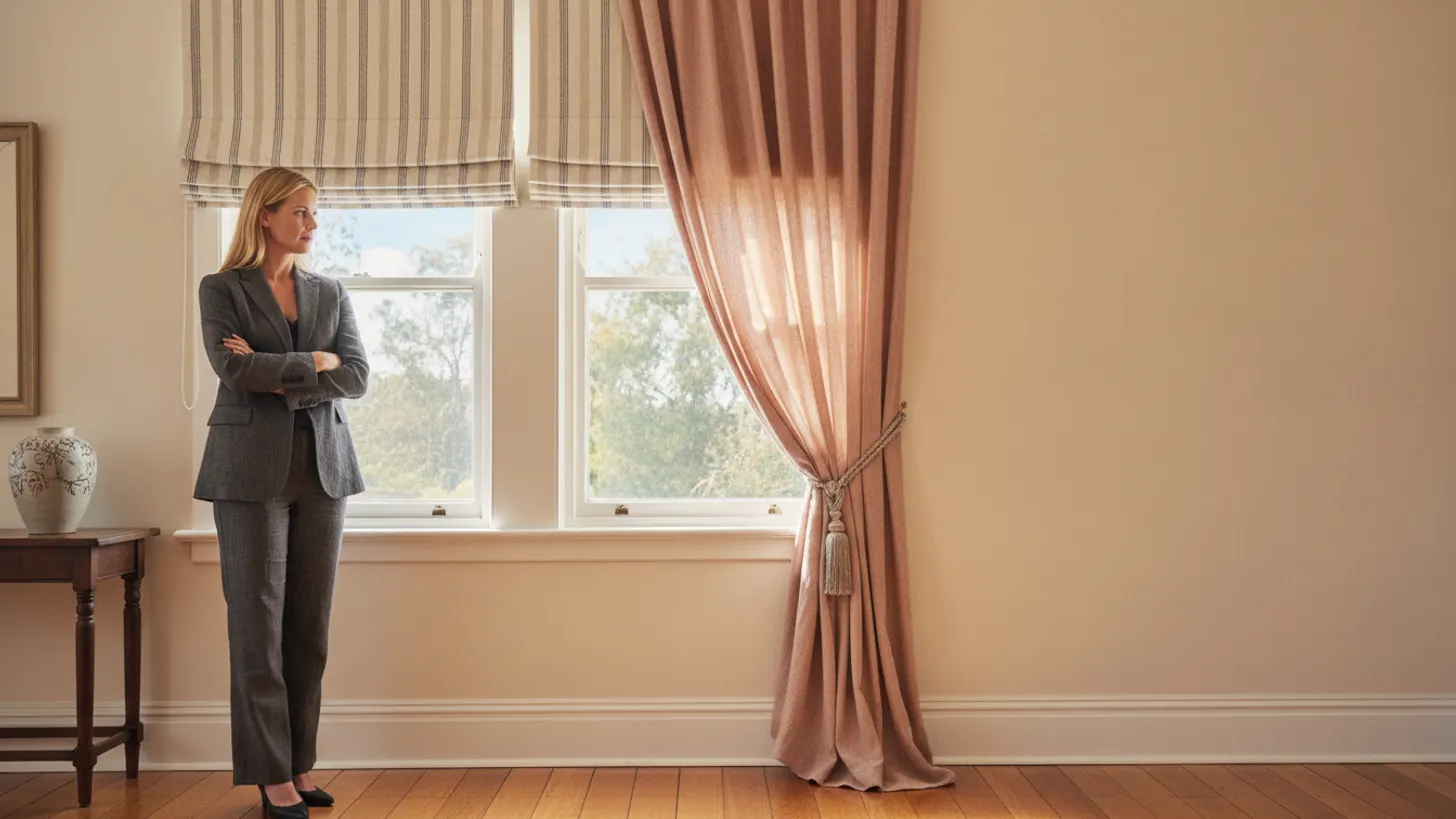
Roman blinds win on softness. They add fabric to a room dominated by hard surfaces, mute dinner-party echo, and lift the ceiling when specified with a top-mount and a puddle-length lining. They also let you carry a fabric story from curtains elsewhere in the home. The downside: dust and cooking odours settle into the pleats, so you will vacuum them monthly. See our detailed roman blinds versus curtains in Australia guide for pleat and header choices.
Plantation shutters win on control and cleanability. Angle the louvres up in daylight to bounce light onto the ceiling; close them down at dinner for a warm cocoon. They also read as architecture rather than decoration, which suits period NSW cottages and modern minimalist builds equally. The full comparison sits in our plantation shutters versus roller blinds post.
Our on-site call is usually to install shutters on the street-facing window (privacy, security, low upkeep) and layer a roman blind or sheer on the garden-facing window for softness. That mix answers the brief for most dining room window treatments Australia homeowners request, without locking the room into one look. Compare finish quality before signing, since dining room window treatments Australia buyers keep for a decade or more.
2026 dining room window treatments Australia trends worth backing
Trend forecasting is usually a poor guide for a room you will live with for a decade. But two shifts in dining room window treatments Australia buyers are asking for now are more than passing fashion, and both survive a resale test.
First, motorised control on tall or awkward windows. Australian Government Energy.gov.au guidance on windows and doors notes that treatments actually operated as designed deliver the biggest energy savings. A motor on the north-facing dining sheer means it actually closes at 3pm in summer, not "when we remember". Our post on motorised blinds in Australia covers the cost trade-off.
Second, warmer whites and stone tones replacing the cool greys of the 2018 to 2022 era. That looks lovely on camera, but it also plays better with the Riverina clay-brick palette and Colorbond browns. Canstar Blue customer satisfaction reporting on blinds and curtains shows warmth and fabric texture now outrank flat colour matches for buyer preference.
Other quieter shifts in dining room window treatments Australia now include:
- Full-height plantation shutters replacing half-height cafe styles for privacy.
- Wave-fold sheers instead of pinch-pleat for a cleaner modern look.
- Solid honeycomb blinds on skylights over dining tables for thermal comfort.
We cover the details separately in Blackout blinds baby room Australia: NSW sleep guide 2026.
Frequently asked questions
What window treatment types work best in an open-plan dining and living area?
The pattern we install most is a single hero product carried across all three zones (usually plantation shutters or dual roller blinds), then a secondary fabric layer added only in the dining area for softness. Around 70% of new Australian home designs use this open-plan layout, according to Housing Industry Association trend reporting, so it pays to plan for continuity. Avoid picking a different product per window: the space will read as three uncoordinated rooms. Our living room window treatments Australia guide shows how the same logic plays out on the couch side.
How do you balance street privacy and natural light in a dining room?
Layer, do not compromise. Fit a daytime translucent (solar-screen roller or open-slat shutter) that keeps outlook and daylight, plus an opaque evening layer (block-out roman or closed shutter) for dinner. Australian Government Your Home shading guidance recommends adjustable treatments for rooms with variable use through the day, which describes almost every dining room in NSW. A single treatment cannot do both jobs well without cutting one in half. Layering costs more up front, but you stop replacing the wrong choice two years later when it fails one brief.
Which fabrics and materials handle dining room humidity and cooking odours best?
Hard, wipe-clean surfaces beat soft ones near a range. Basswood or PVC plantation shutters, solar-screen rollers, and polyester-blend roman blinds all handle steam and airborne cooking oil far better than pure linen or wool. Any fabric treatment must sit at least 30 cm clear of a gas cooktop or radiant heater under AS 1530 flammability guidance. In open-plan spaces, we push the fabric layers to the far wall and keep hard-material treatments closest to the kitchen. That keeps the dining zone soft without turning the linings into an odour trap.
Do roman blinds or plantation shutters work better in a formal dining room?
Both work; the answer depends on the sound of the room and the era of the house. Roman blinds add fabric warmth, quieten dinner-party echo, and let you tie the dining room into a curtain scheme elsewhere. Plantation shutters give better light control, wipe clean in seconds, and read as architecture in period NSW cottages. Houzz Australia design surveys have ranked the two as the top two dining picks for several years running. Our on-site pick most weeks is shutters on the street window, romans on the garden window.
Are motorised blinds worth it for a dining room?
Yes on tall, wide, hard-to-reach, or west-facing windows; not always on standard casements you can reach with one hand. The energy case comes from actually closing the treatment at 3pm on a January afternoon, which humans forget to do. Energy.gov.au notes that operated-as-designed window coverings deliver the biggest bill savings. Battery motors cost less at supply than hard-wired systems. We quote both at measure so you can weigh the trade-off with a real number, not a guess.
What are the leading dining room window treatments Australia buyers install in 2026?
Two shifts are more than passing fashion: motorised control on tall or awkward windows so the treatment actually closes at 3pm, and warmer whites and stone tones replacing the cool greys of the 2018 to 2022 era. Canstar Blue customer satisfaction reporting shows warmth and fabric texture now outrank flat colour matches for buyer preference. Full-height shutters, wave-fold sheers, and honeycomb blinds over skylights are the quieter shifts we back for a decade-long dining room fit-out that still looks current at resale.