Heritage & Period Homes · 16 min read
Heritage home shutters Australia: sympathetic window upgrades
Chris & Campbell · 13 November 2026
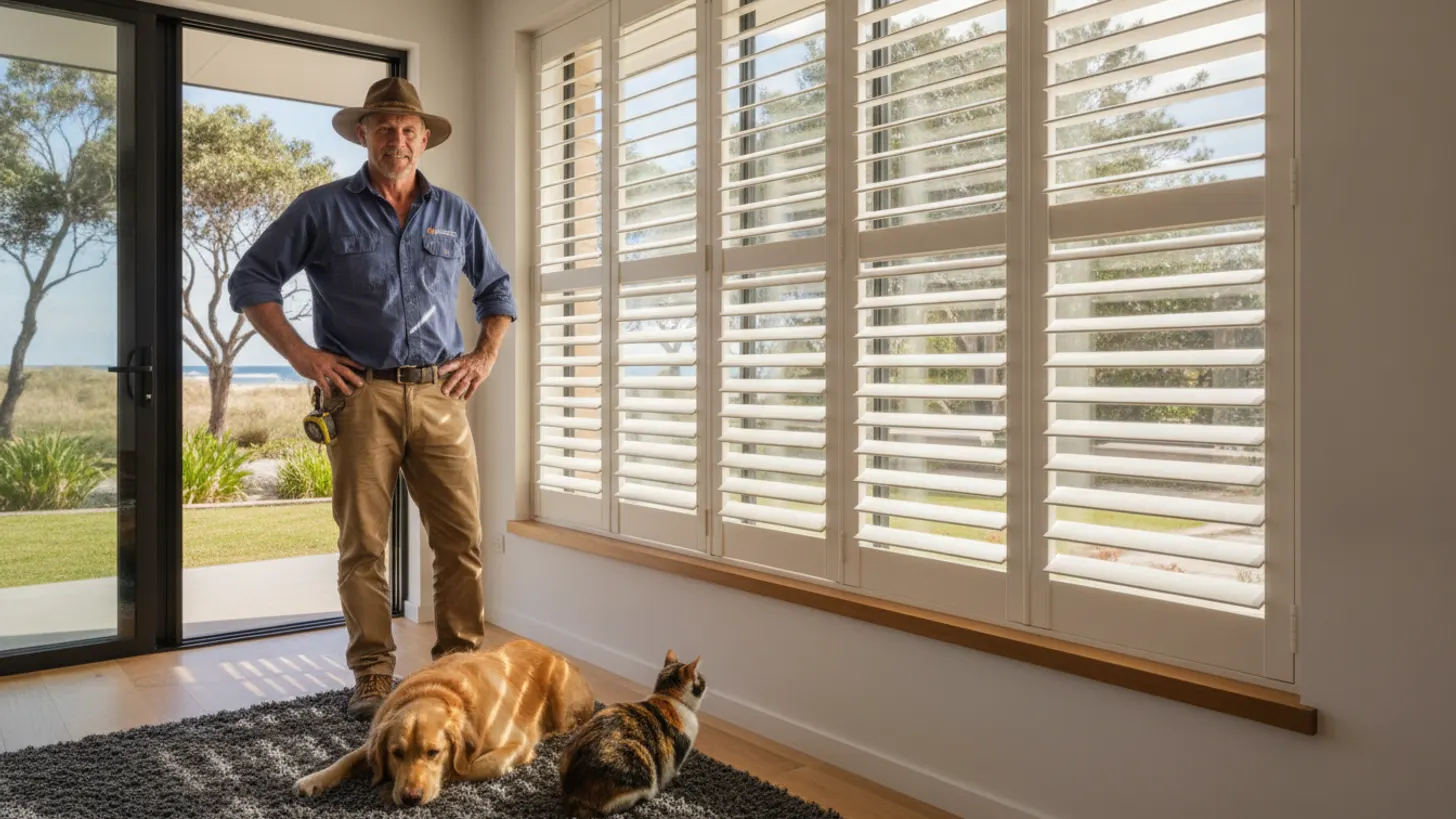
“Will the council let us put shutters on a federation house?” That question comes up on nearly every quote we do around Temora and Wagga. The honest answer is that heritage home shutters Australia homeowners install are rarely refused outright. They get refused when the fixing damages original fabric or the street elevation changes. Reversible internal panels, sized to the existing reveal, usually clear that bar.
Heritage home shutters Australia: are plantation shutters suitable for listed homes?
Usually yes, provided the installation is reversible and the panels sit inside the existing reveal, the recessed opening that frames the window, instead of cutting into original joinery or masonry. The shutter is rarely the problem. The fixing method, the blade width and the paint colour decide whether the result reads as sympathetic or wrong.
Heritage control in New South Wales is about significance, not taste. The NSW Heritage Act 1977 protects listed heritage items and requires approval for certain changes to listed properties, and the NSW Heritage Office advises that alterations to heritage places should respect significant original fabric and character. Screwing a hinge into an 1890s cedar sash alters original fabric. Hanging the same panel on a removable timber sub-frame, which lifts out in an afternoon, generally does not. A sub-frame is a separate timber frame, sized to the reveal, that carries the hinges and every fixing point, so the original sash is never drilled and stays untouched.
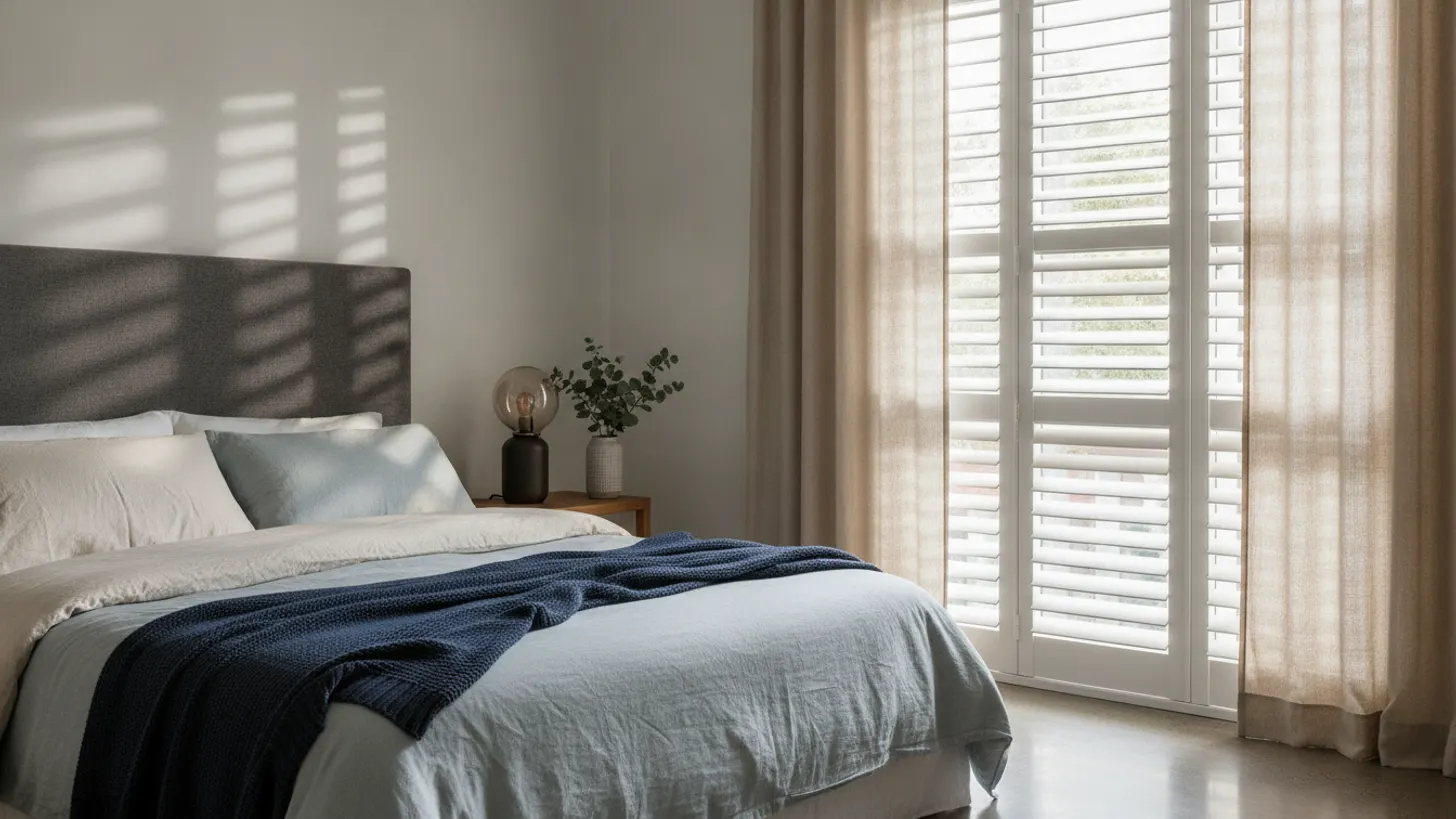
That reversibility test is the most useful idea to carry into a quote. Internal panels sit behind the glass line and change nothing a passer-by can see, which makes them the least contentious form of heritage home shutters Australia homeowners can choose. External shutters, zipscreens and roller shutters alter the street elevation, and that is the part a heritage officer studies hardest. Our guide to measuring and fitting window shutters shows how the sub-frame method works on old openings that are out of square.
There is a full breakdown of this topic in Pet-friendly shutters Australia: safer windows for dogs and cats.
Heritage home shutters Australia: the window details worth preserving
The character worth protecting sits in five details: the sash profile, the glazing bars, the original glass, the moulded architrave, and the hood or awning above the opening. Get a shutter plan wrong here and it costs comfort, since windows account for up to 87% of unwanted heat gain in an old house, so whatever you keep has to perform.
Original glass is the item people lose first and regret longest. Old cylinder and early float glass carries a soft distortion that no replacement matches, so a shutter plan should keep the sash in service rather than treat the glass as a consumable. Hardware counts too. Brass sash lifts, pulleys and cast fasteners are part of the record and should be refitted, not binned. Where a panel would foul a sash lift, the fix is a deeper sub-frame, not a removed fastener.
Glass is also where the comfort problem lives. The YourHome glazing guidance from the Australian Government puts unwanted heat gain through windows at up to 87% and heat loss at up to 40%, which is why a closed panel changes how an old room feels within minutes. Heritage home shutters Australia homeowners regret are almost always the ones that forced the window to change, so measure to the reveal and leave the sash working. For the odd shapes old houses are full of, see our notes on shutters for unusual window shapes and arched window shutters.
Windows carry the bulk of the heat movement in an old house, which is why a shutter does real work there (source: YourHome glazing guidance).
How heritage home shutters Australia complement period architecture
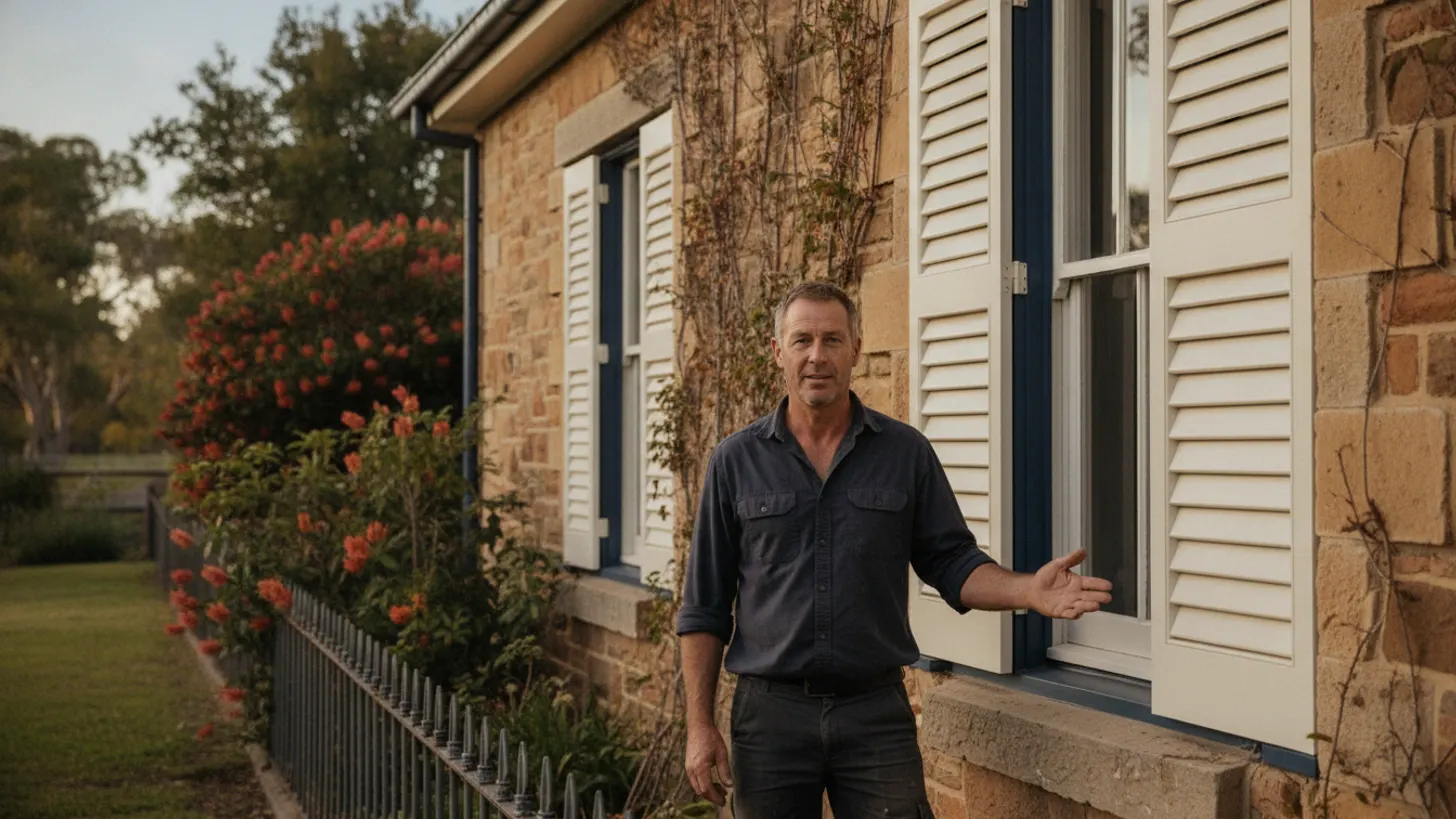
Shutters complement a period house when the blade width matches the proportion of the original joinery: narrower blades for small Victorian sashes, the standard 89mm width for federation double-hungs, and the wider 114mm blade reserved for modern openings, where it reads oversized against a period facade.
Hardware carries the rest of the detail. Hinge style, knuckle count and the mid-rail line should echo the meeting rail of the sash, and the frame should be the slimmest profile that still holds the panel. Specify hinges and fasteners that meet the relevant product standards in the Standards Australia catalogue, then paint them out so the eye reads the panel and not the metal.
Panel layout matters as much as the blade. Tall Victorian double-hungs usually want a two-panel split with the mid-rail set at the meeting rail, so the shutter line and the window line agree. On wide federation bays, a tier-on-tier arrangement keeps the top open for light while the bottom stays closed for privacy.
Heritage home shutters Australia: when council or heritage approval is required in NSW
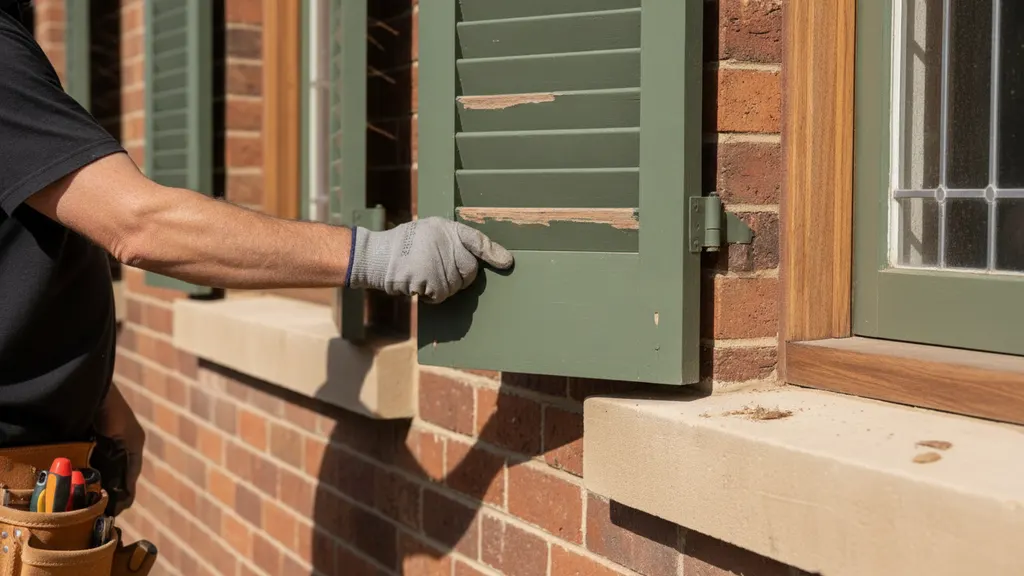
Approval turns on how the property is listed, not on how old it looks. A State Heritage Register item, a local heritage item in a council planning instrument, and a house inside a conservation area each carry different controls, and the local listing can bite when the state one does not. A conservation area is a precinct a council has identified as having collective heritage value, where exterior changes to any house inside it, not just the individually listed ones, need consent.
The NSW Heritage Act 1977 protects listed heritage items and requires approval for certain changes to listed properties. Standard exemptions exist for minor and reversible work, and the consent authority, usually your council or the Heritage Council of NSW, is the one who confirms which exemption covers your opening. Local environmental heritage listings and conservation areas can impose controls separate from the State Heritage Register, so a house that never appears on the state register may still need consent through council. Settling that question first is the step buyers on a listed property skip most often.
Ask in writing, name the fixing method, and attach a simple section drawing of the sub-frame. The NSW Heritage Office advises that alterations to heritage places should respect significant original fabric and character, and a drawing showing no fixing touching the sash answers that concern before it is raised. Photograph the window as it stands before anyone starts.
Heritage home shutters Australia: materials and colours for a sympathetic finish
A sympathetic finish comes down to three choices: the material, the blade width and the paint. Painted timber on a removable sub-frame wins on most period jobs because it can be matched to the existing joinery colour and because the whole assembly comes back out without a trace.
| Option | How it reads on a period facade | Reversible | Best use |
|---|---|---|---|
| Painted basswood or cedar, internal | Closest match to original joinery when colour-matched to the architrave | Yes, on a sub-frame | Street-facing rooms on listed houses |
| Oiled or stained timber | Clashes with painted Victorian joinery, suits bungalow interiors | Yes | Rooms with exposed original timber |
| PVC or polymer | Flatter surface, chunkier frames, obvious in a formal front room | Yes | Bathrooms and laundries out of view |
| External aluminium or zipscreens | Changes the facade, so expect close scrutiny | Partly, brackets fix to the building | Rear and side elevations for heat |
| Roller shutters with a head box | Box sits proud of the opening and reads as modern | No | Non-visible elevations only |
Material choice also has to survive inland conditions. Riverina summers are hard on paint and on any hardware that is not properly finished, so read the household guidance at energy.gov.au on windows and shading alongside CSIRO housing and building research before settling on a finish for a west-facing opening. The Bureau of Meteorology climate averages show how wide the local swing runs.
A finish specified for a mild coastal street will not hold up through a Riverina summer, so match the paint system to the local range.
Colour is the decision people most often get wrong, so start from the architrave and work out from there. Our guides to shutter colours for NSW architecture and basswood, PVC and aluminium shutter materials go deeper on both. Done properly, heritage home shutters Australia homeowners fit this year will read as if the joiner put them in a century ago.
How we measure and quote heritage windows in the Riverina
Every heritage opening is its own job. We measure and quote on site across Temora, Wagga, Griffith and the surrounding towns, checking each reveal for square, depth and the condition of the sash before any price is written. Nothing about heritage home shutters Australia homeowners install can be priced off a photo.
What we look at: whether the sash still runs, whether the architrave is original or a later replacement, where a fixing can land without touching old timber, and whether the listing status means the consent conversation has to come before the order. We bring blade and colour samples so you can hold them against the frame in daylight, and pricing is itemised in writing on the day. Canstar Blue's window furnishing customer research is a reasonable sanity check on what buyers rate highly before you compare quotes.
We got this wrong once, on a federation job in Wagga: what looked like later packing timber in the reveal turned out to be the original window stop, and our first fixing point landed straight into it. We pulled the sub-frame back out, patched the stop, and rebuilt the frame a centimetre proud instead. Now we probe every reveal with a bradawl before a screw goes anywhere near it.
If the house is listed, we will tell you to ring the council before we tell you to order anything. That order of operations saves money and saves rework.
Frequently asked questions
Do I need council approval to put shutters on a heritage house in NSW?
It depends on how the property is listed. A heritage item on the State Heritage Register is handled under the NSW Heritage Act 1977, while a local heritage item or a house inside a conservation area is handled by your council, and those local controls apply separately from the state register. Internal, reversible shutters that leave the street elevation unchanged are the easiest case, but get the answer in writing from the consent authority before anything is ordered. The Australian Government YourHome guidance on renovating existing homes is a useful plain-English starting point for scoping reversible work.
Are internal or external shutters better for a federation home?
Internal shutters are the safer choice on a listed or conservation-area house because they sit behind the glass and change nothing a passer-by can see. External shutters give better heat control, since they stop sun before it reaches the glass, but they alter the facade and attract closer scrutiny. On a federation house we usually suggest internal painted timber on street-facing rooms and external protection only at the back or on side elevations. The energy.gov.au household guidance on windows and shading explains why blocking sun outside the glass does more work than blocking it inside.
What colour should shutters be on a period home?
Pull the colour from the existing joinery rather than from a trend chart. Victorian and federation houses in New South Wales generally carry off-whites, warm creams, deep greens and heritage reds on their window frames, and a shutter painted to match the architrave reads as part of the window instead of an insert. Avoid stark modern whites and grey-blues on a cream facade, because the mismatch is what the eye catches from the footpath. For heritage home shutters Australia owners want to be invisible, matching the frame colour does more than any other single decision. Sustainability Victoria publishes useful background on finishes and durability.
Can shutters be installed without damaging original window frames?
Yes. The method is a timber sub-frame sized to the reveal, which carries the hinges and takes every fixing, so the original sash, architrave and sill are left alone. The sub-frame is fixed into the plaster reveal or into later, non-original packing wherever possible, and the whole assembly can be unscrewed and removed without patching the joinery. Ask any installer to show you exactly where the screws land before you sign. Master Builders Australia, the national body for the building industry, publishes general guidance on contracts and licensed trades that is worth reading first.
Do shutters help with heat and cold in an old house?
They help, and old houses need it. Single-glazed sashes, gaps around the frame and uninsulated reveals mean most unwanted heat moves through the window. A closed panel adds a still air layer and blocks direct sun, which takes the edge off both the summer peak and the overnight chill. Inland New South Wales makes that worth having: Bureau of Meteorology climate averages for Wagga Wagga show a mean January maximum near 32C against roughly 13C in July. Shutters are not a substitute for draught sealing, so do both if the budget allows.
How long does a heritage window shutter job take from measure to install?
Expect the measure and quote visit to run 60 to 90 minutes, because heritage openings are rarely square and each one needs its own sub-frame detail. Manufacture of custom painted timber panels takes several weeks, and approval, where it is needed, runs on the consent authority's clock rather than ours, so start that conversation early. Installation on a room of two or three windows is usually a single day. For background on how existing building fabric behaves, CSIRO housing and building research is a useful read.