Shutters · 17 min read
Shutter colours Australia: choosing finishes for NSW architecture
Chris & Campbell · 6 November 2026
"What white should we use?" is the question we hear most in Temora and Wagga kitchens. The honest answer is that the shutter colours Australia homeowners choose should follow the house, not a trend board. A Federation cottage, a rebuilt coastal weatherboard and a new Griffith brick home each want a different white, a different sheen and a different louvre width. Here is how we work it out on site.
How should you match shutter colours Australia wide to NSW architecture?
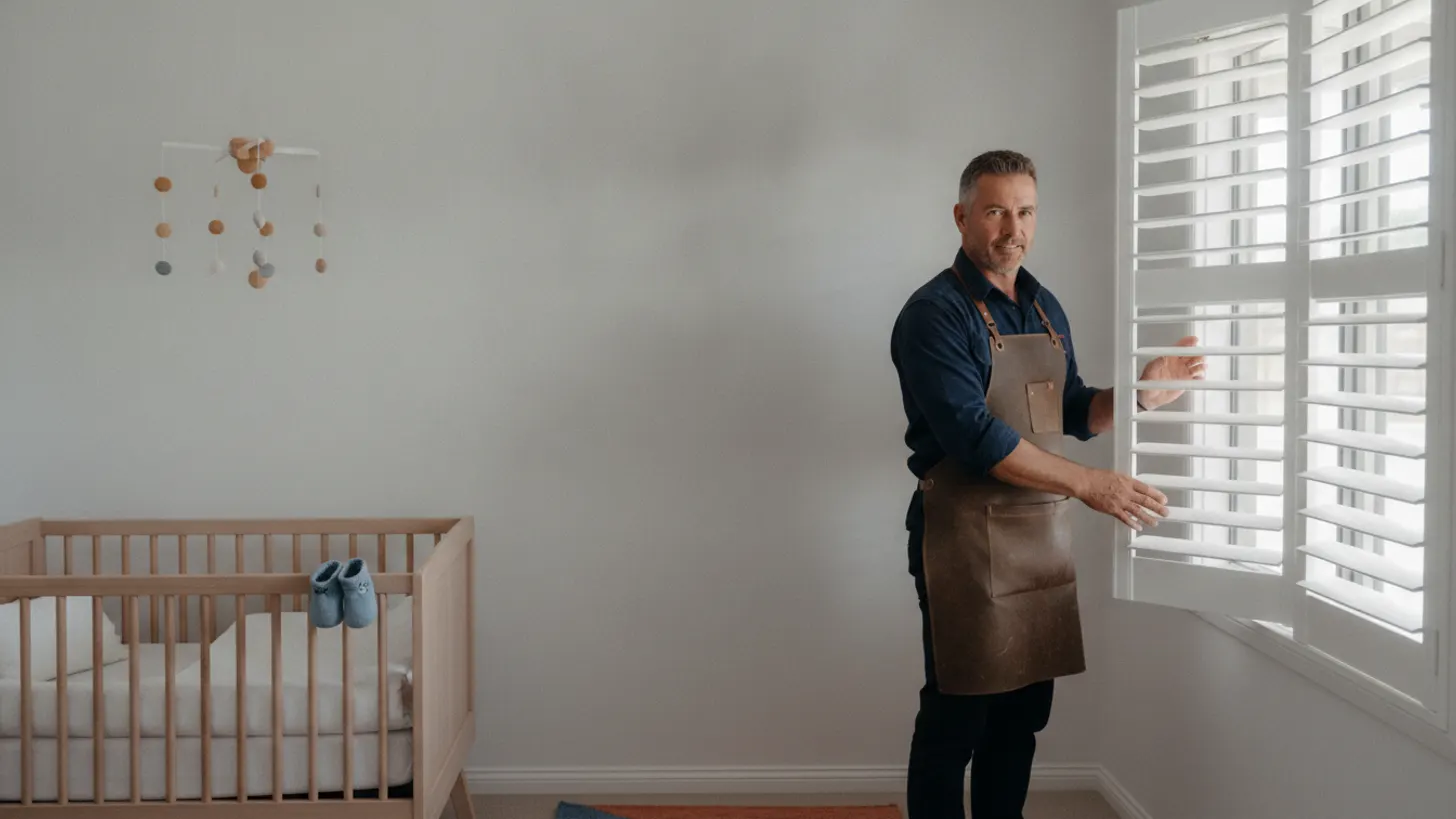
Start with the building, not the room. Read the roof, the window frames, the brick or render, and the fascia, then choose a finish that sits inside that family. A Federation cottage in Temora usually wants a warm off white. A 2023 Griffith build often wants a cooler white, or a charcoal that picks up the aluminium frames. In February 2024 we held three warm whites against the hallway architrave of a Federation cottage on a quiet Temora street before the right one read true under the verandah's shade, proof that north facing light changes the call every time.
The quickest way to get this wrong is choosing from a phone screen. Screens push blue, printed swatches push yellow, and neither one shows sheen. We bring the physical range to the house when we measure and quote, hold each chip against the architrave, then look again inside the reveal where the louvres will actually sit. Job after job, the pattern repeats: people end up happiest with the dull looking chip on the card, not the brightest white in the range, and that holds true for shutter colours Australia wide.
Heritage work is more formal. NSW Heritage guidance recommends using physical and documentary evidence when selecting colours for heritage buildings, which on site means scraping back a discreet patch of original joinery, checking archival photographs, and writing down what you found before anyone orders. Consent conditions can name finishes directly. Residential work also has to meet the performance requirements in the National Construction Code, which affects the materials and coatings allowed, and those requirements call up documents published by Standards Australia, the national standards body.
Style families help, but they are a starting point rather than a rule. Our guide to Hamptons style window treatments in NSW covers the white on white approach in detail, and it is the one look where a finish that reads too warm dates within a season.
Do white shutters make rooms brighter, or just reflect more light?
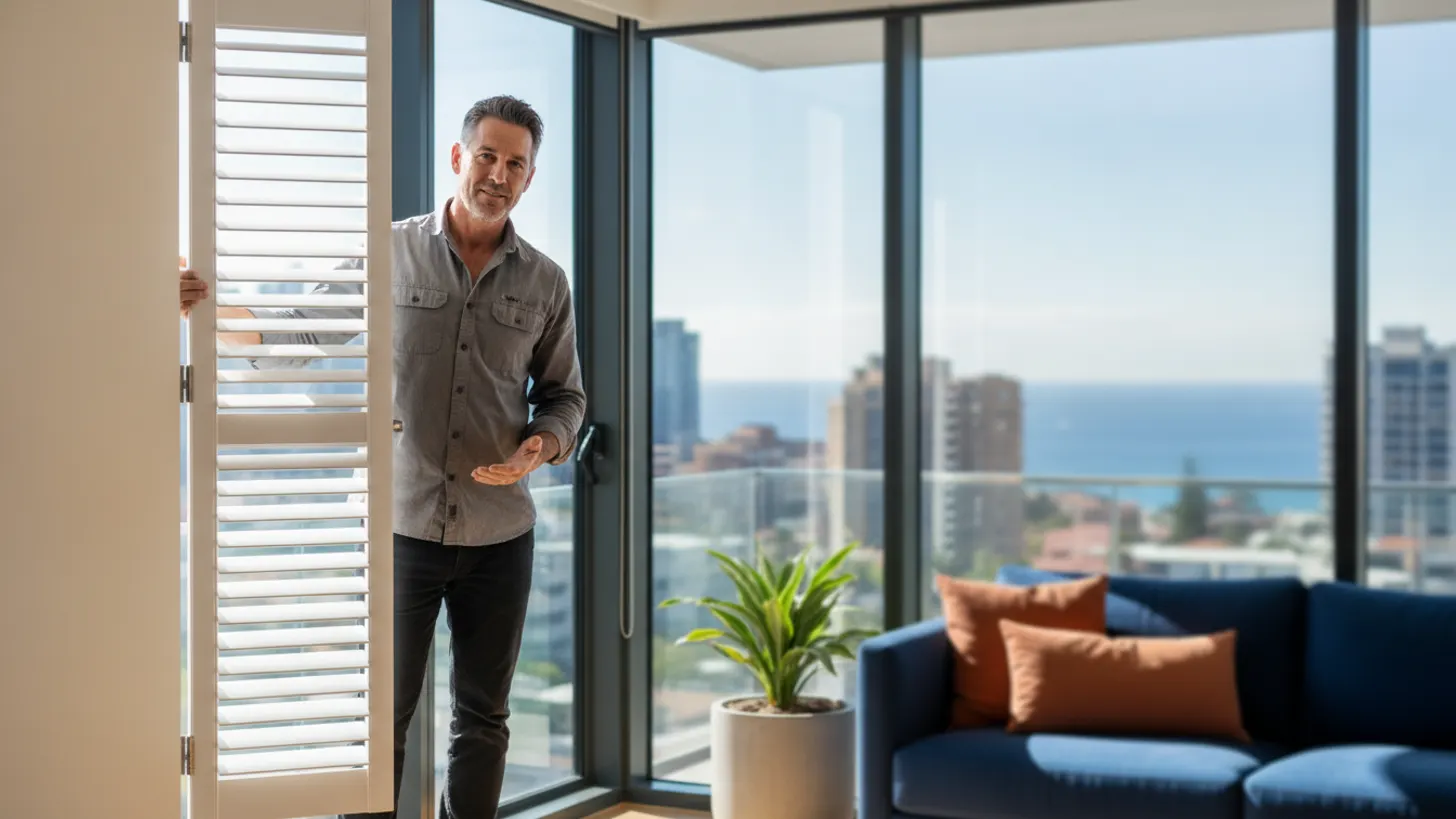
Both, and the difference matters when you are quoting a dark room. White shutters do not make light. They bounce what the glass already lets in, throwing daylight onto the ceiling and back down into the space. Glare gets redirected rather than removed, which is why blade angle still does the heavy lifting.
There is a thermal side too. The Australian Government's YourHome guide to passive design explains that lighter external surfaces generally reflect more solar radiation than darker surfaces, so a pale louvre face behind west facing glass stays cooler than a charcoal one in the same opening. energy.gov.au, the Australian Government's household energy advice site, makes a related point about window coverings: how well a covering seals the opening matters alongside its colour.
White plantation shutters also hide less than people expect. A satin white face shows dust and insect marks sooner than a mid grey, especially in a rural Riverina living room with the windows open through summer. If daylight control is the real goal, the layout and sizing choices in our living room shutters guide on glare, privacy and daylight will move the needle further than the shade of white. Whatever shutter colours Australia suppliers stock, the whites on offer tend to differ mostly in undertone rather than in brightness.
Which neutral finishes suit heritage, coastal and contemporary homes?
Three families cover most NSW work: warm painted off whites for pre 1940 homes, clean cool whites for coastal and Hamptons interiors, and either a cool white or a frame matched charcoal for contemporary builds. Stained timber grain sits outside all three and suits rural, timber rich rooms best.
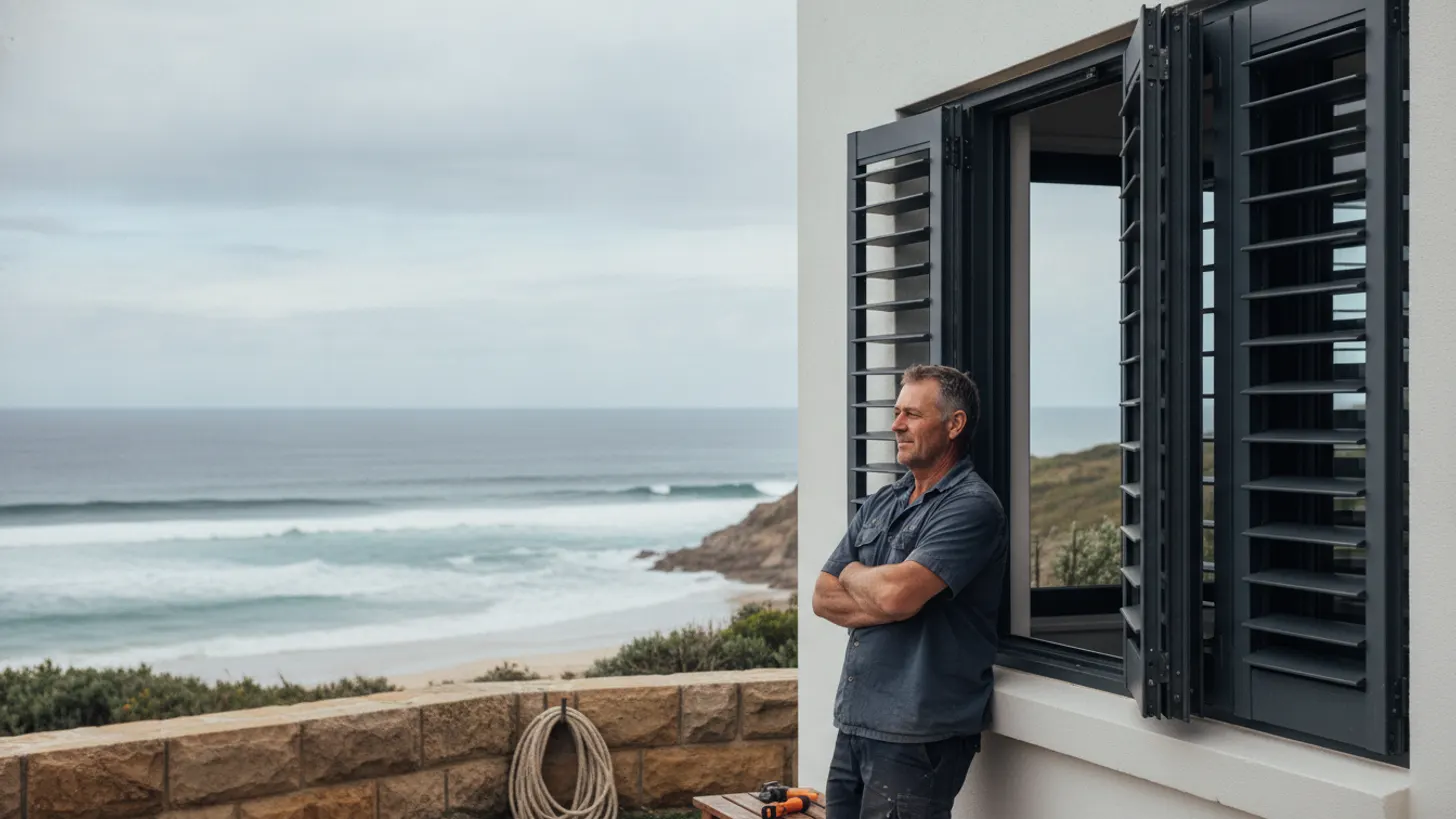
Coastal shutter finishes have to survive more than sunlight. Salt laden air attacks hardware and coatings before it touches the board, so the finish and the substrate have to be specified together. The Bureau of Meteorology, which publishes wind and humidity records station by station, is a fair first check on how exposed a site really is, and CSIRO, the national science agency and publisher of building materials durability research, has long documented how coastal exposure shortens coating life. Substrate choice is covered in our corrosion resistant coastal shutters guide.
Heritage home shutter colours are narrower than most owners expect. Deep creams, stone and muted greens dominate the documented palettes, and the evidence first approach above usually rules out the bright modern white sitting at the top of the sample box. When the standard range does not include a documented heritage shade, a custom tint to a named paint code is the honest answer, whatever shutter colours Australia manufacturers happen to carry.
| Finish | Best use | How the colour behaves | Watch for |
|---|---|---|---|
| Painted basswood | Most interior rooms | Holds a flat, even tone | Warm whites can read yellow beside cool LED lighting |
| Painted polymer | Bathrooms, laundries, kitchens | Slightly cooler and brighter than painted timber | Fewer custom colours available |
| Powder coated aluminium | Exterior and coastal openings | Reads darker in direct sun | Dark colours absorb more heat on the outer face |
| Stained hardwood | Rural and timber rich rooms | Shifts through the day with raking light | Grain variation between panels |
How paint, grain and louvre size change the shutter colours Australia buyers see
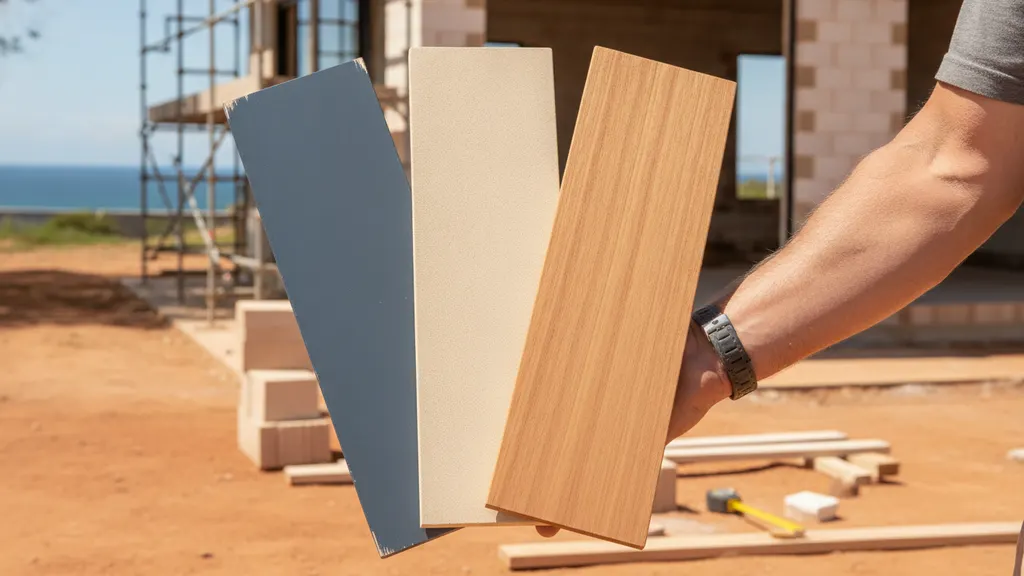
A colour is never only the pigment. Sheen decides how much of the room reflects back at you, grain decides whether the surface reads as timber or as a flat panel, and louvre width decides how much shadow sits between the blades. Change any one of the three and the same paint code looks different.
Wider louvres throw deeper shadow lines, which drops the apparent tone of a pale finish and pushes a mid grey towards charcoal from across the room. Narrow louvres do the reverse, reading lighter and busier. That is why a small sample panel can surprise people once the full window is fitted, whatever shutter colours Australia showrooms display it in: the panel carries one shadow line, the window carries fourteen.
Sheen is the other lever. A matt face hides minor surface texture and reads softer, but it marks more in high traffic rooms. Satin cleans better and lifts the colour slightly. Stained grain finishes shift the most across the day, since the grain catches raking morning light and flattens out by midday.
Standard plantation louvre widths of 63mm, 89mm and 114mm against the finish families we fit most across the Riverina.
Do darker shutter colours Australia homeowners choose run hotter in the sun?
On the external face, yes. A dark coating absorbs more of the solar radiation striking it, and that heat has to go somewhere. Inside the room the effect is smaller than the effect of the glass, the seals and the shading above the window, but on a west facing exterior shutter it is real.
The Australian Government's YourHome shading material is clear that lighter surfaces reflect more solar radiation than darker ones, and Sustainability Victoria, which publishes consumer guidance on windows and coverings, adds that a covering only earns its thermal keep if it seals the opening properly. Colour sits downstream of both. For the heat side of the decision, our plantation shutters energy efficiency guide for NSW heat works through it in order.
Sun geometry explains why a dark shutter behaves differently in January and July. At Temora's latitude of about 34.4 degrees south, the midday sun sits near 79 degrees above the horizon at the summer solstice, near 56 degrees at the equinoxes, and near 32 degrees at the winter solstice. High summer sun strikes a vertical shutter face at a glancing angle, while low winter sun hits it almost square. Whatever shutter colours Australia buyers judge in a July showroom, the same finish will behave differently once the low February sun hits it square on.
Same window, same finish, two very different angles of attack across the year.
What to request in a finish sample before ordering shutter colours Australia wide
Ask for the finish on the actual product, not a printed card. A real sample shows sheen, grain, edge profile and the slight shift that happens when paint sits on a profiled blade rather than flat paper. Then view it in the room, at the window, three times across one day.
- A sample in the real substrate and real coating, at least 150mm wide, with one full louvre attached.
- The paint or stain code written down, so a repair or an extra window can be matched years later.
- The sheen level named in writing, since two suppliers can both call a different gloss level satin.
- A second sample in the next shade along, which is the only way to judge undertone.
- Confirmation of which frames, hinges and blades carry the same finish, and which do not.
Samples should cost you nothing, and a supplier who will not provide one is telling you something. Master Builders Australia, the national association for residential builders, publishes contract and documentation guidance worth reading before you sign for custom joinery, and NSW Fair Trading, the state government body that licenses home building contractors and handles consumer complaints, is a sanity check on who actually turns up. Price moves with substrate and finish as much as with size, which our window shutters cost guide for NSW renovations breaks down.
Frequently asked questions
What is the most popular shutter colour in Australian homes?
Soft warm whites lead, for a practical reason rather than a fashion one: they sit beside the widest range of wall colours and they bounce daylight instead of soaking it up. The Australian Government's YourHome passive design guidance notes that lighter surfaces generally reflect more solar radiation than darker ones, so a pale louvre face also runs cooler behind glass. Popularity is not a specification though. Treat it as a starting point rather than a shortcut: shortlist the two or three whites already present in your own house, and judge them at the window rather than in a showroom, the same rule that holds for shutter colours Australia wide.
Will white plantation shutters yellow over time?
Quality painted finishes hold their colour for years, but every coating ages, and the rate depends on ultraviolet exposure, heat cycling and how often the surface is cleaned. North and west facing openings age fastest. CSIRO, the national science agency that publishes building materials durability research, has documented how exposure drives coating breakdown. In practice a warm white starts life closer to cream and is more forgiving as it ages, while a very cool white can start to look dirty rather than warm. Ask what the finish warranty covers on colour, in writing.
Can I paint shutters to match my existing window trim?
Usually yes, and factory matching beats painting after installation. A manufacturer can spray to a specified paint code before the panels are assembled, so the hinges, frames and blade edges all carry the same coat. Hand painting a finished shutter clogs the pivot pins and voids most finish warranties. Coating performance in residential work is governed by the standards called up by the National Construction Code, published by Standards Australia. Give your supplier the trim's paint code rather than a cut off piece of timber, and ask for a sample panel in that code first.
What colour shutters are best for a heritage home in NSW?
Whatever the evidence supports. NSW Heritage guidance recommends using physical and documentary evidence when selecting colours for heritage buildings, so the starting point is the house itself: paint scrapes on original joinery, archival photographs, and any heritage conservation area controls that apply. Deep creams, stone and muted greens turn up far more often than bright modern white. Where a consent condition names a finish, that condition wins. Master Builders Australia, the national body for residential builders, has useful material on documenting approvals. The standard range may need a custom tint to match, which is common for shutter colours Australia wide whenever a heritage shade is not already on the shelf.
Do dark shutters fade faster in the Australian sun?
Darker pigments show fade earlier because the change is more visible, and dark surfaces also run hotter, which speeds up coating stress. Inland NSW is a demanding place for any exterior finish. Solar exposure and ultraviolet records published by the Bureau of Meteorology show how strong the summer load is across the Riverina. For exterior shutters in charcoal or black, specify a powder coat rated for exterior exposure and keep the warranty paperwork. Interior shutters behind glass fade far more slowly, though a west facing room will still outpace a south facing one.
Should shutter colour match the walls or the window frames?
Match the frames when you want the window to read as one clean unit, and match the walls when you want the shutters to disappear. Matching the architrave is the safer default in older homes, where trim colour is often the strongest line in the room. In new builds with dark aluminium frames, a frame matched charcoal reads deliberate. Sustainability Victoria, which publishes consumer guidance on windows and coverings, is a reminder that fit and seal matter more than tone. Designers pairing dark frames usually choose either the frame tone or a clear off white, a rule of thumb that holds for shutter colours Australia wide.