Plantation Shutters · 14 min read
Plantation shutters energy efficiency Australia: NSW heat guide
Chris & Campbell · 9 October 2026
"Will shutters actually bring our power bill down, or is that just the sales pitch?" We hear it on nearly every quote in Temora and Wagga. Here is the plain answer on plantation shutters energy efficiency Australia: a tight-fitting shutter slows heat moving through glass, and glass is where most of the problem sits. The Australian Government YourHome guide puts summer heat gain through windows at up to 87%, so the gains are real when the fit is right.
How plantation shutters energy efficiency Australia works in NSW homes
Shutters work on the heat that glass lets through. The Australian Government YourHome guide to home energy performance reports windows can be responsible for up to 40% of a home's heating energy loss and up to 87% of its summer heat gain. A closed, close-fitting shutter adds a still air layer and a solid barrier in front of that glass.
Three things do the work. The panel resists heat conduction. The gap between panel and glass holds a layer of air that barely moves. And the louvre angle decides how much direct sun reaches the glass at all. Stopping sun before it lands on the glass costs less than cooling the room afterwards, which is the argument running through YourHome's shading chapter.
Orientation changes the answer. A west-facing lounge in Wagga takes late afternoon sun at a low angle, where louvres tilted down outperform a sheer curtain by a wide margin. South-facing rooms gain little summer sun, so in those rooms plantation shutters energy efficiency Australia benefits come from winter heat retention rather than heat rejection.
Why fit beats brochure numbers
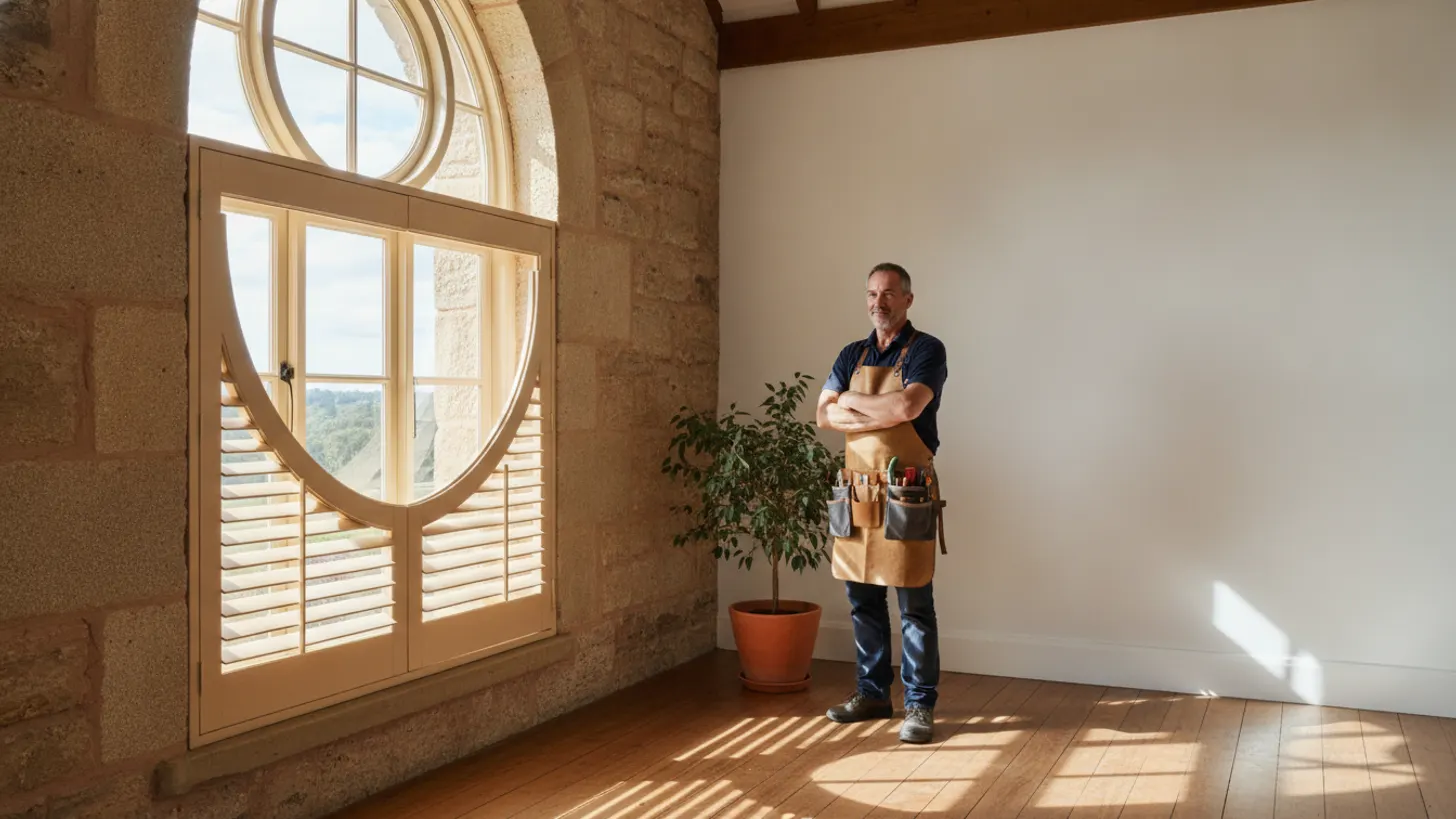
A panel with a 10 mm daylight gap around the frame lets air slip past the barrier, and moving air carries heat. Reveal-mounted shutters with a tight frame hold their air pocket; face-fixed panels standing off the wall do not. Nobody can quote you a performance figure off a product page without measuring the opening first.
We cover the details separately in Can landlords install shutters for rental properties Australia? NSW law explained.
We cover the details separately in Plantation shutters home value Australia: NSW resale guide 2026.
We cover the details separately in Security shutters Australia: privacy and protection for NSW homes.
We cover the details separately in Coastal window shutters Australia: corrosion-resistant NSW guide.
There is a full breakdown of this topic in Apartment window shutters Australia: strata approval guide NSW.
We cover the details separately in Acoustic shutters Australia: reduce outside noise in NSW homes.
Related reading: Kitchen window shutters Australia: ventilation and cleaning guide.
There is a full breakdown of this topic in Window shutters installation Australia: measuring and fitting guide.
Related reading: Bushfire shutters Australia: BAL ratings and NSW compliance guide.
We cover the details separately in Window shutters cost Australia: pricing factors for NSW renovations.
Which materials give the best plantation shutters energy efficiency Australia performance?
Material choice changes the numbers more than colour or louvre size does. Basswood and similar closed-grain timbers hold heat back better than thin aluminium, which conducts readily. PVC sits between the two and shrugs off moisture. The panel material and the reveal seal, not the colour or trim, decide the real plantation shutters energy efficiency Australia outcome.
| Material | Thermal behaviour | Best NSW use | Watch for |
|---|---|---|---|
| Basswood timber | Lowest conductivity of the three; holds a still air layer well | Living and bedroom windows away from direct wetting | Swelling in unventilated wet rooms |
| PVC / polymer | Mid-range; stable under heat cycling | Bathrooms, laundries, harsh west-facing glass | Heavier panels need stronger hinging on wide openings |
| Aluminium | Conducts heat readily; works as a shade, not an insulator | Outside the glass, on patios and exposed facades | Never the right pick for an internal thermal barrier |
Research on Australian housing stock from the CSIRO work on housing thermal comfort keeps landing on the same conclusion: the building fabric and the shading sequence decide indoor temperature swing more than any single product does. If you are weighing panel options in detail, our breakdowns of plantation shutter materials and the head-to-head on timber versus PVC shutters cover the durability trade-offs we see in Riverina conditions.
Do plantation shutters energy efficiency Australia gains hold up in winter too?
Yes, and the mechanism is simple. Glass radiates indoor warmth outward on cold Riverina nights, and YourHome puts window losses at up to 40% of total heating energy. A closed shutter plus a snug reveal cuts the draught path and the radiant path at once, which is where plantation shutters energy efficiency Australia claims hold up best.
The habit matters as much as the hardware. Panels closed at dusk and opened mid-morning capture the benefit; panels left open all night do nothing. Guidance from Sustainability Victoria on window coverings and draught sealing makes the same case for any treatment: edges and timing determine the result.
Shutters and fabric are not rivals. A shutter handles glare, security and the thermal barrier; a lined curtain adds mass and softens the room acoustically. Running both on the same window is standard practice in colder inland towns, and our guide to layering window treatments sets out which combinations are worth the money.
Pairing plantation shutters energy efficiency Australia gains with glazing
Glazing sets the baseline and shutters manage what gets past it. Single-glazed aluminium frames are the hardest case in older NSW housing, because the frame itself conducts heat around whatever you hang inside. Double glazing or thermally broken frames lift the floor; plantation shutters energy efficiency Australia gains then stack on top of that floor.
YourHome's glazing chapter treats glass, frame, shading and ventilation as one assembly. Read in that order, the sensible sequence for an existing home is: seal the obvious draughts, shade the worst-exposed glass externally where you can, then fit internal shutters to carry the rest. Roof glass is its own problem, which is why skylight blinds for heat and glare get treated separately.
Where external shading still wins
Heat stopped outside the glass never enters the room. An awning, zipscreen or eave beats any internal product on a north or west wall in February. Internal shutters then handle privacy, glare and the night-time thermal barrier, which is a different job and a year-round one.
Checking plantation shutters energy efficiency Australia claims before you buy
Ask for the evidence behind any number. Energy-efficiency requirements for building fabric and glazing sit in NCC 2022 Section J, summarised in plain terms by Master Builders Australia on the NCC 2022 energy provisions, and residential thermal performance is rated on the Nationwide House Energy Rating Scheme 0 to 10 star scale.
Three questions sort the honest quotes from the rest. Which windows in this house carry the heaviest load, and why? Is the panel going inside the reveal or on the face, and what clearance will there be? And what is the quoted figure based on, a tested panel value or a brochure line? Household advice published at energy.gov.au's household energy guidance is a useful sanity check against any sales claim.
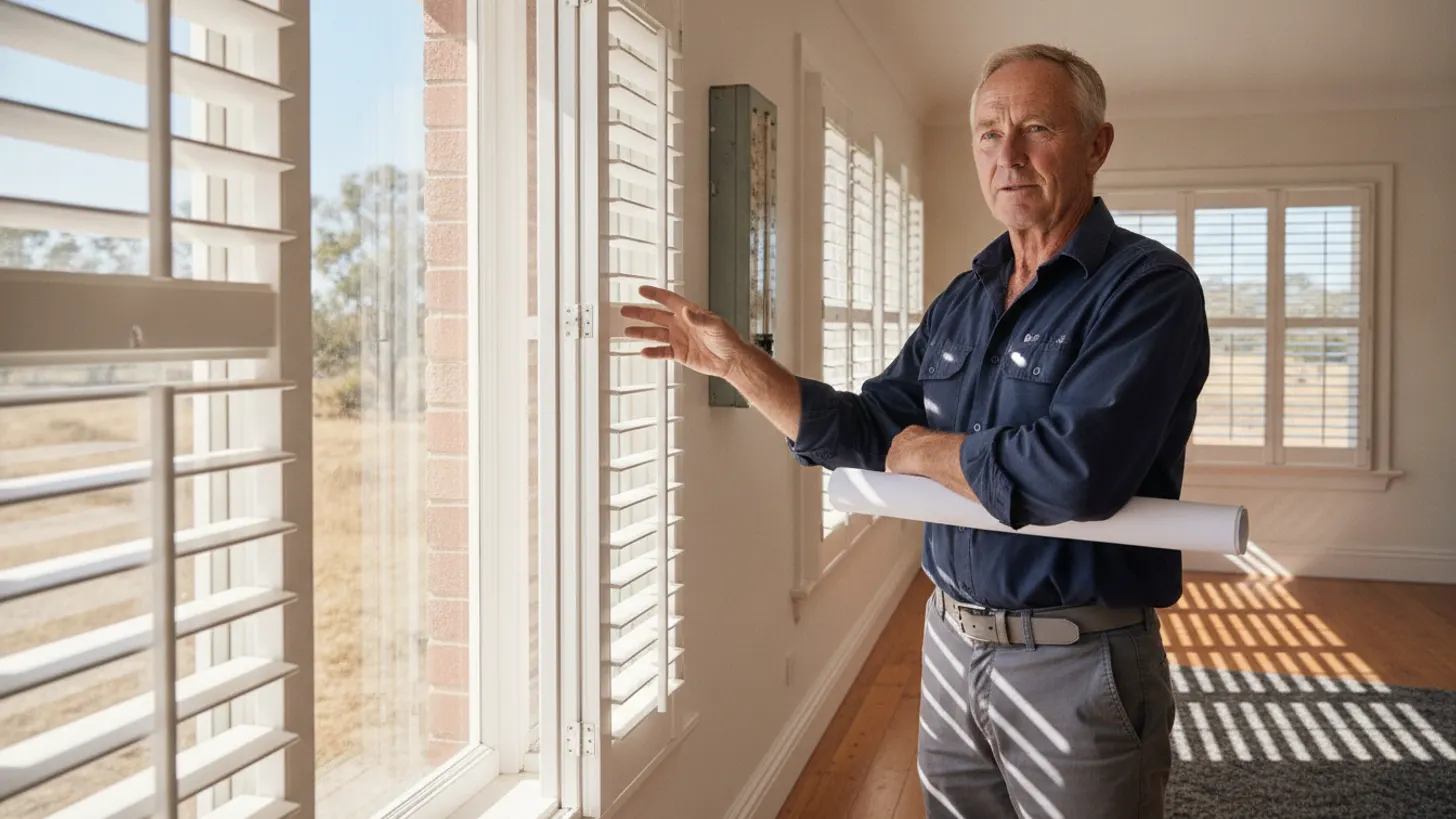
Chris and Campbell measure and quote on site for that reason: clearance, frame type, orientation and reveal depth cannot be read off a floor plan. Nobody should promise you a bill figure before seeing the openings. If budget planning is the next step, our plantation shutters cost guide for NSW homes explains what drives the price of a job up or down.
Frequently asked questions
Do plantation shutters really lower power bills in NSW?
They reduce the heat moving through your glass, and glass is the weak point. YourHome puts summer heat gain through windows at up to 87% of a home's total, so cutting that load lowers how hard the air conditioner works. The size of the saving depends on orientation, glazing, insulation and tariff, and electricity rates vary widely between retailers in NSW. Treat plantation shutters energy efficiency Australia claims as a range, not a guaranteed dollar figure, and ask the installer which windows in your home carry the heaviest load.
Are timber or PVC shutters better for keeping heat out?
Timber, usually basswood, has lower thermal conductivity than aluminium and a slight edge over most PVC panels, so it holds heat back a little better. PVC wins in wet rooms and west-facing windows that cop harsh sun, because it will not swell or warp. Aluminium conducts heat readily, which is why it belongs outside the glass as a shade device rather than inside as insulation. Panel construction and testing methods differ between suppliers, so ask which standard was used and check it against the Standards Australia catalogue of referenced building standards.
Do shutters help in winter, or just summer?
Both, though the winter effect surprises people. Inland NSW towns like Temora and Griffith drop to single digits overnight through June and July, as the long-term records published by the Bureau of Meteorology show. Glass radiates indoor warmth straight out on those nights. Closing shutters at dusk puts a solid panel and a pocket of still air between your heated room and cold glass, and it blocks the draught running along the reveal. YourHome attributes up to 40% of heating energy loss to windows, so the winter case is not a minor one.
Should I spend on glazing or plantation shutters energy efficiency Australia upgrades first?
If you are building or replacing windows anyway, glazing first, because the frame and glass set a baseline you cannot change later. If the windows are staying, shutters and external shading give you more comfort per dollar than a glass upgrade does. The YourHome passive design chapter treats shading and glazing as one system rather than competing purchases. In practice, treating the two or three worst windows properly beats spreading a budget thinly across every opening, which is the honest version of plantation shutters energy efficiency Australia advice.
Do shutters count towards a NaTHERS star rating?
Not directly. The Nationwide House Energy Rating Scheme rates the building fabric on a 0 to 10 star scale, and it models fixed elements such as glazing, insulation, orientation and sealing rather than removable furnishings. Internal shutters are generally treated as occupant behaviour, so they improve lived comfort without moving your star figure. Fixed external shading does get modelled. If you are chasing a rating for a new build, read the scheme material published through energy.gov.au and raise shutters with your assessor early so the shading assumptions match what you install.
How tight does a shutter need to fit to work properly?
Tight enough that you cannot see daylight around the frame when the panels are closed. Air moving around the edge of a panel undoes most of the insulating benefit, the same way a gap under a door undoes draught sealing. Shutters fitted inside the reveal with a close frame and minimal clearance perform better than face-fixed panels standing off the wall. That is a measuring job, not a product-selection job. The YourHome insulation chapter makes the same point about continuity: a barrier with a gap in it performs closer to having no barrier at all.