Buyer Guides · 9 min read
How to choose roller blinds: The Australian homeowner's guide
Chris & Campbell · 1 June 2026
'Why is my blind letting light through at the sides?' -- the answer, almost every time, is that the sizing was wrong. Working out how to choose roller blinds australia starts with three decisions: fabric opacity, correct measurement, and cord safety. Get all three right and a roller blind will perform for 10-15 years without adjustment; skip one and you're looking at a re-order before the year is out.
How to choose roller blinds australia: fabric opacity and finish
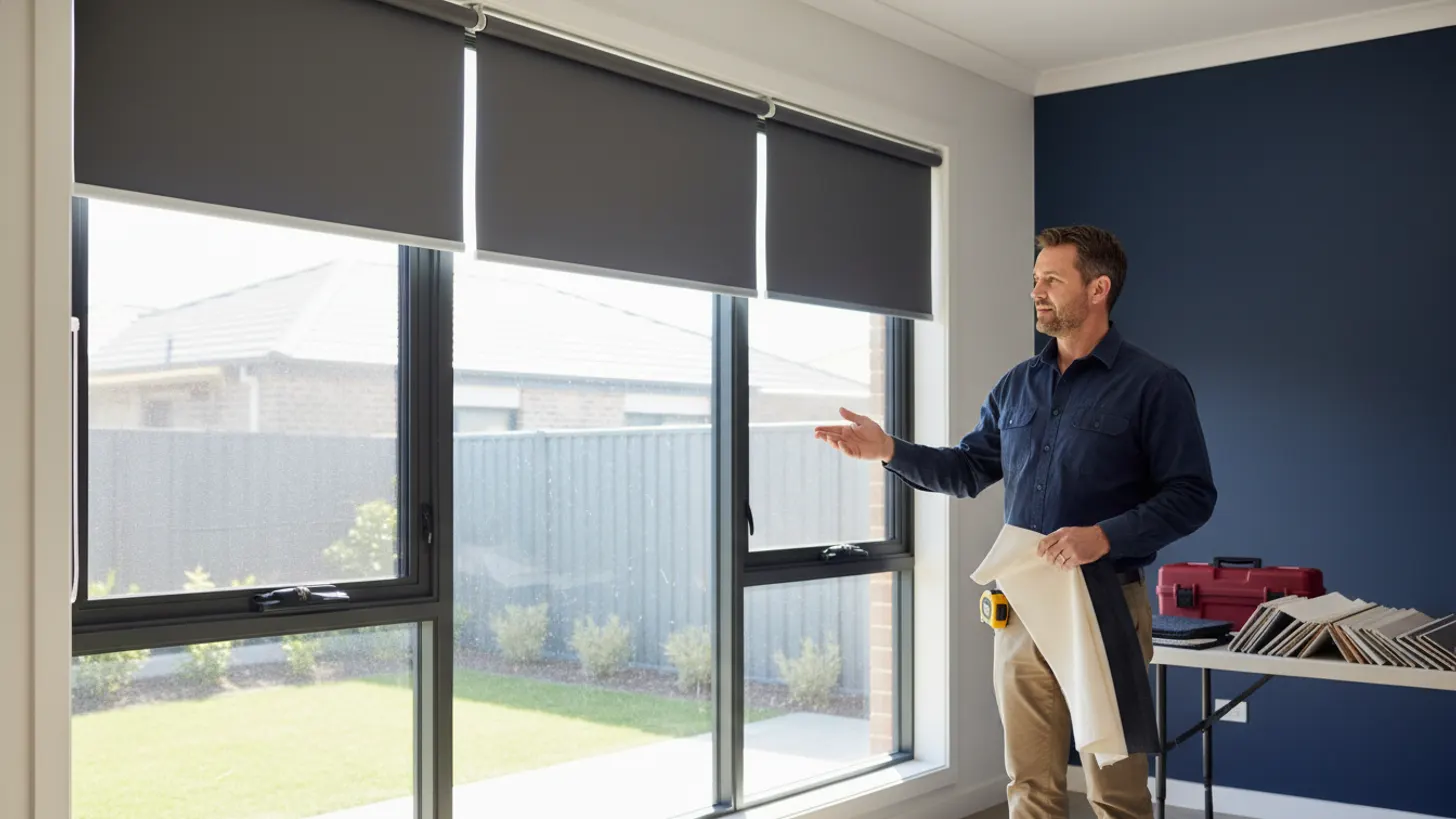
The first decision when working out how to choose roller blinds australia is opacity. Three practical categories cover almost every residential window: translucent (light-filtering), sunscreen (UV-blocking, view-preserving), and blockout (near-total darkness). Translucent fabrics diffuse incoming light and suit home offices or kitchens where you want soft brightness without direct glare. Sunscreen fabrics carry an openness factor rating -- typically 1%, 3%, 5%, or 10% -- which measures the percentage of open weave. A 3% openness fabric blocks around 97% of UV while keeping your view to the garden. Blockout fabrics have a foam or acrylic coating that stops virtually all light penetration. A CSIRO thermal performance study found that properly installed blockout blinds reduce summer heat gain through glass by up to 20% compared to an uncovered window.
If you are asking how to choose roller blinds australia for a north or west-facing room in the Riverina, the Bureau of Meteorology's Australian climate zone map classifies this region as zone 4 (hot and dry), where solar gain through glass is the dominant summer comfort problem. For that exposure, a sunscreen at 3% openness or a blockout is almost always the right answer. See our full roller blinds range for fabric options available across NSW.
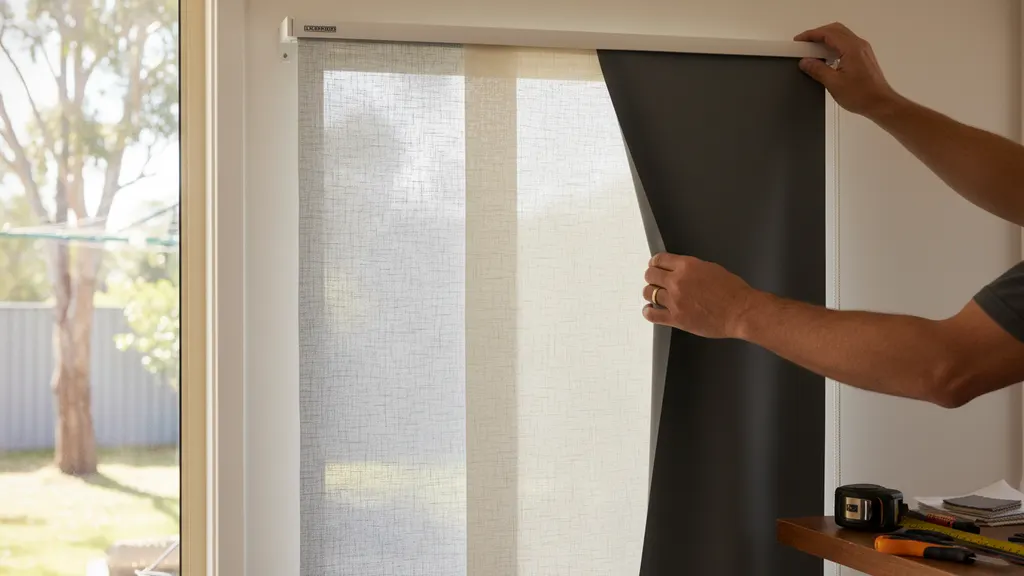
Fabric finish affects thermal performance too. A white or off-white back-coating on a sunscreen or blockout blind reflects radiant heat back through the glass on warm days rather than absorbing it into the room. Dual-fabric systems (often called day-night rollers) mount two fabrics in a single cassette, letting you swap between translucent and blockout without two separate blind installations -- a practical option for bedrooms that double as workspaces.
How to choose roller blinds australia: matching light control to each room
When deciding how to choose roller blinds australia, match the fabric to the room's primary function rather than its size or outlook alone. The table below summarises the approach we use across Temora, Wagga, and Griffith.
| Room | Recommended opacity | Openness factor | Notes |
|---|---|---|---|
| Bedroom | Blockout | 0% (coated) | Add a sheer day blind for morning softening |
| Living / lounge (north or west) | Sunscreen | 3-5% | Preserves outlook, blocks UV and glare |
| Kitchen | Translucent or sunscreen | 5-10% | Specify moisture-resistant fabric |
| Home office | Sunscreen | 3-5% | Cuts screen glare from north or west light |
| Bathroom | Translucent (privacy) | 10-14% | PVC-backed for moisture resistance |
| Media room | Blockout | 0% (coated) | Side-channels prevent light bleed at edges |
For rooms on the western side of a house, the Sustainability Victoria passive design guide recommends external shading first -- awnings or zipscreens -- and internal blinds as a secondary thermal layer. If an external shade is not practical, a blockout or 3% sunscreen on a western window is the next-best step. Read more about external zipscreen options across the Riverina.
Measuring your windows correctly the first time
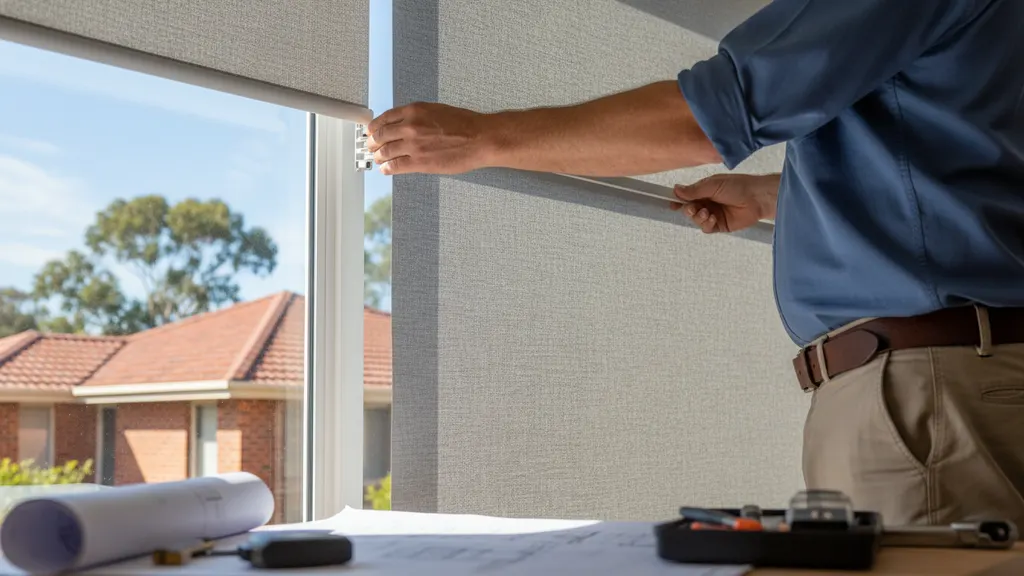
Accurate sizing is one of the most overlooked steps when working out how to choose roller blinds australia. A correctly fitted inside-mount roller blind should have no more than 5 mm gap on each side. Anything wider allows light to bleed around the edges and weakens any insulating air gap the blind creates. For outside-mount blinds, the standard minimum overhang is 50 mm each side -- 100 mm each side if blockout performance is the goal, as noted in Choice's window blind buying guide.
Measure width at three heights (top, middle, and bottom of the recess) and record the narrowest reading. Measure drop at three points (left, centre, right) and record the longest. NSW windows are rarely perfectly square; relying on a single corner measurement is how orders go wrong. When you book a measure and quote with us, we use a digital laser measure and check every recess before quoting, not after.
The YourHome passive design guide notes that window treatment performance drops sharply when installation gaps exceed 10 mm. Even a quality blockout fabric acts as a partial screen if air can convect freely behind it. Edge channels or a cassette headbox close this gap and are worth the added cost in any room where blackout or thermal performance matters.
Getting the sizing right is what separates a blind that performs from one that gaps or sags from day one -- and it is the step most homeowners underestimate when they first work out how to choose roller blinds australia.
How to choose roller blinds australia: motorised vs manual operation
Deciding between motors and manual controls is part of how to choose roller blinds australia, particularly for high windows, skylights, or any installation above 2.4 m. Manual spring-lift roller blinds work reliably for standard window heights. For anything harder to reach, or for homeowners who want set-and-forget automation, a tubular motor removes the daily effort entirely.
Radio-controlled motors (Somfy, Dooya, and similar brands) integrate with most home-automation systems and can be grouped so you raise or lower a whole room with one button. Battery-powered motors need no electrician and typically last 3-5 years between charges on a standard daily cycle. Hardwired motors require a licensed electrician but are quieter and more reliable long-term. For a room-by-room comparison of motor types, see our motorised blinds guide for the Riverina.
On cost, expect to add $150-$300 per blind for a quality motor. The Australian Department of Energy lists smart motorised window coverings as an eligible product category under several state energy-efficiency incentive programs. Check your state scheme before ordering, as rebates can partially offset the motor premium.
There is a full breakdown of this topic in Motorised blinds Australia: Smart home integration guide for 2026.
Child safety and Australian compliance for roller blinds
Cord safety catches many homeowners by surprise when they research how to choose roller blinds australia. The Australian Competition and Consumer Commission enforces mandatory safety standards under consumer product safety law. Blinds with accessible looped cords or chains positioned within 1.6 metres of the floor in any area accessible to children under 10 are banned from sale in Australia.
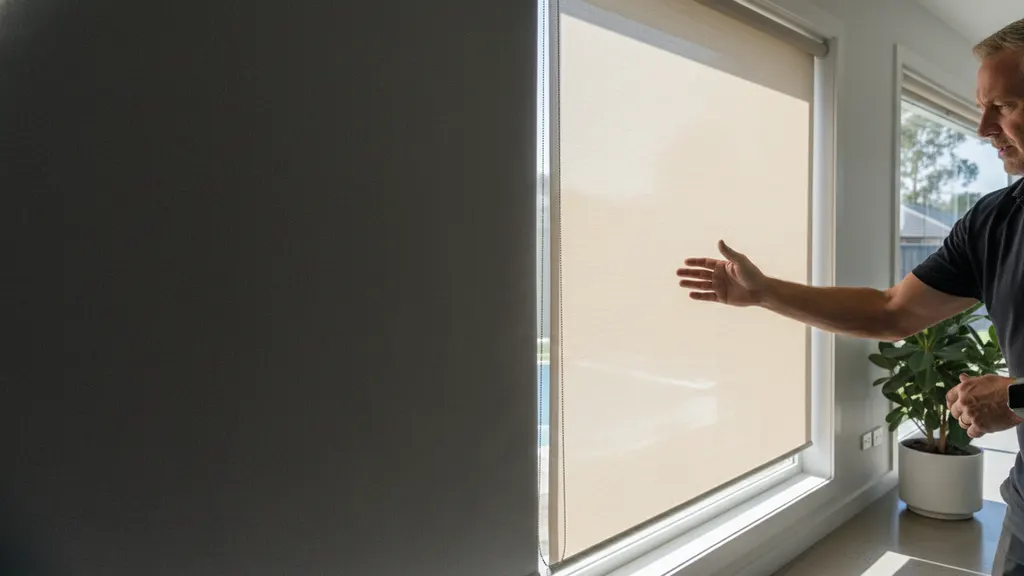
The technical requirement is Australian Standard AS/NZS 4191, which specifies cord tensioner requirements, breakaway connectors, and maximum accessible cord lengths. Every blind we supply and install complies with AS/NZS 4191. For children's bedrooms and play areas, we recommend cordless cassette roller blinds with a spring-lift mechanism -- no cords, no chain, no risk. For the rest of the house, wand-operated or motorised systems remove the hazard while keeping full operation. See our child-safe blinds compliance guide for a room-by-room checklist.
Roller blind costs in the Riverina: what you're paying for
Understanding how to choose roller blinds australia also means understanding where the cost goes. Fabric drives most of the price: a standard 1.8 m-wide translucent blind can start around $130-$180 supplied and installed; a quality blockout with a powder-coated cassette and side-channels on the same window can reach $350-$450. The chart below reflects current installed pricing across the Riverina.
Beyond fabric, the cassette style affects cost. An exposed roller (bare tube) is the budget option. A square cassette adds a cleaner finish and partially encloses the barrel. A full cassette with fabric fascia and side-channels is the premium tier and the one we recommend for any room where thermal performance or blackout quality matters. Cassettes also shield the fabric from dust accumulation, which extends the working life of the blind materially. A properly itemised measure and quote makes every component transparent before any fabric is cut. If you are also weighing shutters for the same windows, our plantation shutters guide covers how the two options compare on light control, privacy, and long-term maintenance.
Frequently asked questions
What roller blind fabric works best in Australian summers?
For Australian summers, a sunscreen fabric with an openness factor of 3-5% gives the best balance: it cuts glare and blocks up to 97% of UV while keeping your view to the outside. In rooms requiring full darkness -- bedrooms or media rooms -- choose a blockout fabric with a minimum 1.5 mm foam-backed coating. The Australian Department of Energy rates blockout fabrics as the highest-performing window treatment for reducing solar heat gain in warm-climate homes. In the Riverina, where summer temperatures regularly exceed 35 degrees Celsius, pairing a blockout with an external awning on western windows delivers the greatest sustained comfort benefit.
How do I measure for roller blinds in Australia?
Measure width and drop to the nearest millimetre. For inside-mount blinds, record the narrowest width of the recess -- windows are rarely perfectly square. For outside-mount blinds, add at least 50 mm each side to cover light gaps. Choice's window blind buying guide recommends a minimum 100 mm overlap each side for full blackout in bedrooms. Always measure twice before ordering; most suppliers will not refund cut fabric. When we come out for a measure and quote, we check every recess at three points before anything is ordered from our NSW supplier.
Are cordless roller blinds required by law in Australia?
Exposed looped cords within 1.6 metres of the floor in areas accessible to children are banned under consumer product safety regulations enforced by the ACCC Product Safety unit. Cordless operation is not required in every room, but any cord or chain in a child-accessible space must be made inaccessible through tensioners, cleats mounted at height, or elimination. The technical standard is AS/NZS 4191. All blinds installed by LuxeShutters across Temora, Wagga, and Griffith comply. If you are unsure whether existing blinds are compliant, we can assess them during a measure and quote visit.
Can roller blinds reduce energy bills in Australian homes?
Yes, but savings depend on fabric choice and installation quality. According to the Australian Department of Energy, well-fitted blockout or low-openness sunscreen blinds can reduce cooling loads by 10-15% in warm Australian climates. The key is closing the gap between the blind and the window frame -- edge channels or cassette headboxes prevent warm air from convecting behind the blind. Sustainability Victoria rates window treatments as one of the most cost-effective passive-cooling steps before more expensive measures such as ceiling insulation upgrades.