Window Treatments · 16 min read
Bathroom blinds Australia moisture resistant: what actually lasts
Chris & Campbell · 24 June 2026
What kills bathroom blinds Australia moisture resistant claims faster than anything else we see on call-outs? Steam soaks fabric drums, corrodes the wrong metal, and feeds black mould behind the slats long before the warranty runs out. After fitting hundreds of bathroom windows across the Riverina, we will name the materials that hold up, the installs that fail, and the gap clearance that stops the mould bloom forming behind your blinds in the first place.
Why standard blinds fail fast in Australian bathrooms
Standard fabric blinds fail in Australian bathrooms because they were never designed for daily steam cycles. Untreated cotton-blend rollers wick water into the spring drum, zinc-plated mechanisms pit within months, and timber slats swell, warp, and split as moisture drives into the grain.
The regulation sets the floor. AS 1668.2 requires a minimum 25 litres per second of mechanical exhaust in bathrooms, which tells you something useful: every regulator assumes your wet zone will hold steam every day. That is the baseline environment your window covering has to survive. The federal Your Home wet area construction guide notes that mechanical components rated for wet zones need stainless or anodised metals. Generic zinc plating fails. On a typical job in Wagga or Griffith, we pull out three-year-old roller blinds that look fine from a metre away but have a black mould stripe along the bottom hem and rusted brackets hiding behind the spring assembly.
The fabric was rated water-resistant. Resistant is not waterproof, and the gap between those two words is where most warranties quietly die. The Australian Window Association publishes WERS condensation resistance scores precisely because the difference matters. Most chain-store blinds never get tested at all.
For a closer look at this, see How to choose roller blinds: The Australian homeowner's guide.
Bathroom blinds Australia moisture resistant materials: waterproof vs water-resistant explained
Calling something waterproof is a high bar. For bathroom blinds Australia moisture resistant marketing usually means the product can shed splashes, not survive a year of daily steam. True waterproof blinds are aluminium, PVC, or marine-grade composite. Everything else is water-resistant at best, and the gap is where most homeowners get burned.
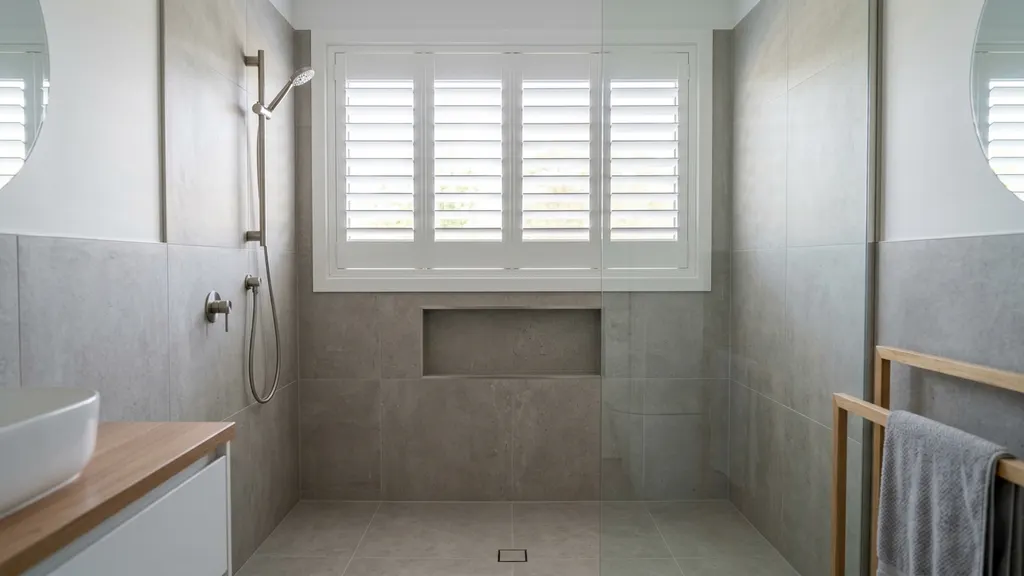
Aluminium venetian blinds resist steam and humidity corrosion indefinitely under standard residential use, which makes them the default for shower windows where airflow is limited. PVC roller blinds with a heat-welded seam and a powder-coated steel chain stand up to 8 to 10 years of wet-zone duty. Faux-wood shutters built from extruded polymer survive splashes and frequent wiping. Real timber shutters do not. We refuse to fit them within two metres of a shower head, and the same applies to untreated linen or cotton-blend roller fabrics. For bathroom blinds Australia moisture resistant longevity, the material list is short and the cheap end is empty.
Australian material science groups back this up. CSIRO research into building material performance in humid environments confirms what we see on every replacement job. The federal energy.gov.au efficient products guide also notes that mechanical components rated for wet areas need stainless or anodised metals. We cite both when customers ask why our quotes specify 316 stainless brackets at twice the price of generic plated steel.
Bathroom blinds Australia moisture resistant choices that balance privacy, light, and ventilation
For the three bathroom window zones we map on every measure-and-quote (shower-adjacent, over-vanity, and toilet-adjacent), the right bathroom blinds Australia moisture resistant material changes. Shower-adjacent windows need aluminium venetians open to the AS 1668.2 25-litre-per-second airflow standard; over-vanity and toilet positions suit PVC rollers rated at 85 percent light blockout for nighttime privacy.
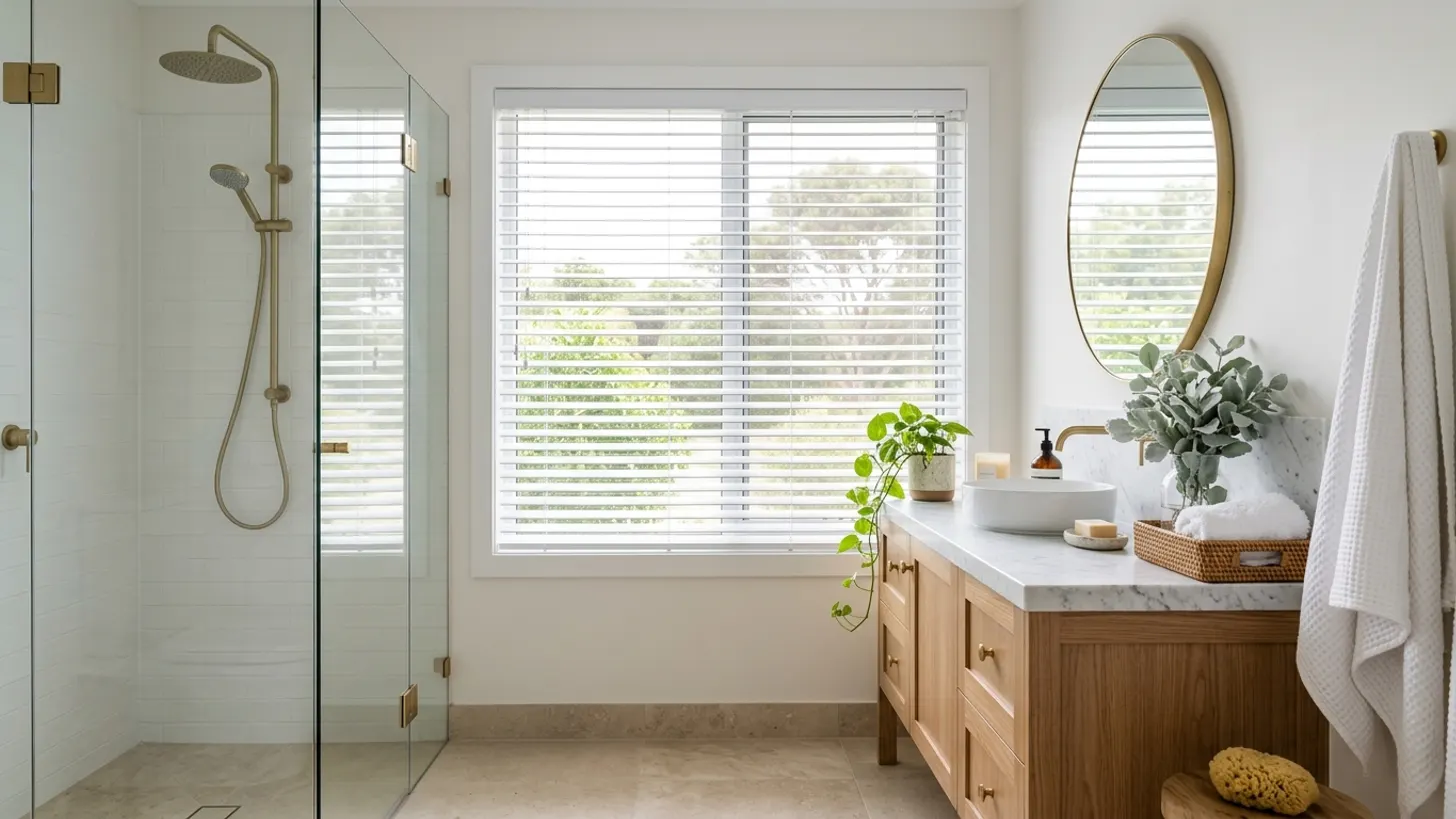
Aluminium venetians win at the shower-adjacent window: open the slats during a shower for steam release, then close them after. PVC rollers in a frosted or pearl finish suit the vanity. For toilet windows you need full blockout, which means a double-cell PVC honeycomb or a backed PVC roller with a tested condensation resistance rating.
Sustainability Victoria's home moisture management guide stresses ventilation as the first line of defence against bathroom mould, ahead of any chemical treatment. That is the order we follow on every install: open window first, exhaust fan second, blind type third. Our guide on window treatments for the Riverina climate goes deeper on that order, and the same logic applies to bedrooms in our bedroom window treatments guide.
We cover the details separately in Bathroom blinds and shutters: moisture resistance and privacy in NSW.
Aluminium venetians or roller blinds: which suits a steamy wet zone
Aluminium venetians and PVC roller blinds are the two real contenders for wet zones. Aluminium wins on steam tolerance and slat-by-slat ventilation control. PVC rollers win on privacy, fabric texture, and ease of cleaning. The right pick depends on which trade-off matters more in your specific room.
Aluminium venetian slats shed water on contact. They will not warp, swell, or rot. A spray of vinegar and water wipes them clean. The downside: noise when the window is open, cord or wand operation if not motorised, and a utilitarian look some homeowners dislike near a feature bath. PVC rollers solve the look and noise issue but trap moisture in the spring drum if the rim is not vented. We see both fitted side by side on the same house. Master bathroom: PVC roller in pearl finish over the vanity, aluminium venetian over the bath. Ensuite: aluminium venetian throughout because the room is smaller and steam volumes higher per cubic metre.
| Criterion | Aluminium venetian | PVC roller | Faux-wood polymer |
|---|---|---|---|
| Steam tolerance | Indefinite | 8-10 years | 12+ years |
| Privacy at full closure | Slatted, partial | Full blockout option | Full blockout option |
| Cleaning | Wipe each slat | Wipe full panel | Wipe full panel |
| Operation noise | Clatters in wind | Silent | Near-silent |
| Average cost | $280-$420 per window | $220-$380 per window | $420-$680 per window |
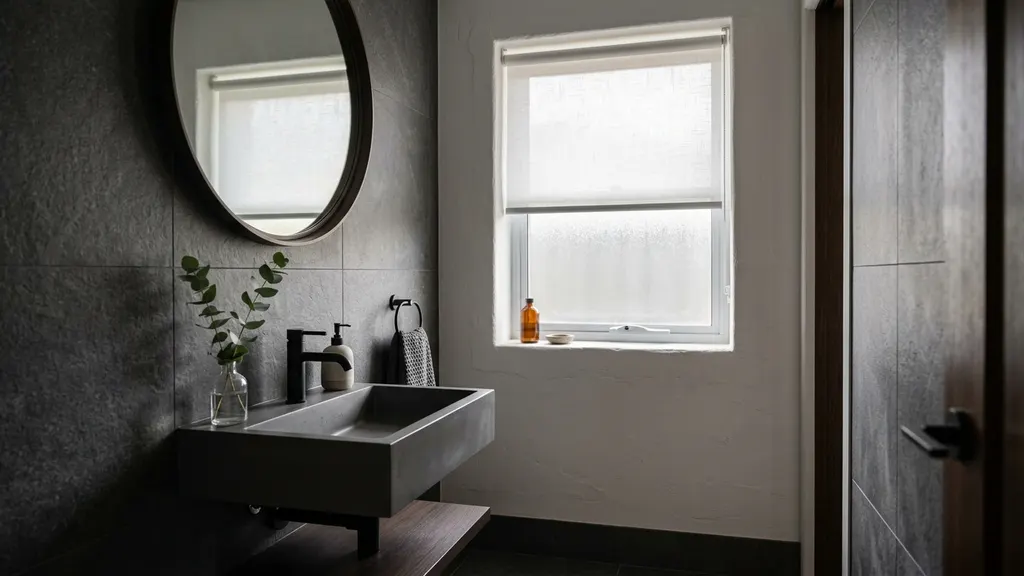
Canstar Blue's Australian blinds satisfaction ratings rank aluminium venetian and PVC roller above other materials for bathroom suitability. The materials simply outlast the alternatives. For bathroom blinds Australia moisture resistant performance, both options are field-proven. Pick based on aesthetics and operation preference, not on whether the blind will survive the steam. Our plantation shutters vs roller blinds guide covers the broader trade-off across other rooms.
For a closer look at this, see Roman blinds vs curtains Australia: which suits your living room?.
Bathroom blinds Australia moisture resistant installation: gap clearance, fixings, and mould prevention
Installation makes or breaks a bathroom blind. A bathroom blinds Australia moisture resistant product fitted hard against the architrave with no airflow gap will grow mould behind it within a year. The fix is simple geometry and the right fixings, but you will not find it in the install card that ships with chain-store blinds.
Leave a 20 to 30 mm gap between the blind back and the window frame. Leave 50 mm of sill clearance below the bottom rail. Use 316 stainless brackets fixed into treated pine or marine plywood pads, not direct into MDF reveal trims. Seal the wall plug holes with neutral-cure silicone, not generic acetic-cure, which corrodes the bracket from the back over time. On every job across the Riverina, we ground the fixing into solid timber framing where possible, and we hand the customer a written cleaning schedule on the day of install: wipe blinds down after long showers, check brackets quarterly, replace silicone every five years.
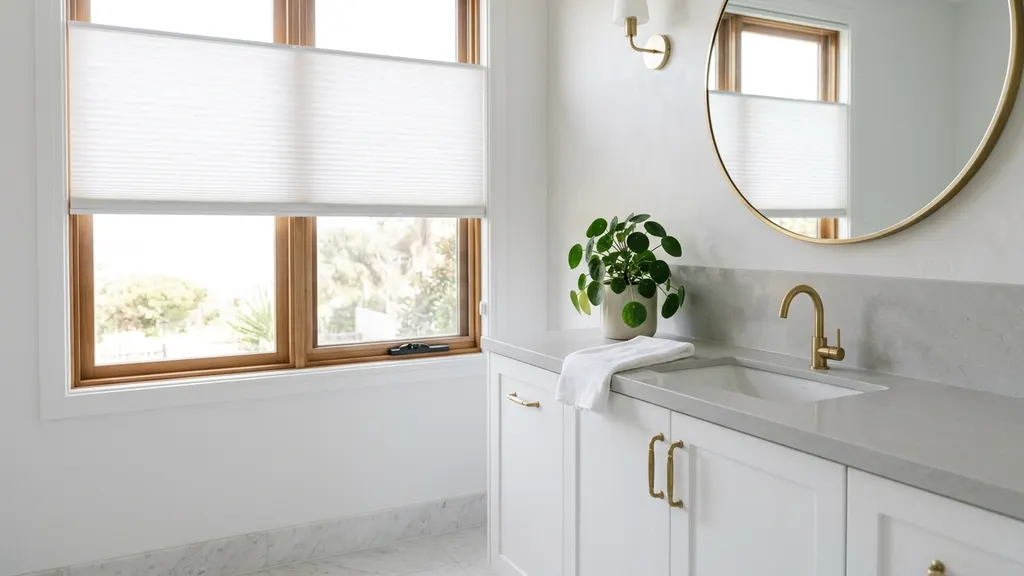
The Your Home guide on wet area design treats airflow as a planning problem, not a maintenance afterthought. We install with the same principle: prevent the trapped pocket of humid air, and you prevent the mould. For bathroom blinds Australia moisture resistant longevity, that one rule does more than every premium fabric upgrade on the market. Our cordless child-safe blinds guide covers the wand and motorised operation options that pair well with this install spec.
Frequently asked questions
How long do bathroom blinds last in Australian humidity?
Most bathroom blinds Australia moisture resistant products from chain stores fail in 2 to 3 years because the spec sheet hides the difference between water-resistant and waterproof materials. Real aluminium venetian blinds last 15 years or longer in a residential wet zone with no special care. PVC-coated roller blinds run 8 to 10 years. Real timber and untreated fabric should never be fitted within 2 metres of a shower head. The Australian Window Association's WERS condensation resistance rating, referenced by the federal Your Home wet area guide, is the metric that tells you which products will actually last.
Are roller blinds or venetians better for a bathroom shower window?
Aluminium venetians win for the window directly over a bath or shower because the metal slats shed water on contact and corrode at a negligible rate. PVC roller blinds suit the over-vanity window where privacy matters more than steam tolerance. We fit both in the same bathroom often: aluminium venetian over the bath, PVC roller in pearl finish over the vanity. The Your Home guide from the federal government rates ventilation as the first defence against bathroom mould, so pick a blind type that lets you open the window during showers without obstruction.
Can I install bathroom blinds myself or should I get a professional?
Self-install is fine for dry-room blinds, but bathroom installations have three failure points DIY usually misses: bracket fixings into wet-rated substrate, neutral-cure silicone behind every wall plug, and the 20 to 30 mm airflow gap between blind and frame. Get those wrong and you grow black mould behind the blind within 12 months. Canstar Blue's blinds satisfaction ratings show installation issues drive most complaints, not the product itself. If you DIY, use 316 stainless brackets, neutral-cure silicone, and keep the airflow gap. Otherwise book a measure and quote with an authorised dealer.
What bathroom blinds Australia moisture resistant material wins in a steam-heavy wet zone?
Aluminium, PVC, and faux-wood polymer composite are the only three bathroom blinds Australia moisture resistant materials we will fit near a shower head. Aluminium venetians are the safest choice for the window with the highest steam exposure. PVC roller blinds with a heat-welded seam and powder-coated chain run 8 to 10 years. Faux-wood polymer shutters survive splashes and frequent wiping. Real timber, untreated cotton blends, and zinc-plated mechanisms all fail fast. Sustainability Victoria's home guide explains why moisture management determines material life, and we pick from that shortlist when we measure and quote in the Riverina.
How do I stop mould behind bathroom blinds Australia moisture resistant installations?
Mould behind bathroom blinds grows in trapped humid air pockets. Stop the pocket forming and you stop the mould. Three things prevent it: a 20 to 30 mm gap between blind back and window frame, 50 mm sill clearance below the bottom rail, and active ventilation during and after showers. Sustainability Victoria stresses ventilation as the first defence against bathroom mould, well ahead of any chemical treatment. We also fit 316 stainless brackets so the wall fixing itself does not rust and create a damp bridge. Wipe blinds down after long showers and check brackets quarterly.
Do moisture-resistant blinds cost more than standard blinds?
Yes, but not by as much as homeowners expect. A PVC-coated roller blind costs roughly 15 to 25 percent more than an untreated fabric equivalent. An aluminium venetian runs about the same price as a quality timber-look venetian. Faux-wood shutters cost slightly less than real timber shutters. The cost difference is recovered fast: untreated products replaced at year 3 versus moisture-rated products lasting 10 to 15 years. The energy.gov.au efficient products guide stresses lifecycle cost over sticker price. When we measure and quote a bathroom job in the Riverina or wider NSW, we price both options so the customer can compare.