Smart Home & Automation · 9 min read
Motorised blinds Australia: are smart window coverings worth the cost?
Chris & Campbell · 6 May 2026
Are motorised blinds Australia homeowners pay extra for actually worth the money in 2026, or are they a clever showroom upsell? We measure and quote window coverings every week across Temora, Wagga, and Griffith, and the honest answer depends on three things: which windows you motorise, which brand of motor you choose, and whether your home is set up to run them properly.
What motorised blinds Australia homeowners are actually installing in 2026
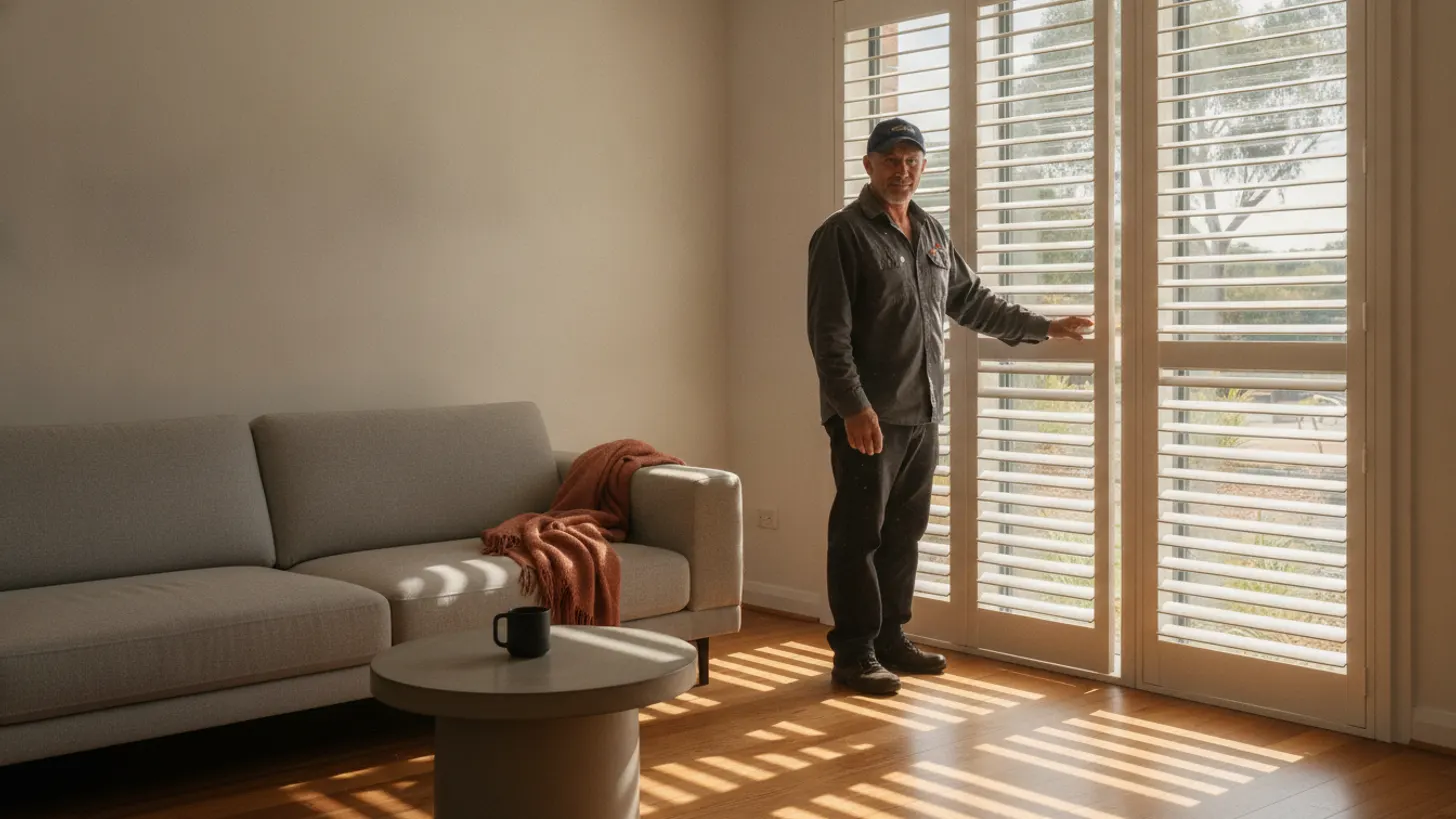
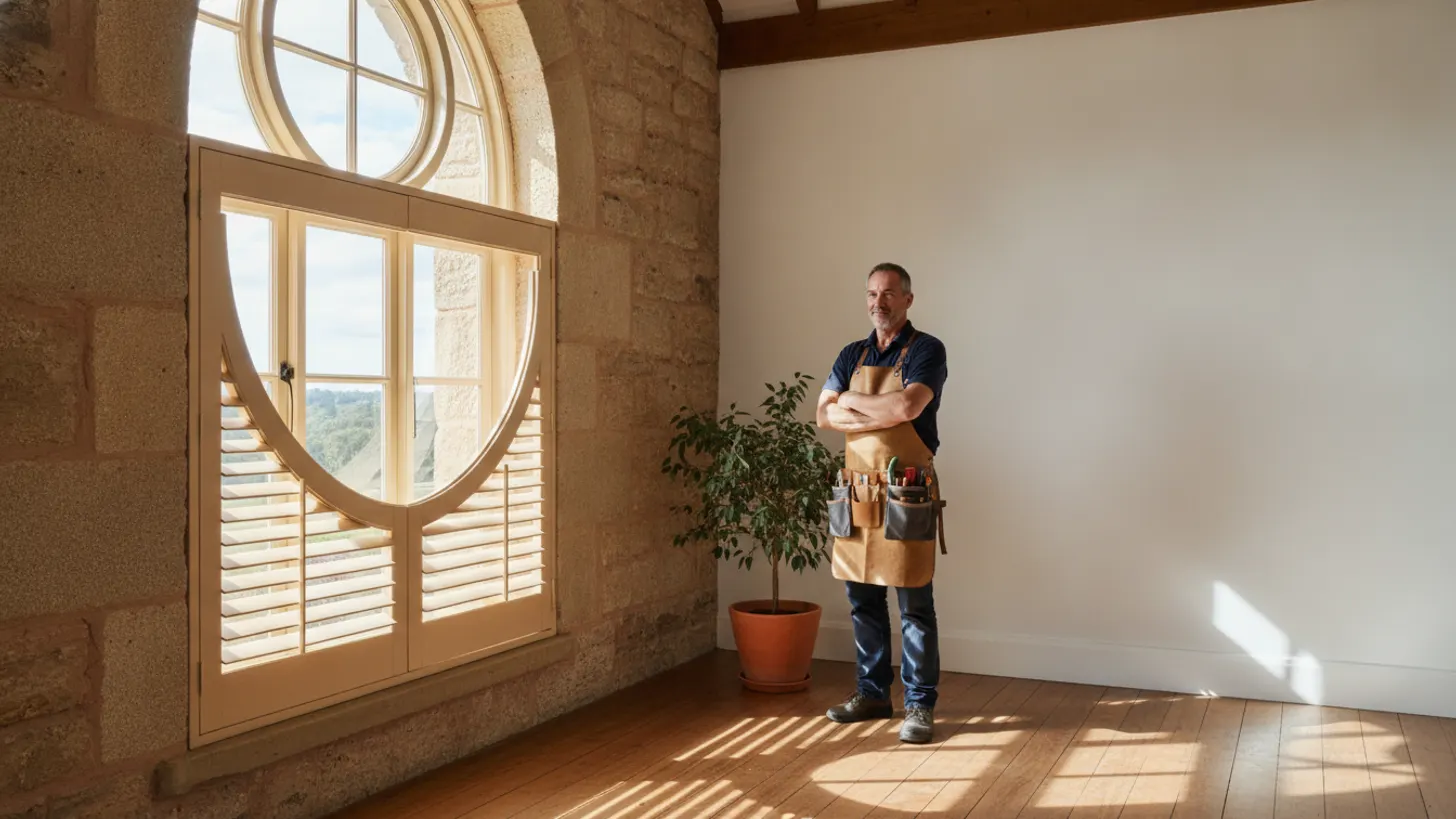
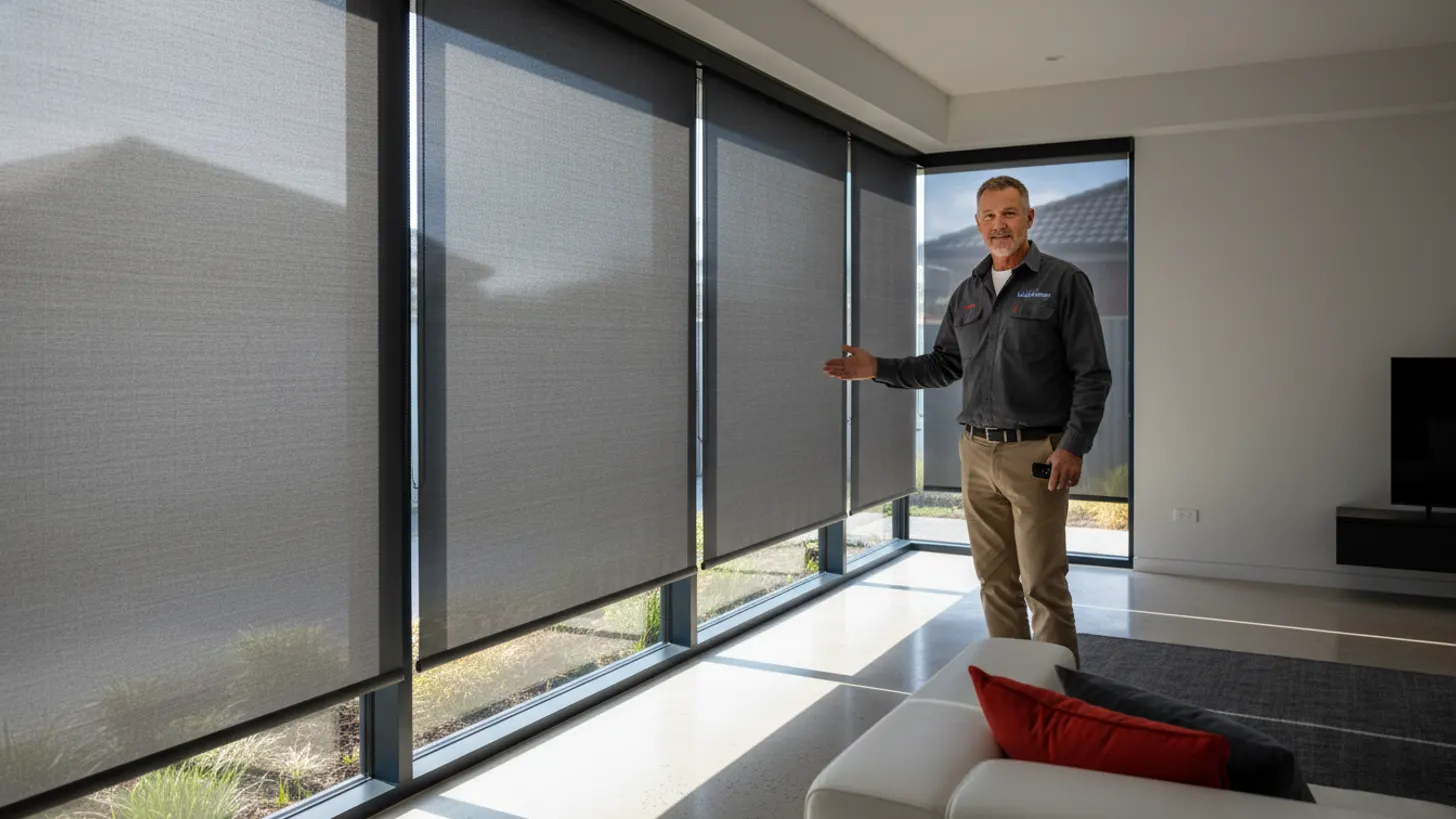
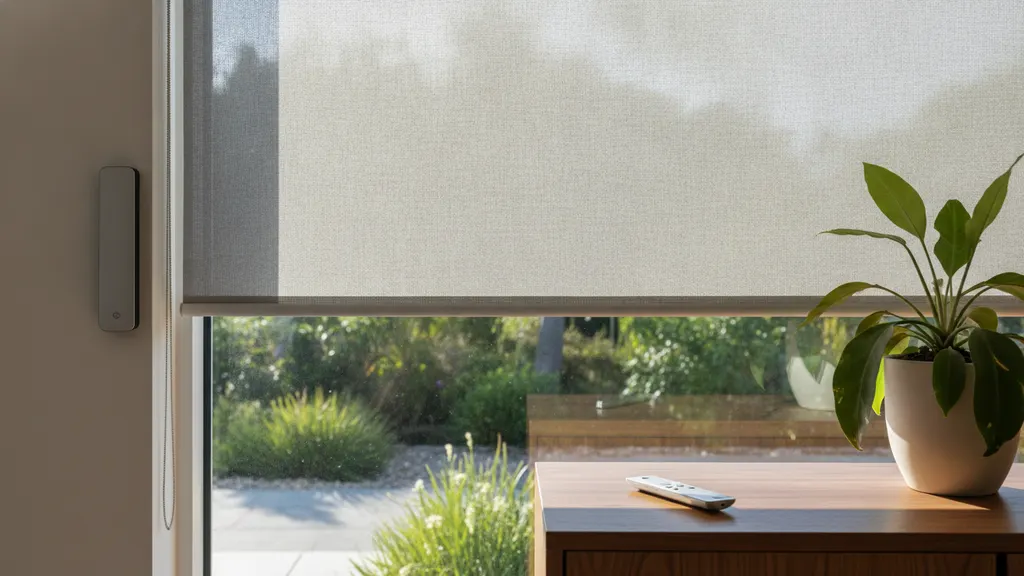
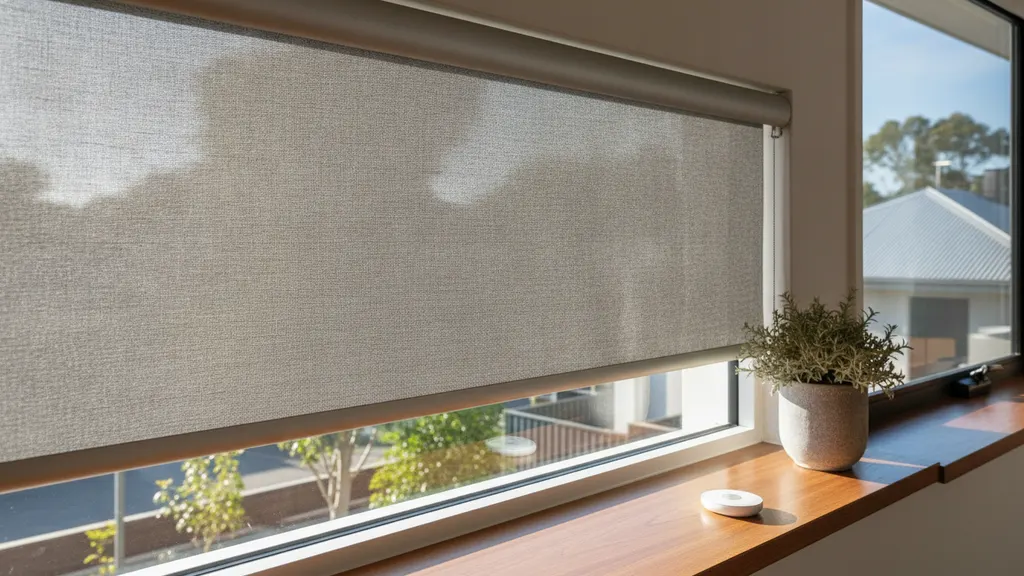
The motorised blinds Australia market in 2026 looks nothing like it did three years ago. Roller blinds with internal tubular motors dominate, followed by motorised cellular blinds for thermal control and motorised plantation shutters for living rooms. Curtain tracks come fourth, mostly in newer builds.
Roller blinds win because the engineering is simple and the motor sits hidden inside the tube. Most quotes we write across NSW are for a Somfy Sonesse 28 or Acmeda Automate motor inside a 38mm tube, paired with a sunscreen, blockout, or dual-roller fabric. Cellular and plantation come second because they cost more to motorise but solve a real problem: heat loss in winter and light control in west-facing bedrooms. Choice's 2024 blinds and shutters review covers brand-by-brand testing if you want third-party data before quoting.
Which rooms get motorised first
Bedrooms, west-facing living rooms, and skylights are the first three rooms every customer wants automated. Bedrooms because no one likes climbing over a bed to close a blockout at night. West-facing rooms because afternoon sun in the Riverina hits 40°C in summer. Skylights because no one wants to chase a manual wand on a 3m ceiling.
Independent buyer feedback in Choice's data shows 71% of owners said the upgrade was worth it in bedrooms, but only 42% in low-use rooms like the formal dining. If you want a deeper comparison of motor brands, our guide on Somfy vs Acmeda motors walks through warranty and noise data.
What motorised blinds Australia cost: real 2026 pricing
What do motorised blinds Australia homeowners actually pay in 2026? For a standard 1500mm wide window, expect $480 to $720 for a motorised roller blind installed, versus $260 to $390 for the same blind with a manual chain. The motor itself accounts for roughly $180 to $420 of that difference, plus installation labour.
Pricing varies by motor brand, fabric, and whether you go battery or hardwired. Somfy and Acmeda are the two motors we install most across the Riverina because both come with 5-year warranties and parts are easy to source. Cheaper unbranded motors from offshore marketplaces sit around $90 a unit, but we have replaced enough failed ones to never quote them. The Canstar Blue 2026 window furnishings price guide tracks similar ranges across NSW retailers.
Hardwired vs battery: the price gap
A hardwired motor runs $40 to $80 more than a rechargeable battery version, but the electrician cost adds $150 to $300 per window if you are retrofitting. New builds win here because cabling runs in before plasterboard. For existing homes in Temora or Wagga, lithium battery motors are usually the cheaper, faster path. A typical Somfy battery tube charges via USB-C and lasts 6 to 12 months between charges.
For a closer look at this, see Plantation shutters cost Australia: what to budget for NSW homes in 2026.
Energy savings: do motorised blinds Australia actually pay back?
Motorised blinds Australia buyers often ask whether the motor itself saves energy. The honest answer: the motor does not, the fabric does. Where motors help is scheduling. Your thermal blinds actually close at sunset and open after sunrise, instead of staying open because no one walked over to pull the chain.
Your Home, the federal residential design guide, reports that well-fitted internal blinds with thermal-backed fabric reduce heat loss through windows by 21% to 33% in winter. CSIRO research on residential thermal performance shows cellular blinds outperform roller blinds for insulation because of the trapped air pocket. Pair that with a sunrise and sunset schedule on a Somfy hub and you get the insulation benefit on autopilot, which is the real return on the motor spend.
What motorisation changes on a west-facing living area
Motorising thermal-backed cellular blinds on sunset schedules is what makes the thermal benefit consistent, because the blinds close whether or not anyone is home to do it. Their previous habit was leaving blinds half-open at night. The energy.gov.au household heating guide predicted similar savings for similar build types in our climate zone. Our deeper write-up on cellular blinds and energy savings covers the maths in full.
Smart home integration: how motorised blinds work day to day
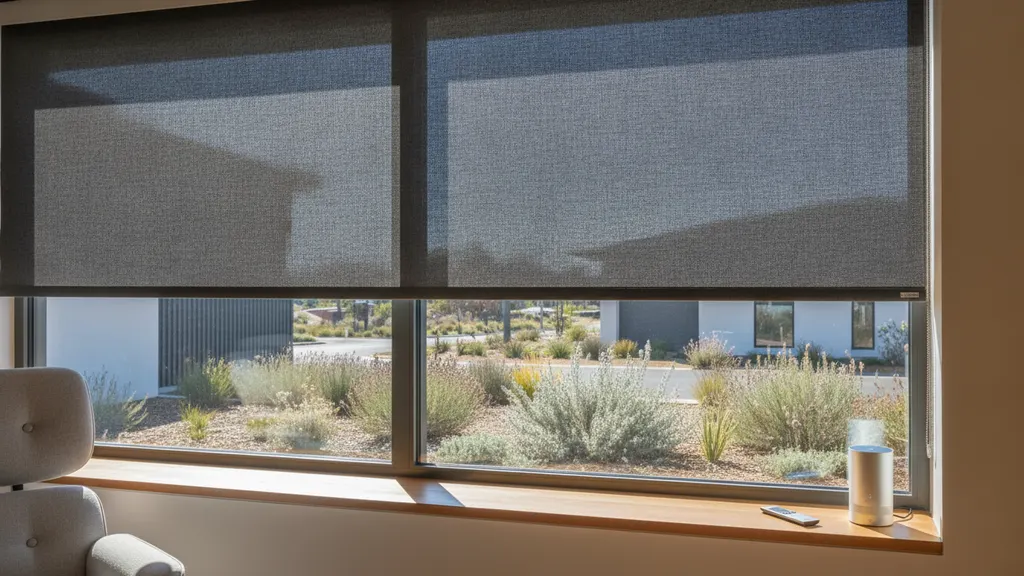
The motor is half the system. The hub, app, and voice integration are the other half. Across the motorised blinds Australia market in 2026, Somfy TaHoma and Acmeda's Pulse 2 hub cover most installations, with both supporting Apple Home, Google Home, and Amazon Alexa over local Wi-Fi or Zigbee.
Daily use looks like this for most clients: bedroom blinds open at 6:30am, 30 minutes before alarm time. Living room blinds close 30 minutes before sunset in winter to retain heat, or 30 minutes before peak sun in summer to keep heat out. Voice control sits in third place because most people use schedules and forget the motor exists, which is the goal. Product Safety Australia's corded blind safety advisory confirms automated cord-free systems remove the strangulation hazard entirely for households with young kids. More on that in our piece on child-safe blinds and AS/NZS 4506:2005.
What goes wrong with motorised blinds Australia setups
Wi-Fi dropouts, hub firmware updates, and battery flat warnings make up 90% of the support calls we field. The fix is usually moving the hub closer to the blinds or replacing a 2018-vintage modem the customer forgot about. Hardwired systems with RS485 cabling almost never fail mechanically but cost more upfront. For renters in NSW, battery motors with a clip-on bracket are the only practical option because no drilling is required for electrics.
Installation, wiring, and Riverina-specific factors
Installation across the Riverina has a few quirks worth knowing. Older Temora and Junee homes built before 1990 often have plaster cornices and timber-lined ceilings that complicate the head fix. Newer estates around Wagga (Boorooma, Lloyd, Estella) are straightforward because they were built with motorisation cabling in mind.
Battery versus hardwired comes down to your build type. New build: hardwire to a 24V transformer near the switchboard, run RS485 to each blind. Existing home: battery motors save you a sparkie and wall repair. Our own measure and quote process always runs a powerpoint check at the window head because we have walked into too many jobs where the customer was promised a hardwired solution the existing electrics could not support without rewiring.
Why motorised blinds Australia need heat-rated motors
Riverina summers are brutal on motors mounted in west-facing windows. Sustainability Victoria's residential energy guide notes window-cavity temperatures can hit 75°C, which destroys cheap motor lubrication. Somfy and Acmeda rate their motors to 70°C continuous, which is why we stick to them. Dust ingress on rural properties around Temora is another reason we recommend sealed tubular motors over external bracket motors. AS/NZS 4506:2005 from Standards Australia covers durability and safety ratings if you want to verify any motor before purchase.
For a closer look at this, see Window treatments Temora extreme heat and cold: the Riverina guide.
Are motorised blinds Australia really worth it for your home?
So are motorised blinds Australia homeowners should spend the extra money on? Three honest answers based on what we install every week. Yes for bedrooms, skylights, and west-facing rooms. Maybe for media rooms and bathrooms. Probably not for spare rooms, formal dining, or any window you open less than twice a week.
The break-even is not really financial, it is behavioural. If you already close your blinds manually every day, motors save you 10 minutes a day and add convenience. If you do not close them, motors create the energy saving you were missing. The Australian Building Codes Board lists window furnishings as one of the highest-impact retrofits for thermal comfort in existing homes, ahead of roof insulation upgrades for many older builds.
Our usual recommendation
For a typical Riverina family home, we suggest motorising four to six high-use windows first, getting used to the schedules, then deciding if the remaining rooms are worth doing in year two. Spread across two budgets it usually feels reasonable. Trying to motorise an entire 15-window house at once is where customers regret the spend. Our NSW window furnishings cost guide breaks down the staged-budget approach in detail.
Frequently asked questions
How much do motorised blinds cost per window in Australia?
Across NSW in 2026, a single motorised roller blind installed sits between $480 and $720 for a 1500mm window, depending on fabric and motor brand. Plantation shutter motorisation runs higher at $820 to $1,400 because the louvres need a separate tilt motor. Cellular blinds land in the middle at $580 to $880. These are installed prices for the Riverina with a 12-month workmanship warranty. The Canstar Blue 2026 price guide shows similar ranges across major capital cities. Battery motors save you the electrician fee of $150 to $300 per window, which often makes them the cheaper total install for retrofits.
Are motorised blinds safe for children?
Yes, they are the safest blind option for any room a child uses. AS/NZS 4506:2005, the Australian/New Zealand standard for blind safety, requires all corded blinds in homes with children under 6 to use cord retention devices or be cord-free. Product Safety Australia's blind safety guide lists corded blinds as a leading cause of paediatric strangulation, with 19 reported deaths since 1999. Motorised blinds have no accessible cords or chains, which removes the hazard entirely. For nurseries, bedrooms, and any low window a toddler can reach, motorisation is the most direct path to compliance with the standard.
How long do motorised blinds last in Australia?
A well-installed motorised blind from a tier-one brand should last 15 to 20 years for the motor and 10 to 15 years for the fabric, based on Choice's 2024 motorised blind testing. Lithium battery packs degrade faster and typically need replacement every 5 to 7 years, costing $80 to $140 per motor. Hardwired motors avoid battery replacement entirely. UV degradation is the main fabric killer in NSW, so west and north-facing windows wear faster. Somfy and Acmeda both offer 5-year motor warranties as standard. Near the coast, salt corrosion can shorten outdoor motor life by 30% to 40%.
Can motorised blinds be retrofitted to existing windows?
Yes, retrofitting is the larger half of the Australian market in 2026. The simplest path is a battery-powered tubular motor that drops into an existing roller blind tube, charged via USB-C every 6 to 12 months. No electrician needed. For plantation shutters, retrofit is harder because the louvre tilt mechanism needs replacing entirely, so we usually replace the panels. For Roman blinds and curtains, conversion kits exist but install time roughly doubles. Sustainability Victoria's retrofit guide recommends starting with the three highest-use windows in your home rather than the whole house at once, which matches what we see across our Riverina jobs.