Blinds & Curtains · 9 min read
Roman blinds vs curtains Australia: which suits your living room?
Chris & Campbell · 1 May 2026
Roman blinds vs curtains Australia: which one suits a sun-belted living room in Wagga, Temora, or Griffith? We measure and quote both options every week across the Riverina, and the answer depends on light control, heat, ceiling height, and how often the room gets used. Here is the honest comparison from a tradesperson who fits both, not a catalogue trying to sell you a single product line.
Roman blinds vs curtains Australia: the quick verdict for living rooms
Both products work. The pick comes down to four things: how much heat your western windows take through summer, whether you want the wall to feel soft or tailored, your per-window budget, and whether kids or pets share the room. Across Temora, Wagga, Griffith, and the wider Riverina, we fit both every week.
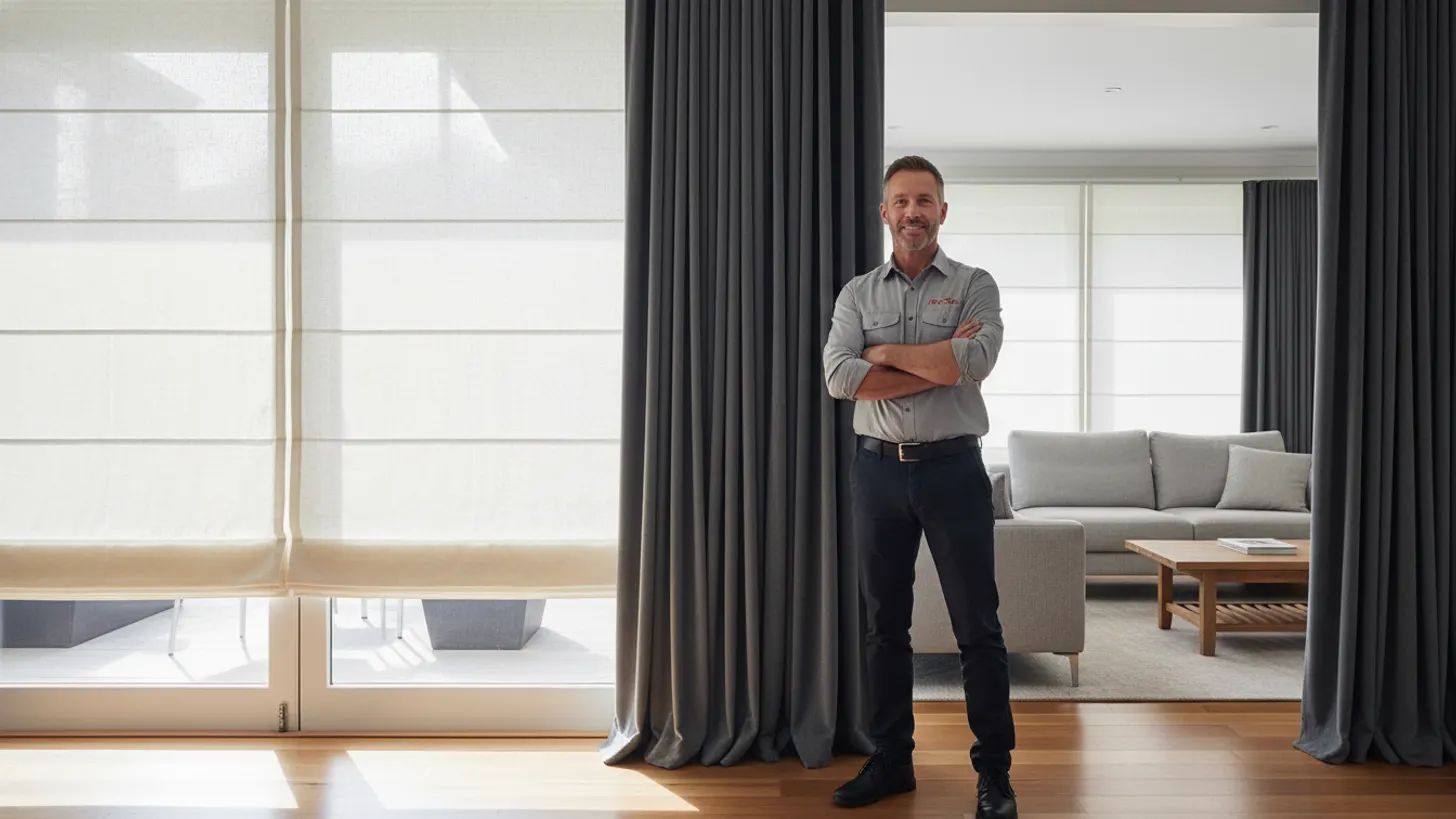
If your living room faces west or north-west and you want strong heat blocking with a tailored look, blockout roman blinds in a heavy lined fabric usually win on cost per window. If you have a tall ceiling, a generous wall budget, and the room doubles as a formal sitting area, floor-to-ceiling lined curtains feel better in proportion and bring sound dampening you cannot get from a flat fabric blind. We measure and quote both side by side so you can see exact numbers and fabric samples in your room before you commit. For the full shutter alternative, see our plantation shutters vs curtains comparison.
Light, heat and energy: roman blinds vs curtains Australia compared
Roman blinds vs curtains Australia performance comes down to how each covering handles air between the fabric and the glass. Window coverings cut heat gain in summer and heat loss in winter, and the size of the trapped air gap drives most of the difference. Uncovered glass can lose up to 40% of a home's heating energy and admit 87% of summer heat, according to the federal Your Home guide on glazing.
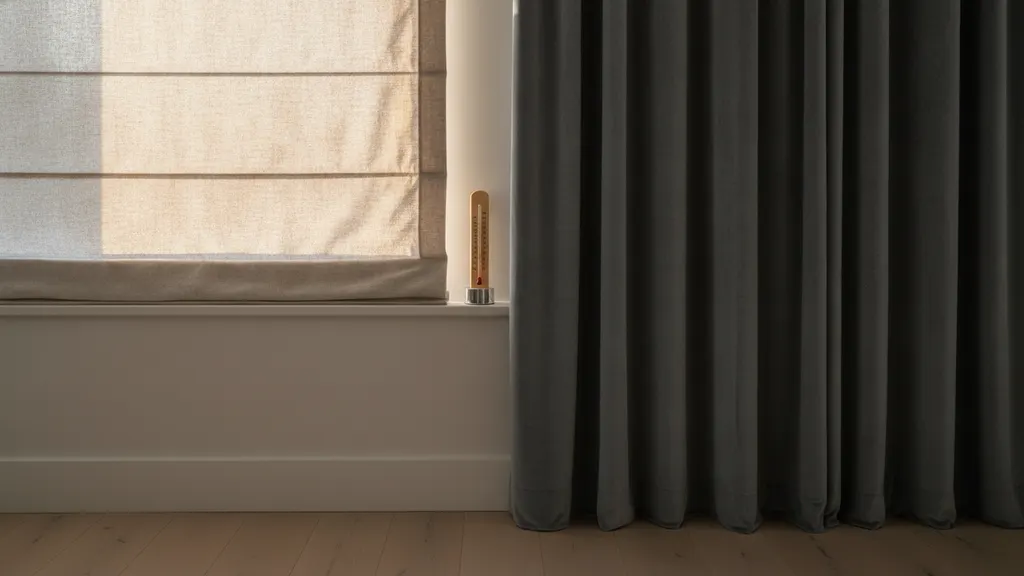
Lined curtains pair fabric with a separate blockout liner and seal the window inside a return rod or pelmet. This trapped air pocket is what does the work; the federal energy.gov.au heating and cooling guide reports that close-fitting heavy curtains with pelmets can reduce heat loss through windows by around 25% compared with bare glass.
Blockout roman blinds use a layered lined fabric pulled flat against the glass. CSIRO research on indoor heat comfort shows tightly fitted internal coverings can drop summer indoor surface temperatures by 4 to 6 degrees on west-facing rooms during a Riverina heatwave. The trade-off is the side gap; a roman blind sits inside the reveal, so warm air still leaks down the sides unless you add side channels or fit the blind face-fixed with an oversized return.
Cost breakdown: roman blinds vs curtains Australia in 2026 NSW
Roman blinds vs curtains Australia pricing depends on width, drop, fabric grade, lining choice, and whether you want motorised operation. The figures below come from our own 2025 Temora and Wagga supply-and-fit records and match the indicative ranges in the Canstar Blue blinds and shutters guide for NSW.
| Covering type | Supply + install, 1.2m x 1.5m window | Lifespan |
|---|---|---|
| Blockout roman blind, lined fabric | $260 to $520 | 10 to 12 years |
| Light-filter roman blind | $210 to $410 | 10 to 12 years |
| Pair of lined curtains on rod | $380 to $1,150 | 12 to 15 years |
| Sheer plus blockout double curtain | $680 to $1,950 | 12 to 15 years |
| Motorised blockout roman blind | $640 to $980 | 10 to 12 years |
A typical Riverina living room has two to three windows. We measure and quote each opening separately so you can mix a sheer linen curtain on the feature window with blockout roman blinds on the other two. Mixing usually saves 18% to 26% versus full lined curtains on every opening, without losing the visual softness most clients want at the front of the room.
Style and proportion in NSW living rooms
Style choice tracks the house. Federation cottages around Temora and Junee carry curtains better, because the picture rails and 2.7 metre ceilings invite a long vertical line and the original timber architraves give you a face-fix surface for a return rod. New-build estates in Lloyd, Boorooma, and the Wagga south end have lower ceilings, square reveals, and tighter wall budgets where blinds sit cleanly without crowding the corner.
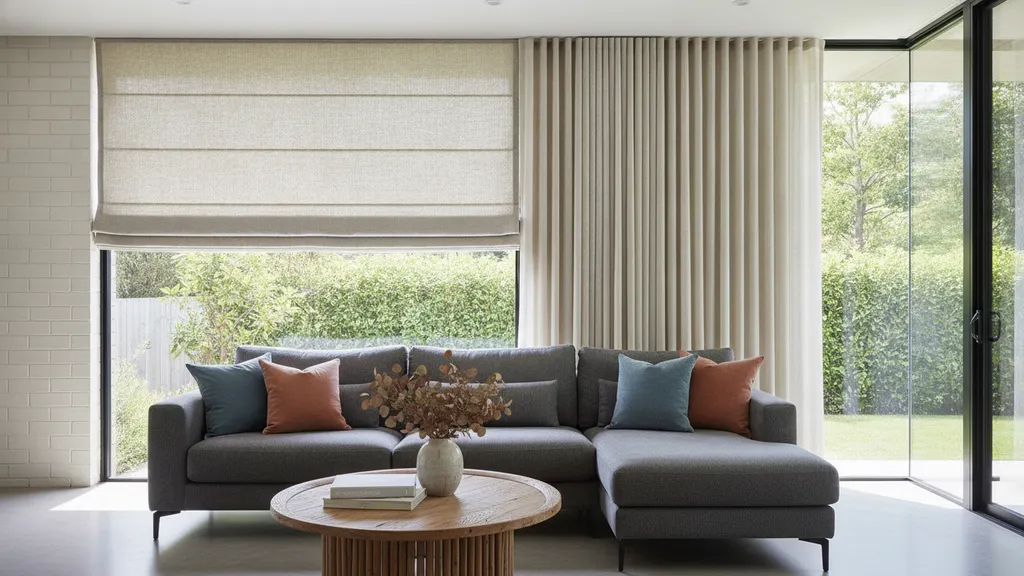
Roman blinds vs curtains Australia is also a question about visual weight. Roman blinds sit inside the reveal, finish flush, and disappear into the wall colour, which suits minimalist rooms and joinery-heavy spaces where curtain pooling would crowd nearby furniture. Curtains add softness, sound dampening, and the hotel-warmth feel a flat blind cannot match. If you want to dig into the heat performance angle for harsh afternoon sun, our best blinds for western sun in NSW guide goes deeper on fabric grades.
Cleaning, child safety and durability
Curtains gather dust at the rod and at the pooling base. Most of ours come down twice a year for a cold gentle wash, plus a fortnightly vacuum on the leading edge with a soft brush head. Roman blinds can be dust-rolled in place, but the fabric retains creases and rarely washes well; we recommend replacing the fabric panel every six to eight years if the room sees heavy western sun, while keeping the headrail and mechanism for the life of the install.
Child safety is the line we do not cross. The federal Product Safety Australia guidance on corded window coverings records 27 confirmed child fatalities in Australia from corded blinds since records began. Mandatory child-safe devices have been required on supplied product since 2010, but plenty of older Riverina homes still hold non-compliant cords from 2007 to 2009 installs. We replace any corded operation on roman blinds with a chain tensioner anchored to the architrave, or we recommend motorisation outright on any window inside a kids' play space. For full coverage of the safer options, our child-safe window coverings guide walks through the certifications to look for.
Roman blinds vs curtains Australia: which wins for your living room?
Roman blinds vs curtains Australia comes down to room type. Use blockout roman blinds where heat, glare, and budget matter most, and where the joinery already carries the room. Use lined curtains where ceilings reach 2.6 metres or more, where the room hosts guests, and where you want the acoustic softness a layered fabric brings to a hard-floored space.
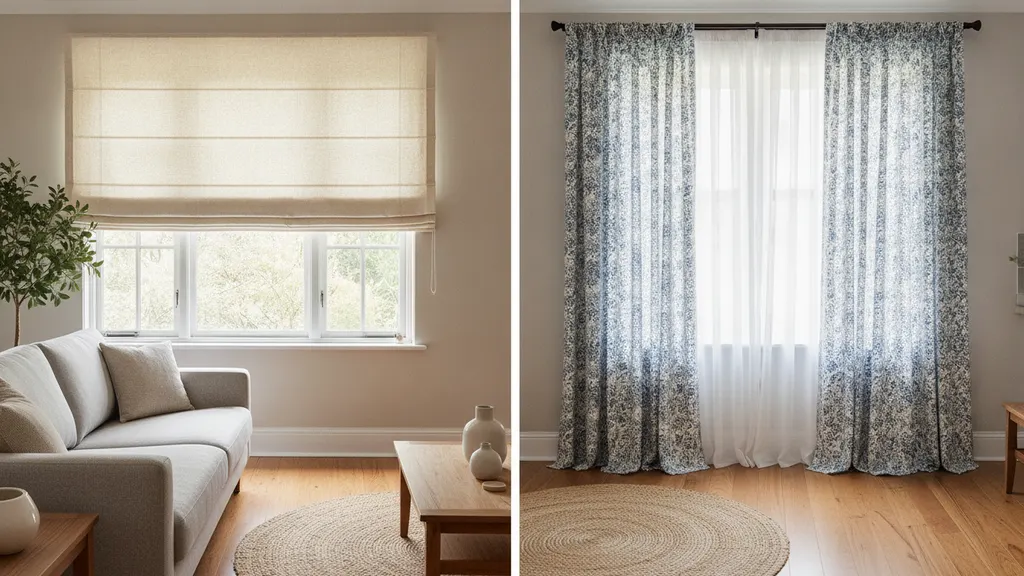
Our 2025 mixed approach: roman blinds vs curtains Australia is not an either-or fight for most rooms. Many Riverina living rooms in our records run a sheer linen curtain pair for daytime softness, sitting behind a blockout roman blind that drops at night for total privacy and heat control. The combination costs less than double curtains and looks better than blinds alone in front of a soft sofa.
Frequently asked questions
Are roman blinds warmer than curtains in a NSW winter?
Roman blinds vs curtains Australia for winter warmth has a clear winner most of the time: curtains. Curtains beat roman blinds because of the sealed air pocket they create between the fabric and the glass, especially when paired with a pelmet or a full wraparound return rod. The federal energy.gov.au heating and cooling guidance records heat-loss reductions of around 25% from close-fitting heavy curtains with pelmets, compared with about 17% from a roman blind fitted inside the reveal. If winter warmth is the top priority and your living room runs to 2.7 metre ceilings, lined curtains with a top return are the better pick across the Riverina.
Do roman blinds work on tall ceilings?
Roman blinds vs curtains Australia behaviour shifts the moment you climb past a 2.4 metre drop. Most fabric panels look right at drops up to about 2.4 metres. Past that, the fold stack at the top of the blind becomes deep, around 26 to 30 centimetres, and starts eating into the visible glass when the blind is raised. On a 2.7 metre ceiling we usually recommend a face-fixed curtain on a return rod for the sit-and-look feel, or a mix where a roman handles the bottom 1.5 metres of glass and a sheer curtain falls full height to dress the wall. The Choice window coverings buying guide covers this scaling problem in more detail.
What is the lifespan of roman blinds vs curtains in a Riverina home?
Quality lined curtains last 12 to 15 years before the lining wears at the leading edge or sun degrades the face fabric. Quality roman blinds last 10 to 12 years before fold creases lock in and the cord or chain mechanism slackens. Western-facing rooms in Wagga and Griffith pull the lower end of each range. East and south-facing rooms reach the upper end. We measure and quote with these ranges in mind so you can compare upfront price against replacement cycle. For the heaviest western windows we recommend external Ziptrak awnings behind the internal blind to extend fabric life by 40% or more, per Sustainability Victoria window and glazing guidance.
Roman blinds vs curtains Australia: which one is safer for kids?
Motorised options on both products are the safest pick for any room a child uses regularly. If you stay with manual operation, modern roman blinds with a chain tensioner anchored to the wall meet the Australian mandatory standard for corded coverings. Floor length curtains carry their own risk: a toddler can pull a heavy curtain off its rod if the bracket is not screwed into a stud. Per Product Safety Australia consumer guidance, the safest combination for a child's room is cordless roller or motorised romans paired with a wand-draw curtain track. We do not fit corded operation in any nursery or playroom regardless of cost; see our motorised blinds buying guide for the brands we trust.