Curtains · 16 min read
Velvet curtains Australia: heavyweight drapes for NSW winters
Chris & Campbell · 16 September 2026
Every May we field the same question from Wagga and Griffith clients: will velvet curtains Australia sourced actually keep the cold out of a formal living room? The short answer is yes, more than any other single window treatment we fit. Lined heavyweight velvet drapes hold heat inside the room, drop ambient noise, and pull off the old-hotel look modern Riverina homes want without sacrificing thermal numbers. Here is the trade study we walk clients through before we measure and quote.
What makes velvet curtains Australia different from standard drape fabric?
Velvet is a cut-pile fabric: the loops of yarn are sliced open to create a dense upright forest of fibres standing 2 to 4 mm tall on the face of the cloth. That pile traps air, catches light, and gives velvet the optical depth other drape fabrics lack. It is pile height, not weight alone, that carries the look.
Pile depth and weight govern both thermal and acoustic performance. At 300 gsm the pile stands roughly 2 mm tall; at 500 gsm it reaches 3.5 to 4 mm. Each additional millimetre of pile height increases trapped still air volume against the glass, which is why heavyweight velvet outperforms a woven-flat fabric of identical weight on thermal measures. For velvet curtains Australia clients targeting winter performance, that means specifying 450 to 500 gsm pile rather than mid-weight alternatives. A woven-flat fabric like interlined linen compresses air into a flat layer; velvet stands it upright in individual fibre columns, reducing convection within that layer. The third distinction relevant to buyers is pile colouration. Surface-printed velvet applies dye to the tips of the pile only, leaving lighter roots that show a two-tone sheen when the pile is brushed or creased. Dyed-through velvet is saturated at the fibre level before weaving, so the colour runs the full pile length and holds its depth as the tips wear. For formal rooms where the drape is the hero feature, we specify dyed-through on every cotton velvet job.
The three velvet compositions we fit in NSW homes are cotton velvet, polyester velvet, and recycled polyester velvet. Cotton velvet has the deepest natural pile and takes rich saturated dyes, but it creases hard and needs cool professional cleaning. Polyester velvet is more forgiving, resists mildew in coastal air, and holds pleat memory through a full winter. Recycled polyester velvet delivers the same weight and drape at a lower embodied-carbon figure, and the Textile Exchange 2024 Preferred Fiber and Materials report puts recycled polyester velvet at over 15 percent of global decorative velvet output.
Weight matters as well. Any drape fabric under 300 gsm hangs like a sheet in a stiff northerly. True upholstery-grade velvet sits between 350 and 500 gsm, and that mass is what pulls the fabric into the vertical folds that photograph like a hotel room. The Your Home guide to insulation and window treatments notes that fabric density is one of three drivers of a drape's thermal contribution, alongside lining and coverage of the wall around the window.
Related reading: Layering window treatments Australia: curtains and blinds for NSW.
We cover the details separately in Sheer Curtains Australia: Get Privacy Without Losing Natural Light.
How velvet curtains Australia insulate against cold in NSW winters
Lined velvet drapes achieve around R0.5 under ASTM C1695 test conditions, broadly matching what a secondary glazing insert adds to a standard NSW window. That figure holds across every Riverina job we quote: the cut pile traps a still air layer against the glass and across the full drop, and still air is one of the cheapest insulators in any residential retrofit.
Lining is where most owners save or waste the R-value. A three-pass blackout lining doubles the effective R-value of a mid-weight velvet versus an unlined install. The Sustainability Victoria home heating and cooling guidance reports that heavy-lined curtains stopping at the sill can leak 20 to 30 percent of their thermal benefit through the base gap, so we specify floor-to-ceiling installations and a full return to the wall wherever the room allows.
Coverage matters as much as fabric. Velvet curtains Australia clients often assume the drape is the whole story, but climate records for the Riverina show overnight winter lows in Wagga sit around 2 to 4 degrees Celsius from June through August, with hard frost weeks in July. Only a full wall-to-wall track with a pelmet or a boxed valance closes the convection loop. The Bureau of Meteorology Riverina climate averages back that pattern year on year.
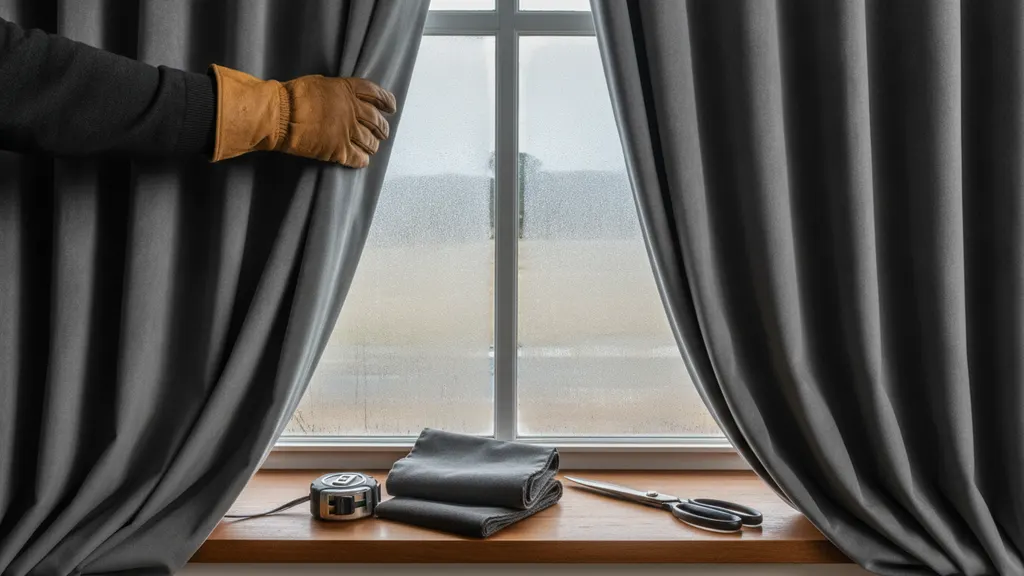
In July 2025, Campbell measured and fitted a 1935 weatherboard cottage in Narrandera, one of the better-documented velvet curtains Australia winter performance cases we have run. The job replaced worn roller blinds with interlined 500 gsm cotton velvet on a wall-to-wall track and boxed pelmet. The client recorded the morning living-room temperature at 8 °C on a -1 °C overnight before installation; four weeks post-fitting, the same overnight low produced 12 °C. The only variable was the curtains.
Colours and styles of velvet curtains Australia buyers pick in 2026
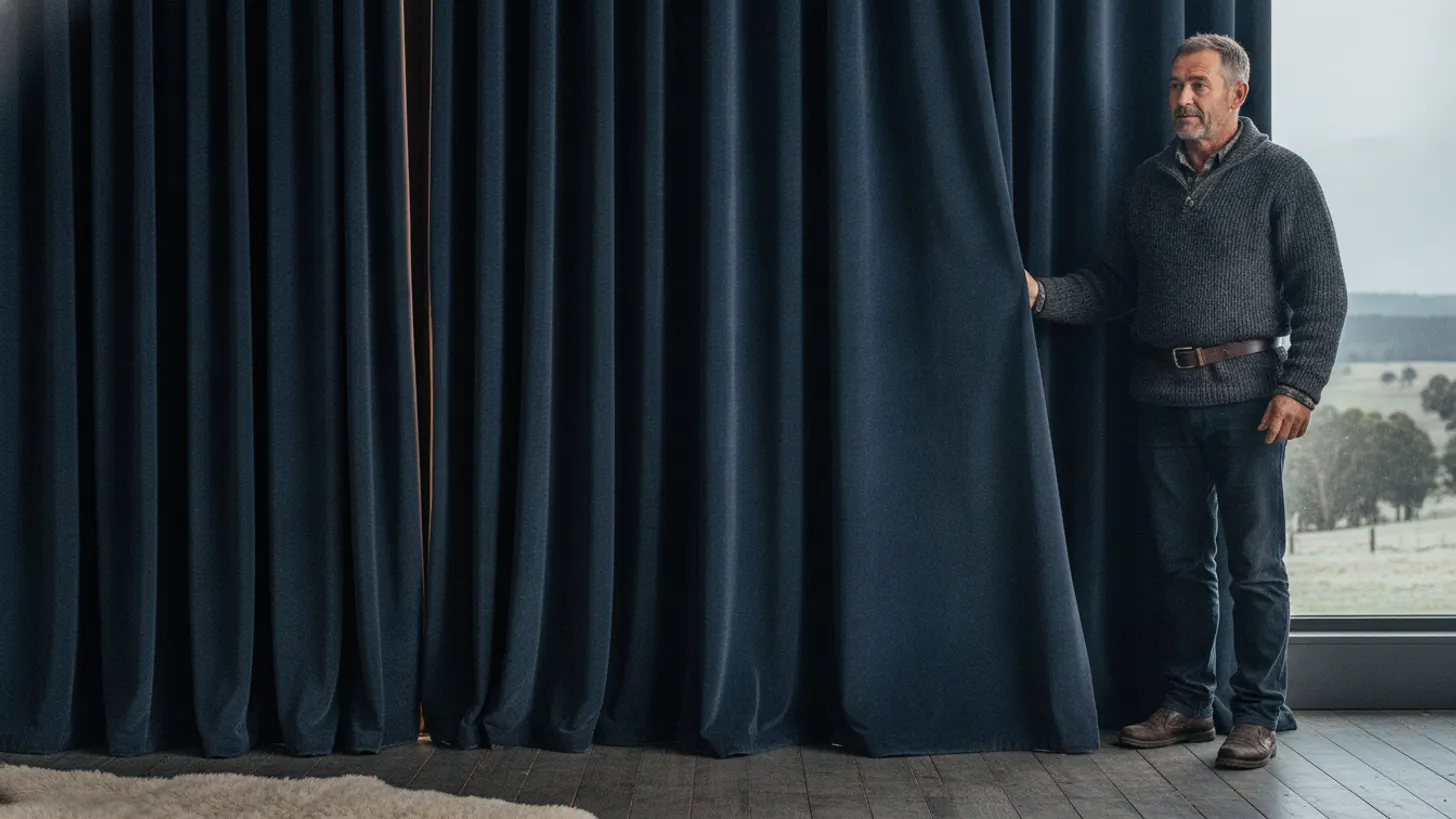
Deep saturated colours drive the current velvet market. The three tones we fit most often in 2026 are forest green, midnight navy, and terracotta, each accounting for roughly one in four formal-room quotes we price across the Riverina. Neutral velvets in mushroom, oat, and stone are the safe pick for houses headed to market within three years.
Style pairings we walk clients through in the consultation:
| Room style | Velvet weight | Colour brief | Header type |
|---|---|---|---|
| Federation living room | 450 to 500 gsm cotton | Deep bottle green or claret | Pinch pleat, pelmet |
| Modern coastal bedroom | 380 to 420 gsm poly | Mushroom, stone, oat | S-fold on ceiling track |
| Hamptons formal lounge | 420 gsm poly-cotton | Soft navy, dove grey | Pinch pleat with rings |
| Contemporary farmhouse | 500 gsm cotton | Terracotta, deep ochre | Wave header on track |
The velvet curtains Australia market in 2026 skews toward jewel tones and matt piles. Owners often pair velvet with a lighter sheer inner layer for daytime privacy, and we cover that combination in our post on layering curtains and blinds for NSW rooms.
Header choice changes the drama level as much as colour. A pinch pleat with a pelmet gives you Federation formality. A wave or S-fold gives you a cleaner modern silhouette that reads as art gallery. For guidance on which header suits which room, our brief on S-fold curtains for NSW living rooms spells out the trade-offs.
Are velvet curtains practical to clean in Australian homes?
Care is where owners hesitate, and the answer depends on fibre. Polyester velvet curtains Australia homes see in most modern installs are the low-maintenance choice: fortnightly upholstery-brush vacuuming plus a professional dry clean every three to four years. Cotton velvet is stricter. Book a specialist drape cleaner every two years, and never machine wash a lined velvet drape at home.
Dust management on velvet is easier than the fabric's reputation suggests. Use a soft brush attachment vertically down the pile, not across it, and finish with a lint roller if pet hair is a problem. For crush marks after storage or delivery, a handheld garment steamer held 15 centimetres from the surface will pull the pile back upright in under 10 minutes per drop. Never press an iron directly onto velvet.
Coastal air is the one climate where cotton velvet suffers. Salt aerosol accelerates fibre breakdown in natural velvets, and Australian building-science testing confirms marine-air exposure measurably shortens natural-fibre furnishing lifespan. Homes within five kilometres of the coast should default to polyester or poly-cotton velvet, which resist salt and mildew.
Hanging and pleating velvet curtains Australia for a luxury finish
Track projection is the single move that separates a flat install from a hotel-grade one. Project the track 15 to 20 centimetres off the wall and the drape stack sits proud of the architrave, making pleats read as three-dimensional. A flush-mounted track will always look pressed flat, regardless of fabric weight or colour.
Header choice interacts with fabric weight. Pinch pleat with three-finger tucks needs 2.5 times fullness in the fabric, and anything under 2 times fullness will look scrimped in a 500 gsm velvet. Wave header on a corded track wants 2 times exactly. Getting fullness wrong is the most common mistake in a DIY velvet buy, and no amount of dressing after the fact will fix it. For hardware selection we recommend our client-facing brief on Australian curtain rods and tracks for NSW windows.
Dressing after installation is where the pleats set for life. We tie the drape into its pleats with soft cotton tape from the top down for 72 hours after fitting, and this is not optional on velvet, since the pile takes a set from the first week and holds it. Skip the dressing and the pleats will splay within a month.
Owners choosing velvet as part of a broader plan should read our companion piece on linen curtains for NSW homes if a second bedroom needs a lighter fabric, and our brief on energy-efficient window coverings across Australia for full-home planning. The CSIRO built environment program lists heavy lined drapes as a top affordable thermal upgrade for existing housing stock.
Frequently asked questions
What R-value do lined velvet curtains achieve on standard NSW windows?
Independent testing under ASTM C1695 puts a floor-to-ceiling lined velvet drape system at around R0.5 across the covered area, broadly comparable to adding a single-pane secondary glazing insert to a standard NSW window. That figure assumes 350 to 500 gsm velvet, three-pass blackout lining, and a wall-to-wall track with a pelmet or a full return to the wall so warm air cannot spill down the back of the drape. Sill-length curtains leak 20 to 30 percent of that R-value through the base gap, per Master Builders Australia thermal performance guidance. Full-floor coverage matters more than fabric weight alone.
Do velvet curtains work in humid coastal NSW summers?
Polyester and recycled polyester velvet handle coastal humidity well. Cotton velvet is more fragile in salt-laden air within 5 kilometres of the coast, where fibre breakdown accelerates. In the Riverina and inland NSW, cotton velvet holds up for decades of daily use. In summer, we ask clients to run ceiling fans on medium behind closed velvet drapes to keep condensation off the glass on cold-humid mornings. Bureau of Meteorology inland humidity records show Wagga and Griffith averages well below coastal ranges, so cotton velvet is a safe long-term pick across the Riverina and southern NSW.
How much does a velvet curtains Australia install typically cost per metre?
Retail pricing for velvet curtains Australia clients see varies widely by fibre, weight, and lining. Cotton velvet at 500 gsm sits at the higher end, polyester velvet at 400 gsm sits lower, and premium European velvets sit higher again. Making, hardware, and installation are separate line items on any drape quote. Every LuxeShutters job is quoted after an in-home measure, and we never quote sight-unseen because pleat count, track projection, and coverage lines drive at least half of the finished cost. Standards Australia window covering guidance covers safety and fitting requirements that also affect the final quoted total.
Can velvet curtains be steam cleaned at home?
Yes, with care. Use a handheld garment steamer held 15 centimetres from the surface, moving vertically down the pile, never across the grain. Never press an iron directly onto velvet. For deep cleaning on cotton velvet, book a specialist drape cleaner every 24 months. Polyester velvet stretches that interval to 36 to 48 months. Vacuuming weekly with a soft brush attachment on the lowest suction setting is the single move that most extends velvet lifespan. According to CSIRO built environment maintenance research, dust load in soft furnishings doubles thermal degradation over five years if not managed at home.
What lining works best for winter warmth on velvet drapes?
Three-pass blackout lining is the answer for cold-climate performance. It adds opaque coverage, doubles thermal resistance versus unlined velvet under ASTM C1695 testing, and helps the drape hang with more visual body. Interlining, a soft flannel layer between the face fabric and the blackout, adds another R0.05 to R0.10 and gives the drape the plush look luxury hotels use. Interlining also softens the pinch pleat and prevents light leakage down the leading edge. For NSW winters with hard frost weeks in July, we specify interlined blackout on the main formal room and standard blackout on secondary rooms.
How wide should velvet curtains be for correct fullness across a window?
Fullness is the ratio of fabric width to track width. For pinch pleat headers in velvet, target 2.5 times fullness. Wave or S-fold headers want 2 times. On a 3-metre track that means 7.5 metres of made fabric for pinch pleat or 6 metres for wave. Under 2 times fullness on any velvet header will look thin in wide windows. This is where DIY velvet buys usually go wrong. Every velvet curtains Australia project we run at LuxeShutters is calculated fresh from the site measurement to Australian curtain-making trade practice.