Curtains · 15 min read
Sheer Curtains Australia: Get Privacy Without Losing Natural Light
Chris & Campbell · 3 August 2026
Can a fabric really block prying eyes from the footpath while flooding the lounge with morning sun? Yes, and that is exactly what sheer curtains Australia homeowners keep asking us to install once they see them working next door. Chris and Campbell measure and quote every window personally across the Riverina, so this guide pulls together what the fabrics do, where they earn their keep, and the layering trick that finishes the job.
What makes sheer curtains Australia different from standard blockout?
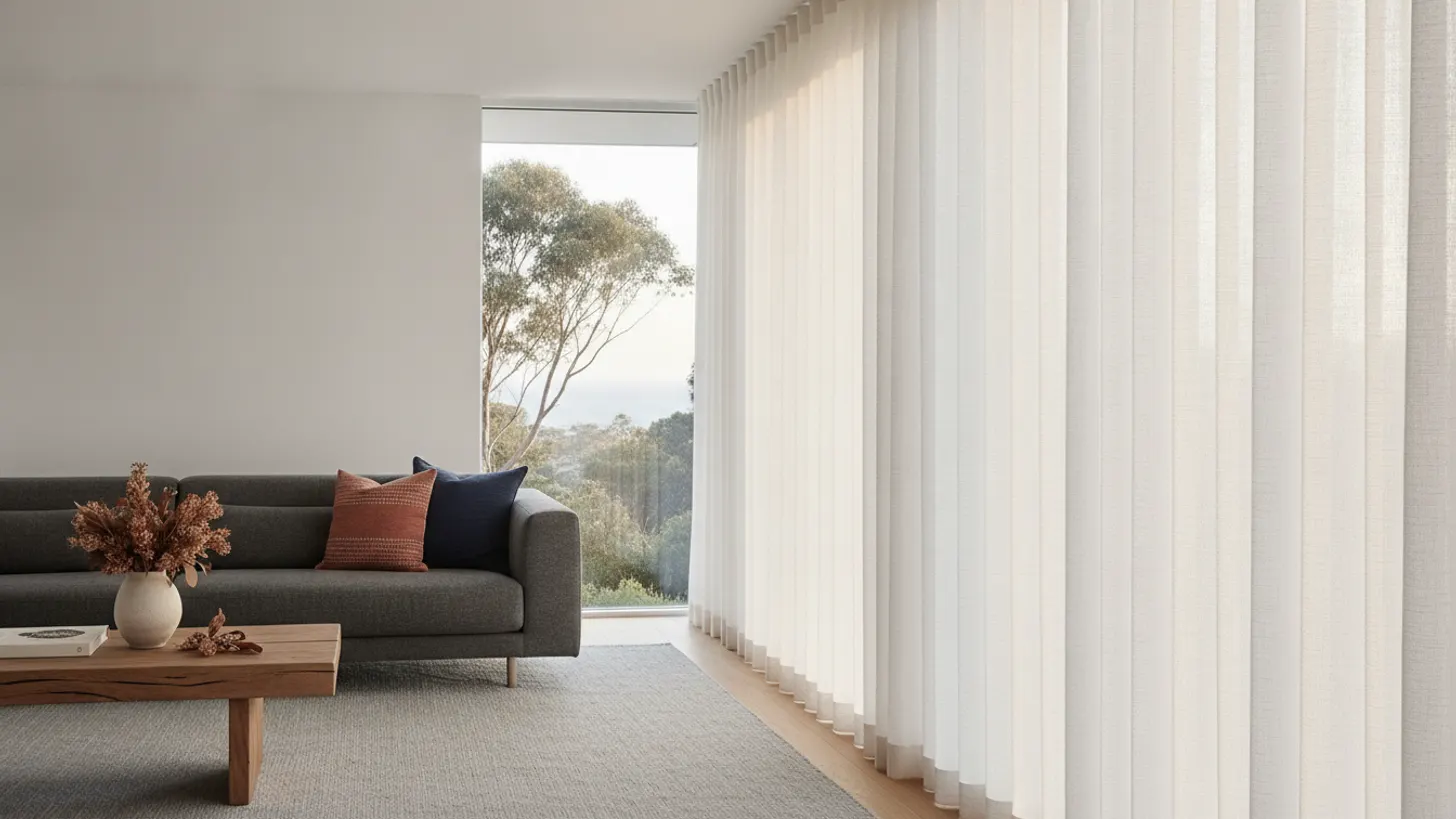
A blockout has an openness factor of zero; a daytime-privacy sheer curtains Australia buyers choose sits between 3 and 5 percent, the gap that fills a room with filtered sun while keeping the interior hidden from the footpath. That measurable difference is the reason one blocks all light while the other acts as a soft veil.
Anything above 10 percent starts to show silhouettes after dusk, which is why both the openness rating and a layered setup matter (covered later in the guide). That 3-to-5 percent band is specific: below 3 percent a sheer starts to feel like a frosted panel, while above 5 percent daytime privacy falls away against a low sun.
We install a lot of sheers because Riverina and coastal NSW homes have windows that face straight onto a footpath, a shared driveway, or a neighbour ten metres away. Blockout works at night but forces you to close it during the day too, killing the light. A sheer lets you keep the window uncovered visually while blocking direct sightlines. The Your Home technical manual notes that untreated windows are a large source of daytime glare and visual heat perception in an Australian living room, and a sheer takes the sting out without going dark. See our companion piece on living room window treatments Australia for how sheers pair with roller blinds in open-plan spaces.
Which rooms benefit most from sheer window treatments in NSW?
Lounge, dining, master bedroom, and any north or west-facing family space. In our Riverina installs, roughly nine in ten sheer jobs fall into those four room types, because they combine the longest daily sun exposure, the most active sightlines from outside, and the highest hours of household use. Kitchens and hallways rarely need one.
Lounge rooms are the classic pick. A sheer softens the harsh Riverina afternoon sun, hides the couch and the TV from anyone walking past, and still lets you see out to the driveway if a car pulls up. Master bedrooms benefit for a slightly different reason. Most Australian bedrooms need morning privacy from the street plus enough light so the room does not feel like a hotel blackout box. Pair the sheer with a blockout for sleeping and you have covered both jobs.
Home offices and studies pick up glare control. Direct sun on a laptop screen at 2pm is unworkable, and a sheer knocks the intensity back to a diffused level. If your desk faces a window, our guide to home office window treatments walks through the whole setup. Kids' rooms, bathrooms, and laundries usually skip sheer curtains Australia altogether because they need full privacy day and night. A good roller blind or plantation shutter fits better there.
How do sheer curtains Australia perform against NSW summer heat and UV?
A sheer curtains Australia install cuts UV transmission by 60 to 80 percent depending on weave, but blocks almost no solar heat gain unless paired with a heavier layer behind it. That split matters: sheers earn their keep on furniture protection and glare control, not on cooling costs alone.
The Your Home technical manual states that solar heat gain through windows can account for up to 40 percent of the summer cooling load in an Australian home. A single sheer does not stop that heat, because the fabric absorbs a fraction of the energy and radiates the rest into the room. To actually reduce cooling bills you need to combine the sheer with a heavier layer or with external shading. The energy.gov.au window coverings page puts internal blinds and curtains at 10 to 30 percent solar reduction, and layered systems at 40 to 60 percent.
UV is a different story. Bureau of Meteorology UV monitoring and Cancer Council Australia both record UV Index 11 or higher on more than 50 days a year in most Australian capital cities, which is enough to fade a leather couch, timber floor, or wool rug in a few summers flat. A tight-weave sheer with a low openness factor blocks the majority of UVA and UVB without needing to be closed off. For inland conditions our Temora extreme climate guide spells out how sheers compare to shutters right across the Riverina.
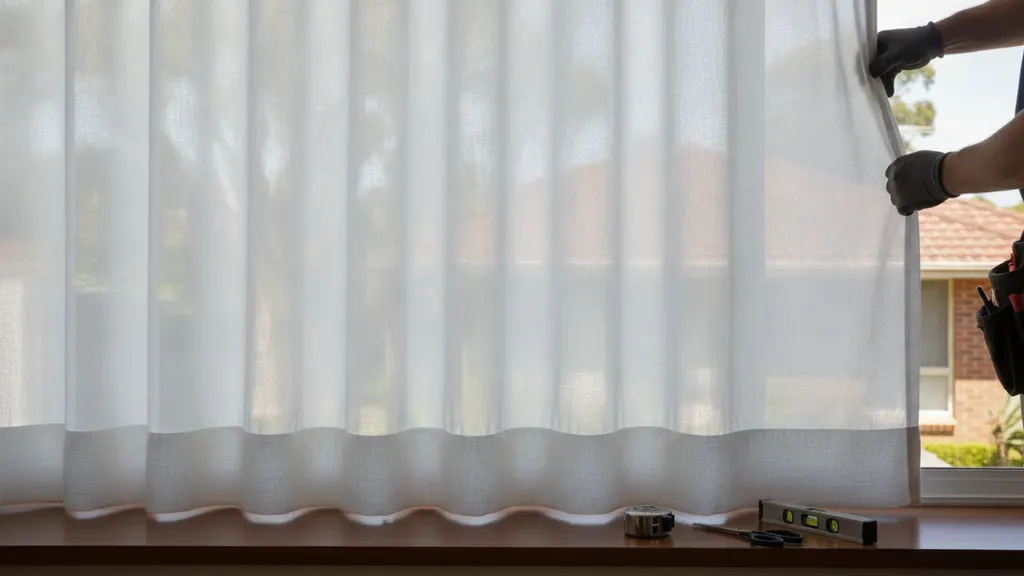
Best sheer fabric types for durability in Australian conditions
Polyester voile lasts 10 to 12 years in inland NSW conditions and tops Canstar Blue's durability rankings for sheer curtains Australia buyers, making it the workhorse fabric for most installs. Linen and cotton sheers look softer but fade and stretch faster in direct Riverina sun, and cotton-polyester blends fall in the mid-range for most NSW rooms.
Fabric choice is the single biggest driver of how long a sheer lasts before it starts sagging, greying, or thinning at the hem. Canstar Blue window furnishings reviews rank polyester voile at the top for value and lifespan across Australian conditions, because it resists UV yellowing, holds its shape after wet weather, and washes cleanly. Linen looks premium and drapes beautifully but it absorbs moisture, so on a humid Riverina summer day the fabric hangs longer than the rod allows. Our energy-efficient window coverings guide covers the fabric versus energy trade-off in more detail.
Here is what the durability picture looks like when you compare the three main fabric families side by side:
| Fabric | Openness factor | UV block | Lifespan (inland NSW) | Stretch risk |
|---|---|---|---|---|
| Polyester voile | 1-8% | 60-80% | 10-12 years | Minimal |
| Cotton-polyester blend | 2-7% | 50-70% | 7-9 years | Low |
| Pure linen | 3-10% | 40-60% | 4-6 years | High (2-4% first humid summer) |
Beyond fabric type, look at the header. A pinch-pleat or S-fold header carries a heavier sheer without pulling the track sideways. Eyelet headers are quicker to install but move sideways under a westerly wind, which is fine for a single window but awkward across a wide sliding door. That is why we specify S-fold for sheer curtains Australia customers with big glass walls.
Layering sheer curtains Australia with blockout for full day-night control
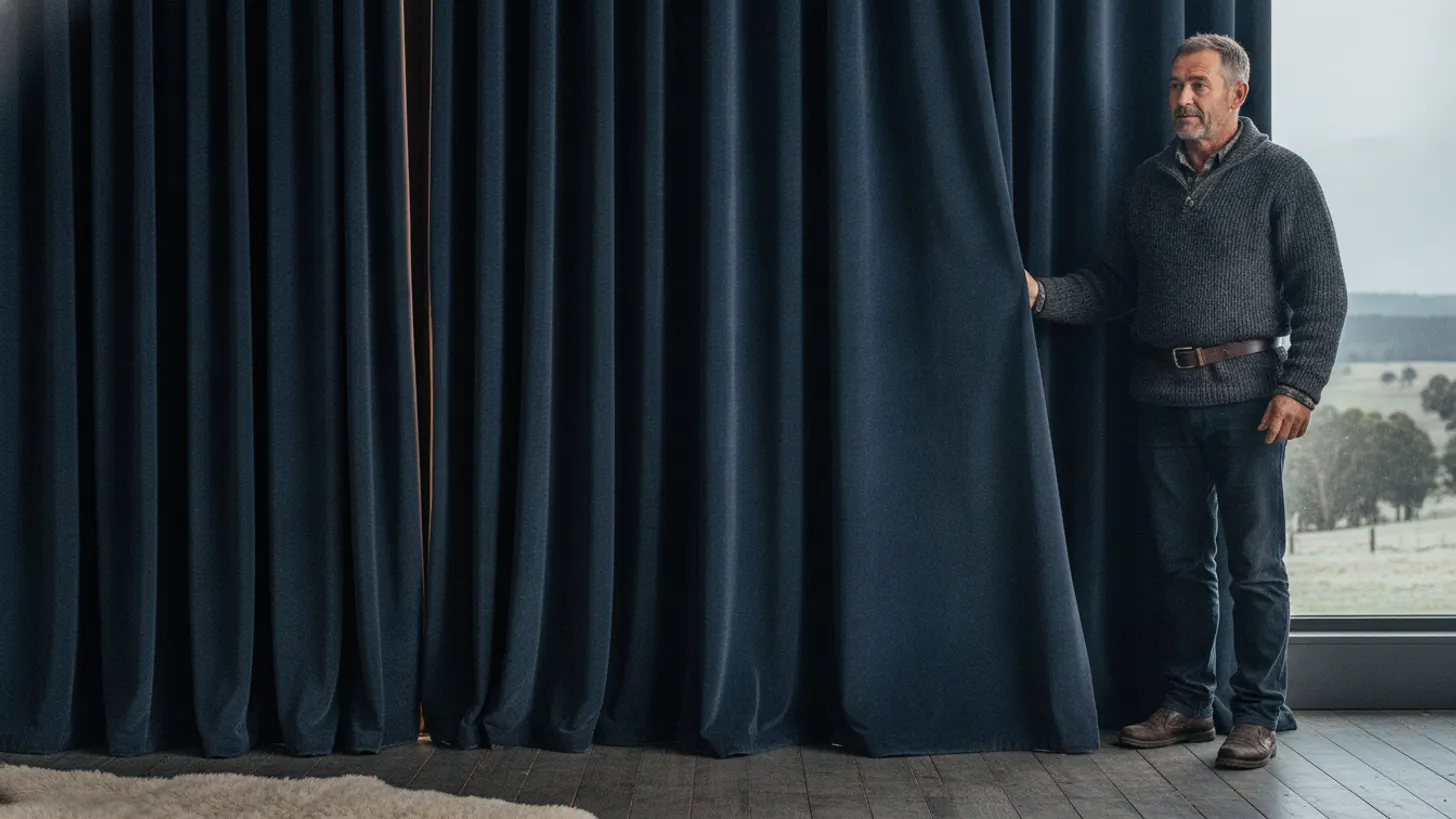
A layered sheer-plus-blockout system cuts solar heat gain by 40 to 60 percent compared to a single curtain, per the Sustainability Victoria windows guide, because the trapped air gap between two independent tracks acts as insulation. That figure is the clearest reason Riverina households keep choosing the layered setup over a single blockout.
The front track carries the sheer for diffused daytime light and privacy; the back track carries the blockout for total darkness and heat retention at night. A double track (also called a dual track or S-fold combo) runs both curtains on the same bracket under a shared pelmet, opening them independently. In a bedroom the blockout closes at 10pm and the sheer stays out of the way behind it. In the lounge the sheer stays closed all day and the blockout only comes across if the sun is setting straight into the west-facing glass. This is the setup we install most often for sheer curtains Australia customers who want both jobs handled in one visit.
On a Riverina winter night, that trapped air gap is worth 1 to 2 degrees inside the room, which adds up across months of Temora frosts.
Compare the layered layout against a single curtain or blind at a glance:
On the practical side, double tracks add 60 to 90 mm of depth to your window reveal. Measure the reveal before you commit, because some heritage cottage windows in Wagga or Griffith are too shallow, in which case we install a face-fixed pelmet to make it work. See our roman blinds vs curtains Australia comparison if you are still weighing the format.
Frequently asked questions
Are sheer curtains Australia buyers install actually private at night?
Not on their own. Once the sun sets and interior lights come on, a sheer with an openness factor above 3 percent will show silhouettes from outside. The fix is either a very tight-weave sheer (openness under 2 percent) or a layered system with a blockout curtain behind. Most NSW households pick the layered option because it also gives sleep-quality darkness in the bedroom, per energy.gov.au guidance on domestic window layering. A single sheer alone works for the lounge during the day but not for a bedroom at night.
What openness factor should I ask for on a daytime privacy sheer?
Somewhere between 2 and 5 percent. Under 2 percent starts to feel more like a light-filtering blind and loses the airy look most people are buying a sheer for. Above 5 percent and you will see clear shapes from the footpath at dusk. Three percent is the sweet spot for a north or east-facing lounge in an average NSW suburban street. A good installer should hand you a fabric sample and show the openness rating printed on the tag. Always ask for it before signing a quote.
How much sun protection do sheer curtains give my furniture?
A tight-weave polyester sheer used in sheer curtains Australia installations blocks 60 to 80 percent of UV, depending on weave and colour. Darker sheers block more UV but let through less visible light. Cancer Council Australia records UV Index 11 or higher on more than 50 days a year across capital cities, which is enough to fade timber floors and leather within two to three summers if the window is unshaded. A sheer will not stop fading completely but it slows it a lot.
Can I put sheer curtains in a rental property?
You can, but check with your landlord first. Most residential leases treat curtains as tenant-supplied unless they are already installed at lease start. Sheers are lightweight and fix to standard curtain tracks or tension rods, so removal is straightforward at end of lease. Landlords sometimes prefer to install them themselves as an inclusion, because sheers add rentability without adding heavy replacement cost. Per Canstar Blue reviews, tenants rate rooms with sheers higher on comfort than rooms with roller blinds alone.
How much sag or stretch should I expect over time?
Polyester voile, the most popular fabric in sheer curtains Australia installations, hangs true for its full lifespan with almost no stretch. Linen sheers will stretch 2 to 4 percent in the first six months, particularly through a humid summer, which is why we hem linen sheers about 3 cm shorter than the finished drop at install. Cotton-polyester blends fall in the middle. If your linen sheer ends up pooling on the floor after a year, a good drapery workroom can re-hem it in an afternoon. Canstar Blue reviews cover the maintenance side in useful detail.
Should I motorise a sheer curtain track?
For a wide sliding door or hard-to-reach clerestory window, yes. For a standard lounge window, probably not, because the payback is not there for most households. A motorised sheer track adds around 30 to 50 percent to the install cost. Where it earns its keep is on floor-to-ceiling glass or on north-facing openings where the sheer needs to move with the sun through the day. We usually recommend it only if the client already has a smart home hub running.