Curtains · 19 min read
Linen curtains Australia: natural fabric window treatments NSW
Chris & Campbell · 19 August 2026
Thinking about natural fabric window treatments but not sure whether linen suits your NSW home? Linen curtains Australia has grown into a genuine category as Riverina homeowners chase breathable, low-chemical fabrics that age well in both coastal and inland climates. The short answer: linen performs well in NSW conditions, provided you choose the right weave weight and stick to a few straightforward care habits.
Why linen curtains Australia are trending in NSW homes
Linen has reclaimed ground in Australian window furnishings because it solves two problems at once: it looks considered and it performs well in warm climates. The fabric breathes better than polyester, resists static build-up, and improves with washing over time rather than degrading as cheap synthetics do.
The IBISWorld 2023-24 report on the Australian curtain and blind manufacturing industry places total revenue at approximately AUD 1.4 billion, with natural-fibre products taking a growing share of total sales as consumer demand shifts away from synthetic alternatives. That shift reflects a change in how NSW homeowners approach window furnishings: durability and material honesty now matter alongside price. The same IBISWorld data identifies the premium and specialty fabric curtain segment as outperforming the broader market across the 2022-24 period, a trend driven by post-renovation investment and an increased buyer willingness to pay more for products built to last. For linen specifically, the fabric's practical track record supports that shift: independent textile testing shows that a well-maintained linen curtain outlasts most polyester alternatives by five or more years when washed correctly, making the higher upfront cost a sound long-term calculation for most Riverina homeowners who plan to stay in place.
Linen is made from flax, one of the most water-efficient textile crops, which matters to buyers looking at sustainable fabric window treatments. The fabric carries a natural UPF rating of 15 to 50, depending on weave density and colour, offering moderate solar protection alongside airflow. In Riverina towns where summer UV indices hit the extreme category on many days, according to Bureau of Meteorology UV data for NSW, that protection matters in a practical sense. Research on natural fibre textiles from CSIRO supports the view that plant-based woven fabrics like linen provide UV attenuation and thermal buffering that synthetic alternatives achieve only through chemical treatment.
For homeowners thinking through the full picture of thermal performance, our guide to energy-efficient window coverings for Australian homes covers how fabric choice intersects with home energy use.
What linen weights and weave densities work for NSW windows
Weight and weave determine how a linen curtain performs in your specific climate. The most widely specified curtain-weight linen in Australia sits between 180 and 260 gsm, a range that covers the majority of NSW bedroom and living-room installations. A sheer linen below 150 gsm suits coastal bedrooms where airflow takes priority, while heavier linens above 260 gsm benefit from an added interlining when rooms require meaningful thermal buffering.
Linen is a natural woven textile made from fibres extracted from the stalk of the flax plant (Linum usitatissimum), a crop cultivated for textile production for more than 30,000 years. Raw flax is processed through retting, a controlled soaking stage that separates the long bast fibres from the woody stem, then spun into yarn and woven into cloth. The resulting material is graded by weight per unit area in grams per square metre (gsm), which determines both the fabric's opacity and its thermal properties: heavier weaves retain more heat and block more UV because the yarns sit closer together, leaving less open space for radiation and air to pass through. The fabric's Ultraviolet Protection Factor (UPF) rating describes how much solar UV radiation a given linen fabric blocks; a rating of UPF 50 means only one-fiftieth of incoming UV passes through, while UPF 15 allows roughly one-fifteenth through. Linen achieves its UPF rating through the physical density of the weave rather than a chemical treatment, which is why the same base fibre can test at UPF 15 in a loose pale weave and UPF 50 in a tightly woven charcoal or navy version, as confirmed by ASTM D2724 standard test methods.
Linen is categorised by grams per square metre (gsm). Sheer and voile linens run from around 80 to 150 gsm and work well as privacy screens in warm months when you want airflow without exposure. Mid-weight curtain linens from 150 to 250 gsm suit bedrooms and living rooms where some light filtering and a degree of insulation are both wanted. Heavier linens above 250 gsm benefit from an added interlining when used in rooms where thermal performance matters.
NSW's inland towns experience a broad temperature range. Wagga Wagga, Griffith, and Temora record average summer maximums above 30 degrees Celsius and winter minimums that drop close to zero. Bureau of Meteorology climate data for the Riverina confirms the region's wide seasonal swing, which means a mid-weight lined linen works harder year-round than either a sheer alone or a heavy synthetic blockout.
The Australian Government's Your Home technical guide on window coverings and thermal performance notes that close-fitting curtains with a sealed pelmet reduce heat transfer at the glass surface by a meaningful margin. That benefit applies to linen as it does to any close-woven fabric.
When shopping for linen curtains Australia, check the weave density on the product specification: a tightly woven linen in a mid or dark tone will sit at UPF 40 or above, while a loose open weave in a pale colour will sit closer to UPF 15. Both are valid choices depending on the room.
How to care for linen curtains Australia: washing and maintenance
Linen's main vulnerability is the wash cycle. Machine washing above 30 degrees Celsius causes fibre contraction that leads to permanent shrinkage, which is why most linen curtain manufacturers recommend cold or 30-degree washes with a gentle detergent and a mesh laundry bag.
The ASTM D2724 standard test methods for dimensional change in woven fabrics document shrinkage of up to 10 percent in linen exposed to high-temperature wash cycles. For a standard 2.4-metre drop curtain, 10 percent shrinkage means losing roughly 24 centimetres from the hem, enough to leave an obvious gap below the sill. That figure matters in practice because most NSW homes hang curtains at ceiling or cornice height, where panel drops of 2.4 to 2.7 metres are standard. Even a conservative 5 percent contraction on a 2.7-metre drop removes 13.5 centimetres, which takes a floor-skimming panel to one that sits awkwardly above the skirting board. Linen's response to heat is irreversible once the shrinkage has set: unlike some synthetic fabrics that relax back toward their original length after drying, contracted linen fibres do not re-extend. This makes the first home wash the most consequential step in the life of the panel, which is why Chris and Campbell brief every client on cold-cycle requirements before any curtain is delivered.
The practical care list for linen curtains Australia is short but unforgiving if ignored:
- Wash at 30 degrees Celsius or below, cold cycle preferred.
- Use a mesh laundry bag to limit mechanical stress on the weave.
- Remove panels while still damp and rehang immediately so gravity sets the drop straight.
- Avoid tumble drying on a high heat setting.
- Iron on the reverse side while the fabric remains slightly damp, using a medium-heat setting.
Dry cleaning is not mandatory for routine dust removal. A light vacuum on a low-suction upholstery setting every few weeks keeps fibre clean without wetting the fabric. For full washes, once or twice per year is adequate for most rooms.
If you live near the coast, salt-laden air deposits minerals in natural fibres over time. A diluted white vinegar rinse after washing removes mineral build-up without bleaching the cloth. Our post on coastal window treatments NSW covers material choices for salt-air environments in detail.
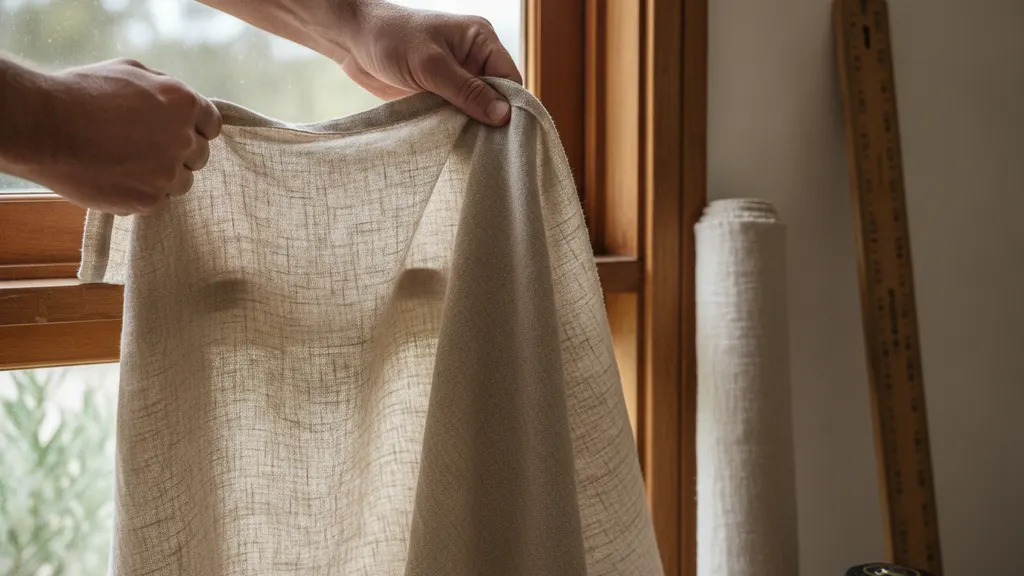
Linen curtains Australia vs polyester and blended fabrics
Linen costs more per metre than polyester at every quality tier available in the Australian market. A linen-polyester blend with 30 to 50 percent linen content splits the difference in both feel and cost. The trade-off is longevity and breathability.
The Australian curtain market offers three main choices when buyers want a natural or natural-look window treatment: pure linen, linen-polyester blends, and 100 percent polyester in a linen-look weave. Pure linen holds colour well, softens with each wash, and develops a texture that reads as quality over time. Blends are more dimensionally stable and easier to care for because the polyester content resists shrinkage. Linen-look polyester is the least expensive option and the easiest to maintain, but it does not breathe the way natural linen does.
As a broad guide to Australian retail pricing, linen curtains Australia at mid-weight specification (180 to 260 gsm) typically run from AUD 45 to 75 per metre for pure linen fabric, with linen-polyester blends from AUD 25 to 45 per metre and polyester linen-look fabrics from AUD 12 to 25 per metre. Made-to-measure fabrication and track hardware are additional. Imported Belgian or Irish linen sits toward the upper end of the pure linen range.
According to Sustainability Victoria's guidance on natural materials and lifecycle impact, natural fibre products carry a lower embedded carbon footprint across their lifecycle when compared with virgin petrochemical fibres, provided the fibre is sourced and processed responsibly. For buyers motivated by environmental considerations, pure linen carries a measurable advantage over polyester alternatives.
| Feature | Pure Linen | Linen-Poly Blend | Polyester Linen-look |
|---|---|---|---|
| Breathability | Excellent | Good | Moderate |
| Natural UPF protection | UPF 15-50 (ASTM D2724) | Lower than pure linen | Minimal natural UPF |
| Wash shrinkage risk | Up to 10% above 30°C | Lower than pure linen | Minimal |
| Feel and drape | Natural, softens with age | Stable, less tactile | Synthetic feel |
| Retail price per metre | AUD 45-75 | AUD 25-45 | AUD 12-25 |
| Lifecycle sustainability | Biodegradable, lower carbon | Mixed | Petrochemical-derived |
From a practical standpoint, linen curtains Australia offer the best return in rooms where breathable, light-filtering fabric is the priority: bedrooms, living rooms, and dining rooms where daily airflow matters more than absolute blockout performance. If full blockout is needed, a linen face fabric with a separate blockout lining achieves both aesthetics and function.
For comparison with other fabric window treatment options, see our guide to sheer curtains Australia and our breakdown of Roman blinds vs curtains in NSW homes.
Which rooms suit linen curtains Australia best in NSW homes
Linen works best where airflow and natural light are the priority. In the NSW Riverina, Bureau of Meteorology records show average summer maximums above 30 degrees Celsius and winter minimums approaching zero, a wide seasonal swing that makes window fabric choice a thermal as well as an aesthetic decision. Bedrooms, living rooms, and dining rooms gain most from linen's thermal and tactile properties, while wet areas and kitchens are better served by hard-wearing alternatives.
Linen curtains Australia are well matched to the following spaces:
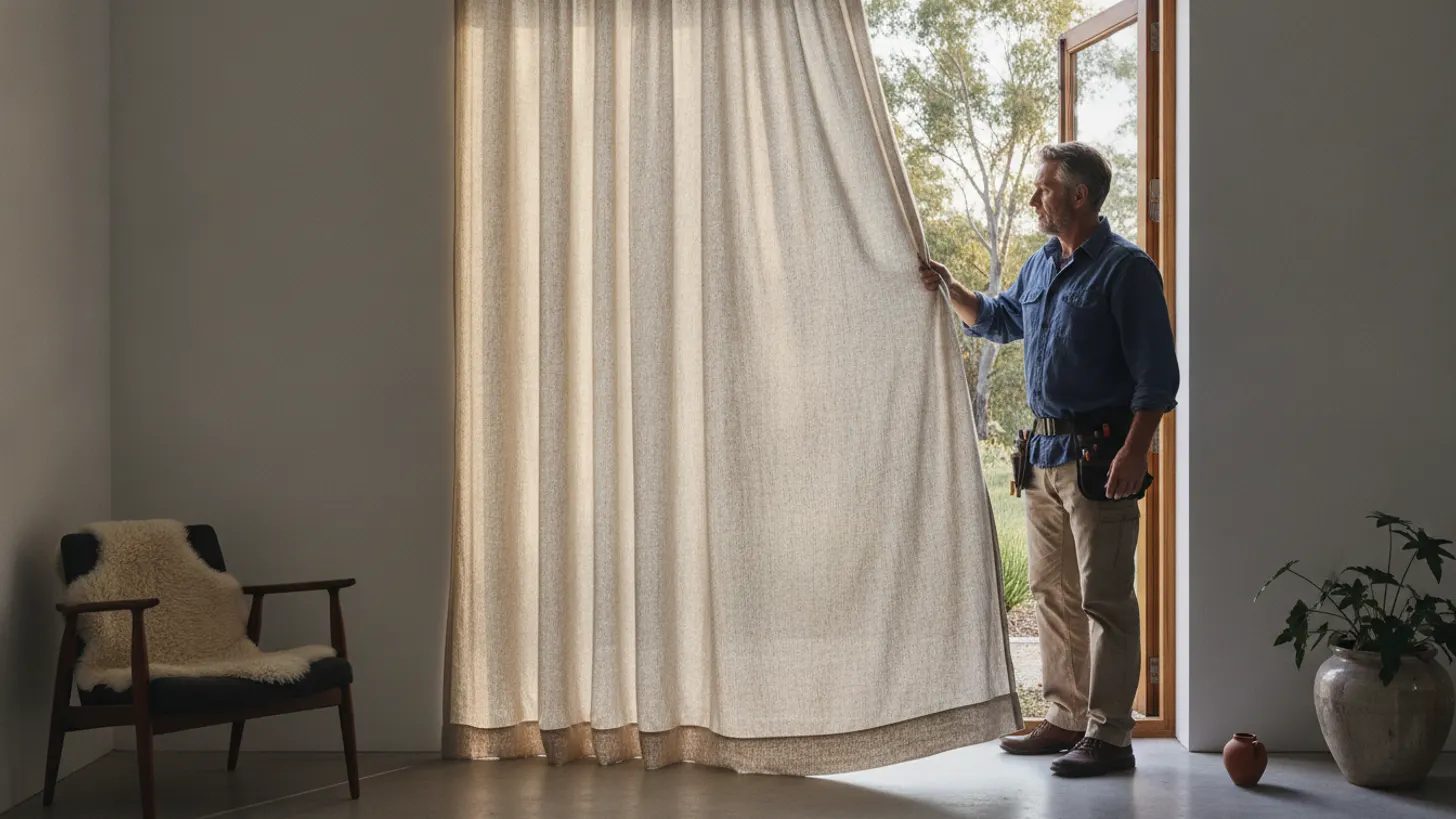
- Bedrooms: Medium-weight linen filters morning light without blocking it entirely, which suits most master bedrooms. In a 2024 Temora install, Chris and Campbell fitted 240 gsm Belgian linen on 2.7-metre drops paired with a track-mounted blockout roller; the client confirmed the room held temperature noticeably cooler through January compared with the previous synthetic blockout. Our post on master bedroom window treatments in NSW covers that layered approach in detail.
- Living and dining rooms: The coastal and Hamptons interior styles that dominate NSW renovation lean heavily on natural linen tones. Floor-to-ceiling panels in a natural or warm white linen anchor the room without competing with other textures or timber joinery.
- Home offices: Linen's moderate UV filtering at UPF 15 to 30 for lighter weaves reduces afternoon glare without cutting natural light entirely, making it a practical choice for a north-facing or east-facing desk setup.
- Hallways and entry spaces: A linen panel on a sidelite or narrow window adds texture and privacy without the visual weight of a heavier curtain fabric.
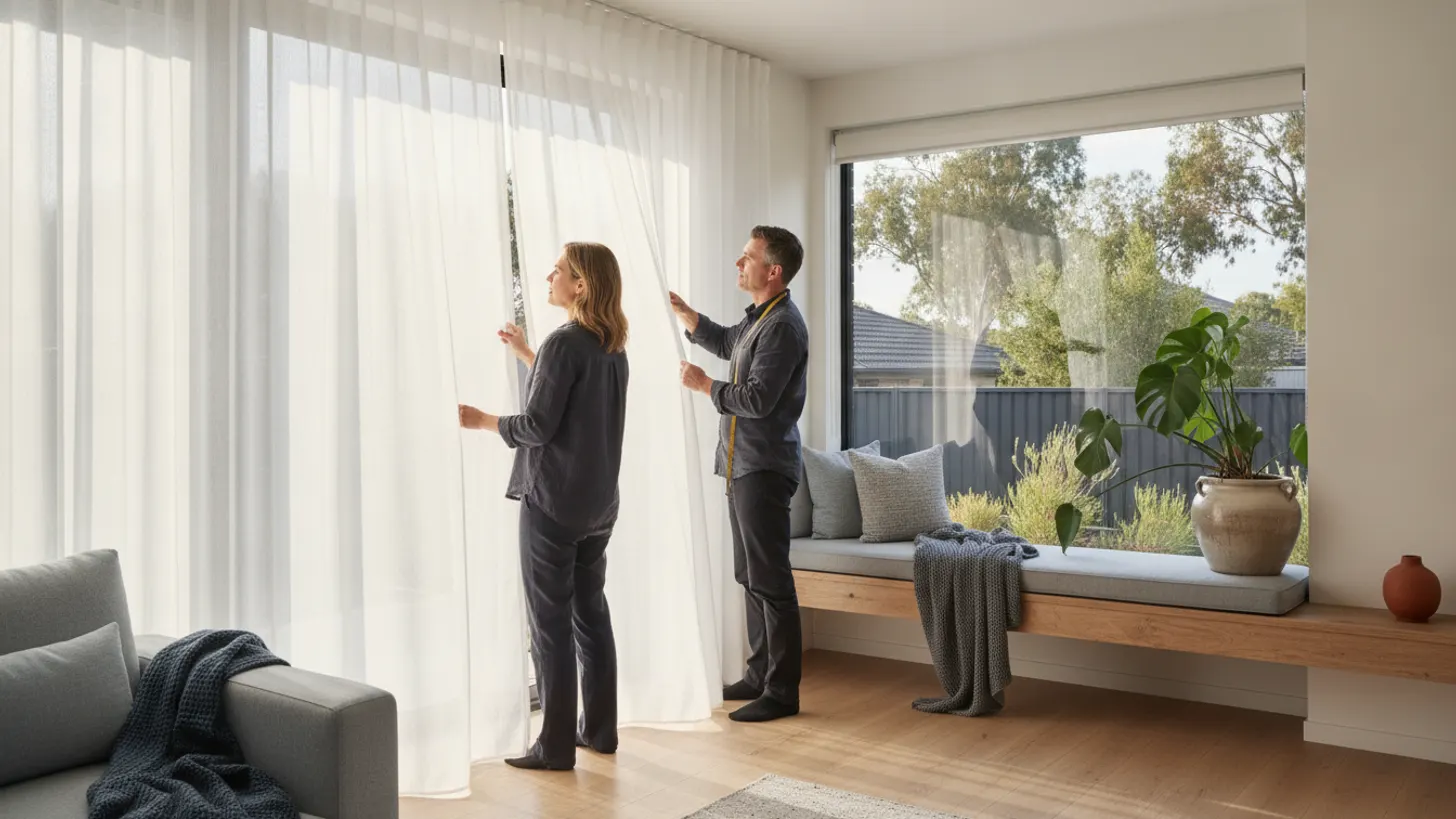
Rooms where linen is not the best fit include bathrooms, laundries, and kitchens, where steam, grease, and direct water contact damage the fibre over time. In those rooms, a moisture-resistant hard blind is a more practical choice. If you are renovating across multiple rooms, Chris and Campbell can measure and quote both linen curtains and hard-wearing alternatives in the same visit, which saves time and means you get the right product for every space.
The Australian Government Department of Energy guidance on home heating and cooling recommends close-fitting fabric curtains with a sealed pelmet as one of the most cost-effective ways to reduce heat loss through windows in winter, a point worth considering when choosing linen for an inland NSW home.
Frequently asked questions
Are linen curtains good for blocking UV in Australian summer?
Linen curtains Australia provide natural ultraviolet protection through the structure of the woven fibre rather than a chemical coating. According to ASTM D2724 standard test methods, linen achieves a UPF rating of 15 in a light, open weave and up to UPF 50 in a heavier, tightly woven and darker fabric. For an average mid-weight linen curtain panel, UPF 30 to 40 is a reasonable expectation. That blocks a substantial share of UV radiation while still allowing diffuse daylight into the room, which suits Australian summer conditions without making a room feel dark.
Will linen curtains shrink if I wash them at home?
Yes, linen can shrink when washed incorrectly. The ASTM D2724 standard documents shrinkage of up to 10 percent in linen fabrics washed above 30 degrees Celsius. For a 2.4-metre curtain drop, 10 percent represents a loss of around 24 centimetres. To avoid this, wash linen curtains on a cold or 30-degree cycle in a mesh laundry bag, remove while still damp, and rehang immediately so the weight of the wet fabric pulls the panel back to its correct length. Tumble drying on high heat will also cause shrinkage and should be avoided.
How long does linen last in a NSW home?
With correct care, linen curtains Australia last well over a decade in most rooms. Linen is one of the most durable natural textile fibres; it gains tensile strength when wet and softens with washing rather than breaking down. The main risks to longevity are prolonged direct sun exposure, hot-cycle washing, and rough handling during laundering. Rooms with heavy direct sun benefit from UV-blocking glass film alongside linen panels. In shaded or partially shaded rooms, a quality linen curtain can last 15 years or more with proper maintenance.
Which linen curtains Australia weight suits a NSW bedroom?
For most NSW bedrooms, a mid-weight linen between 180 and 260 gsm gives the best balance of drape, light filtering, and modest insulation. Lighter linens below 150 gsm create a sheer, airy look but offer less privacy and lower UV protection. Heavier linens above 280 gsm provide better thermal performance but have a heavier, more formal drape. If you want the look of linen with effective blockout, the best approach is a linen face fabric combined with a separate track-mounted blockout roller behind the panel, rather than a heavily interlined single panel.
How do linen curtains compare in price to polyester options in Australia?
Linen curtains Australia cost more per metre than polyester or linen-polyester blends at comparable widths and weights, reflecting the higher cost of natural flax processing and the superior longevity of the finished fabric. Linen-polyester blends reduce upfront cost while retaining some natural feel and moderate sustainability benefits. Pure polyester in a linen-look weave is the lowest-cost option but lacks breathability, biodegradability, and the tactile quality of natural linen. For exact pricing, a free measure and quote visit with Chris and Campbell will give you itemised figures for your specific windows and fabric choices.
Which interior style suits linen curtains best in NSW homes?
Linen curtains suit Hamptons, coastal, Scandi, and relaxed contemporary interiors that favour natural materials, neutral tones, and unfussy layering. In NSW, the Hamptons style is popular in both coastal towns and inland areas like Wagga Wagga and Griffith, where linen's texture and quiet movement sit well alongside wide-board timber floors and white or off-white walls. Linen also works in minimalist interiors where the fabric is meant to recede. It is less suited to formal, traditional styles that call for structured silk or velvet fabrics with a more considered drape.