Window Treatment Guides · 15 min read
Layering window treatments Australia: curtains and blinds for NSW
Chris & Campbell · 16 September 2026
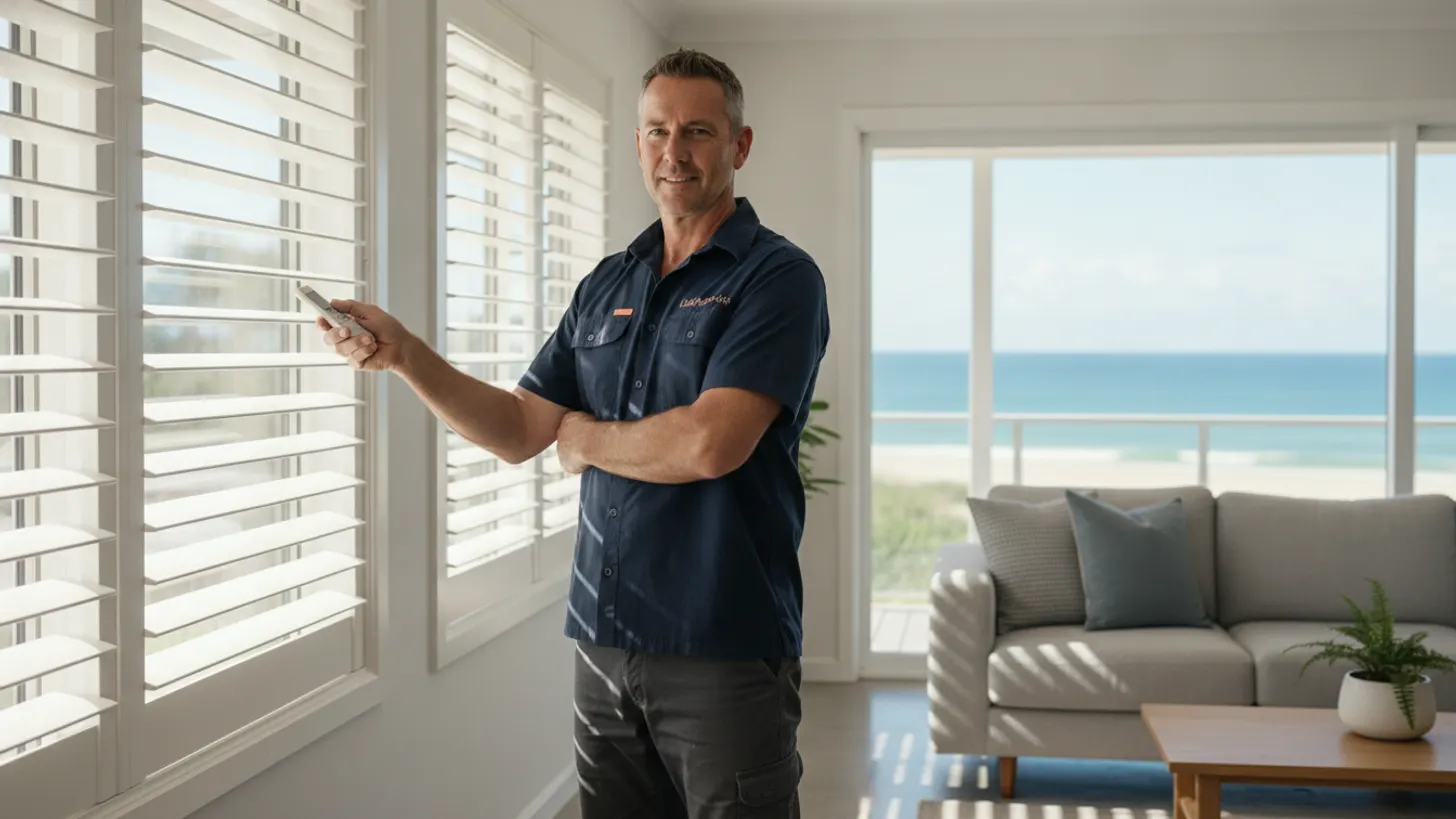
Homeowners in Wagga and Temora ask us the same question every week: is layering window treatments Australia worth the extra cost, or is it just designer talk? The short answer is yes across the Riverina, where west-facing rooms cook through summer and shed heat fast on winter nights. A blockout blind paired with a lined curtain does what neither can do alone, and the difference shows up on your power bill within one billing cycle.
Why do interior designers use layering window treatments Australia strategies in NSW homes?
Designers layer blinds and curtains because a single product rarely handles all three jobs at once: light control, privacy, and thermal performance. Australian Window Association data puts internal furnishings at up to 30 per cent of a window assembly's total thermal resistance, making a layered system the right specification for a Griffith summer afternoon and a Temora winter night alike.
The Australian Window Association's technical guidance notes that internal furnishings meaningfully change the total thermal performance of a window assembly, and the effect is additive when two products work together. That is why layering window treatments Australia has moved from a purely aesthetic choice to a serious energy-efficiency choice, and it is why we measure and quote it as a system, not a stack of individual products.
NSW rooms also fight two climates. In the Riverina we deal with 40 degree Celsius summer afternoons and sub-zero winter mornings within the same house, while coastal Sydney faces high humidity plus salt-laden UV. A single blind or a single curtain rarely covers both extremes. A hard blind for heat, a soft curtain for cold, that is the core logic of layered design across NSW.
For deeper reading on how curtains contribute to whole-window R-value, the Australian Government's Your Home guide is the standard reference used by architects and builders across NSW.
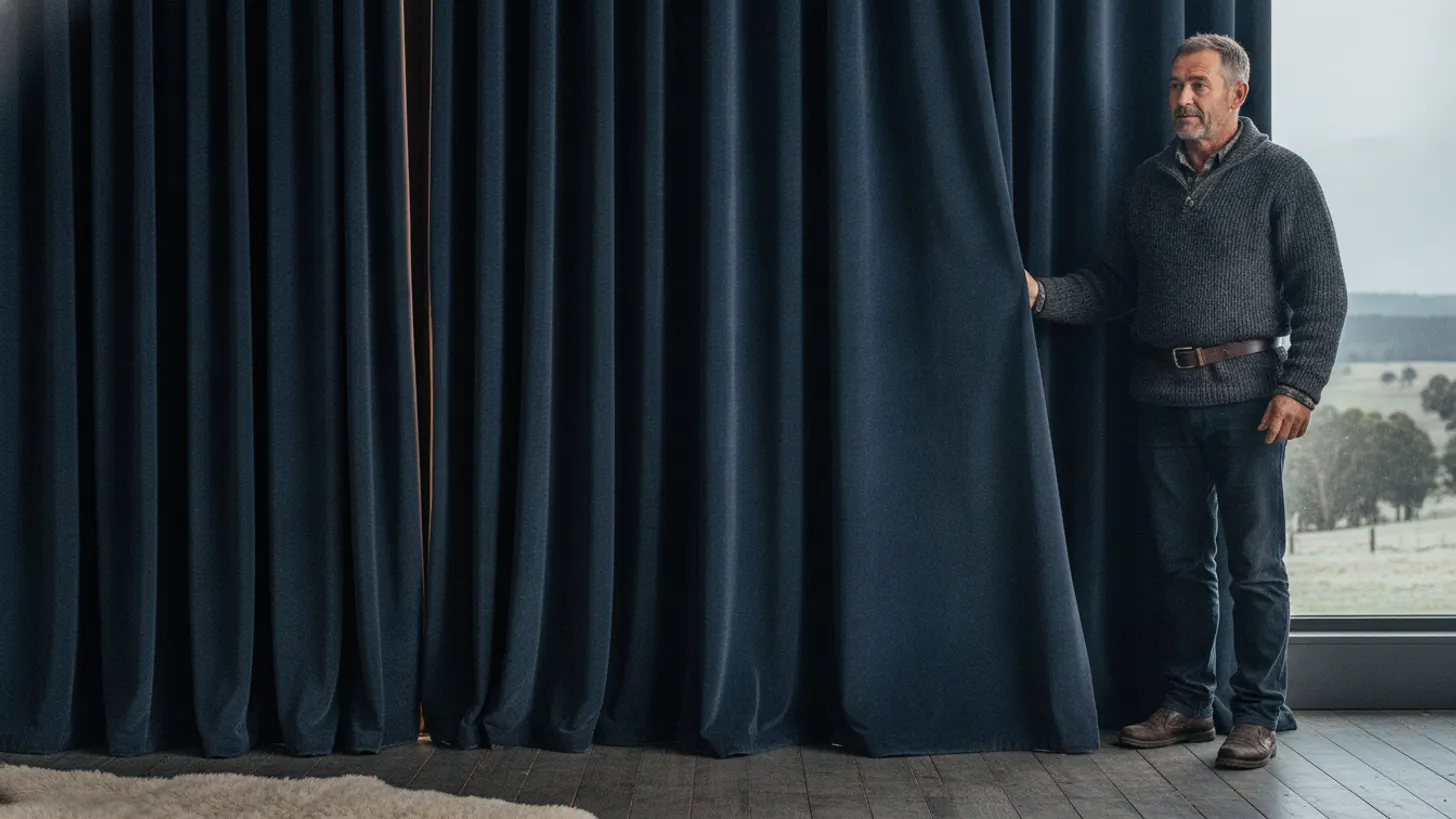
Related reading: Velvet curtains Australia: heavyweight drapes for NSW winters.
We cover the details separately in Bamboo blinds Australia: natural woven wood window treatments NSW.
We cover the details separately in S-fold curtains Australia: modern wave style for NSW living rooms.
We cover the details separately in Hamptons style window treatments Australia: coastal NSW guide.
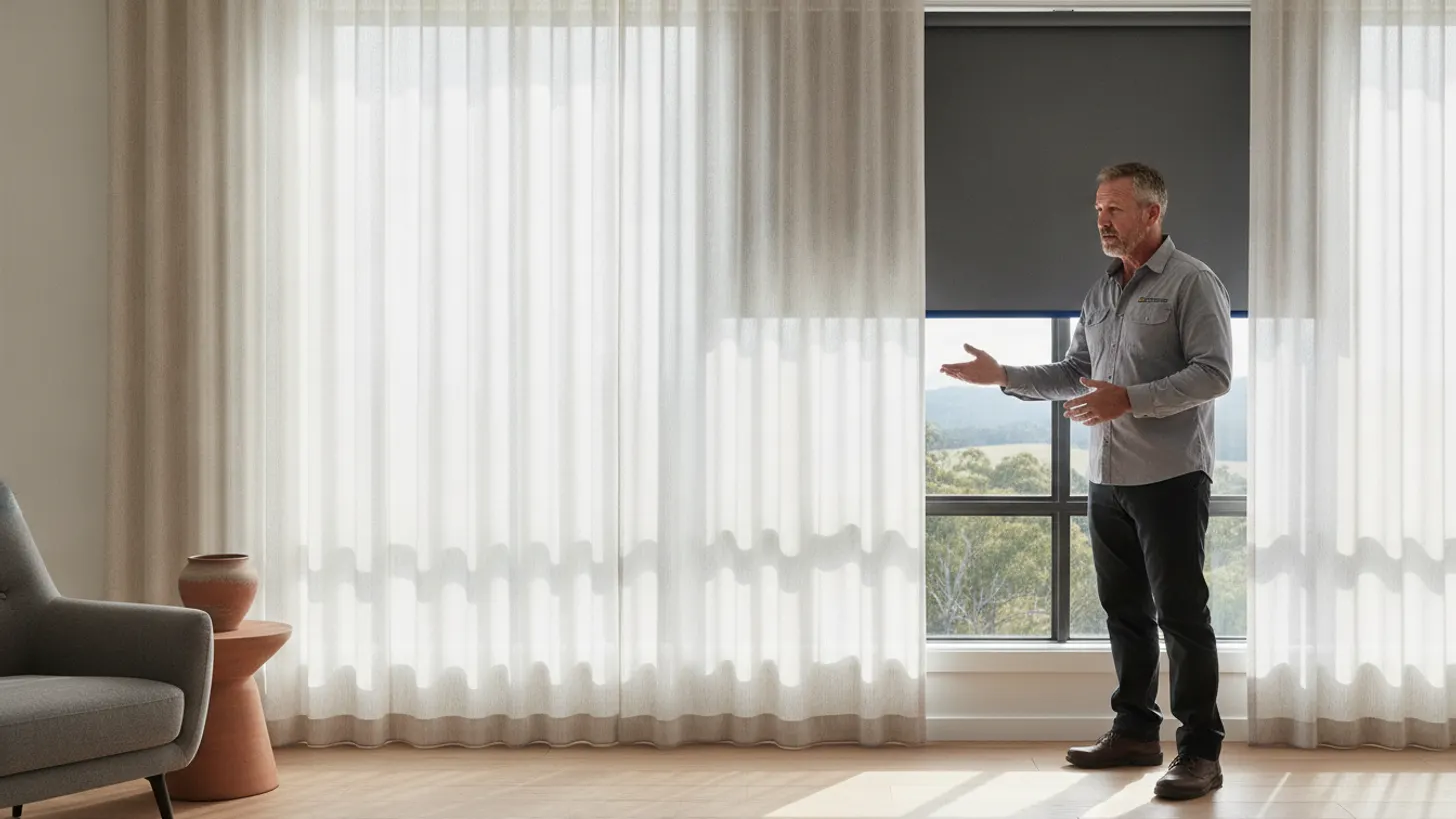
We cover the details separately in Sheer Curtains Australia: Get Privacy Without Losing Natural Light.
We cover the details separately in Cordless blinds Australia: child safety guide for NSW families.
What blind and curtain combinations work best for layering window treatments Australia by climate zone?
NSW spans eight BOM climate zones, and layering window treatments Australia improves a window's insulating R-value by R0.2 to R0.4 per Australian Window Association thermal guidance. A light sunscreen-and-sheer combination sits at the low end; a blockout blind under a heavy lined curtain reaches the high end. Aspect and glazing type determine which end applies to your room.
Here is what we specify most often across the Riverina and coastal NSW:
| Room aspect | Blind layer | Curtain layer | Why the pairing works |
|---|---|---|---|
| West-facing living | Blockout roller or dual roller | Lined S-fold (wave-pleat) in medium weight | Stops afternoon glare, adds night insulation |
| North-facing bedroom | Honeycomb blockout cell | Sheer linen S-fold | Winter solar gain by day, blockout at night |
| East-facing kitchen | Sunscreen roller | None, or short cafe curtain | Cuts morning glare, keeps benchtop visible |
| South-facing bathroom | Privacy honeycomb | None (moisture) | Insulates cold south wall, resists condensation |
For west-facing living rooms in Wagga, the best comfort outcome we see comes from a dual roller blind paired with lined curtains. CSIRO research on combined shading and residential thermal comfort found this pairing lowers peak indoor summer temperatures by 3 to 5 degrees Celsius compared with either treatment used alone. The blind blocks the sun during the day, the curtain traps the cool at night.
For a deeper look at pairing double roller blinds with curtains, our day-night dual roller guide covers the specifics for NSW living rooms.
How do you choose tracks and rods for layering window treatments Australia?
The single figure to get right when layering window treatments Australia is the clearance between the blind face and the curtain track. Australian Window Association installation guidance specifies 100 to 150 mm as the minimum a layered pair needs to operate without fabric drag or seal loss. Get that number wrong and the rest of the specification does not matter.
We measure and quote hardware clearances at the same visit we discuss fabrics. Standard practice across NSW is a 100 to 150 mm gap between the blind's front face and the curtain track, with the curtain fitted on a double bracket, a ceiling-fixed track, or a cornice-hidden channel. Ceiling tracks give the cleanest ceiling-to-floor drop and the strongest thermal seal, which matters most in Riverina winters.
Our curtain rod and track hardware guide walks through the options in detail. For NSW builders working to the child-safety and cordless requirements published by Standards Australia, both the blind and the curtain must comply, and we specify the pairing accordingly.
The other hardware detail that gets missed is returns. A curtain that ends flat against the wall lets light and warm air escape around the sides. A 100 to 150 mm return, curved back to the wall, seals that gap. Combined with a pelmet or a ceiling track, that is how a layered treatment matches the WERS (Window Energy Rating Scheme)-rated thermal performance predicted for the pairing.
Can layering window treatments Australia cut energy costs in NSW?
Yes, and the effect is measurable rather than marketing. Layering window treatments Australia works because a curtain over a blind creates a small trapped-air gap, and trapped air is a strong insulator. The Australian Government's household insulation guidance ranks glazed windows as one of the top three heat-loss paths in a typical home.
The Your Home glazing chapter reports up to 87 per cent of a home's summer cooling load can enter through unshaded windows and up to 40 per cent of winter heating energy can escape the same way. A single roller blind reduces some of that. A lined curtain on its own reduces some of that. A layered pair reduces materially more, because the two air films stack.
Sustainability Victoria, in their save energy in the home guide, recommend combined internal shading as one of the highest-yield retrofits for older housing stock, alongside ceiling insulation and draught sealing. In older weatherboard homes across the Riverina, we see this borne out on the meter after one winter.
Honeycomb (cellular) blinds work particularly well as the inner layer because their sealed cells add their own trapped air pocket. Our honeycomb blind guide covers the thermal specifics. For homes without honeycomb, a good blockout roller under lined curtains still delivers most of the benefit.
What are the most common mistakes NSW homeowners make when combining blinds and curtains?
The mistakes we fix most often on Riverina jobs are the same three: wrong order of layers, wrong curtain length, and wrong hardware clearance. Getting any one of them wrong wipes out most of the thermal benefit that layering promises. The good news is these mistakes are all easy to catch during the measure and quote visit, and once resolved the layering window treatments Australia approach delivers what the physics predict.
Order of layers matters. The blind sits closest to the glass; the curtain sits on the room side. Putting a sheer between the blind and the glass traps moisture against the window and defeats the air-gap principle. This is the single most common mistake on rental fit-outs we take over from previous owners.
Curtain length is the next one. A curtain that stops at the sill loses the whole thermal argument, because warm air pours out under the hem. Full-length curtains that skim the floor by 5 to 10 mm are the standard for layered work across NSW. In heritage homes with radiators or floor vents, we sometimes drop to just above the vent, but never to the sill.
Hardware clearance is the third. A track fixed too close to the wall means the curtain rides on the blind, wearing the fabric and jamming the mechanism. See our energy-efficient window coverings guide for the full pre-install checklist.
One more error worth flagging: fabric weight mismatch. A heavy blockout curtain over an already-thick honeycomb blind creates a bulky stack that homeowners stop opening after a month. Match the weights. If the blind is heavy, use a mid-weight lined curtain. If the blind is light, the curtain can carry more weight.
Bureau of Meteorology climate summaries for NSW towns are a useful reference when deciding fabric weights. In Temora we design for 42 degree Celsius summer maxima and 2 degree Celsius winter minima in the same year, so a layered treatment has to handle both ends of the range.
Frequently asked questions
Are blinds and curtains together worth the extra cost in NSW?
Yes, in most NSW aspects. Layering window treatments Australia delivers three benefits a single product cannot: daytime glare control, night-time thermal seal, and privacy at every hour of the day. CSIRO's thermal comfort research shows a blockout blind under a lined curtain cuts peak indoor summer temperatures by 3 to 5 degrees Celsius compared with either treatment alone. In a Riverina west-facing living room, that is often the difference between switching the air conditioner on at 3 pm or holding out until 6 pm, which changes what your quarterly power bill looks like.
What is the best blind for layering window treatments Australia?
For most NSW rooms, a blockout roller blind or a honeycomb (cellular) blockout blind is the strongest inner layer to combine with lined curtains. Honeycomb cells trap their own air pocket, so pairing them with curtains stacks two thermal layers. The Australian Window Association's technical guidance on internal furnishings ranks cellular blinds among the highest-performing internal shading products. In bay windows or awkward reveals, a dual roller (sunscreen plus blockout) sometimes replaces the honeycomb because it flexes better around the frame.
Do you need special tracks for double window coverings Australia?
You need hardware built for two layers, but not anything exotic. The three common track solutions are double brackets on a standard rod, a ceiling-mounted track set 100 to 150 mm forward of the blind, and a hidden channel behind a pelmet or bulkhead. For heavier layered treatments, NSW homeowners often specify ceiling tracks because they give a floor-to-ceiling drop and hide the mechanics. Reveals under 100 mm deep sometimes need a face-fixed blind and a ceiling curtain track, because there is not enough depth for both inside the reveal.
Can layered curtains help with condensation on single-glazed windows?
Yes and no. A tight curtain against a cold single-glazed window can actually increase condensation on the glass, because the trapped air is cooler and holds less moisture. The fix is ventilation, not more layers. Yourhome.gov.au's glazing chapter recommends venting the room during the day and only closing layered treatments at night, which is standard practice for the heritage NSW homes we service. In rooms with severe condensation we sometimes leave a 50 mm gap at the top of the curtain track for airflow.
Should renters bother putting curtains over roller blinds?
In many NSW rentals, yes, provided the curtain track is tension-fitted or fixed within the tenancy's cosmetic-change rules. Standalone tension rods with lined eyelet curtains sit clear of the roller blind and add most of the thermal benefit of a full layered install. Our rental window coverings guide walks through the compliant options. Layering window treatments Australia is not just an owner-occupier decision; renters running heaters through Riverina winters see a real reduction in unit-comfort loss.
How much can layered treatments actually cut a NSW power bill?
The honest answer: it depends on your baseline and your aspect, but published Australian Government figures suggest the potential is meaningful. Energy.gov.au reports that improving internal window shading is one of the highest-return low-cost retrofits available to a household, and Sustainability Victoria's household energy guidance places combined internal shading alongside ceiling insulation as a top-tier retrofit. In a Riverina brick veneer with single glazing, we typically see homeowners report noticeably lower quarterly bills the first summer and winter after layering, without changing anything else about the home.