Smart Home Automation · 16 min read
Motorised shutters Australia: smart home control for NSW homes
Chris & Campbell · 18 September 2026
"Can I run the whole west side of the house from my phone?" It is a reasonable question for any homeowner staring at six large windows and a hot afternoon sun. Yes: motorised shutters Australia wide now pair with Google Home, Amazon Alexa, or Apple HomeKit, and battery motors mean most rooms need no new wiring at all. The catch is choosing the right power option per window.
How motorised shutters Australia wide work in a smart home
Strip away the app and a motorised shutter is simple: a small tubular motor (an electric motor built directly into the roller tube or shutter frame, rather than mounted outside it) drives the panel or blind. A radio remote, a bridge, or a hub then carries the signal, which is why the whole setup feels instant.
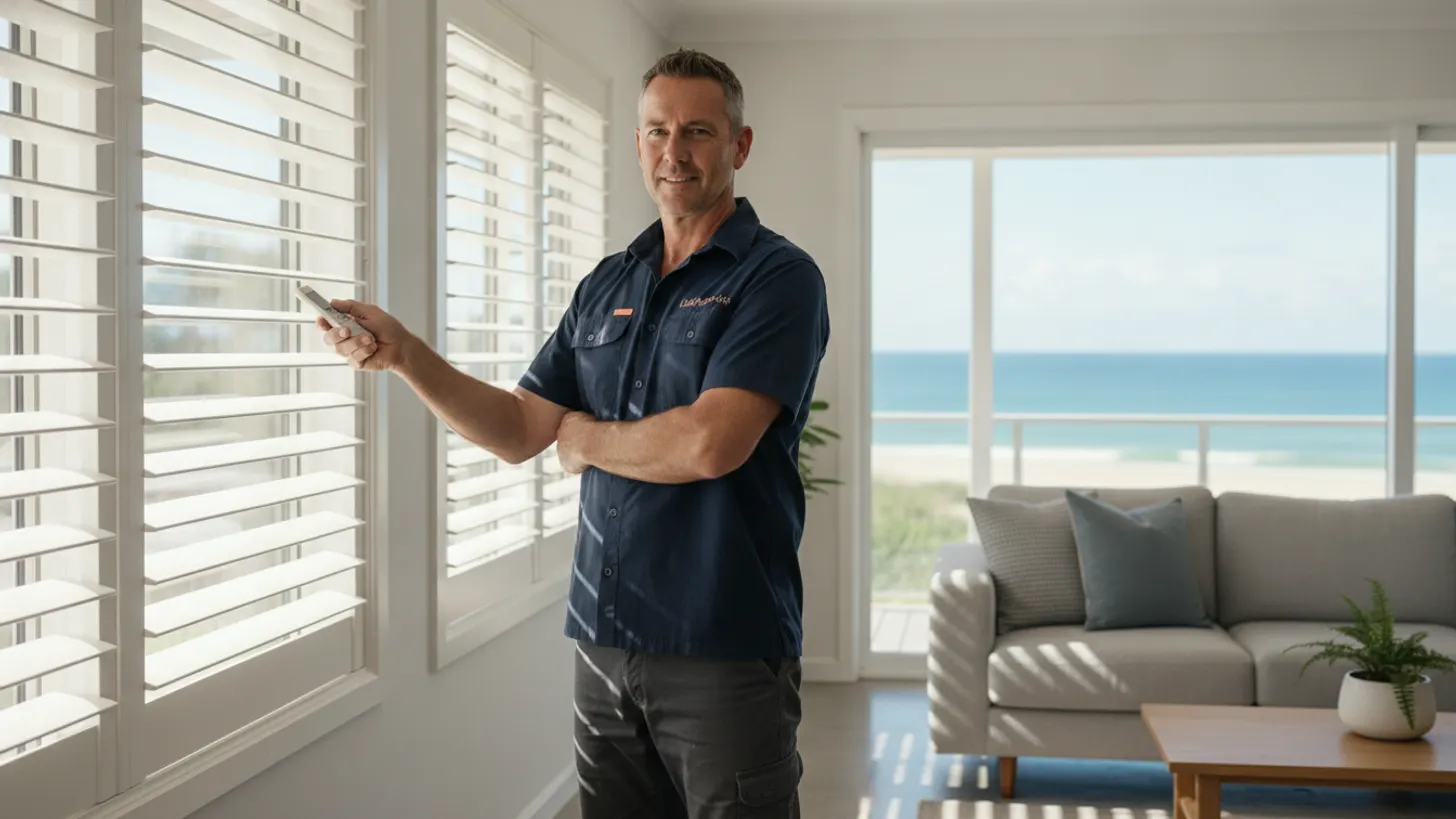
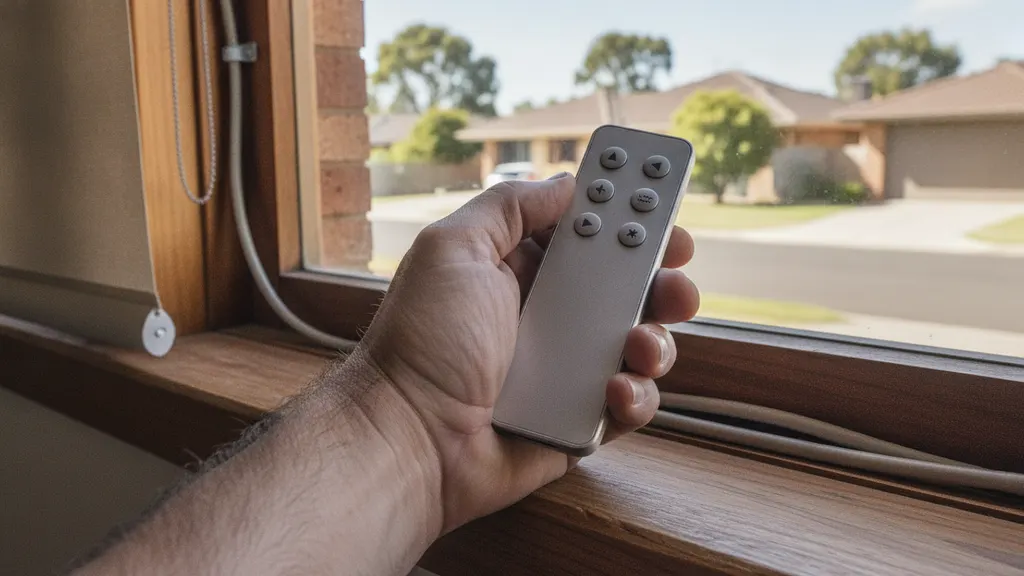
Three power options cover almost every job, and control happens in layers on top of whichever one you pick. A rechargeable lithium battery sits inside the roller tube or the shutter frame and is commonly rated for up to about 12 months of use per charge under typical daily operation. A plug pack runs to a nearby power point. A hardwired motor takes permanent supply, and in NSW that connection belongs to a licensed electrician. On the control side, the motor listens for a radio signal from a handheld remote or a wall switch, and a bridge (a small box tied to one motor brand) or a hub (a box that can join several brands on the same network) translates your home network into that radio language, which is what puts control on a phone screen. Add a schedule and the west side closes at three in the afternoon in January whether anyone is home or not.
Heat is the reason this matters, not novelty. The Australian Government's Your Home guide to passive design treats shading as the first line of defence against summer heat gain, because glass covered before the sun hits it beats an air conditioner catching up afterwards. Automation makes the timing reliable on the days nobody is watching the clock.
Where the motor actually sits
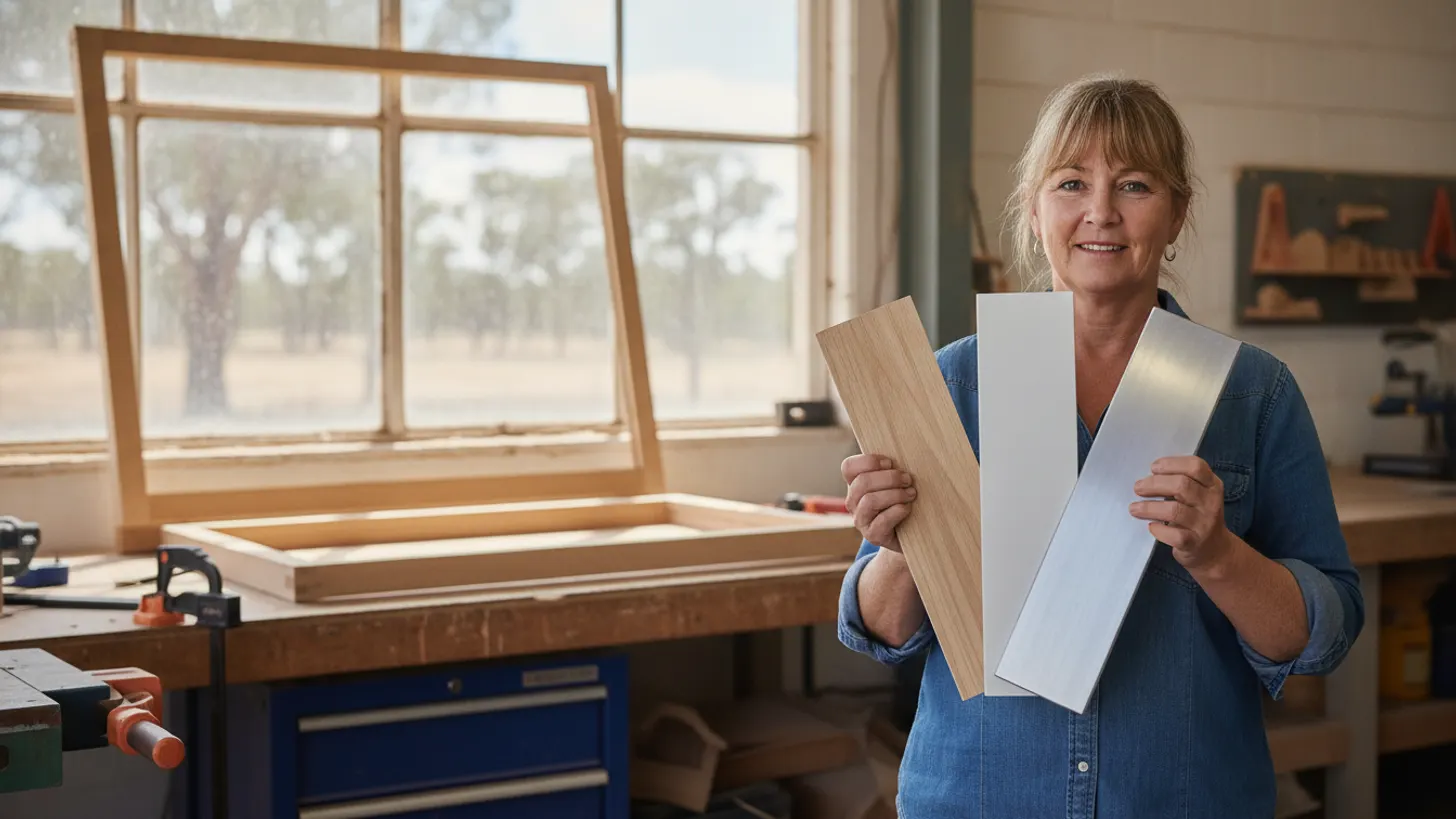
On plantation shutters, a slim motor built into the frame tilts the louvres. On rollers, romans and zipscreens (fabric screens that run inside a fixed side channel, common on alfresco areas), a tubular motor lives inside the tube. Panels that slide or fold still move by hand. Material choice changes the load the motor carries, which our guide to basswood, PVC and aluminium shutter materials covers in detail.
There is a full breakdown of this topic in Timber vs PVC Plantation Shutters: The Australian Buyer's Comparison.
We cover the details separately in Plantation shutters cleaning Australia: the homeowner's guide.
Which smart home systems pair with motorised shutters Australia suppliers sell
Most motorised systems sold into Australian homes speak to at least one of three mainstream platforms: Google Home, Amazon Alexa and Apple HomeKit. Pairing usually runs through the motor brand's own hub or bridge. Compatibility is worth checking first, because motorised shutters Australia wide are only as clever as the hub behind them.
| Platform | How you control it | Watch out for |
|---|---|---|
| Google Home | App, Google Assistant voice, routines | Needs the motor brand's hub on the same network |
| Amazon Alexa | Alexa app, voice, sunrise and sunset routines | Naming your groups well matters once you run many windows |
| Apple HomeKit | Home app, Siri, automations, remote access via a home hub | Support is the least universal across motor brands |
Standards keep shifting, so ask whether a motor range supports Matter, the cross-platform standard that lets devices work across ecosystems. CSIRO research into household energy and connected home technology tracks how quickly Australian homes are adding controllable devices, and the lesson for a buyer is to avoid hardware locked to one app that may not exist in five years.
Radio range matters more than people expect in a large country house. The phone-to-hub link is your network; the hub-to-motor link is usually radio, and thick walls, steel framing and long runs all cut into it. A repeater fixes most of it, and that radio link is what keeps the whole system responsive rather than laggy.
What motorised shutters Australia cost next to manual options
Motorising adds cost in three places: the motor, the control gear (remote, hub or wall switch), and any electrical work. That is why motorised shutters Australia wide carry a premium over the same covering on a manual rod or chain, and why the premium lands per window rather than as one flat fee.
We are not going to invent a number here, and no website should. Pricing moves with window size, material, motor brand and how many openings share a hub. What holds true is how to compare: ask every supplier for itemised written pricing that separates the covering, the motor, the hub and the electrical work. Chris and Campbell measure and quote on site across the Riverina for that reason.
Running cost is the small part of the story. A tubular motor draws power for the few seconds it moves, not while it sits. Household electricity pricing is tracked in Canstar Blue's household electricity cost research, and against a normal quarterly bill, a handful of motors moving twice a day is not the line to worry about. The energy question sits in the shading itself, and energy.gov.au household energy guidance puts heating and cooling among the largest slices of home energy use.
A sensible middle path is to motorise the windows that are hard to reach or that you want on a schedule, and leave the easy openings manual. Nobody needs motorised shutters Australia wide on every opening in the house, and mixing the two keeps the budget honest.
We cover the details separately in Plantation shutters cost Australia: what to budget for NSW homes in 2026.
Are motorised shutters Australia wide worth it on hard-to-reach NSW windows?
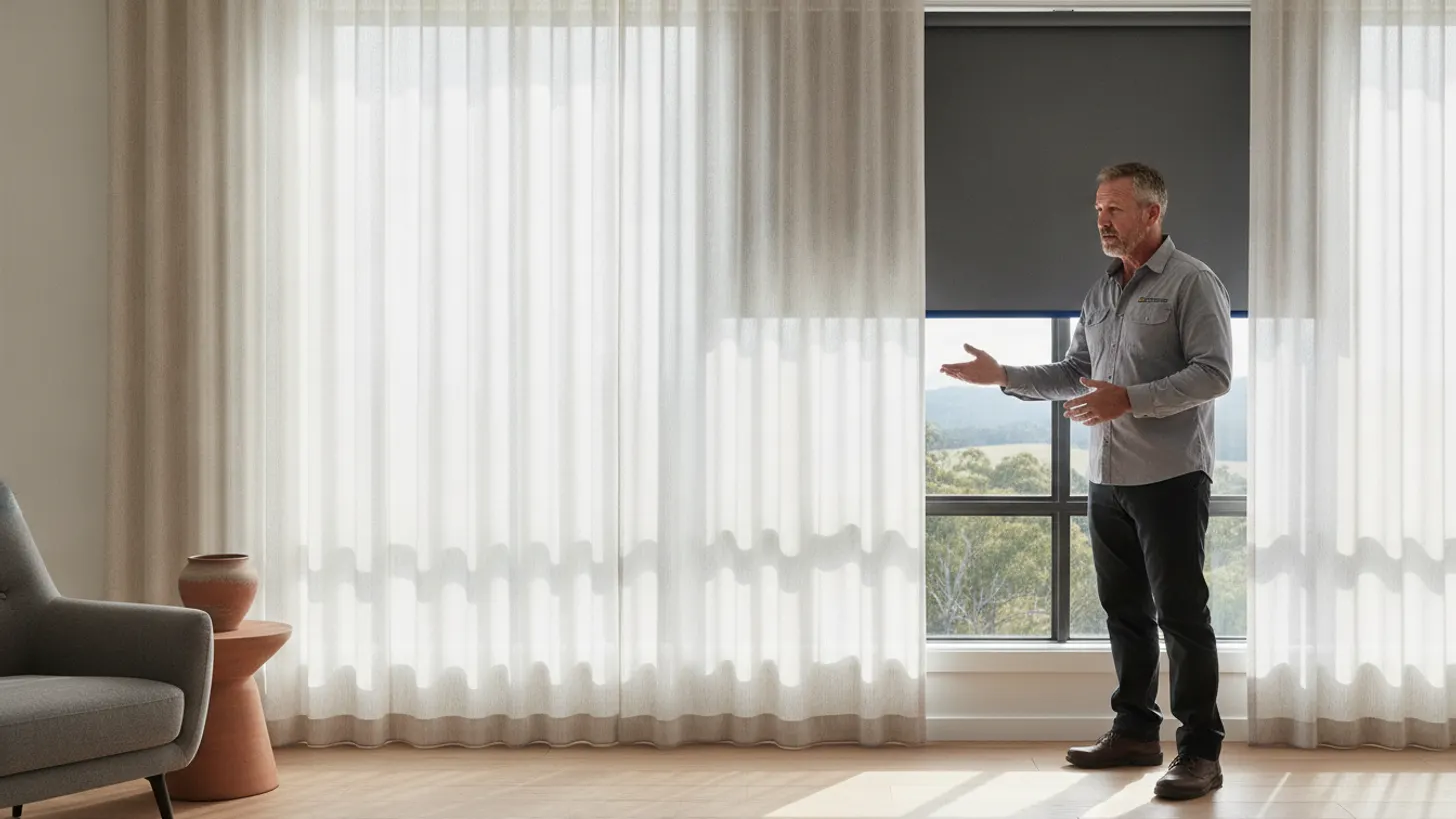
This is where the spend makes obvious sense. Stairwell glass, high gable windows, wide sliders and anything sitting behind a kitchen bench or a lounge suite gets adjusted far less than it should, because reaching it is a chore. The motorised shutters Australia homeowners fit on those openings get used daily instead of monthly.
Summer inland is not gentle. Bureau of Meteorology climate records show long runs of hot days across Temora, Wagga Wagga and Griffith, and west-facing glass carries most of that load from mid-afternoon. A schedule that closes the west side before the peak beats good intentions every time. Our guide to window treatments for Temora's extreme heat and cold covers the material side of the same problem.
Outdoor zipscreens and awnings are the other strong case, since they are the hardest things on the house to work by hand in wind. Our guide to outdoor blinds for alfresco and patio areas runs through the options.
Cord safety is the quieter argument. A motorised covering has no operating cord or chain at all, which removes the hazard behind Australia's corded blind rules; our cordless blind child safety guide for NSW families sets out what applies in a nursery. Sustainability Victoria's household guidance on window coverings also makes the point that coverings only deliver their thermal benefit when they are closed at the right time, which is the whole case for automating them.
What ongoing maintenance do motorised shutters Australia wide need?
Less than most people expect, and different from manual gear. There is no cord to fray and no chain to replace. The jobs that do come up are charging a battery about once a year, keeping tracks and louvres clean, the occasional hub firmware update, and calling an electrician if a hardwired circuit plays up.
Battery charging is the main scheduled task. Under typical daily operation, rechargeable motor batteries are commonly rated for up to about 12 months per charge, so the habit that works is doing the whole house on one weekend each year, the way people handle smoke alarm batteries.
Cleaning is the other routine job for motorised shutters Australia wide, and it is the same work a manual covering needs: dust the louvres, wipe the bottom rail, keep the track clear so the motor is not fighting grit. Our roller blind cleaning and warranty guide applies to motorised units too, with one rule added: keep water away from the motor end and the charging port.
Fixed wiring is the part to respect. Standards Australia, publisher of the AS/NZS 3000 wiring rules, sets the framework that makes fixed electrical work a licensed trade, and a hardwired motor connection in a NSW home sits inside it. Battery and plug-in motors avoid that step, which is part of why they dominate retrofits. Anyone offering to hardwire motorised shutters Australia wide without a licensed electrician on site is a supplier to walk away from.
Frequently asked questions
Can I control motorised shutters Australia wide with Google Home or Alexa?
Yes, in most cases. Systems sold into Australian homes commonly integrate with Google Home, Amazon Alexa or Apple HomeKit, usually through the motor brand's own hub or bridge sitting on your home network. Once paired you get app control, voice commands and schedules tied to sunrise and sunset. The detail that matters is which platforms a particular motor range supports, because not every brand covers all three, and HomeKit support is the least universal. Ask the supplier to name the ecosystems in writing before you order. CSIRO research into household energy and connected home technology is useful background on where this is heading.
Do motorised blinds need an electrician in NSW?
Only if they are hardwired. Battery and plug-in motors need no fixed wiring, which is why they dominate retrofits in existing homes. A hardwired motor draws permanent supply, and in NSW that connection must be made by a licensed electrician to comply with Australian electrical safety standards. That is not a supplier preference, it is the rule covering fixed wiring in any dwelling. If you are building or renovating, plan the cable runs early so the electrician can rough them in before the wall linings go on. Master Builders Australia is a useful starting point for how licensed trades slot into a build program.
How long does a battery-powered blind motor last between charges?
Rechargeable motor batteries in current systems are commonly rated for up to about 12 months of use per charge under typical daily operation, meaning roughly one open and one close each day. Heavy use, very large or heavy coverings and cold weather all shorten that. Most motors take a USB or barrel charger, recharge in a few hours, and warn you in the app before they stop. The approach that works is charging every motor in the house on the same weekend once a year. For the wider household picture, energy.gov.au household energy guidance is worth reading.
Will motorised shutters cut my summer cooling costs?
Shading does the work; the motor makes sure it happens on time. Closing coverings on sun-facing glass before the heat arrives stops much of it entering, and Your Home shading guidance from the Australian Government treats that as the first move in controlling summer heat gain. What automation adds is behavioural: scheduled coverings close at the right hour whether anyone is home or not, which is the part most households miss on a workday. Expect the biggest difference on west-facing living areas in January and the smallest on shaded southern windows. No covering should be sold to you as a fixed dollar saving.
What happens to motorised shutters during a blackout?
Battery motors keep working, because they are not on mains power. Hardwired motors stop until supply returns, though most ranges include a manual override so panels and blinds can still be moved by hand, and security roller shutters usually have a crank or key release. Hub control also drops out when the router loses power, so the handheld remote or wall switch becomes the fallback. Storm season across inland NSW is well documented in Bureau of Meteorology climate records, so ask exactly what the manual release looks like on any range you are considering.
Can plantation shutters be motorised, or only blinds?
Both can be motorised. Motorised plantation shutters NSW installers fit use a small motor built into the frame that tilts the louvres, giving light and privacy control without touching the panel. Blinds and roller systems use a tubular motor inside the roll. Sliding and bifold shutter panels still move by hand; it is the louvre tilt that automates. On tall or wide openings that is the difference between a shutter adjusted daily and one left in a single position all season. Your Home glazing guidance explains why controlling light and heat at the glass matters most.