Outdoor Blinds · 15 min read
Outdoor blinds Australia: alfresco and patio solutions for NSW
Chris & Campbell · 14 August 2026
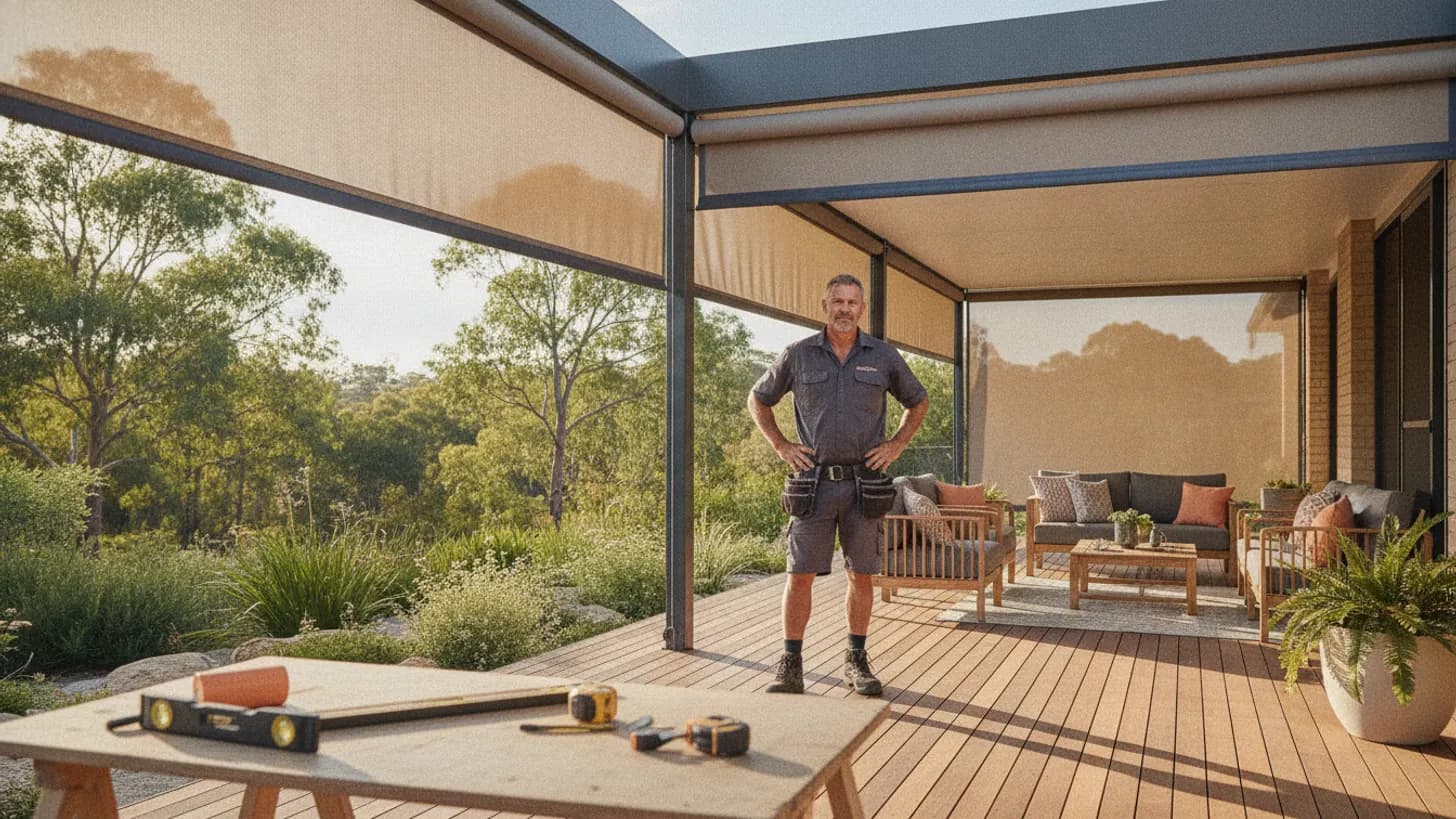
'Will outdoor blinds Australia sells actually make our patio usable through a Wagga summer, or is this just decoration?' That is the question we hear most often on quote visits across the Riverina. The honest answer is yes, but only if the system suits the site: sun angle, prevailing wind, and how often the deck faces salt spray or bushfire smoke. Chris and Campbell are CWGlobal authorised dealers for the Riverina and measure every job personally. This guide walks through what we install, what a job costs in 2026, and what actually lasts under NSW conditions.
What types of outdoor blinds Australia homeowners install on alfresco and patio areas
The outdoor blinds Australia trades install on alfresco decks fall into three families we measure and quote regularly: zipscreen blinds, PVC cafe blinds, and external roller blinds. Each solves a different problem (enclosure, weather protection, or glare), so the right pick depends on aspect, wind exposure, and how often you want the deck fully sealed.
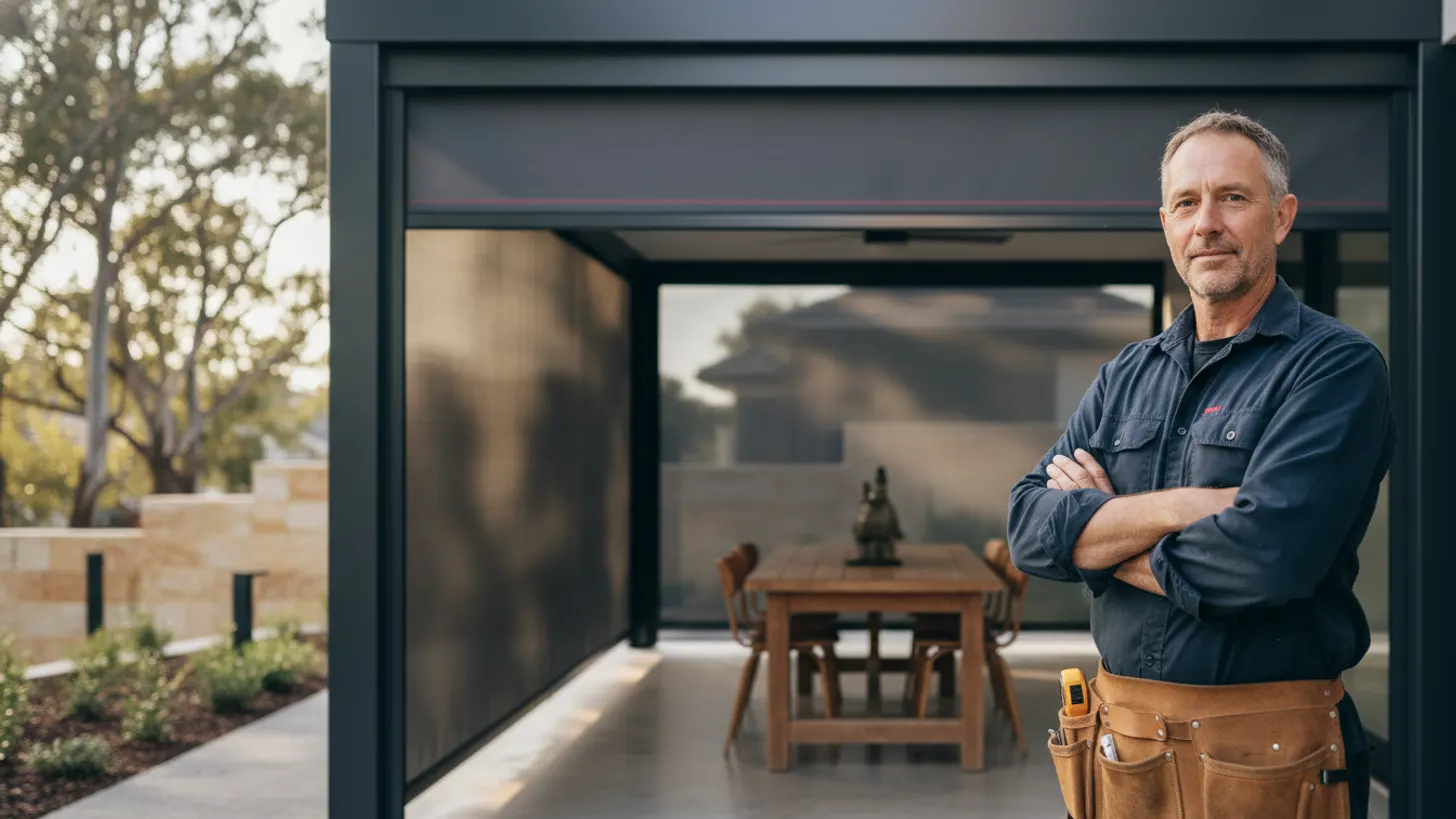
Zipscreen blinds are the premium option. The fabric edges slide inside side channels with a zip-style track, so the blind stays taut in gusty conditions and seals out mosquitoes when fully down. We install these on north and west-facing alfrescos across Wagga and Griffith because they turn the deck into an extra room half the year.
Cafe blinds are clear or tinted PVC drop-down curtains with straps or a manual pulley. They cost less than zipscreens and let you keep the view through the blind. They are the practical pick for smaller decks or where budget matters more than a fully sealed enclosure. The Australian government Your Home guide to shading notes that any adjustable external shading outperforms internal blinds for keeping heat out.
External roller blinds run in fixed guides or on bottom-weight bars. They are often specified for shopfronts, but many outdoor blinds Australia homeowners fit them on smaller west windows and upper-storey balconies. They roll fully out of sight when not needed.
Which materials in outdoor blinds Australia stock handle NSW weather and UV
Fabric grade determines whether outdoor blinds Australia projects last a decade or bleach out in three. Bureau of Meteorology records show Wagga and Temora clearing 40 degrees Celsius on 15 or more days per summer, while coastal NSW adds salt loading on top. A west-facing Riverina drop ages at roughly twice the rate of an equivalent Melbourne install.
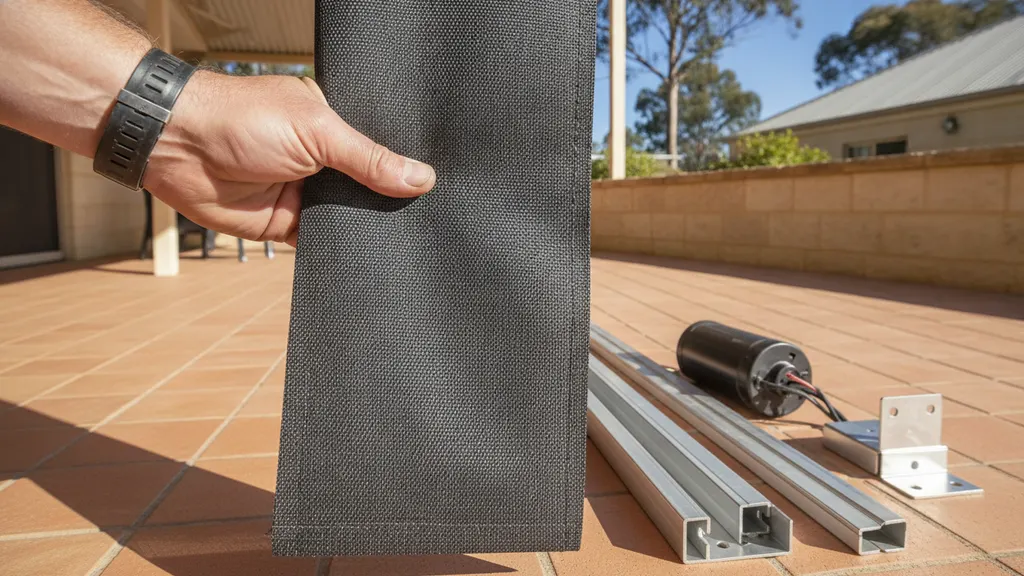
Two dominant fabric families cover most residential work: PVC-coated polyester mesh (for zipscreens and mesh cafe blinds) and clear or tinted PVC film (for see-through cafe blinds). Premium suppliers publish real test data. Serge Ferrari Soltis mesh is rated for 10-year service life against UV degradation, mould, and salt-air corrosion, with test certification published against Australian standards. Economy alternatives typically use a lighter 300 gsm coating that begins to chalk and crack within two to three seasons on north or west drops exposed to Riverina sun. The distinction matters more than most buyers expect: a premium fabric at one and a half times the cost can save two full replacement cycles over a decade. Look for fabrics tested to AS/NZS 4399 for UV block-out and frame systems compliant with AS/NZS 2080:2006 published by Standards Australia. If a supplier cannot name the test standard their fabric is assessed against, treat that as a red flag and request a competing quote.
Aluminium frames on zipscreens should be marine-grade (5000-series) or powder-coated to a minimum 60-micron thickness for coastal jobs. Stainless steel side channels and fasteners are worth the small upcharge within about 10 km of the coast, matching guidance in our coastal window treatments NSW guide. On a 2024 install at a Griffith property, we replaced cafe blinds fitted by the previous contractor using standard aluminium fixings: salt-laden westerlies had worked into the frame joints and cracked the side channels within 18 months. We specified marine-grade 5052-series side channels and stainless fasteners on the replacement zipscreens, which have performed without fault since.
Cafe blinds vs zipscreen blinds vs external roller blinds
Zipscreens account for roughly 60% of the residential outdoor blind drops we quote on Riverina new-builds. Cafe blinds take most of the rest, and external roller blinds are a smaller category for balconies or windows where fabric needs to roll fully out of sight. Together, cafe blinds and zipscreens cover about 90% of the outdoor blinds Australia market each year.
| Feature | Cafe blinds | Zipscreen blinds | External roller blinds |
|---|---|---|---|
| Typical wind rating | Moderate (roll up in strong wind) | High (zip track holds fabric) | Moderate to high |
| Insect seal | Partial (straps only) | Full (zip channels) | Partial |
| Motorisation option | Rare | Standard | Standard |
| View through | Clear or tinted PVC available | Mesh view (10 to 14% openness) | Mesh or blockout |
| Typical drop price 2026 | $600 to $1,500 | $900 to $3,500 | $800 to $2,000 |
Zipscreens are increasingly the default request on new-build alfrescos, mirroring the choices set out in our planning window treatments new build NSW post. Cafe blinds still make sense on rentals, granny flats, and heritage cottages where a lower price and easy replacement matter more than perfect sealing.
What outdoor blinds Australia cost for a typical NSW alfresco in 2026
Prices for outdoor blinds Australia consumers see in 2026 vary more than most homeowners expect, driven by span width, fabric grade, motorisation, and site access. A three-drop alfresco in Wagga typically runs somewhere between $3,000 and $10,000 fitted, based on Canstar Blue 2025 outdoor blinds buyer research and current supplier trade pricing we work with.
The main cost drivers we walk through on a measure and quote visit are drop width (wider drops need heavier bottom bars), fabric choice (Serge Ferrari and similar top-tier fabrics roughly double the fabric line item versus economy mesh), and motor spec (hardwired versus battery, and whether it links to a home automation hub). Most outdoor blinds Australia projects we price on residential jobs land in the middle of the range shown.
Energy savings offset some of the spend. Federal energy.gov.au guidance on household energy efficiency puts external shading among the most effective interventions for reducing cooling load on north and west-facing facades, a finding consistent across independent building science literature.
How to maintain outdoor blinds so they last in NSW conditions
Maintenance is where most premature failures for outdoor blinds Australia customers start. In our field experience, neglected cleaning accounts for roughly 70% of early warranty voids. Fabric left dirty through a Riverina summer collects grit that grinds into the coating every cycle. A ten-minute quarterly wash can add two or more years to fabric life and keeps warranties intact.
Our field checklist is straightforward. Hose down the fabric with plain water every three months, working from top to bottom to flush grit out of the weave rather than grinding it in. Once a year, wash with a mild pH-neutral detergent (no citrus cleaners, no high-pressure spray directly on the fabric face, which forces water behind the coating), lubricate zips or guides with a dry silicone spray, and inspect stitching at load points, particularly the bottom bar corners where tension concentrates. Check motorised systems for any error codes or unusual travel hesitation, and clear any leaf or insect debris from the guide channels before cycling. On coastal Newcastle and Central Coast jobs we rinse hardware every six weeks through the salt-heavy summer and autumn months, echoing the routine in our Newcastle window treatments guide. Inland Riverina clients can stretch to quarterly rinses for hardware, but never skip the six-monthly stitching check on west drops.
Warranty terms hinge on documented maintenance. Keep receipts for professional service and photographs of any storm damage. Report faults early: a small tear in a zipscreen mesh can be re-stitched inside the fabric warranty, but if left to shred it becomes a full-panel replacement. The single biggest reason outdoor blinds Australia warranty claims fail is missed routine maintenance. For Riverina-specific climate context, our Temora extreme climate guide covers what we brief clients on at handover.
Frequently asked questions
What is the best type of outdoor blind for an NSW alfresco?
For most Riverina and coastal NSW alfrescos we measure and quote, zipscreen blinds are the strongest all-round pick. The zip-track edge keeps fabric taut in wind, seals out mosquitoes, and lets you fit motorisation on large drops. Cafe blinds are still right where budget is tight or you want a clear PVC panel to preserve the view, and external roller blinds work well on narrower windows or upper storeys. The most important decision is not the type but the fabric grade and frame compliance to AS/NZS 2080:2006 published by Standards Australia, since that standard governs long-term wind and UV performance.
How long do outdoor blinds last in Australia?
Expected service life for outdoor blinds Australia buyers see sits between five and 12 years depending on fabric grade, aspect, and salt loading. Premium PVC-coated meshes such as Serge Ferrari Soltis carry a 10-year fabric warranty. Economy meshes usually run three to five years before UV fade and stitching failure appear on north or west drops. Motorised hardware from major brands is typically warranted for five years. Coastal salt cuts service life by 20 to 30% in our experience, unless marine-grade aluminium and stainless fasteners are specified. The Australian government Your Home site notes unmaintained shading products degrade far faster.
Can outdoor blinds be closed in strong wind?
Zipscreens are engineered for higher wind loads because the fabric is captured in a side track, and better systems are wind-rated to Beaufort 8 (34 to 40 knots) or higher when fully deployed. Cafe blinds and drop-down PVC curtains should be rolled up when winds exceed about 40 to 50 km/h, because the fabric can flap and tear the fixing eyelets. The Bureau of Meteorology is a good primer on Beaufort ratings and local wind gust data. Motorised zipscreens can be paired with a wind sensor that auto-retracts once a preset threshold is crossed, which is worth specifying on exposed sites.
Are outdoor blinds waterproof?
Clear PVC cafe blinds are effectively waterproof at the panel and will keep rain off furniture, though they always leak a little at seams. Mesh zipscreen fabrics are water-shedding rather than waterproof: the mesh openness (typically 5 to 14%) lets some spray through in driving rain. For year-round rain protection you generally combine zipscreens with a solid patio roof or awning above the blind. The Master Builders Australia resource base on outdoor rooms covers the roof-to-blind detail well. Do not expect a mesh outdoor blind alone to weatherproof an alfresco: it blocks sun, wind, and insects primarily.
Do outdoor blinds need to comply with any Australian standard?
Yes. AS/NZS 2080:2006, published by Standards Australia, sets performance requirements for external sun control products, covering wind loading, UV degradation, and mechanical durability. Reputable manufacturers publish test data against this standard. On top of that, motorised systems must meet AS/NZS 3000 wiring rules if hardwired. Corded manual systems fitted within reach of children should also follow child-safety requirements in AS/NZS 4935 to prevent strangulation. Ask your installer for the compliance certificate: if they cannot supply it, walk away from the quote and get a second opinion elsewhere.
How much do motorised zipscreens cost to run in energy terms?
Very little. A typical tubular motor draws about 90 to 120 watts while operating and runs for roughly 30 seconds per cycle. Even if you cycle four drops twice a day, annual power use sits under 5 kWh, or about a dollar a year at 2026 NSW retail tariffs. The larger energy story is the cooling load offset: federal energy.gov.au guidance notes external shading can reduce summer air-conditioning demand by up to 30% on the shaded facade, which dwarfs the motor draw. For a broader view see our energy efficient window coverings Australia post.