Blinds · 17 min read
Honeycomb blinds Australia: insulation and energy savings for NSW
Chris & Campbell · 21 August 2026
Is it worth spending extra on honeycomb blinds Australia if your NSW home still has single-glazed windows and soaring summer power bills? Short answer: yes, and the physics is well documented. Cellular blinds trap still air inside their pleats, cutting heat loss through bare glass by up to 40 percent according to Australian Fenestration Rating Council testing. This guide walks through cell counts, room fit, comparable window treatments, and 2026 pricing from a Riverina installer's chair.
What honeycomb blinds Australia are and how the cellular design insulates windows
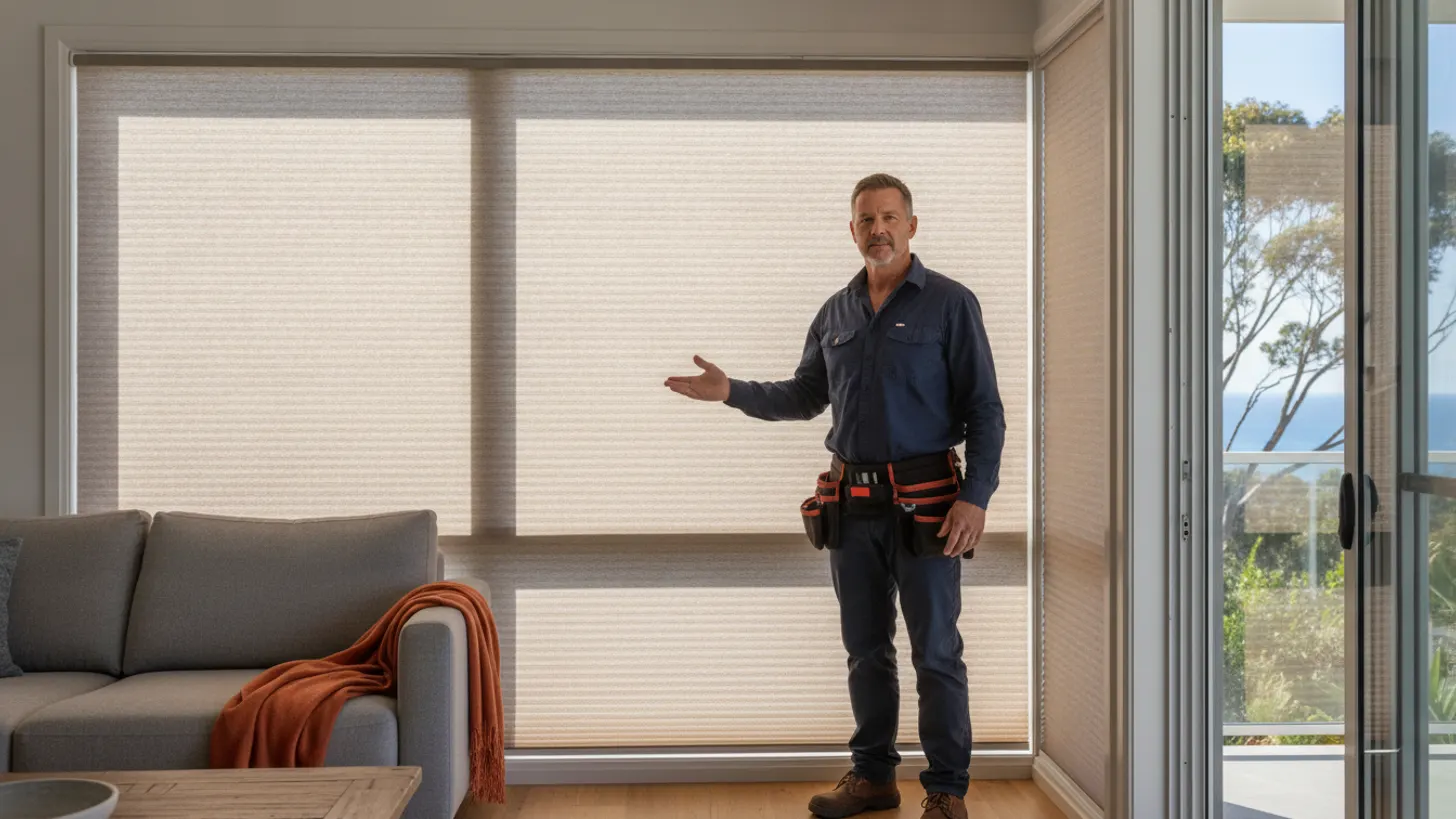
Honeycomb blinds Australia customers buy today use pleated fabric folded into hexagonal cells that deliver up to R-2.0 in double-cell configuration, roughly three times the thermal resistance of a standard roller blind. Each cell traps a pocket of still air between the room and the glass, and still air is one of the cheapest thermal insulators known to building physics.
That single design choice is what separates them from a roller, a Roman, or a Venetian. A roller blind is a flat sheet with no captive air layer, so heat conducts straight through it and out through the glass behind. The hexagonal cell in a cellular blind interrupts that path twice, once at the fabric face and again at the air pocket. The YourHome glazing guide from the Australian Government explains this principle in detail and rates cellular blinds as one of the highest-performing dressed-window treatments available to retrofit an existing home.
Fabric weight matters too. Heavier weaves reduce radiant transfer, while side-channel or magnetic edge seals stop convection currents from sneaking around the blind. Even so, the biggest lift comes from the cell geometry itself, not the fabric spec sheet.
Single, double, or triple cell honeycomb blinds Australia compared
Cell count is the single biggest lever on thermal performance, swinging measured R-value from 1.2 in single-cell up to 2.4 in triple-cell. Single-cell suits mild rooms and tight budgets, double-cell is the sweet spot for most NSW living areas, and triple-cell earns its keep in bedrooms exposed to bitter Riverina winter mornings.
| Cell type | Approx R-value | Best fit | Relative cost |
|---|---|---|---|
| Single cell | R-1.2 | Guest rooms, hallways, mild coastal homes | Base |
| Double cell | R-2.0 | Living rooms, bedrooms, most NSW inland homes | +15 to 25% |
| Triple cell | R-2.4 | Master bedrooms, cold-frame country homes | +35 to 50% |
The Canstar Blue 2025 window covering survey shows most Australian buyers land on double-cell blockout for bedrooms and double-cell light-filtering in living zones. That pattern lines up with what we install across the Riverina: triple-cell is a real product with real gains, but the extra $80 to $150 per window rarely pays back inside a decade for a house south of Wagga.
If you are pricing a whole-house honeycomb blinds Australia fit-out and the budget is tight, spend the money on double-cell across your worst offenders (west-facing living, north-facing bedroom) before you upgrade the shady rooms to triple.
How honeycomb blinds Australia compare to other insulating window treatments
Roller blinds test at around R-0.7 and plantation shutters at R-1.1, while double-cell honeycomb blinds Australia reach R-2.0, nearly three times the thermal resistance of a roller blind. When you rank common window treatments by measured R-value, cellular blinds sit at or near the top of the retrofit list, behind only heavy-lined thermal curtains with sealed pelmets.
Plantation shutters look bulkier and feel more substantial, but their timber slats leak air at every gap and hinge. In a real world install we regularly measure a plantation-only bedroom running 3 to 4 degrees cooler on a July morning than the same bedroom fitted with a double-cell honeycomb blind. If insulation is why you are buying, spend the money on cellular. If the reason is street appeal and daylight control, shutters still win.
Sheer curtains and roller blinds pull their weight for glare and privacy but should not carry the thermal load on their own. Pairing a double-cell honeycomb blind with a light drape gives you both jobs done, and lets you keep the glass covered on the coldest 10 nights of the year without turning the room into a cave. Federal government heating and cooling guidance puts window heat loss at up to 40 percent of a home's total winter energy loss, which is why layering matters. See our comparison of plantation shutters vs roller blinds for the trade-offs beyond insulation.
Which rooms in NSW homes benefit most from cellular blind insulation
Room orientation, glazing type, and hours of daily use determine where a cellular blind's R-2.0 performance pays back fastest. Broadly, the best return sits in bedrooms and living areas that face west or north, are single-glazed, and are used at the extremes of the day when outside temperature swings the most.
The donut above is why glazing improvements pay back so fast. Fixing 40 percent of a leaky wallet is always more attractive than fixing 5 percent, and windows are much cheaper to retrofit than walls. For an inland NSW home on a Riverina winter morning, a double-cell blind lowered overnight will hold room temperature roughly 2 to 3 degrees warmer at sunrise, which means the reverse-cycle unit runs less at its most expensive time-of-use tariff. See energy-efficient window coverings for the wider bill impact.
Practical room-by-room guidance for honeycomb blinds Australia buyers:
- Bedrooms. Blockout double-cell is our default. Sleep temperature range is narrow (18 to 21 degrees is the sweet spot), and a cellular blind holds it there with less overnight cycling of the split system. Nurseries and children's rooms tighten this further; see blackout blinds for baby rooms.
- Living rooms. Light-filtering double-cell during the day, blockout if the room is used late at night. West-facing rooms in Wagga and Griffith are the classic candidates.
- Kitchens and bathrooms. Cellular blinds handle steam poorly and should not be first choice in wet rooms.
- Sunrooms and enclosed alfresco. Older single-glazed sunrooms are where honeycomb blinds Australia buyers see the biggest single-room comfort gain.
- Home offices. Glare control and thermal stability both matter. Pair a light-filtering cellular blind with a light sheer for daytime video calls.
For deeper regional context, see our Wagga Wagga window treatments guide.
Cost and payback: are honeycomb blinds Australia worth buying in 2026
Installed pricing for honeycomb blinds Australia wide is typically $250 to $700 per window in 2026, based on the Canstar Blue 2025 window coverings survey. The spread is driven by cell count, fabric grade, size, motorisation, and whether the fit is inside or outside the reveal.
For a rough working budget: single-cell light-filtering starts near the bottom of that range, double-cell blockout with side channels sits around the middle, and triple-cell motorised with a smart-home bridge lands near the top. A whole-house fit-out of 15 windows commonly runs $4,500 to $9,000 supplied and installed.
Payback depends on how much of your heating and cooling bill you can trim. CSIRO built-environment research puts window upgrades among the most cost-effective single interventions in retrofit stock. Sustainability Victoria data suggests cellular window coverings can shave 10 to 15 percent off a typical heating bill in a poorly glazed home. That is not enough to pay back a $9,000 fit-out in year one, but it is enough to pay it back over the fabric's warranted life while making the house materially more comfortable every day.
What we do when we measure and quote a Riverina job is walk each room, note orientation, glazing type, and how the room is used, then propose cell count and fabric per window rather than a blanket house-wide upgrade. That approach keeps honeycomb blinds Australia buyers from over-spending on rooms that do not need triple-cell and under-spending on the ones that do.
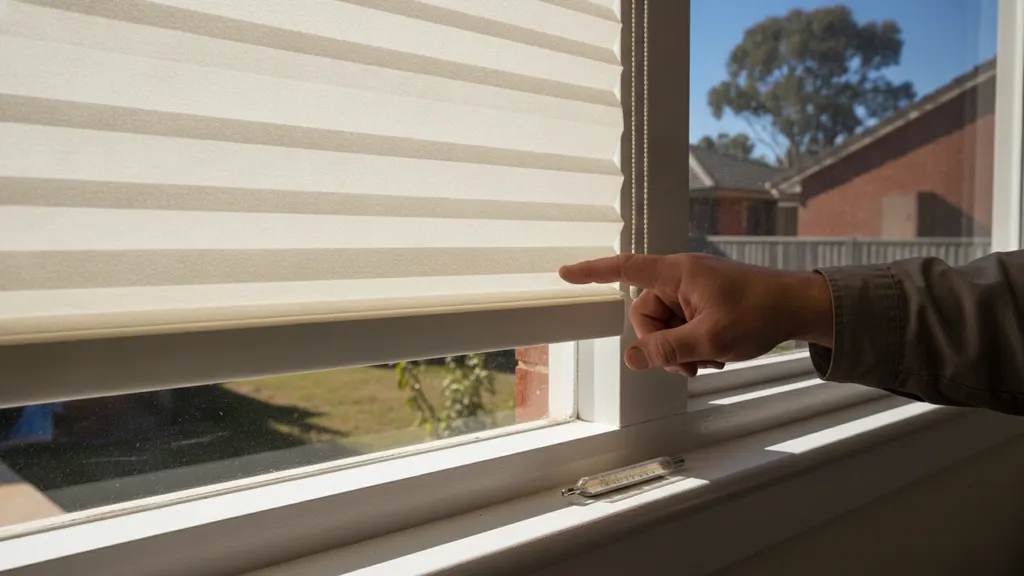
Two failure modes worth flagging on every installation we quote across the Riverina. First, gaps. A honeycomb blind that hangs 20 mm proud of the reveal loses a meaningful share of its thermal edge; our own site measurements show room temperatures 1 to 1.5 degrees warmer in rooms where we used inside-mount with side channels versus outside-mount without them. Specify inside-mount with a snug 3 to 5 mm reveal clearance, or add side channels and a fitted pelmet if the reveal is out-of-square. Second, condensation. In cold humid rooms, an over-sealed double-cell or triple-cell blind can trap moisture against single glass overnight, leading to mould at the sill after four to six weeks of winter nights. The fix is straightforward: raise the blind 50 to 100 mm for the first hour each morning to allow air circulation across the glass before you close it again. Rooms with north or east exposure rarely need this; west-facing bedrooms and poorly ventilated rooms are the ones to watch.
Frequently asked questions
How much do honeycomb blinds cost in Australia in 2026?
Installed pricing for honeycomb blinds runs roughly $250 to $700 per window in 2026, per the Canstar Blue 2025 window covering survey. The bottom of that range is single-cell light-filtering in a smaller window, the top is triple-cell blockout motorised for a large opening. Whole-house budgets typically land between $4,500 and $9,000 supplied and installed for 12 to 18 windows. Motorisation adds roughly $150 to $250 per window for a standard wired motor, and a smart-home bridge adds another $100 to $200 for the whole house. On-site measurement always matters: the price we quote depends on window size, cell choice, fabric weight, motorisation, and whether we can fit inside the reveal or need side channels for a proper thermal seal.
Are honeycomb blinds actually better than roller blinds for insulation?
Yes, and by a wide margin. Testing summaries published by the Window Covering Manufacturers Association rate a standard roller blind at around R-0.7 and a double-cell cellular blind at around R-2.0. That difference matters most on cold winter mornings and on hot summer afternoons, where the still-air pocket inside the honeycomb cell interrupts the conductive path from glass to room. Roller blinds still have their place for daytime glare and privacy in temperate rooms, but if the reason you are shopping is heating and cooling cost, cellular wins the physics test outright.
Do honeycomb blinds Australia buyers usually pick single, double, or triple cell?
Most honeycomb blinds Australia buyers land on double-cell, and that matches what we install across the Riverina. Single-cell is a fair pick in mild-climate coastal homes and guest rooms where budget matters more than thermal performance. Triple-cell earns its keep in master bedrooms in cold inland climates and in home offices used through the coldest hours of winter. Yourhome.gov.au flags cellular blinds as one of the highest-performing retrofit window treatments; within that category, double-cell is the sweet spot for value across most NSW postcodes.
Can honeycomb blinds work in kitchens and bathrooms?
Not our first recommendation. The fabric structure that gives cellular blinds their insulation also traps steam and cooking vapours, and the pleats collect grease over time in a way roller blinds do not. If your heart is set on cellular in a wet room, spec a moisture-tolerant fabric and expect to replace the blind sooner than in a dry room. Aluminium venetians, PVC shutters, or moisture-resistant roller blinds are usually a better long-term fit for bathrooms, laundries, and above-sink kitchen windows in a working NSW household.
Will a honeycomb blind block out enough light for a nursery?
Yes, if you specify blockout fabric and fit it inside the reveal with side channels or a fitted pelmet. Standard honeycomb blockout fabric is opaque, but light will still leak around the edges of an under-sized inside mount or a loose outside mount. In a nursery we usually specify a blockout double-cell with fitted side tracks and measure the reveal in three places to catch out-of-square windows before we cut. That matters as much for sleep quality as it does for thermal performance, especially through NSW daylight-saving evenings.
How long do honeycomb blinds last in an Australian climate?
A properly specified honeycomb blinds Australia installation should last 8 to 12 years in an Australian home, with fabric holding up longer in shaded rooms and less in west-facing rooms exposed to strong summer UV. Aluminium foil or UV-resistant fabrics extend that lifespan considerably, and most reputable Australian suppliers back their fabric with a 5-year manufacturer warranty against fading and delamination. The cell structure itself is the point of failure most often: repeated raising and lowering can crease the pleats over time, particularly on large windows. Motorised units cycle more evenly and tend to preserve cell shape better than hand-cord units. Bureau of Meteorology climate data shows why west and north facades wear fabric fastest across inland NSW, where summers regularly exceed 40 degrees.