Nursery · 16 min read
Blackout blinds baby room Australia: NSW sleep guide 2026
Chris & Campbell · 29 July 2026
Which blackout blinds baby room Australia parents choose determines whether a nap runs 30 minutes or two hours. The room needs to be dark enough that melatonin holds through the sleep cycle, and the blind system must meet ACCC child-safe rules. Chris and Campbell measure and quote every nursery job across Temora, Wagga and Griffith personally, so this guide reflects what actually works in NSW homes, not marketing brochures.
Why blackout blinds baby room Australia families need for better infant sleep
Infant sleep runs on melatonin, the hormone produced by the pineal gland that regulates the sleep-wake cycle. Melatonin is suppressed by faint light on the retina, which is why even a thin gap around a blind can interrupt a nap cycle. Mindell et al. (Pediatrics, 2010) linked well-darkened sleep environments to longer sleep consolidation in babies under 12 months. Blackout blinds baby room Australia parents pick should therefore aim for near-total darkness during naps and overnight, not just dimming.
Red Nose Australia's safe sleep guidance lists a dark, quiet room as a supporting condition for healthy infant sleep cycles. In NSW terms, that means blocking direct summer sun off west-facing walls, plus 4:30am eastern light in daylight-saving months. A curtain hung over a pelmet alone will not do it. Rooms in the Riverina face strong summer sun and 40°C surface temperatures on unshaded glass.
For families across the Riverina, the Bureau of Meteorology NSW climate data shows sunrise before 5:45am from November to January. Without a full seal at the window opening, that first hour of light will wake a baby earlier than the parents planned. Compare related setups in our bedroom blackout guide.
Blackout vs light-filtering: what a nursery actually needs
Light-filtering fabric drops brightness by roughly 40-70% but leaves the room readable, which is fine for a lounge nap but wrong for overnight infant sleep. True blackout fabric blocks close to 100% of light transmission and pairs with a side-channel or reveal-fit frame to stop bleed at the edges. For blackout blinds baby room Australia setups, both parts matter, and fabric alone will still leak enough light around the edges to shorten a nap by 30 to 60 minutes.
Guidance from yourhome.gov.au on window glazing notes that unsealed window coverings lose most of their light and thermal benefit because gaps let in a disproportionate share of transmission. Typical fabric transmission looks like this:
| Fabric type | Approx. light transmission | Best nursery use |
|---|---|---|
| Sheer | 60-90% | Not suitable |
| Light-filtering | 15-40% | Daytime lounge only |
| Room-darkening | 3-10% | Toddler naps if paired with curtain |
| Blackout (coated) | Under 1% | Infant naps and overnight |
Blackout blinds baby room Australia options: safest 2026 blind types
Not every blackout product suits a nursery. Blackout blinds baby room Australia specifications should meet AS/NZS 4936, the mandatory Australian standard governing the design and testing of corded internal window coverings, published by Standards Australia, and match ACCC advice on cordless operation for rooms used by children under 6. Three system types typically qualify in NSW homes:
- Cordless roller blackout blinds with side channels. A spring-assist or push-up roller in a blackout coated fabric, running inside U-shaped aluminium channels screwed to the window reveal. Side channels add a moderate per-window cost on top of the blind, but they deliver the single biggest gain in real-world darkness.
- Motorised roller blackout blinds. Battery or hardwired tubular motor, controlled by remote, wall switch, or a home assistant. No cord, no chain, no strangulation risk. Best paired with a scheduled morning open to help set circadian rhythm past the newborn stage. See our motorised blinds guide for battery life expectations.
- Honeycomb (cellular) blackout shades. Double or triple cell construction, blackout liner sandwiched between cells. Highest thermal performance of the three, useful in western Riverina towns where afternoon glass surface temperatures top 40°C on hot summer days.
Whatever the choice, the operating system must be cordless or have a fitted tensioner that locks any chain out of a child's reach. Curtains over the top for extra sound absorption are fine, provided any tie-back cords are removed or short and unreachable. For older siblings sharing the room, review child-safe blind fundamentals before choosing add-ons.
How to seal light gaps around nursery windows in NSW homes
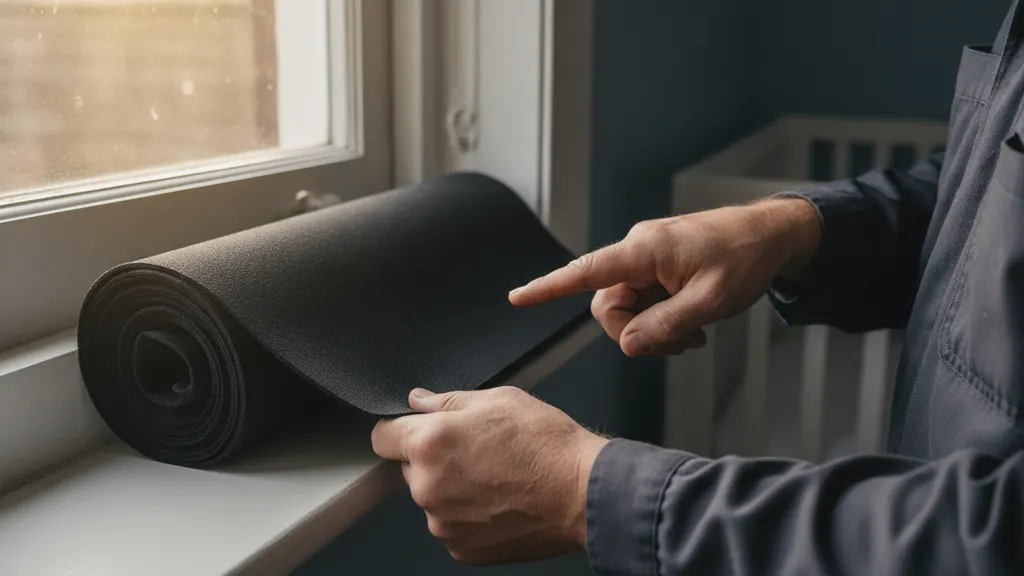
Light leaks at four points: top of the blind head, bottom rail, left and right edges, and any gap between the window architrave and the wall. Fixing these turns a decent blackout blind into a fully dark room. Blackout blinds baby room Australia installations that reach near-perfect darkness use a stack of small fixes rather than one product.
- Reveal-fit vs face-fit. A reveal-fit blind sits inside the window opening. Face-fit sits on the wall in front. Face-fit gives less side light because it overlaps the frame by 40-70mm each side, so for infant sleep it is often the better call.
- Side channels. Aluminium channels screwed to the reveal cut side-bleed to near zero. Worth specifying on any reveal-fit install for east or west facing windows.
- Pelmet or top box. Blocks light bouncing over the head of the blind. A 90mm timber pelmet adds thermal performance as well.
- Weather seal for the architrave gap. Some older Temora and Wagga weatherboard homes leak light through a 3-5mm gap between the frame and plaster. Sealed with paintable acrylic.
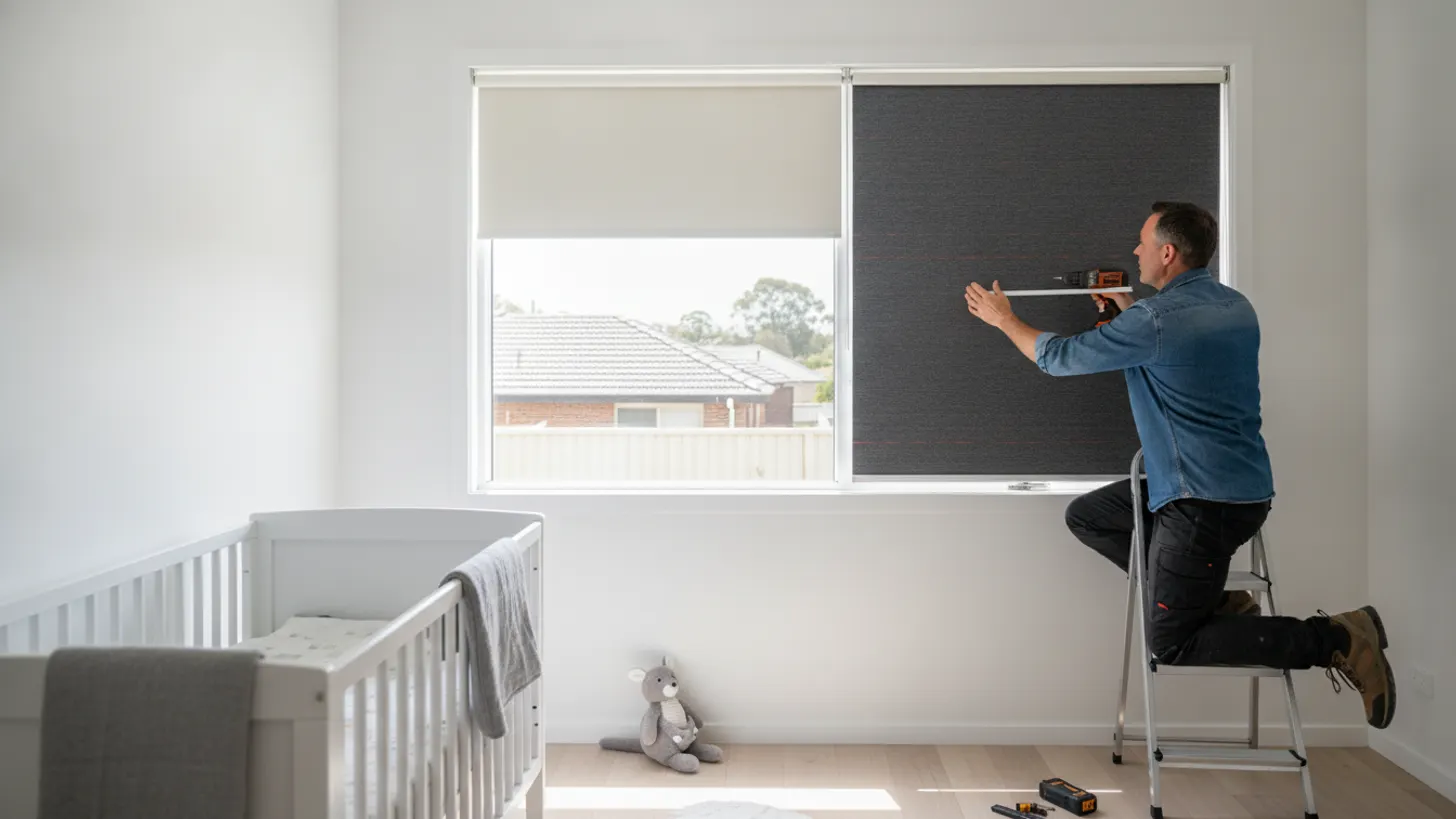
A west-facing nursery is where sealing matters most. The room had a reveal-fit roller with no side channels, and the family reported a 45-minute maximum nap before their baby woke with light across the cot. Cordless rollers with aluminium side channels and a 90mm timber pelmet are the combination that actually blocks the light around the edges. The blind fabric was the same coated blackout; the gaps were the only change. The yourhome.gov.au shading guidance makes the same point: sealed edges are what turns any blackout blind into a functional light and thermal barrier.
Blackout blinds baby room Australia benefits: thermal and acoustic gains
A properly sealed blackout system does three jobs at once: darkness, insulation, and noise damping. Blackout blinds baby room Australia setups that use honeycomb cellular fabric with side channels can reduce summer heat gain through the window by up to 40% according to guidance from energy.gov.au on insulation and glazing, and cut winter heat loss by around 30%. Both matter in NSW nurseries, where a stable room temperature between 16-20°C aligns with infant sleep environment guidance from the Australasian Sleep Association.
CSIRO energy-efficient buildings research confirms that window furnishings paired with sealing measures deliver a large share of the residential envelope's thermal performance. This matters most for blackout blinds baby room Australia families install where the nursery faces west or has large glazing. The chart below shows a typical Riverina nursery west-facing window across a 40°C summer afternoon:
Acoustic dampening is a secondary benefit. A dense blackout fabric with cellular structure absorbs mid-range noise (the pitch range of traffic and birdsong) by around 3-5 dB according to product testing on energy-efficient window treatments. Not soundproofing, but enough to blur an early morning garbage truck. For Temora and Riverina homes facing an arterial road, this is often the deciding feature. See our Temora climate window treatments guide for related seasonal setup detail.
Frequently asked questions
Are blackout blinds baby room Australia parents install actually safe for cots?
Yes, provided the blind meets AS/NZS 4936 and the operating system has no accessible cord or chain. Australia's mandatory corded window covering standard has been in force since 2014 and is enforced by the ACCC. For a cot room, the safe options are cordless spring rollers, motorised rollers, or cordless honeycomb shades. Never install a chain-drive blind within 1.6 metres of a cot, changing table, or bookshelf a toddler could climb. Guidance from yourhome.gov.au also stresses that any fitted seals must not create a pinch or trap hazard for small hands. For older homes with deep window reveals in the Temora and Wagga area, confirm the bracket depth keeps the roller face clear of the window glass and the cot rail. A tensioned bottom rail also prevents the blind from swinging if a toddler touches it.
How much light do I need to block for infant sleep?
Aim for near-total darkness during naps and overnight, meaning you should not be able to read a book cover in the room. Research linking melatonin suppression to even low light levels supports aiming for total darkness where safely possible. Blackout coated fabric delivers under 1% transmission, but the real gain comes from sealing edges, so plan for either a face-fit blind that overlaps the frame by 40-70mm each side or a reveal-fit blind with side channels. The Bureau of Meteorology climate data shows NSW sunrise before 5:45am from November to January, and that first hour of light is the highest-risk window for early wake-ups in a nursery. A baby's circadian rhythm responds to morning light cues before the sleep cycle is fully consolidated, so sealing the window from first light is as important as choosing the right fabric.
Can renters in NSW install blackout nursery blinds safely?
Yes. Cordless roller blackouts are the blackout blinds baby room Australia renters request most often, fitting inside the reveal with two brackets and small screws that only leave 2mm holes, well within normal rental allowances under the Residential Tenancies Act. Motorised versions with battery motors need no wiring and leave no mark on walls when removed. Landlords in the Riverina and wider NSW usually welcome the upgrade because the blind stays with the property on lease end. For a rental you can also use a portable travel blackout that suctions to the glass, though it will not seal as well as a fitted blind with aluminium side channels. If your lease tenure is uncertain, cordless roller is the most flexible choice because removal takes under five minutes and leaves the window as found. See our rental window coverings guide for landlord-friendly options across the Riverina.
Do I need to replace nursery blackout blinds when my child grows up?
No. A quality roller blackout or cellular shade in a blackout fabric lasts 12-15 years with basic care, and the darkness that helps a newborn also helps a school-age child sleep in during holidays. What you may want to replace is the operating system: an older chain-drive blind should be swapped to a cordless or motorised version once a walker can reach it, regardless of whether the fabric is still in good condition. Coated blackout fabric holds its backing best when you avoid steam cleaning and stick to dry brush plus mild spot cleaning for stains. A simple check: hold a torch to the blind face in a dark room and look for pinholes or fading along the edges. Fabric that passes that test is worth keeping. Care and inspection guidance is on Standards Australia pages for AS 4936 blinds.
What is the difference between room-darkening and true blackout?
Room-darkening fabric drops light by around 90-97% but still glows a soft grey when you sit inside during daylight, meaning the room remains readable rather than dark. True blackout uses a coated backing of acrylic foam or PVC to reach under 1% transmission, so the room is properly dark at midday on a bright summer day. The distinction matters for infants because even low-level light stops melatonin from holding through a full nap cycle. For toddlers over about two years old, room-darkening fabric combined with a lined curtain often does the job for overnight sleep. For children under two years, choose true blackout fabric with side channel sealing and a fitted pelmet or top box to close the head gap. This combination takes the room from readable-grey to properly dark and is the standard blackout blinds baby room Australia configuration we install in Riverina nurseries.
How much do blackout blinds for a Riverina nursery typically cost?
Prices vary by window size, fabric weight, and control system, so we do not publish flat rates. Broadly, cordless roller blackout is the lowest-cost option; battery-motorised versions add a per-window premium for the motor unit; and honeycomb cellular blackout costs more again because of the cell construction and higher fabric weight. Side channels add a moderate per-window cost but deliver the single biggest gain in darkness for most rooms. Nursery windows in NSW homes are typically 1,200-1,800mm wide, which often means a standard size blind is available without a custom surcharge, though a reveal measurement confirms this. The most accurate figure comes from a free in-home visit, where we measure the actual window reveals and confirm whether standard or custom sizes apply for your nursery.