Window Treatments · 16 min read
Sunroom blinds Australia: heat and UV control for NSW homes 2026
Chris & Campbell · 2 September 2026
Ask any homeowner with a west-facing sunroom in the Riverina and you will hear the same complaint: unusable from November to March. Choosing the right sunroom blinds Australia wide is the difference between a room that bakes at 42 degrees and one that stays livable through a heatwave. This guide covers the fabric ratings, install positions, materials and 2026 pricing that actually matter, based on jobs we measure and quote every week across NSW.
What are the best sunroom blinds Australia has for heat control?
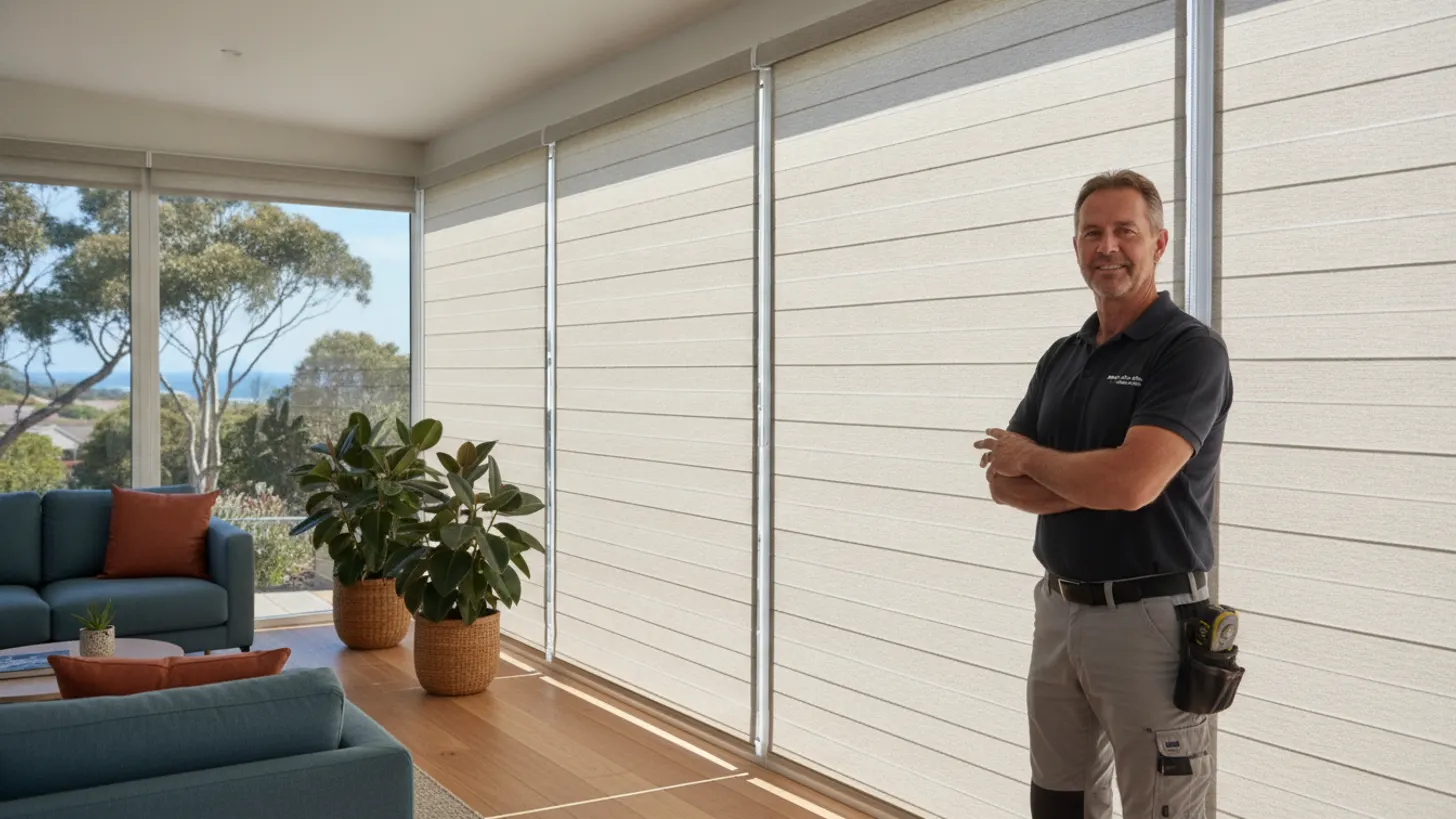
Exterior systems cut solar heat gain by up to 85 percent versus an unshaded equivalent, making external products the best sunroom blinds Australia offers. Zipscreens, which are motorised exterior blinds with side-channel cables that seal against the frame to block wind-driven rain and solar radiation, lead that category alongside folding-arm awnings and outdoor rollers in PVC-coated mesh.
The CSIRO has published building-envelope research on solar gain showing that unshaded glass can raise internal room temperatures by 10 to 15 degrees Celsius compared with a shaded equivalent. That gap widens further in a sunroom because you have glass on multiple elevations and often a glazed roof. The Your Home shading guide from the Australian Government reaches the same conclusion: external shading is roughly three times more effective than internal shading for the same fabric.
Practically, that means a two-layer approach wins almost every time in a Riverina sunroom. Exterior zipscreens or awnings handle the summer heat load. Interior honeycomb or sunscreen rollers add evening privacy, glare control, and winter insulation. We measure and quote both layers in the same visit so the hardware, brackets and cable runs are designed together rather than bolted on later.
What UV ratings matter most for sunroom blinds Australia wide?
UPF 50 blocks 97.5 percent of UV radiation, openness factor of 3 to 5 percent trades heat rejection against view-through, and light transmission sets how bright the room stays: these three numbers, not colour or pattern, decide whether a sunroom blinds Australia install will protect furniture, floors and skin. Ask for the manufacturer test document.
UPF 50 blocks at least 97.5 percent of UV radiation, which matters because the Bureau of Meteorology UV index regularly hits 12 or higher across inland NSW in summer. Openness factor sits between 1 and 14 percent for most sunroom mesh; 3 to 5 percent is our default for a Riverina sunroom because it holds view-through while cutting glare. For fully enclosed conservatory blinds Australia clients often prefer, we use tighter 1 to 3 percent meshes on the western elevation and slightly more open fabrics on the south side.
Timber floors and leather furniture fade fastest under uncontrolled UV. Standards Australia references relevant fabric performance methods under AS/NZS 4399 for sun protective clothing and fabrics, and reputable local suppliers will publish results against those tests. If a quote does not name the fabric brand, mill, or test standard, we walk away.
Which materials last longest in sunroom blinds Australia climates?
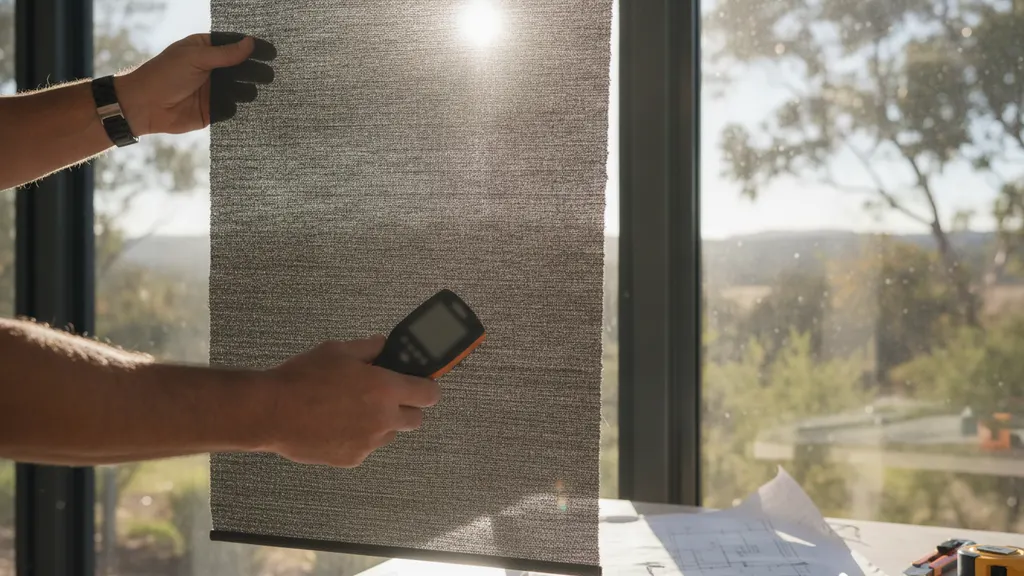
Quality outdoor-grade PVC-coated polyester mesh is tested to 20,000 hours of UV exposure, the durability benchmark sunroom blinds Australia climates demand most; solution-dyed acrylic and marine-grade aluminium hardware complete the most durable combination available. Cheap imports without UV certification can chalk, fade, or crack inside three summers on a north-facing sunroom in Wagga or Griffith.
Outdoor PVC mesh is typically tested to 15,000 to 20,000 hours of UV exposure. That equates to roughly 8 to 12 years of direct Australian sunlight before noticeable degradation, assuming realistic daily exposure hours. Solution-dyed acrylic canopies used on some folding-arm awnings can push past 15 years when maintained. Powder-coated aluminium frames on zipscreens usually carry 5 to 10 year hardware warranties, with stainless fixings recommended in coastal NSW because of salt exposure documented in the Master Builders Australia technical guidance on coastal detailing.
| Material | Typical lifespan (NSW) | Best sunroom use |
|---|---|---|
| Outdoor PVC mesh | 8-12 years | Exterior zipscreens, drop awnings |
| Solution-dyed acrylic | 10-15 years | Folding-arm awnings, canopies |
| Powder-coated aluminium | 10-20 years | Frames, tracks, hoods |
| Interior honeycomb fabric | 7-12 years | Insulation and glare control layer |
| Basswood shutters (interior) | 15-25 years | Adjustable light control, privacy |
Should sunroom blinds Australia installs go inside or outside the glass?
Exterior blinds deliver up to 85 percent solar heat reduction for any sunroom blinds Australia project, against around 35 percent for interior-only products. An interior blind absorbs solar energy after it passes through the glass and re-radiates it into the room; exterior blinds stop that energy before it enters the building envelope.
The Sustainability Victoria window coverings guide and the energy.gov.au household insulation and window coverings page both make the same point: external shading typically delivers two to three times the heat rejection of a comparable internal product. For an enclosed verandah blinds NSW clients often ask us about, that difference is the gap between a usable summer breakfast room and a sealed greenhouse. On a 2025 north-facing enclosed verandah in Wagga, adding exterior zipscreens to an existing interior-only setup cut peak afternoon temperatures by 8 degrees Celsius.
Interior only is still the right answer in a handful of cases: strict heritage overlays, strata restrictions on the exterior facade, or budgets that will not stretch to outdoor hardware. In those cases we usually specify reflective-backed honeycomb blinds and thermal-lined S-fold curtains to squeeze the most performance out of the interior layer. It will never match a good exterior system, but it is a meaningful improvement over bare glass.
NSW sunroom blind costs in 2026: what to budget
Supplied and installed, a typical sunroom blinds Australia fit-out with four to six openings falls between $4,000 and $18,000 depending on whether the setup is interior-only, exterior-only, or a two-layer combination. We always measure and quote before naming a firm figure, but independent price guides give a useful reality check before you brief any installer.
The 2026 Canstar Blue blinds and shutters cost guide breaks the total down by product type: interior roller blinds $250 to $600 per window installed, honeycomb blinds $400 to $900, basswood plantation shutters $450 to $1,200 per square metre, and motorised exterior zipscreens $1,500 to $3,500 per opening depending on width and drive type.
The spread across that range depends on whether you choose interior only, exterior only, or the two-layer setup, and whether exterior blinds are motorised with wind and sun sensors. Motorisation adds convenience and, when tied to a sun sensor, can reduce operator error on hot afternoons when nobody is home to drop the blinds.
Related reading from our own site: for broader context on sunroom blinds Australia product choices, our energy efficient window treatments Australia guide covers whole-home upgrades, our honeycomb blinds Australia insulation guide covers the interior layer in detail, and our window treatments Temora extreme climate guide covers the specific Riverina heat and cold cycle. For coastal sunrooms, our coastal window treatments NSW guide covers salt-air hardware.
For a closer look at this, see Plantation shutters cost Australia: what to budget for NSW homes in 2026.
Frequently asked questions
What are the best blinds for a hot Australian sunroom?
Exterior zipscreens or outdoor roller blinds in PVC mesh are the strongest performers because they block solar radiation before it hits the glass. CSIRO thermal research shows unshaded glass can lift internal temperatures by 10 to 15 degrees Celsius versus shaded equivalents, so intercepting heat outside the window is far more effective than absorbing it inside. Interior honeycomb blinds or sunscreen rollers work as a secondary layer for glare and privacy, particularly on south and east elevations where solar load is lower. In our sunroom blinds Australia installations across the Riverina, we usually pair an exterior zipscreen with a light-filtering interior blind. The Australian Building Codes Board confirms external shading on north and west elevations outperforms insulation and reflective roofing on peak cooling-load days in a residential retrofit.
What UV rating should I look for in sunroom blind fabric?
Look for a UPF rating on the fabric spec sheet and confirm the openness factor. UPF 50 or a UV block rating of 95 percent and above will protect furniture, timber floors and skin during peak Riverina summer. Openness factor between 3 and 5 percent gives you a good balance of view-through and heat rejection. For enclosed sunrooms facing north or west, we usually recommend a 3 percent openness screen. The Bureau of Meteorology UV index forecasts regularly hit extreme in NSW summer, so fabric certification matters more than colour choice. Cancer Council Australia notes that UV damages surfaces and skin even through light cloud cover, making documented fabric certification more reliable than an untested import alternative that carries no tested UV protection claims.
How long do sunroom blinds actually last in NSW conditions?
Quality outdoor-grade PVC and acrylic fabrics are tested to 15,000 to 20,000 hours of UV exposure, which equates to roughly 8 to 12 years of Australian sun before noticeable degradation. Powder-coated aluminium frames on zipscreens typically carry 5 to 10 year warranties, while stainless steel fixings resist rust in coastal and inland conditions. Cheap import fabrics without UV certification can start chalking or fading inside 2 to 3 years. Ask for the manufacturer warranty document in writing before you sign, and confirm it covers both fabric and hardware in the sunroom application per Master Builders Australia guidance on installer documentation. Gale Pacific, one of Australia's leading technical fabric suppliers, publishes maintenance data showing that annual soft-brush cleaning can extend expected fabric service life by two to three years.
Should sunroom blinds be fitted inside or outside the glass?
Exterior installation is more effective for heat control because it stops solar radiation before it enters the room. Interior blinds absorb and re-radiate that heat, so a sunroom with only inside blinds will still climb well above comfortable temperatures in Riverina summer. Exterior blinds cost more, need weather-rated hardware, and may face council or heritage constraints in some NSW areas. The Your Home shading guide confirms external shading typically delivers around three times the heat rejection of internal shading. The best result is usually a two-layer approach. Where external installation is permitted, the two-layer setup also helps control condensation on single-glazed sunroom panels in winter, because interior cellular blinds slow overnight heat loss and keep the glass surface above the dew point for longer.
How much do sunroom blinds cost supplied and installed in NSW?
Independent price guides such as the Canstar Blue blinds and shutters cost guide suggest interior roller blinds sit around $250 to $600 per window supplied and installed, honeycomb blinds around $400 to $900, and motorised exterior zipscreens $1,500 to $3,500 per opening depending on width and drive. A full sunroom with four to six openings typically lands between $4,000 and $18,000 installed. Costs vary with fabric grade, motorisation, and site access. Every sunroom is different, so we measure and quote in person before giving a firm price. Motorisation with a wind and sun sensor typically adds $300 to $600 per blind but can recover that cost over two to three summers through reduced cooling bills, particularly when the sensor drops external blinds automatically on hot afternoons when the home is unoccupied.
Can sunroom blinds also reduce my energy bill in NSW?
Yes, particularly when they lower the cooling load in summer and reduce heat loss through single-glazed sunroom windows in winter. The Australian Government Your Home guide notes heating and cooling can account for around 40 percent of household energy use, and window coverings are one of the cheapest interventions available. Honeycomb cellular blinds trap air in their cells and add measurable insulation to poorly performing glass, while external screens cut peak solar gain. Pairing the two in a sunroom is one of the most cost-effective retrofit upgrades for older NSW homes without triple glazing. The NSW Government's Energy Savings Scheme recognises window coverings as an eligible energy efficiency measure under certain conditions, and some retailers can advise whether your installation qualifies for rebate support, reducing the net cost of a quality setup.