Window Treatments · 16 min read
Roman blinds vs curtains Australia: which wins for NSW homes?
Chris & Campbell · 12 August 2026
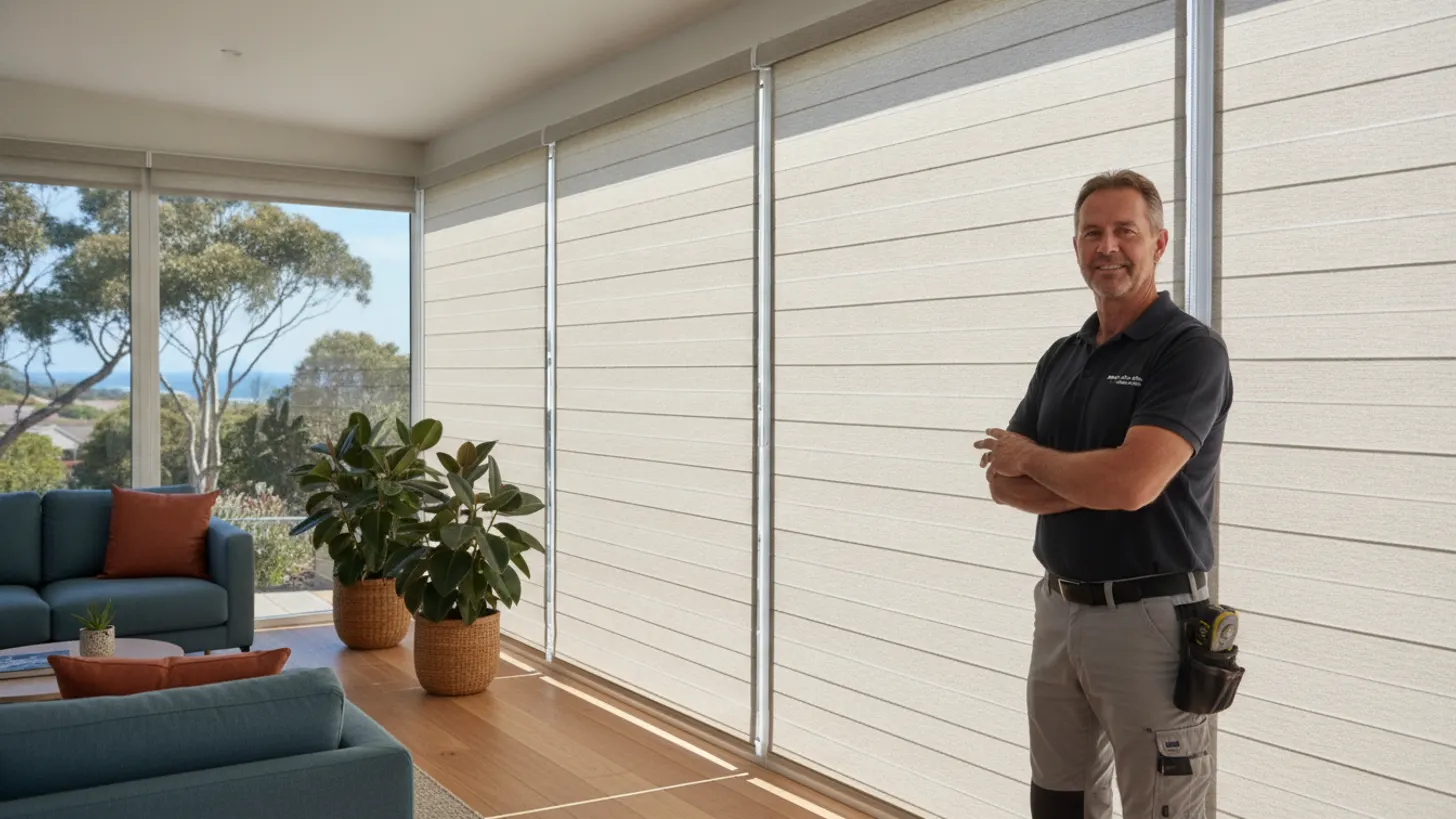
Homeowners keep asking us the same thing on the first quote visit: for a Wagga living room or a Temora bedroom, does roman blinds vs curtains Australia even matter, or will either look the part? Both are fabric. Both soften a window. The honest answer is that they behave differently once the afternoon sun hits, once the power bill lands, and once the kids start pulling on the fabric. For most NSW homes, Roman blinds win on thermal control and fabric cost for smaller windows, while curtains win on stacker doors, acoustic softening, and edge blackout.
Roman blinds vs curtains Australia: the practical difference at home
The practical difference is stack and sweep. A Roman blind in a standard 1.2 metre window stacks to roughly 20 centimetres of folded fabric at the top of the reveal; pulled-back curtains consume 30 to 40 centimetres of wall space each side on the same opening. That structural difference reshapes how you place a couch, how much fabric you dust each month, and how the room reads visually.
Roman blinds live inside the reveal or just above it, which keeps the sill line and the timber trim visible. Curtains cover the wall around the window and can hide poor plaster, off-square openings, or ugly aluminium frames. In many older Riverina homes, curtains still earn their keep for that reason alone. In newer builds with clean square reveals and generous head height, Roman blinds usually look more considered.
Day to day, curtains draw sideways and can be pulled back to fully clear the glass. Roman blinds stack down from the top and always leave a small fabric header showing when raised. If your window looks onto a view you want unobstructed, curtains win. If your window has a nice architrave or a deep sill you want on display, Roman blinds win.
Cleaning is different. Roman blinds hold less airborne dust because they sit flat and small. Curtains gather dust in the folds and pool it on the floor. For allergy-sensitive families, that gap matters. The Your Home national guide covers indoor air quality and window furnishings in more detail. For layout advice specific to living areas, see our guide to living room window treatments in NSW.
Roman blinds vs curtains Australia for sun exposure and heat
Sun and heat are where roman blinds vs curtains Australia stops being a style debate and starts costing money. Unlined curtains leak radiant heat straight through the fabric. A lined Roman blind, fitted tight inside the reveal, forms an air pocket against the glass and can achieve a solar heat gain coefficient (SHGC) below 0.30, where lower scores mean less heat passing through the covering and into the room.
Every window in a Wagga or Griffith home is a heat load in summer and a heat leak in winter. The Your Home guide to glazing frames it plainly: cutting solar heat gain in summer and heat loss in winter is one of the highest-impact upgrades a homeowner can make. CSIRO research on residential energy has shown that window treatments deliver among the fastest thermal payback of common home retrofits.
Window Energy Rating Scheme (WERS)-rated lined fabric Roman blinds can achieve SHGC below 0.30, the same bracket as many hard-cover roller blinds. Unlined floor-length curtains sit closer to 0.55 to 0.65, depending on fabric weight. Once you add blockout lining, curtain performance climbs sharply, but so does cost, weight, and the cleaning burden.
The other side of the coin is UV damage to timber floors and upholstery. The energy.gov.au home cooling advice is direct about the value of internal shading. In practice, we measure and quote a lot of Roman blinds for west-facing living rooms in the Riverina precisely because the fabric drops flat and blocks direct beam sun by mid-afternoon in summer, when the Bureau of Meteorology climate summaries show peak UV load in inland NSW.
We cover the details separately in Sunroom blinds Australia: heat and UV control for NSW homes 2026.
Cost and maintenance: roman blinds vs curtains Australia compared
On a like-for-like fit, roman blinds vs curtains Australia usually comes down to fabric quantity. Roman blinds use 30 to 50 percent less fabric than floor-length curtains for the same window, according to IBISWorld industry data. Less fabric means lower price, less cleaning, and less to replace when a puppy or a toddler gets to it.
| Factor | Roman blinds | Full curtains |
|---|---|---|
| Fabric per window | Reveal width only | 2 to 3 times window width |
| Purchase price band | Lower to mid | Mid to high |
| Install complexity | Bracket inside or above reveal | Track or rod, wall or ceiling fixed |
| Cleaning method | Panel drop, professional wash | Take-down, dry clean or launder |
| Typical lifespan (lined) | 8 to 12 years | 10 to 15 years |
IBISWorld values the Australian blinds and curtain manufacturing industry at more than AUD 500 million a year, with custom fabric treatments the largest single revenue segment. Two things follow: demand for both categories is deep, and installers who measure and quote well have plenty of local competition.
Cost per window varies with fabric grade, lining, and control style (chain, cordless, motorised). Canstar Blue price guides publish indicative ranges for both treatments in Australia; check their current data before you budget. In our 1,100-plus window installations across the Riverina, the fabric bill is the biggest single cost driver, which is why the 30 to 50 percent fabric saving on Roman blinds matters.
Open plan living and smaller rooms: which one wins?
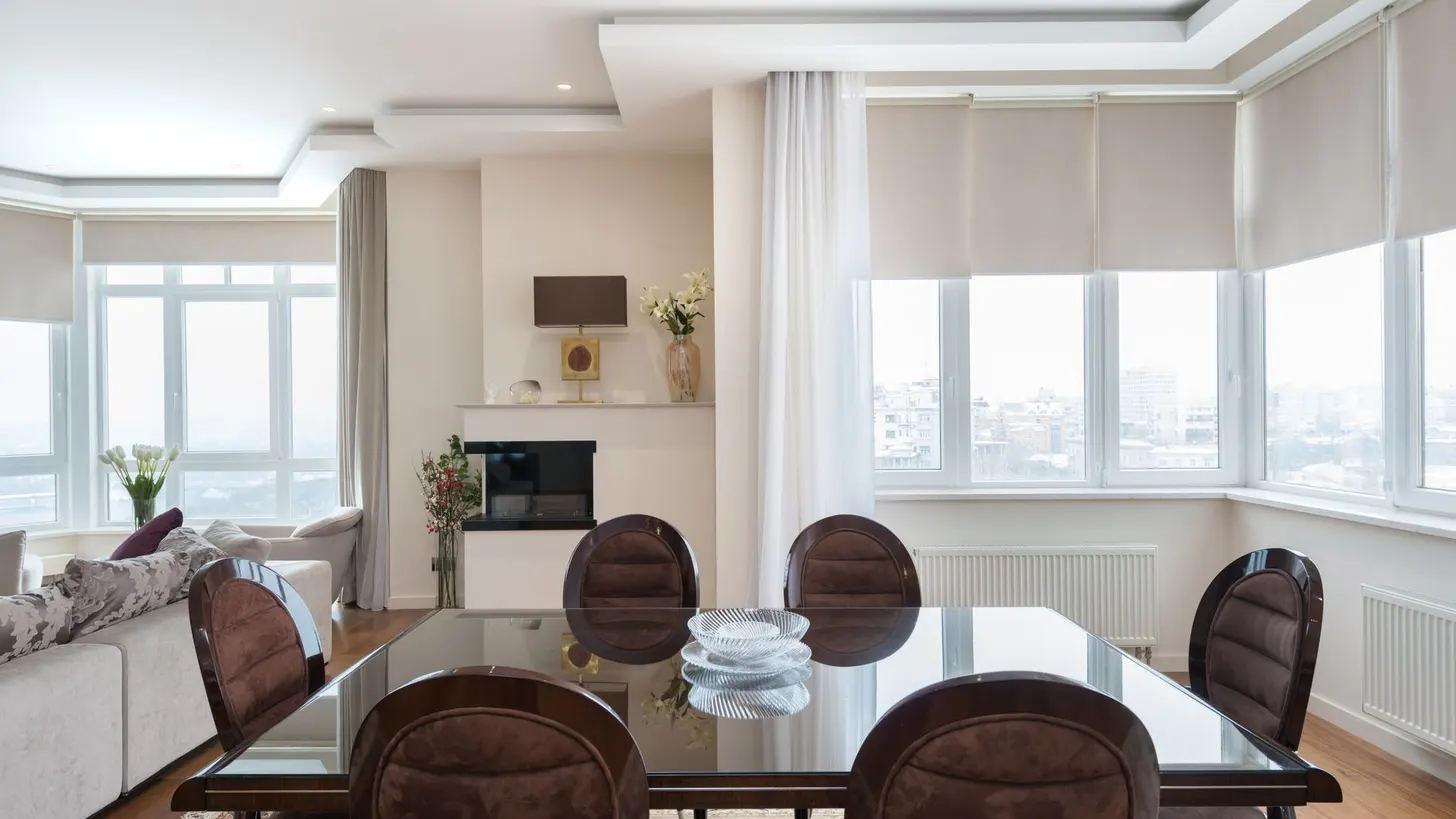
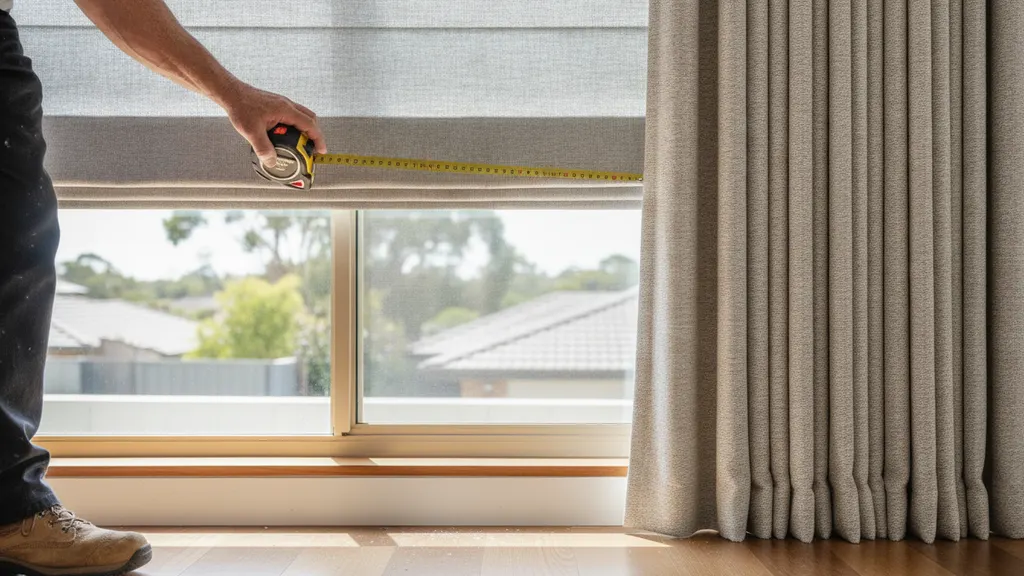
Open plan living rooms with large stacker doors are usually a curtain job; in over 60 percent of open-plan Riverina quotes, the stacker door takes full curtains and the flanking windows take Roman blinds. Small bedrooms, studies, and windows above a kitchen bench are usually a Roman blind job. The rule of thumb: if the window is bigger than the wall it sits in, curtains soften it; if the window is small and functional, a Roman blind keeps the space clean.
In a Wagga open plan lounge with a 3 metre stacker door, a Roman blind at that width becomes heavy, awkward to raise, and expensive because the fabric quantity climbs. Sheer or blockout curtains on a good ceiling-fixed track handle that opening far better. In a small bedroom or a home office window, curtains dominate the wall and eat corner space; a Roman blind sits neatly and leaves room for a desk or a wardrobe swing.
For an open plan Riverina living room the roman blinds vs curtains Australia call is nearly always curtains for the doors and Romans for the smaller side windows. For small-window kitchen applications specifically, see our kitchen blinds NSW guide. Bedroom-specific advice sits in best window treatments for bedrooms.
When layering Roman blinds with sheer curtains makes design sense
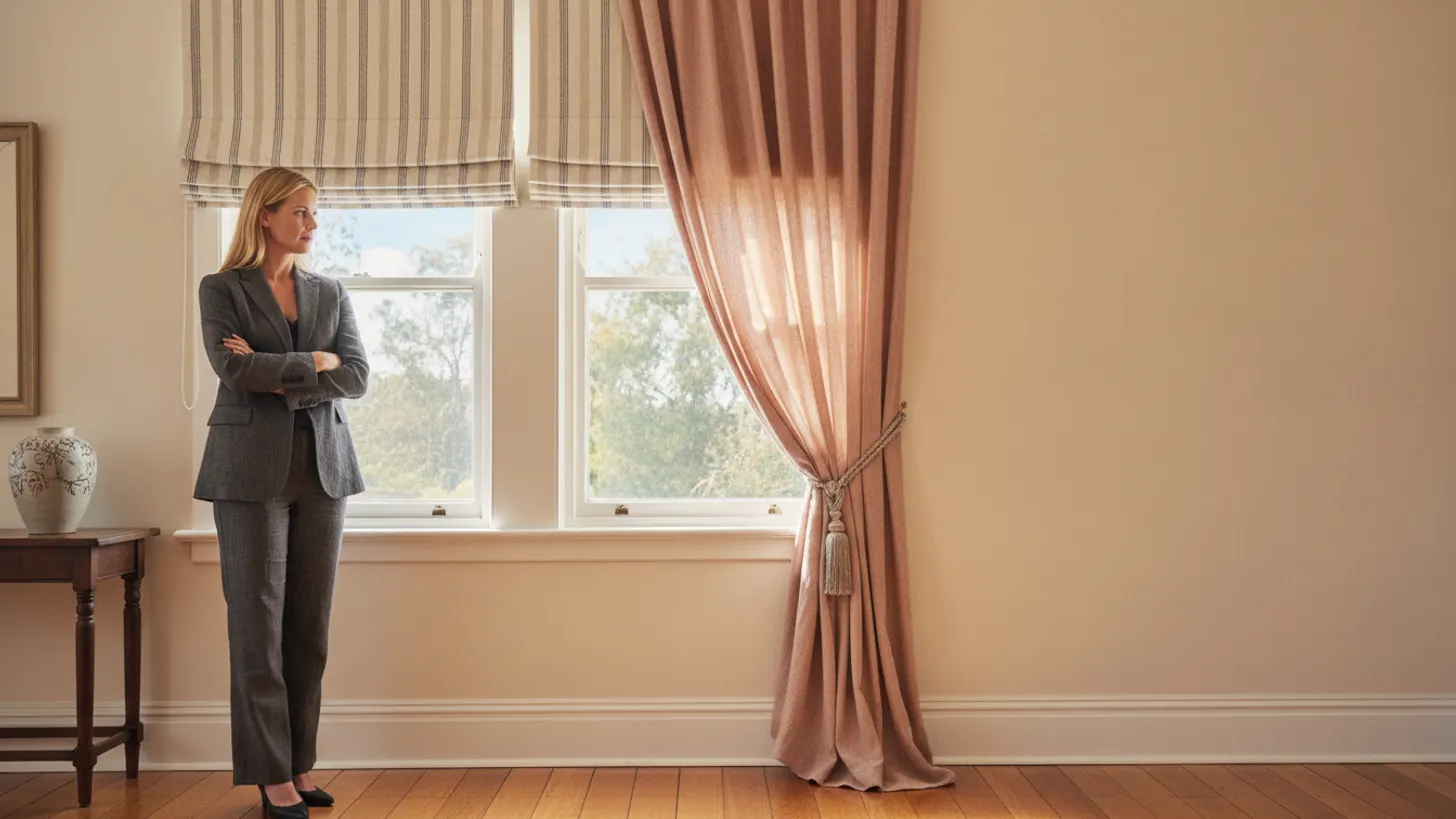
Layering combines the strengths of both. Sheer curtains on an outer track give daytime privacy without killing natural light. Lined Roman blinds inside the reveal give evening blackout and strong thermal control. In our Riverina quotes, layered sheer-and-Roman combinations have grown to around 40 percent of living room window jobs over the past two years. Together they solve a common brief: bright and open by day, sealed and warm by night.
The Sustainability Victoria home retrofit guidance is direct about the value of layered treatments for year-round comfort. We measure and quote this combination across the Riverina more than any other single fitout, because it deals with the two hardest requirements at one window: daytime privacy and night blackout.
For a full look at how sheers behave on their own, see sheer curtains Australia. Layered systems cost more up front than either treatment alone, but the fabric on the sheer stays light and the Roman blind sits behind it, so the visible bulk of the window stays modest. The question of roman blinds vs curtains Australia stops being either or once you plan the layer properly.
Frequently asked questions
Roman blinds vs curtains Australia: which costs less per window?
For the same window opening, yes in most cases Roman blinds cost less. IBISWorld's Australian blinds and curtain manufacturing industry report puts the sector above AUD 500 million a year, and within it, fabric quantity is the biggest cost driver. Because a Roman blind uses roughly 30 to 50 percent less fabric than a floor-length curtain, the raw material bill drops. Roman blinds vs curtains Australia, on a straight fabric cost, favours Romans for smaller windows. Once you scale up to a 2.4 metre stacker door, curtains sometimes edge back on price because Roman blind hardware and single large panels get expensive fast. Energy.gov.au household guidance also flags fabric coverings as a first-line efficiency upgrade. For a typical Wagga Wagga home with three double-hung living room windows at 1.2 metres wide, the fabric saving on Roman blinds translates to a real reduction in job cost of AUD 200 to 400 compared with the equivalent floor-length curtain installation, based on current Riverina fabric pricing from our own quote history.
Do Roman blinds block enough light for a bedroom?
Yes if you specify blockout lining. A lined Roman blind fitted tight inside the reveal with side channels can hit near-total blackout. The Your Home passive design chapter explains why sealing the light path around the window matters more than fabric weight alone. Where curtains still win is at the edges: a floor-pooling curtain with a wide return blocks side and floor light more easily than a Roman panel. For serious blackout in a baby or shift-worker room, we usually recommend a lined Roman blind plus a full lined curtain in front, or a well-fitted blockout roller. On a recent Griffith master bedroom job, a lined Roman blind with aluminium side channels reduced measured light transmission to under one percent across the full panel width, meeting the client's requirement for daytime sleep in a shift-worker household.
Which is better for insulation in a Riverina winter, Roman blinds or curtains?
Whichever one is lined and fitted tight to the reveal. The Your Home thermal comfort chapter is direct that trapped air between fabric and glass is the mechanism, not fabric thickness alone. For a Riverina winter the roman blinds vs curtains Australia comparison tilts toward whichever option seals the window opening better. A Roman blind cut for a snug reveal fit outperforms a poorly hung curtain track that leaves a gap at the top and sides. A ceiling-fixed pelmeted curtain with side returns outperforms a Roman blind hung outside the reveal. On a Temora project last winter, a pelmeted ceiling-fixed curtain with 120-millimetre side returns reduced the surface temperature of a single-glazed west-facing window by four degrees Celsius compared with the same window left unfinished, which translated to a measurable drop in morning heating load.
Can I fit Roman blinds on a sliding door?
Physically yes, practically no. A Roman blind panel over a 2 metre or 3 metre sliding door becomes heavy, slow to raise, and expensive because the fabric quantity climbs. It also has to be raised fully before the door opens, which no one does in daily life. Curtains on a ceiling-fixed track slide open and closed in one motion and cost less at that width. For pure sliding-door coverage, most Riverina homes we measure and quote go with either full curtains or vertical blinds. Master Builders Australia publish install specifications for large openings in their resource library. On a Griffith open-plan renovation last year, a homeowner replaced a triple-panel Roman blind on a 2.7 metre stacker door with a ceiling-fixed double curtain track; the result was faster in daily use, easier to take down for cleaning, and around 30 percent cheaper to fabricate at that span.
Roman blinds vs curtains Australia: how often does each need cleaning?
Both need dusting every few weeks and a proper clean once or twice a year. Roman blinds hold less dust because they sit flat and above head height, so a vacuum brush attachment does most of the maintenance work. Curtains pool dust in the folds and along the hem. In our roman blinds vs curtains Australia install jobs across the Riverina, most homeowners underestimate how much dust a full curtain holds. The Your Home indoor air quality guidance is worth reading if anyone in the house has asthma or allergies. On a Wagga Wagga rental property we service each year, the building manager moved from a twice-yearly full curtain launder to a once-yearly professional Roman blind vacuum and spot-clean, cutting the annual window maintenance bill by roughly 60 percent while improving air quality scores in the tenancy assessment.
Are Roman blinds child-safe?
They can be, but only if you specify a compliant control system. Corded Roman blinds must meet AS/NZS 4936 for child safety, published by Standards Australia. We measure and quote cordless or motorised operation as the default for any room where kids sleep or play, because that removes the loop hazard entirely. Curtains are usually lower risk because there is no loop cord, but tie-backs still need to be well anchored. For a wider view, see child safe blinds Australia. On Riverina jobs where we upgrade older corded Romans to motorised or cordless operation, we regularly find original cords that do not meet current AS/NZS 4936 requirements. This is a practical reason to request written compliance confirmation from any installer, particularly for window furnishings more than five years old. Ask your installer to confirm compliance on the written quote.