Heritage Homes · 18 min read
Heritage home window treatments NSW: period style meets modern comfort
Chris & Campbell · 26 August 2026
Can you fit plantation shutters to a Federation cottage without wrecking its heritage listing? For most NSW owners the answer is yes, but only if you plan the fixings, materials and reversibility up front. This guide covers heritage home window treatments NSW councils accept, which styles suit Federation, Victorian and Californian bungalow windows, and how to keep the character while adding real thermal comfort. We measure and quote every job in Temora, Wagga and Griffith personally.
Heritage home window treatments NSW: what the rules actually say
Heritage home window treatments NSW councils allow depend on two things: whether the property is on the State Heritage Register or a local council LEP list, and whether the treatment alters original fabric. Interior blinds fitted without penetrations rarely need consent. External shutters, exposed motors, or track screws into original architraves almost always do.
Heritage NSW manages more than 7,000 State Heritage Register properties, and each is bound by the NSW Heritage Act 1977. If your home is on the Register, the Act requires development consent before any work that could affect its heritage significance. Track screws sunk into original cedar or kauri joinery count. So do exterior awnings that change the roofline silhouette.
Local council LEPs cover thousands more homes across NSW, from Federation cottages in Temora to Californian bungalows in Newcastle. Before we measure and quote a listed job we ask you to check with your council duty planner, or we do it with you on the visit. For guidance on retrofits that respect building fabric, the Australian Government's Your Home guide on glazing is the plain-English starting point. Our detailed heritage compliance guide covers the paperwork end.
Which blind and shutter styles suit Federation and Californian bungalow homes
Federation homes (1890-1915) feature high ceilings, double-hung timber sash windows, and decorative leadlight top panels. Californian bungalows (1920s-1940s) use lower window heads, wider casings, and more horizontal proportions. The right treatments respect those proportions. Plantation shutters, Roman blinds, and pelmet-topped curtains all work; vertical blinds and heavy pelmets rarely do.
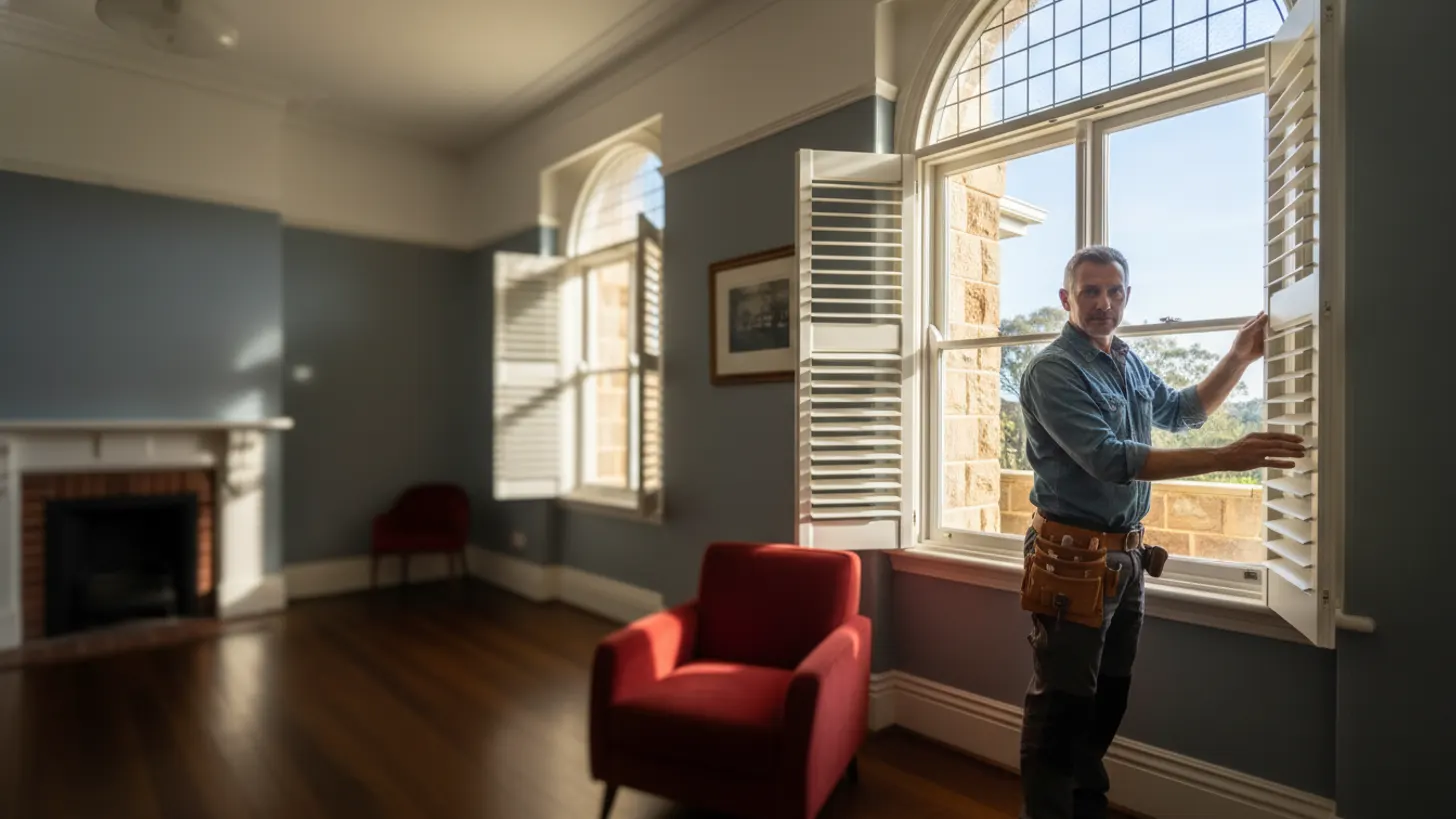
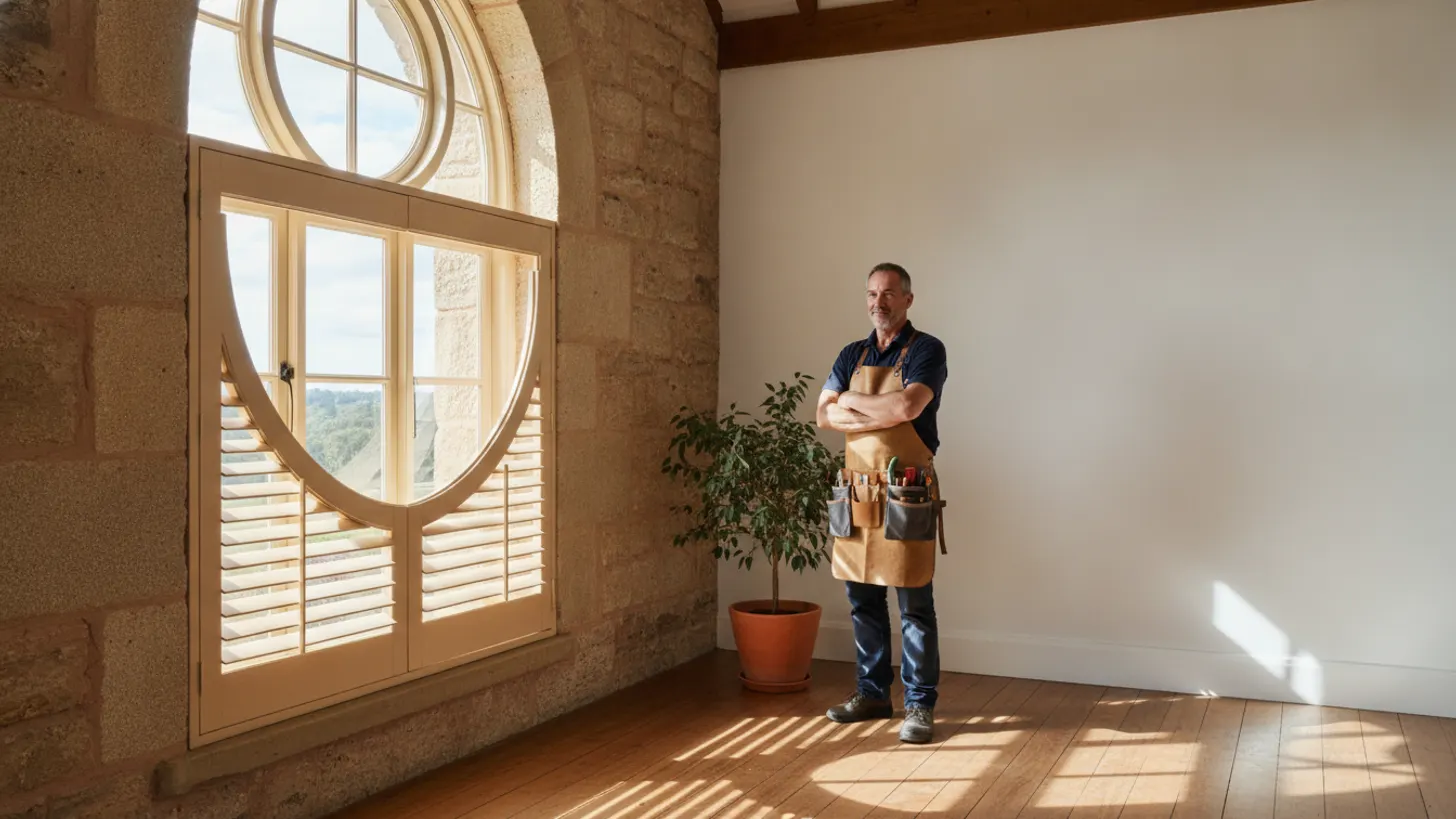
For Federation cottages, timber plantation shutters with 89mm or 114mm louvres are the closest visual match. They sit inside the recess, respect the sash line, and can be tilted to protect leadlight from harsh western sun. When we measure and quote a Federation job we default to basswood or Western Red Cedar so grain and finish match existing skirtings and architraves.
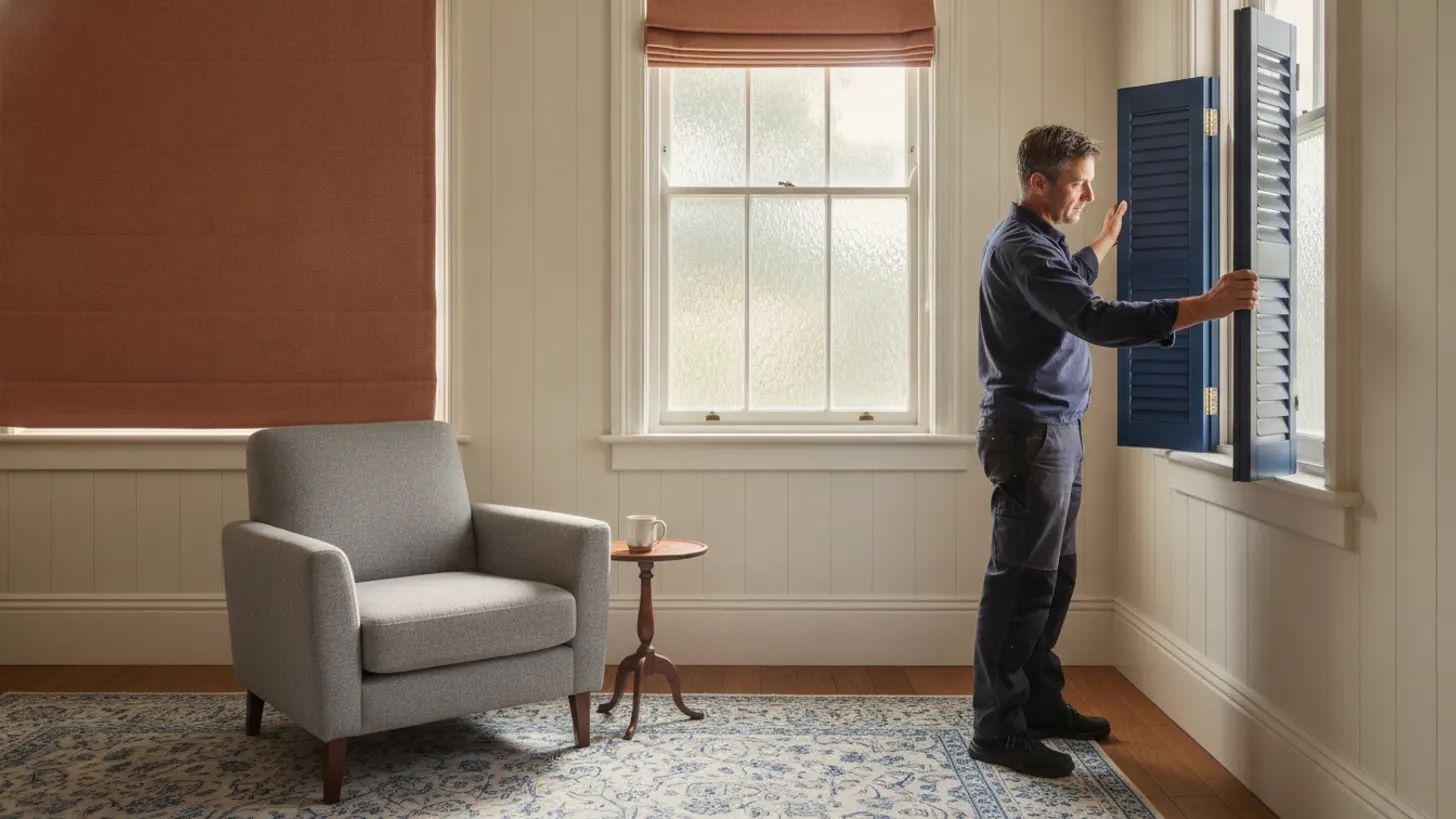
Californian bungalow windows suit wider louvres (89mm and up) and heavier fabrics. Roman blinds in natural linen, cotton canvas or wool blend match the bungalow's arts-and-crafts leaning. See our linen curtains guide for fabric choices that hang well on tall bungalow windows. Vertical blinds, mini-Venetians and bright PVC roller blinds fight the period line and can trigger a council flag on locally-listed streetscapes. Heritage home window treatments NSW councils reject most often are the ones that put alien materials into a listed frontage.
| Treatment Type | Heritage Approval Risk | Reversibility | Thermal Rating | Period Authenticity | Cost Premium vs Standard |
|---|---|---|---|---|---|
| Timber plantation shutters (inside reveal) | Low | High: reveal fixings only, no original joinery contact | Moderate: R0.2 to R0.3 on single-glazed sash | High: sympathetic to Federation and bungalow proportions | 15 to 25% above standard |
| Roman blinds (linen or cotton canvas) | Low | High: top-cleat only, no architrave contact | Low to moderate: depends on fabric weight and pelmet | High: arts-and-crafts and bungalow authentic | 5 to 15% above standard |
| Honeycomb (cellular) blinds | Low | High: tension or reveal fit, fully removable | High: adds R0.3 to R0.5 per yourhome.gov.au data | Low to moderate: period-neutral appearance | 10 to 20% above standard |
| Pelmet-topped curtains (ceiling-fixed track) | Low | High: ceiling track screws into plaster, not joinery | High: up to 30% reduction in window heat loss | High: Federation pinch-pleat and bungalow drape authentic | 10 to 20% above standard |
| Roller blinds (natural linen, inside reveal) | Low | High: reveal bracket only, fully removable | Low to moderate: reflective backing adds marginal gain | Moderate: cream linen period-typical in Federation era | 0 to 10% above standard |
Can you install plantation shutters in a heritage-listed NSW property?
Yes, in most cases you can. Interior plantation shutters fitted to hidden reveal fixings rarely disturb heritage fabric, and Heritage NSW typically treats them as reversible internal work. The two exceptions are exterior shutters and any install that requires cutting original architraves or lime-plaster reveals. Get council sign-off before you order.
Interior plantation shutters attach with a top-and-bottom reveal frame or a full L-frame that hides all fixings inside the window recess. Screws go into modern packing or reveal timber, not the original sash or architrave. When we measure and quote a Federation or Victorian cottage we mock the fixing line on masking tape first, so the owner sees exactly where the frame lands. The reason heritage home window treatments NSW councils sign off quickest are the ones that touch no original fabric.
On a 1903 Federation cottage in Temora's heritage conservation area, the local LEP listing prompted the council officer to query whether our L-frame would contact the original cedar architraves. We photographed the masking-tape mock-up showing a 6mm clearance from original fabric, submitted the photos to the duty planner, and received written exempt-development confirmation within 48 hours. The shutter assembly now lifts out with eight screws. Not a mark on the cedar.
If you own a locally-listed home, ring your council duty planner before you sign the order. Most Riverina councils will confirm internal shutters as exempt development in writing within 48 hours, provided no original joinery is removed. For State-listed properties you may need a Section 60 exemption under the NSW Heritage Act 1977, which is usually granted for reversible internal treatments. For budget planning across shutter types, our plantation shutters cost guide walks through the material and finish variables.
Heritage home window treatments NSW: matching period style with modern comfort
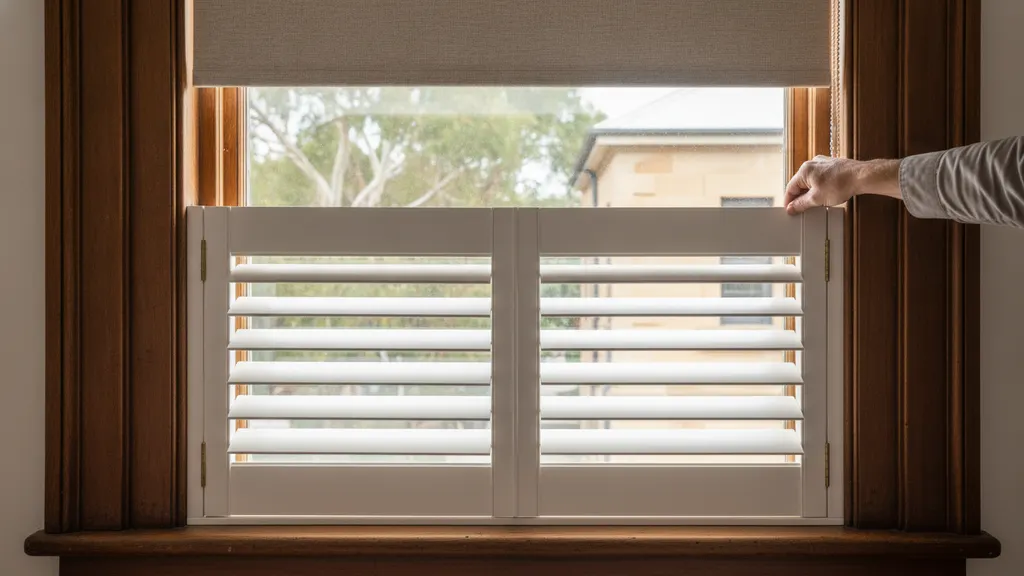
Heritage home window treatments NSW owners install today do more than one job. They restore the streetscape, cut summer heat gain and winter heat loss, protect timber floors and rugs from UV, and give real acoustic dampening on busy Riverina main streets. The trick is layering thin period-correct treatments with a modern insulating layer behind.
Single-glazed timber sash lets around 40% of a home's winter heat escape through windows and up to 87% of unwanted summer heat in, per Australian Government data (see energy.gov.au on windows). A period-correct plantation shutter, Roman blind or pinch-pleat curtain reads to the street. Behind it we can hide a low-profile honeycomb blind or reflective roller in the reveal, which does the thermal work.
A CSIRO home performance research program shows cellular blinds with side channels can add up to R0.5 to a single-glazed window, enough to noticeably drop the run time on a reverse-cycle unit. For fabric-forward homes, S-fold sheers plus a pelmet-topped drape is a classic Federation combination that still meets the Your Home insulation guidance on sealed pelmets. See our honeycomb blinds insulation guide for the technical detail. Heritage home window treatments NSW owners choose today mostly follow this layered approach: period-correct front, thermally serious back.
The most reversible heritage home window treatments NSW owners choose
Reversibility is what most heritage assessors care about. Can the treatment be removed in a morning with no visible mark on original fabric? Heritage home window treatments NSW owners default to for exactly this reason are inside-reveal plantation shutters, ceiling-fixed sheer curtains, tension-fitted honeycomb blinds and Roman blinds on top-only cleats.
Inside-reveal plantation shutters are the gold standard. All fixings sit inside the reveal, hidden behind the frame. Remove four to eight screws and the whole assembly lifts out with the original architrave untouched. On a State-listed property, this is often the only shutter option Heritage NSW will approve. Ceiling-fixed S-fold curtain tracks are the second best. The track screws into ceiling plaster, not the window architrave, and the sheer or drape hangs a full drop clear of the window frame.
The AS/NZS 4213 corded internal window covering standard also applies (see Standards Australia for the current version). Heritage home window treatments NSW installers fit today must meet the child-safety requirements regardless of the home's age, so we default to motorised or wand-operated systems on all cottage jobs.
Frequently asked questions
Do I need council approval for internal blinds in a heritage-listed NSW home?
For most locally-listed homes in NSW, purely internal blinds fitted with no penetration into original joinery are treated as exempt development by the council. That means you can proceed without a heritage impact statement. However, if your home is on the State Heritage Register managed by Heritage NSW, any work that could affect heritage significance technically requires a Section 60 approval under the NSW Heritage Act 1977. In practice, reversible internal shutters and blinds are routinely granted a Section 60 exemption. The safest step is a five-minute call to your council duty planner before ordering. Most Riverina councils respond to a written inquiry within 48 hours, and keeping that written response on file protects you if a future assessor questions the install or if you later want to add a second treatment type. See the Your Home glazing guide for a plain-English overview.
Which heritage home window treatments NSW suit a Federation home best?
For a Federation cottage built between 1890 and 1915, the most historically accurate internal treatment is a period-style pinch-pleat curtain in linen, wool or heavy cotton, hung from a timber pole with rings. A 250 to 300 gsm linen weight hangs well in tall Federation rooms and pairs naturally with a sheer under-curtain in the same fabric family, for a layered result that reads as period-correct from both sides of the glass. When choosing heritage home window treatments NSW installers recommend for Federation homes, fabric weight is the detail most often overlooked. Plantation shutters were not common in Australian Federation homes but interior-mounted timber shutters read as sympathetic if the louvre size is generous (89mm or 114mm) and the finish matches existing skirtings. Roller blinds in natural cream linen with a bottom tape were also period-typical. Avoid vertical blinds, mini-Venetians, and bright PVC finishes. For passive design benchmarks that guide period-authentic fabric weight and pelmet choice, see the energy.gov.au heating and cooling resource.
Can motorised blinds be installed in a heritage listed home in NSW?
Yes, in nearly every case. Motorised blinds are internal treatments that use rechargeable battery motors or low-voltage wiring, and no external face of the building changes. The visible fixings are the same as any manual internal blind, which means the reversibility test is met. Rechargeable battery motors are now rated to 500 or more charge cycles and can run a standard-sized blind for three to five years on a single charge, which removes the need for any fixed wiring routed through heritage fabric. On a State-listed property you may need to show the council or Heritage NSW how the wiring is routed. If you plan to run 240V behind original lime plaster, that step usually needs a heritage impact statement. Battery-powered motors avoid that entirely. For AS/NZS child-safety compliance detail on motorised systems, see the Standards Australia catalogue.
How do I keep my Californian bungalow cool in a Riverina summer without wrecking the look?
The Riverina hits sustained 38-42C summer highs, per the Bureau of Meteorology climate averages for Wagga Wagga, which records January mean maximums above 38C across at least 20 days per summer. To keep a Californian bungalow cool without altering the streetscape you want to intercept solar gain before it hits the glass. External retractable awnings in period-correct canvas stripe fabric, hidden inside a slim head-box painted to match the fascia, are usually approved on locally-listed properties. Inside, honeycomb blinds fitted into the reveal add insulation without altering the sash. Combine both and the western elevation temperature drop is measurable inside an hour of full sun. The heritage home window treatments NSW owners report the greatest cooling benefit from are external awnings on west and north elevations combined with cellular blinds in east-facing rooms. See our window treatments Wagga Wagga guide for climate-specific detail.
Are exterior roller shutters ever allowed on a heritage home in NSW?
Rarely, and never without a formal heritage impact statement. Exterior aluminium roller shutters change the facade profile, add a visible head-box, and permanently alter the streetscape, which is exactly what most heritage listings are meant to protect. On a State-listed property the answer is almost always no. On a locally-listed home in a heritage conservation area the council may accept a low-profile recessed housing on rear elevations only, but the front elevation is off-limits. Bushfire attack level ratings above BAL-12.5 sometimes lead homeowners toward shutters for ember protection, but BAL-compliant window screens and ember guards are available in heritage-sympathetic formats that avoid the head-box problem entirely. If you need bushfire or security protection, retractable internal aluminium shutters or interior security screens are the reversible path. Always get consent in writing before ordering, per Master Builders Australia heritage work guidance.
How much do heritage home window treatments NSW installs cost compared with modern homes?
Heritage installs sit slightly above a standard install for two reasons: bespoke fabrication for out-of-square windows, and hand-scribing to imperfect architraves. A standard timber sash in a maintained Federation home can be off-square by 8 to 12mm, which requires scribing the reveal frame by hand, and that scribing labour is the main driver of the cost premium above a standard install. Industry cost surveys published by consumer comparison sites like CanstarBlue's window covering research show plantation shutter and quality curtain costs can run 15-25% higher when custom scribing is involved. That is a market average, not a LuxeShutters quote. We measure and quote every heritage job on-site so the number reflects your actual window sizes and joinery condition. Reversibility fixings and premium timber finishes are the two biggest cost variables.